
Want to avoid the three biggest mistakes that are made with live Christmas trees? Ones that can not only cost them longevity – but also make your tree far more susceptible to becoming a danger for fire?
Bringing a live Christmas tree into your home can be one of the most enjoyable parts of the holiday season. The smell of fresh pine filling the air, the glow of Christmas lights on real branches, and the nostalgia of choosing the perfect tree all make it a special tradition year after year for so many.
However, even though live Christmas trees are beautiful, keeping them healthy and safe indoors can be a challenge. Especially when a few simple tips are not followed! In fact, most problems people run into with live trees come from three very common mistakes. Ones that can be completely avoided with just a little bit of tree caring knowledge.

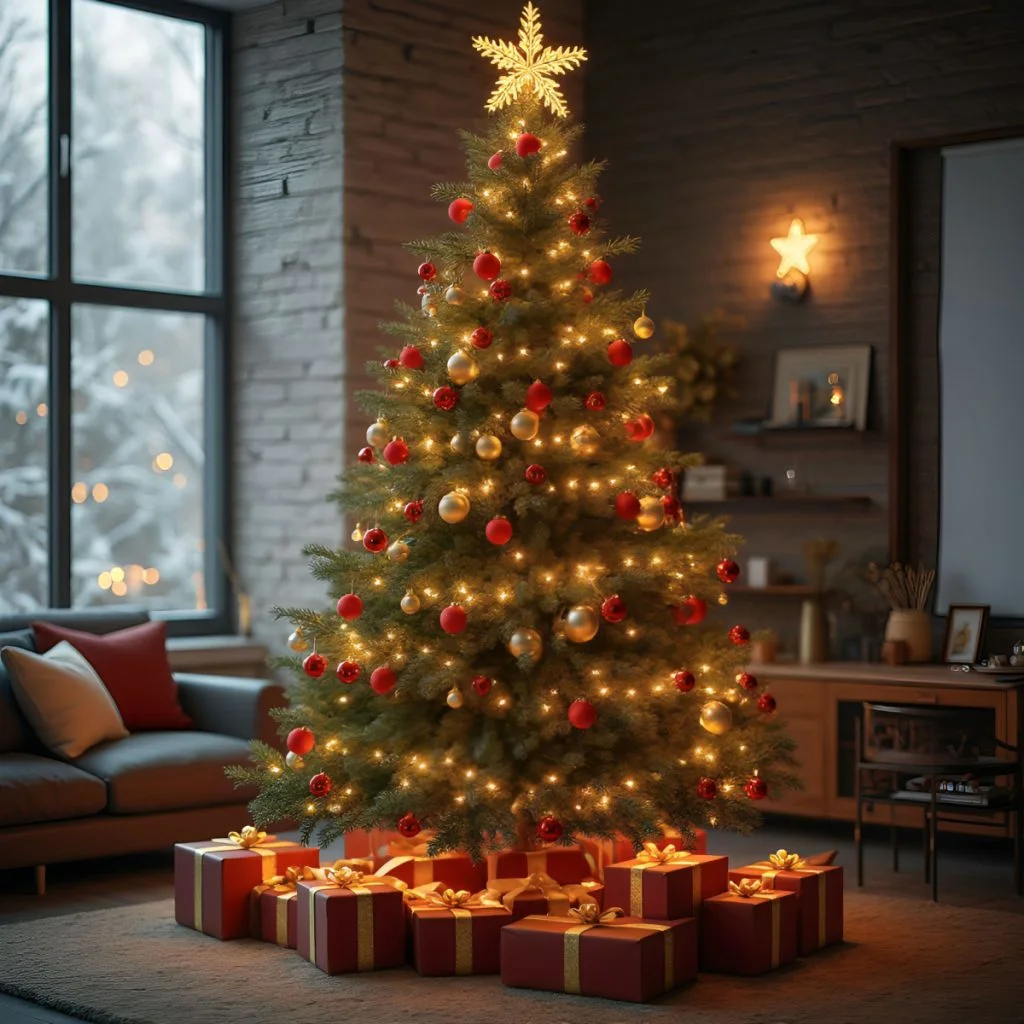
Let’s face it, the biggest issue homeowners face is keeping a tree fresh and hydrated. Once a tree begins to dry out, it loses needles quickly. Not only does it lose its luster, it also becomes a fire hazard. And – it certainly won’t last through the season. But here is how to avoid all of that worry with ease!
The 3 Biggest Mistakes Made With Live Christmas Trees
Mistake #1: Failing To Prepare A Tree Before Bringing It Indoors
Many people skip the simple preparation steps needed to help a tree adjust from outdoor temperatures to the warmth of a house. This transition is important. Why? Because sudden changes in temperature can stress the tree. And that will reduce how long it stays fresh.
One of the most helpful steps is giving a tree time to acclimate. Live Christmas trees are cut and stored outdoors when temperatures are often very cold. Bringing a tree directly from freezing temperatures into a warm living room causes the needles, branches, and trunk to warm too quickly. When this happens, moisture can be lost rapidly, similar to how ice melts fast when placed in hot water.
To prevent this sudden shock, placing the tree in an unheated garage, barn, or covered porch for several hours before bringing it inside allows it to warm slowly. This gentle transition helps the tree hold onto more moisture and adapt better to indoor conditions.
Give Your Tree A Shake!
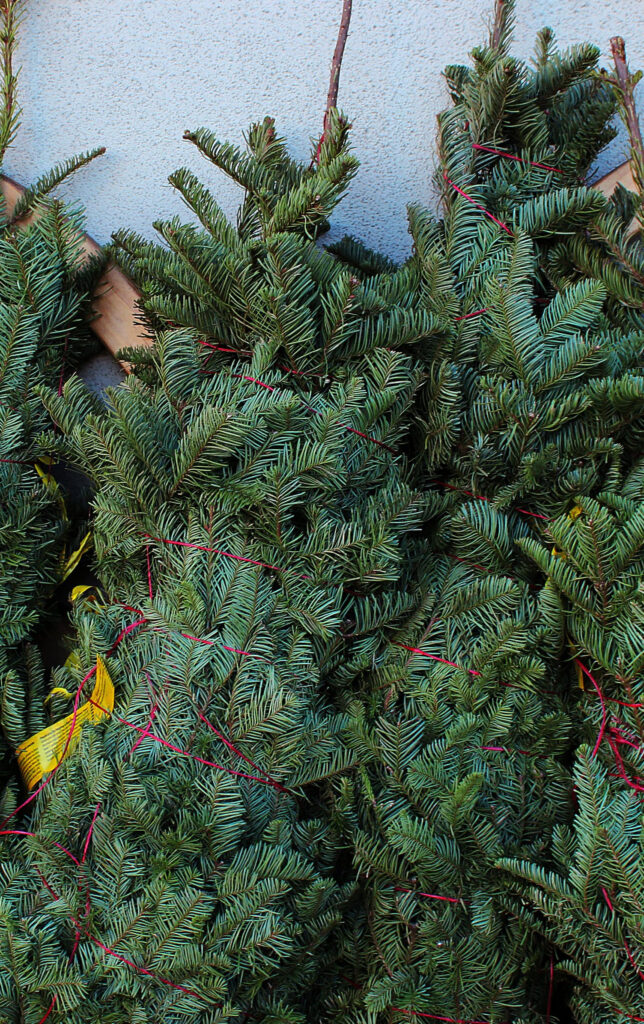
Another often-skipped step is shaking or gently brushing the tree before it comes into the house. Even if the farm shakes it mechanically, wind and transportation can loosen needles. Giving the tree a shake outdoors removes loose needles and debris that would otherwise fall onto the floor later. It also helps open up the branches so the tree can take water more efficiently once inside.
Checking the tree for any broken branches, splits in the trunk, or damaged limbs is also important. A damaged trunk may not absorb water even. And – broken branches tend to shed needles quickly. Addressing these issues before putting the tree in the stand can save a lot of frustration later.
Finally, many people forget to secure the tree properly in the stand. A crooked or unstable tree not only becomes a safety risk, but it can also make watering harder. When the tree leans, the base may not sit evenly in the water, and parts of the trunk will dry out faster. Making sure the tree is centered, level, and tight in the stand makes daily care much easier.
Mistake #2: Not Adding Water Immediately To Your Live Christmas Tree
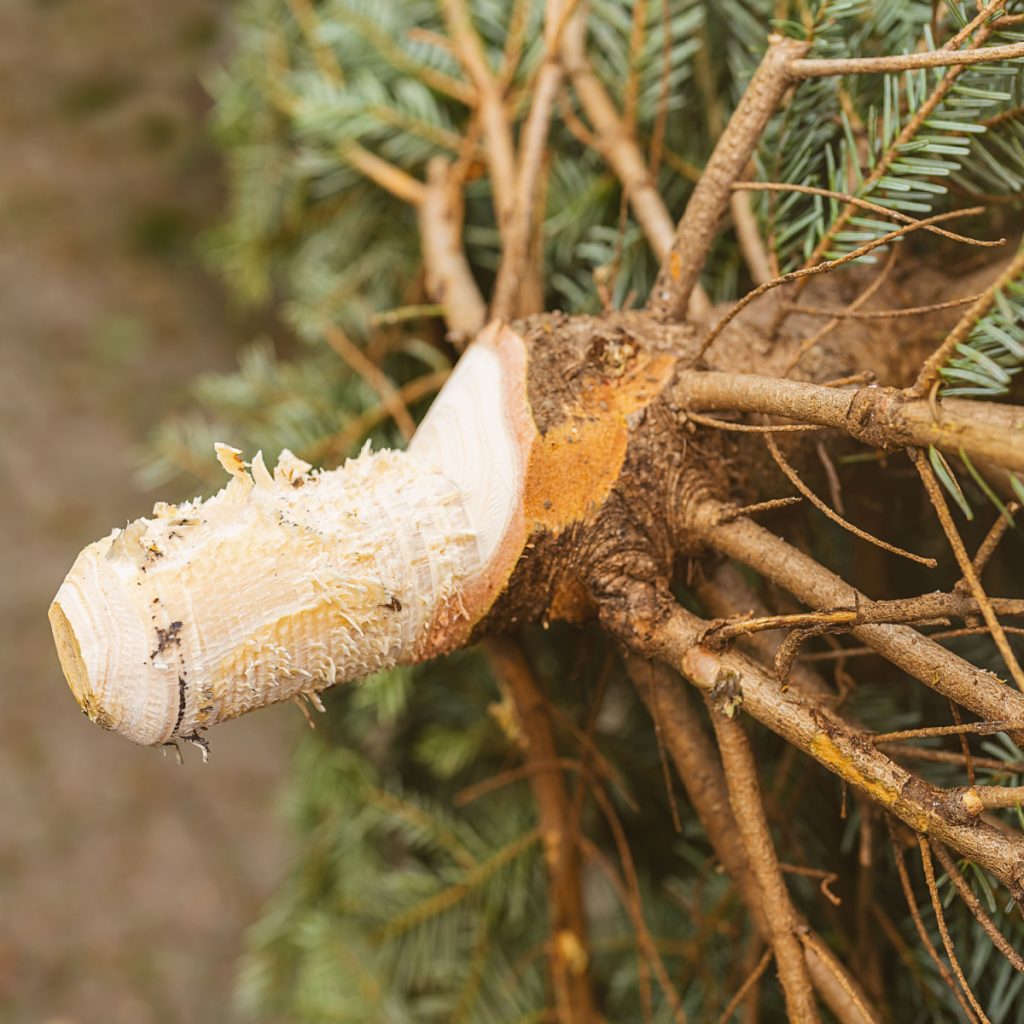
This is by far the most harmful mistake people make with a live Christmas tree. When a tree is cut, sap begins to seal over the bottom of the trunk. This natural sealing process can happen surprisingly fast. Sometimes in only a few hours.
Once the sap seals over the cut surface, water can no longer absorb up through the trunk. The tree then begins to dry out from the inside, no matter how much water is poured into the stand later.
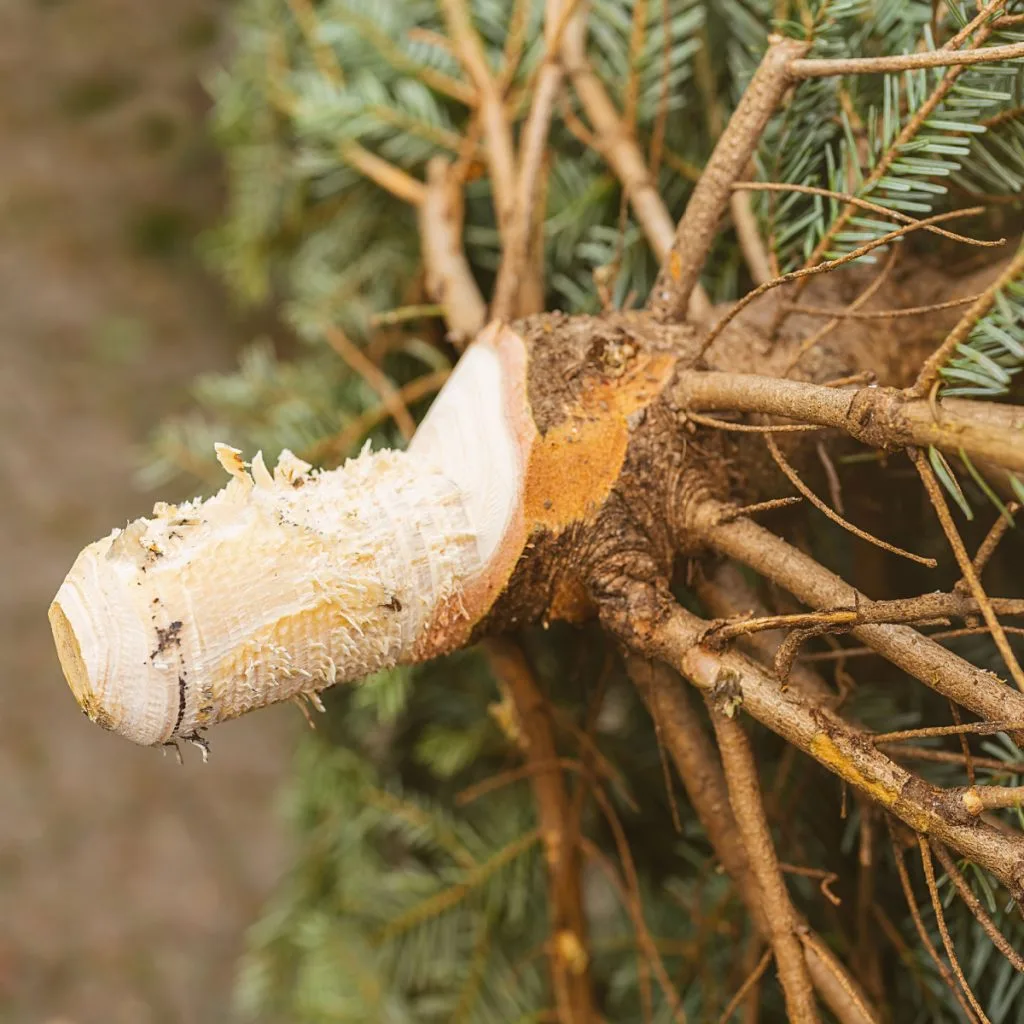
Many people bring their tree home, set it in the stand, straighten it up, decorate it, and then wait until later in the day to add water. By that time, the base of the trunk can already seal over.
Even worse, some people bring the tree home and leave it in the garage for a day or two without putting it in water. This almost always results in a tree that struggles to absorb moisture once it finally gets indoors.
Making A Fresh Cut
The best way to prevent this is simple: make a fresh cut on the bottom of the trunk and place the tree in water immediately. Even if the tree was freshly cut at the tree farm, cutting off just a quarter-inch slice from the bottom allows water to begin flowing up the trunk again.
It is one of the most important steps you can take because once that sap seals, there is no way to reverse the process. Once the tree is in the stand, it’s vital to keep the water level above the base of the trunk at all times. If the stand runs dry even once, the exposed cut can seal itself up again. A dry stand for even a short time can also cause the tree to begin dropping needles.
Most trees will drink a surprising amount of water in the first day or two as they adjust to the warmth of the home. Checking the water several times a day during the first 48 hours is one of the best habits you can develop. After that initial period, most trees settle into a more predictable routine and drink water more slowly.
Consistent watering will keep the branches soft, the needles flexible, and the tree safer!


Mistake #3: Placing A Tree Near Heat Sources, Vents, Or Drafts
And the 3rd biggest mistake with live Christmas trees? Not placing them in the right location inside the home!
Even with perfect watering, a fresh tree can dry out quickly if it is around constantly warm air. Unfortunately, the most common places people choose for their trees are often the worst spots for keeping them fresh.
Heat sources like fireplaces, radiators, wood stoves, baseboard heaters, and portable space heaters can cause the branches and needles to dry out far faster than normal. A tree that might have lasted three or four weeks in a cool part of the home may only last a week or two when placed next to a heat source.
The warm air pulls moisture out of the needles. Then, the branches become brittle, and the tree becomes far more likely to shed its needles on the floor.
Heating vents and furnace ducts are just as damaging. Many people place their trees in the corner of the living room. They do so without realizing that a vent above or beside the tree is blowing warm, dry air onto it. This constant airflow speeds up drying. It often results in the top or one side of the tree turning brown and losing its needles.
Drafty areas can also be a problem. Cold drafts may not dry the tree out as fast as warm air, but they cause wide temperature swings. Swings that can stress the needles. A tree near a door that opens frequently, especially to the outdoors, will show signs of wear more quickly.
Choosing The Best Location
The best location for a live Christmas tree is a cool, protected area of the home. One that is away from heat, vents, and direct sunlight. A room that stays consistently cool will help the tree use water more slowly and keep its freshness longer.
Taking a few extra minutes for these simple preparation steps can make a big difference in how long your tree stays green and vibrant. And let you enjoy the season even more! For more on trees, check out our article: The 5 Best Pine Trees For A Christmas Tree – Whether Picking A Live Or Cut Tree!
This Is My Garden
Follow Our Facebook Page For Great Gardening Tips And Advice! This Is My Garden Facebook Page
This Is My Garden is a garden website created by gardeners, for gardeners. Jim and Mary Competti have been writing gardening, DIY and recipe articles and books and speaking for over 15 years from their 46 acre Ohio farm. They publish three articles every week, 52 weeks a year. Sign up today to follow via email, or follow along!