
One of the biggest questions for gardeners is how long to leave their ornamental grasses up after they brown off in the fall. And although you can technically take them down at any point after that – today we are going to cover 3 great reasons for leaving them up all through the winter!
Ornamental grasses are built to handle winter. Their tall stems, seed heads, and arching blades stand strong through cold winds, frost, snow, and ice. And when those grasses stay in place, they do far more than provide a little structure. They add beauty, help wildlife, and protect the crowns of the plants from harsh weather.
Why To Leave Ornamental Grasses Up Through Winter
Ornamental grasses come from regions with wide temperature swings. Many native grasses grow in open areas where wind, snow, sun, and weather shift every day. Their tall growth helps shield their deep crowns from damage.

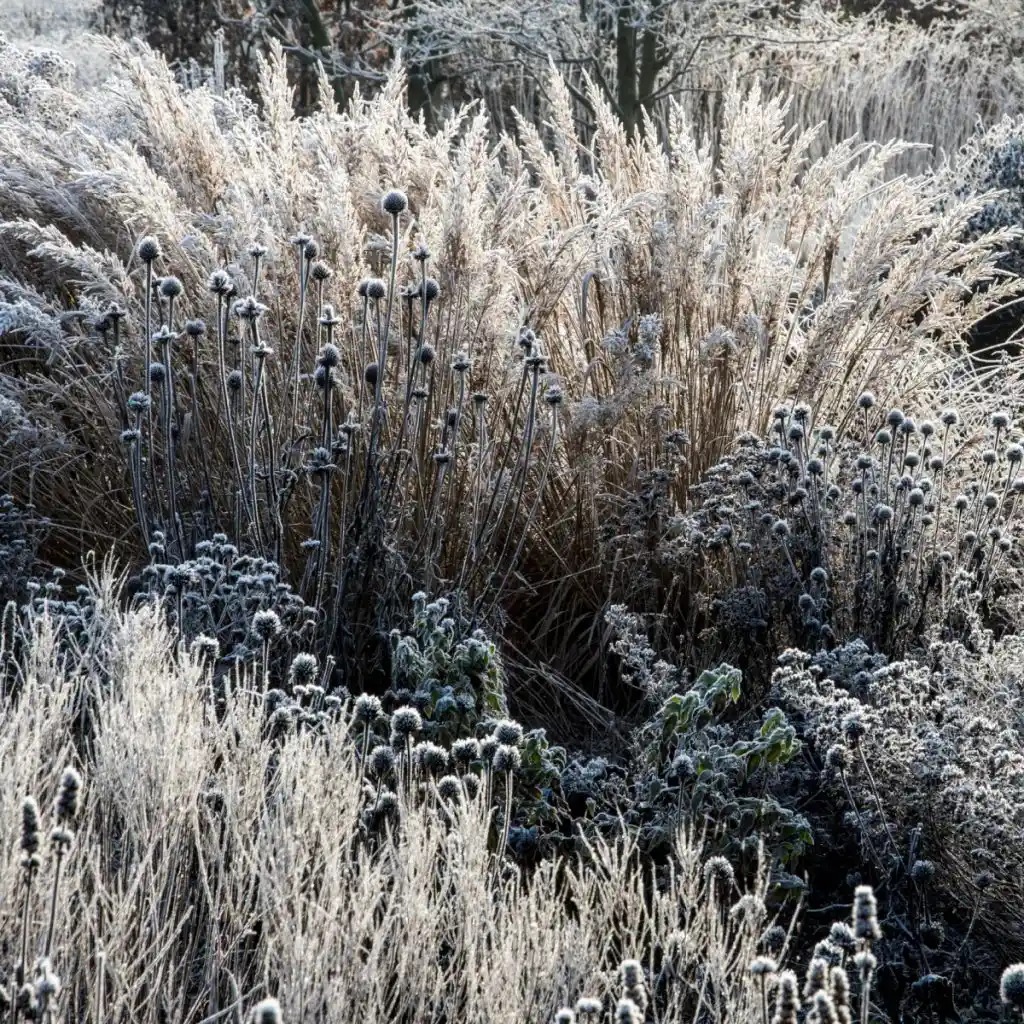
Their blades also bend with ice and wind, rather than snapping. Because of this, your ornamental grasses want to stay up over winter. Cutting them early works against their natural rhythm. Leaving them up works with it.
There are many reasons to leave ornamental grasses in place all winter. But three reasons stand out above all others. They improve the look of your landscape. They support local wildlife. And most importantly, they protect the plant for better spring growth. Each reason brings a different benefit, and all three come together to make a stronger, healthier garden.
Reason #1: Ornamental Grasses Add Beauty & Interest All Winter
A winter landscape can feel empty when perennials die back. Beds flatten. Color fades. And the garden seems still. But ornamental grasses change all of that. They bring life and movement when everything else sleeps. Their seed heads catch frost. Their tall blades sway in the lightest breeze. Even on a gray day, grasses glow when the sun hits their dry stems.
Winter landscapes need height. They need something to draw the eye. Most plants lose that height once the cold arrives. But grasses keep their tall presence until spring.
A stand of miscanthus or switchgrass can rise six to eight feet in winter. Fountain grasses still hold their arching form, even when dry. Little bluestem turns a copper-orange tone that brightens even the darkest December morning.


Snow also transforms grasses. Snow clings to the blades. It rounds the seed heads. It piles on the tops and bends the stems into soft curves. When a snowy day arrives, ornamental grasses can become the most striking feature in your entire yard.
More Beauty In The Landscape
Leaving the grasses up can also help tie your landscape together. Without structure, open spaces feel bare and unfinished. Grasses create natural divisions between beds. They soften fences and walls. They give form to long walkways and corners. And when everything else is flat, those tall shapes become essential.
If you have evergreen trees nearby, grasses look even better. The dry tan stems stand out against the deep green color. The mix feels natural and warm. It is a simple pairing that brings life to large areas. And it stays attractive from November through early March. All without any work from you!
Ornamental grasses also hold their color longer than most gardeners realize. Many varieties stay gold or bronze well into winter. Some turn silver as frost coats them again and again. Others darken to a warm brown that pairs well with winter berries, pine cones, and evergreens.


Reason #2: Ornamental Grasses Support Wildlife In Winter
Winter is hard on wildlife. Food becomes scarce. Shelter is limited. And protection from predators becomes more important. Ornamental grasses help solve many of these problems by offering food and cover during the coldest months.
The seed heads on many grasses provide a natural food source for birds. Sparrows, finches, chickadees, and juncos all feed on grass seeds through winter. When snow covers most food sources, these seed heads become extremely valuable. Leaving them up can help support local birds when they need it most.
Grasses also create shelter. Their tall stems and tight clusters form small pockets of protection. Birds tuck inside to escape wind and snow. Rabbits may hide in the bases of larger clumps. Beneficial insects use the stems as winter homes. Many pollinators overwinter in hollow or pithy stems. If you leave your ornamental grasses up all winter – you help provide all of the above with shelter!
Winter birds rely on cover not just for warmth, but also for survival. Hawks and owls hunt more actively in winter. Without shelter, small birds become easy targets. A stand of ornamental grasses provides quick cover from above. Birds can dive into the thick blades and escape danger. It’s a simple but powerful support for your backyard wildlife.
Grasses Help Insects Too
Leaving your ornamental grasses up through the winter also helps protect soil-dwelling insects. Their dry leaves fall around the plant base and create a natural layer of insulation. This protects bees, beetles, and other beneficial insects that overwinter underground. More insects in spring means more pollination and a healthier garden.
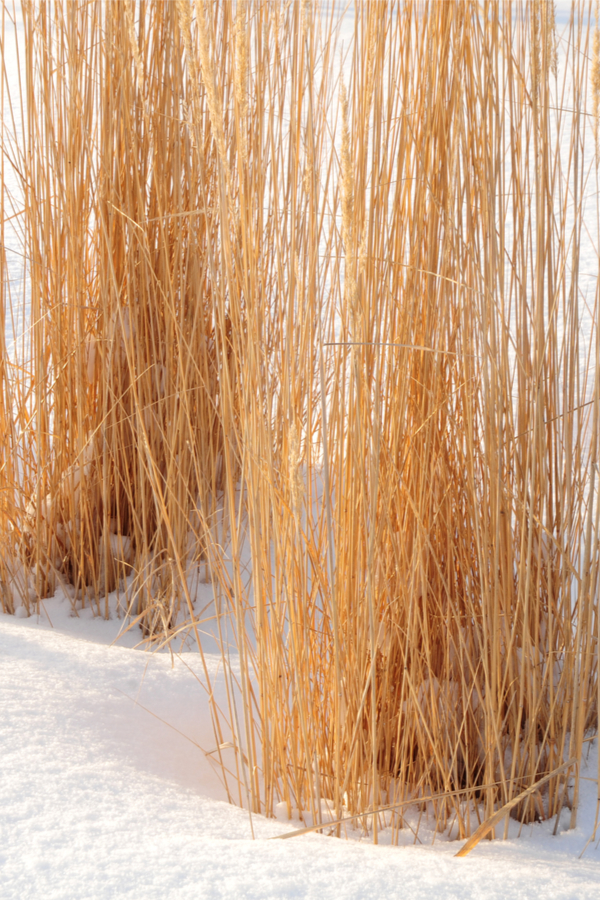
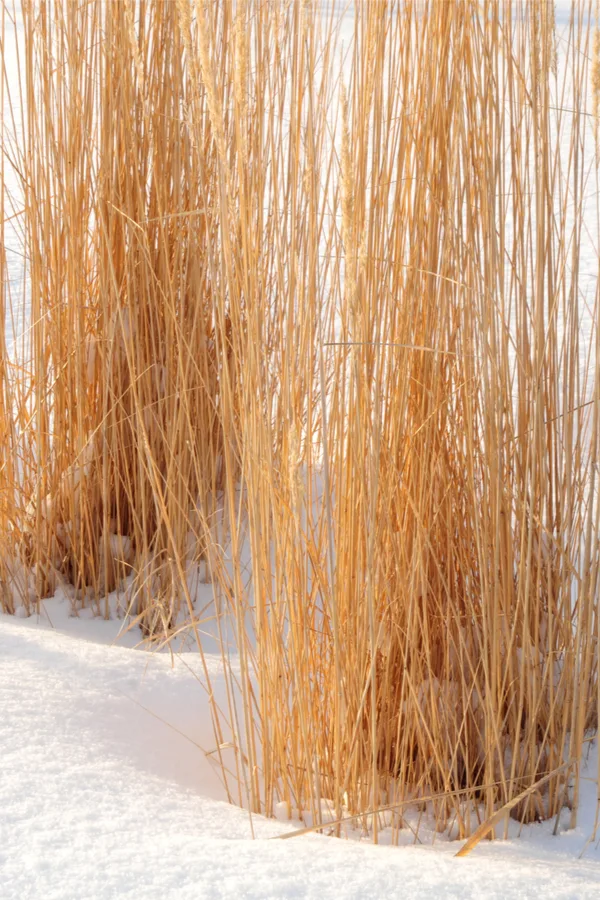
By leaving your ornamental grasses up through winter, you create a simple but powerful habitat. You help birds find food. You protect overwintering insects. And you give wildlife safe places to hide. All of this supports a stronger backyard ecosystem that will help your garden thrive in spring.
Reason #3: Protecting Your Grasses
The final and most important reason to leave ornamental grasses up all winter is plant protection. The tall stems act like a natural shield. They cover the plant’s crown, which is the heart of the grass. This crown sits at soil level. If it freezes too deeply or stays exposed to harsh wind, the plant can be damaged.
The dry foliage on top of the plant also traps snow. Snow is one of the best insulators a plant can have. Snow keeps the temperature around the crown steady. It prevents rapid freeze-thaw cycles that harm root systems. It also stops cold winds from drying out the plant.
Ornamental grasses evolved to stay standing all winter. Their old growth works like a natural winter coat. The blades bend and sway, but they stay attached long enough to protect the plant. When you cut grasses back before winter, you remove that coat. And when you remove that protection, the plant is exposed to harsh conditions it wasn’t designed to face without cover.

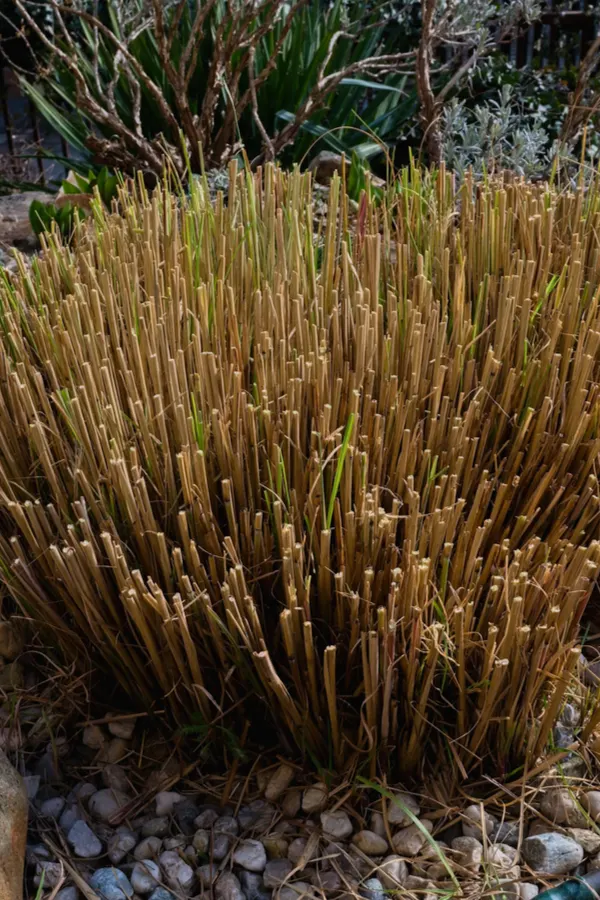
Winter protection is even more important for young grasses. New plants have shallow root systems. They can freeze more easily. Their crowns have less bulk. Leaving them up for their first winter helps them survive and establish stronger roots for the next season.
Leave Ornamental Grasses Up To Help Protect Against Thawing & Freezing
Leaving grasses up also helps protect roots from heaving. In winter, soil freezes and thaws repeatedly. This movement can push shallow roots upward. But when the grass remains tall, the plant stays more stable. The dry blades create a layer that slows soil shifts. This reduces the risk of winter injury.
When spring arrives, the old foliage can be cut back easily. By then, the crown has survived winter. The new shoots will be ready to grow. Here’s to working less – and leaving your ornamental grasses up until early spring!
For more on spring division, check out our article: How To Divide Ornamental Grasses In Early Spring – Create New Plants For Free!
This Is My Garden
Follow Our Facebook Page For Great Gardening Tips And Advice! This Is My Garden Facebook Page
This Is My Garden is a garden website created by gardeners, for gardeners. Jim and Mary Competti have been writing gardening, DIY and recipe articles and books and speaking for over 15 years from their 46 acre Ohio farm. They publish three articles every week, 52 weeks a year. Sign up today to follow via email, or follow along!