
Did you know that Mistletoe has a secret life? And it’s certainly not in the holiday spirit of giving – but instead, in the spirit of stealing and taking!
Mistletoe is one of the most familiar symbols of the holiday season. Each winter, as homes are decorated for Christmas, sprigs of mistletoe appear over doorways, in entry halls, and near fireplaces.
For many people, mistletoe is tied to one simple tradition. If two people meet beneath it, a kiss is expected. While the custom is lighthearted and fun, the plant behind the tradition has a much deeper and more surprising story.
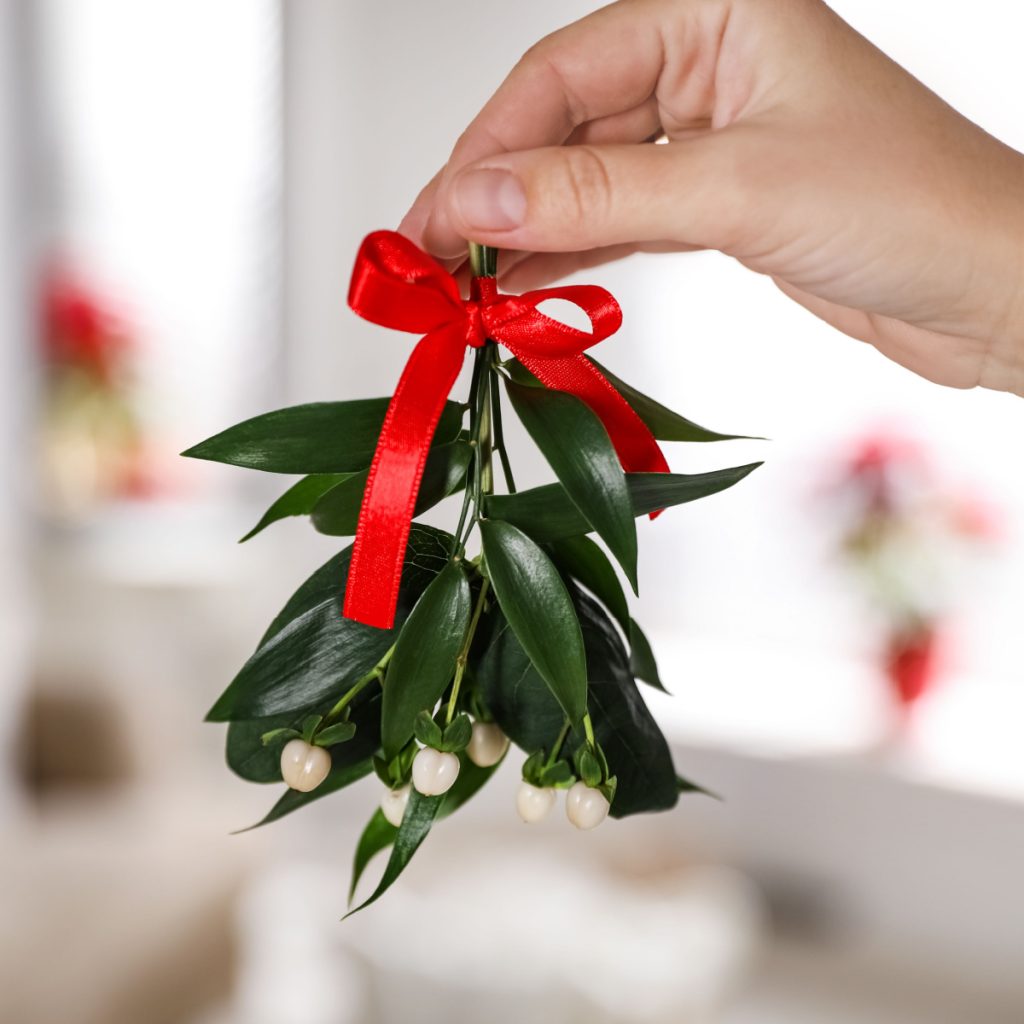

At first glance, mistletoe appears to be a simple evergreen plant with thick green leaves and small white or red berries. But beneath that familiar look is a plant with a unique way of surviving in nature. Mistletoe does not grow in soil like most plants. Instead, it lives high in the branches of trees, where it relies and feeds on other plants to survive.
The Secret Life Of Mistletoe
Mistletoe – The Semi-Parasitic Plant
Despite its festive reputation, mistletoe has a far more complicated role in nature. Mistletoe is considered a semi-parasitic plant. This means it depends on other plants for survival but still produces some of its own food through photosynthesis.
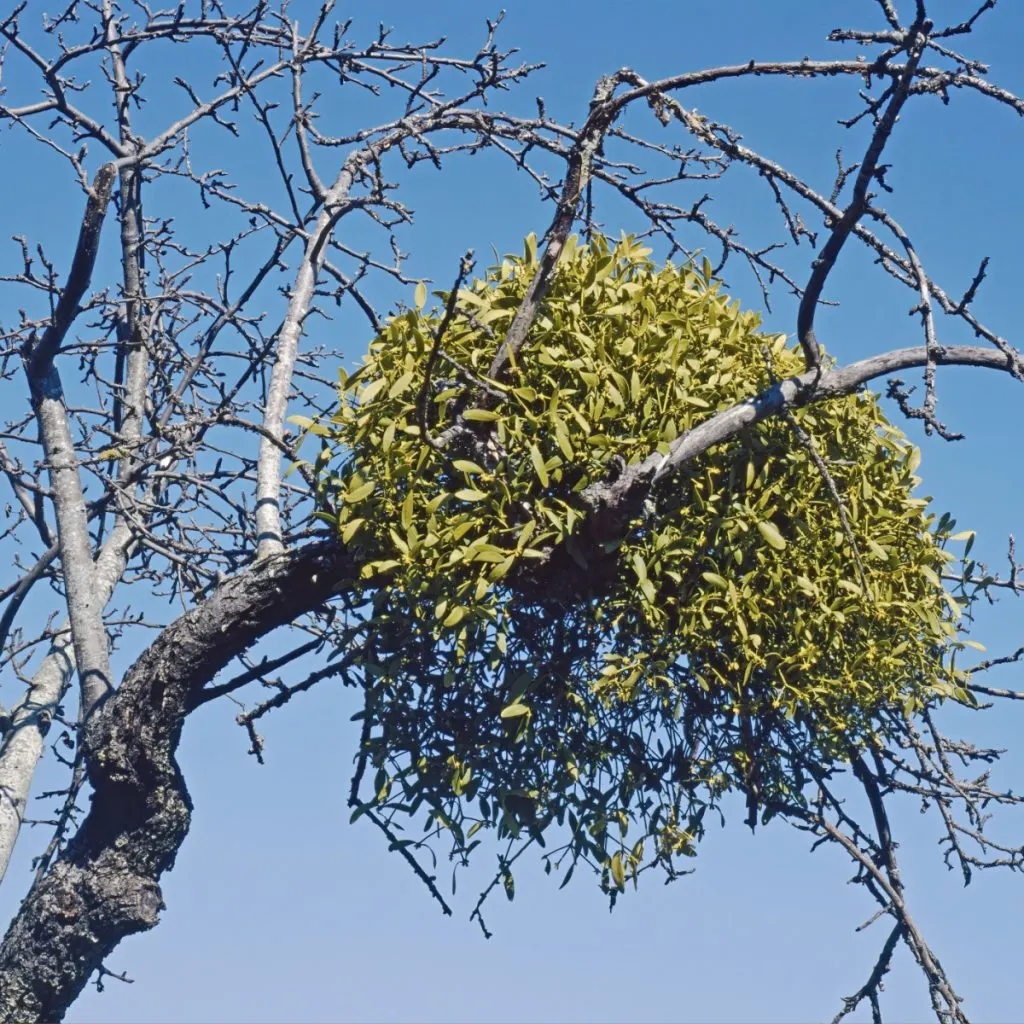
Rather than growing roots in the ground, mistletoe attaches itself to the branches of trees. Once attached, it sends specialized growths into the bark of the tree. These growths allow the mistletoe to pull water and nutrients directly from the host plant. In this way, mistletoe behaves much like a parasite, taking what it needs to survive from another living organism.
However, because mistletoe also has green leaves and can photosynthesize, it is not fully dependent on the host tree. This combination of independence and dependence is what makes mistletoe a semi-parasite rather than a true parasite.


How Mistletoe Spreads in Nature
Mistletoe owes much of its spread to birds. The berries produced by mistletoe are a valuable food source during winter, when other foods are scarce. Birds eat the berries and later deposit the seeds on tree branches.
The seeds are sticky and cling easily to bark. When conditions are right, the seed begins to germinate right on the branch. As it grows, the young mistletoe plant sends shoots into the tree’s tissues, forming a lasting connection. Over time, the plant becomes firmly established and can live for many years in the same spot.
Because birds often perch in the upper branches of trees, mistletoe is usually found high above the ground. This makes it easy to overlook until winter arrives and the host tree loses its leaves.
The Secret Life Of Mistletoe – Trees Commonly Affected by Mistletoe
Mistletoe can grow on a wide range of trees. It is most commonly found on deciduous trees such as oak, maple, hickory, and pecan. It can also grow on pine trees and other species, showing just how adaptable it is.


In many cases, a small amount of mistletoe causes little harm to a healthy tree. Problems tend to arise when mistletoe becomes widespread or when the host tree is already stressed. Trees suffering from drought, disease, or poor growing conditions may struggle more when mistletoe is present.
When mistletoe becomes heavy in a tree canopy, it can reduce the tree’s vigor over time. This is why mistletoe is sometimes considered a problem plant by foresters and land managers.
It survives without soil, spreads with the help of birds, and forms lasting connections with trees high above the ground.
Mistletoe rarely kills a healthy tree on its own. In most cases, it simply coexists with its host, drawing what it needs while continuing to support wildlife. Its reputation as a harmful plant is often exaggerated, especially when it grows in moderation.
The Role of Mistletoe in Wildlife
Although mistletoe takes nutrients from its host trees, it also plays an important role in supporting wildlife. The berries are an essential winter food source for many bird species. At a time when insects and seeds are hard to find, mistletoe berries help birds survive.
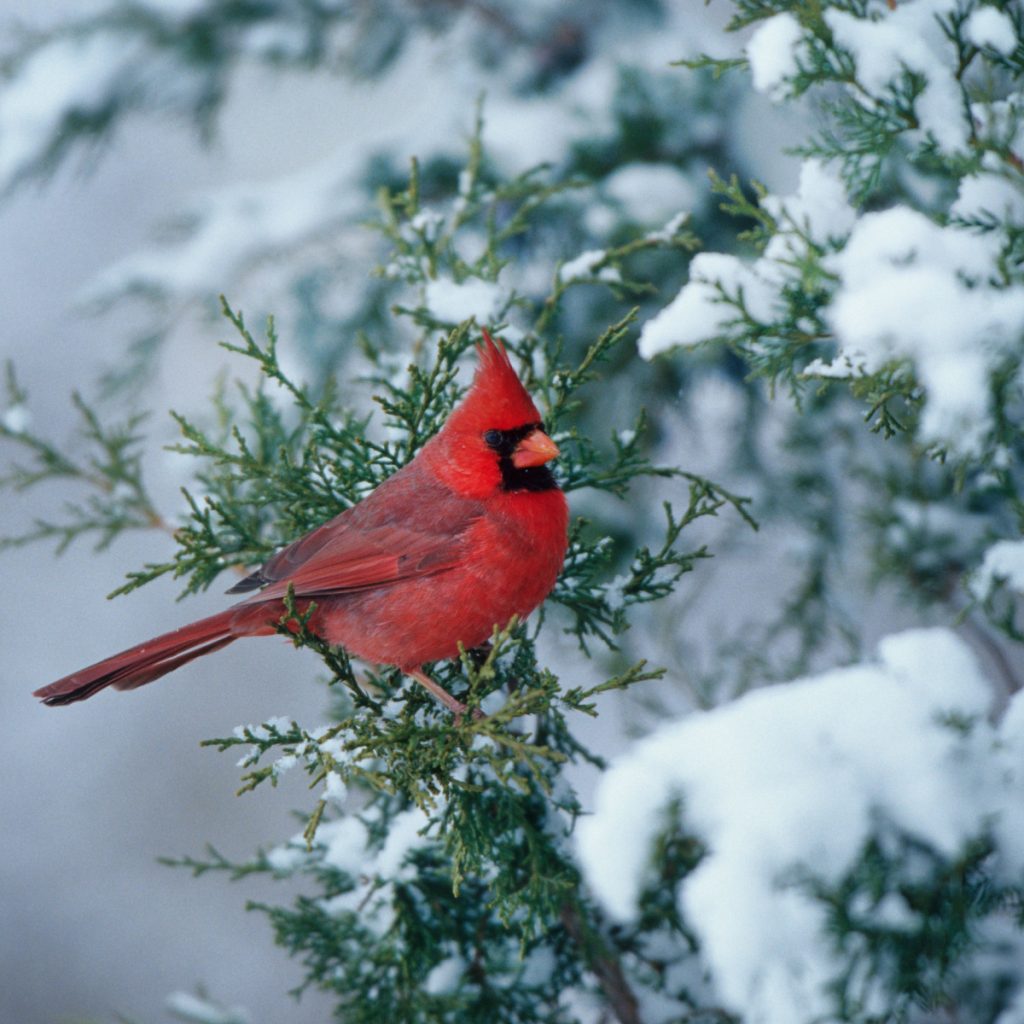
Birds, in turn, help mistletoe continue its life cycle by spreading seeds to new trees. This relationship benefits both the plant and the wildlife that depend on it. In this way, mistletoe becomes part of a larger ecosystem rather than simply a harmful parasite.
This balance is one of the reasons mistletoe has survived for so long in forests around the world. Even though it takes resources from trees, it gives back by supporting animals during the harshest part of the year.
Why Mistletoe Stands Out in Winter
One reason mistletoe became so closely tied to winter celebrations is its appearance. Mistletoe remains green throughout the winter, even after its host tree has lost all of its leaves. Against bare branches and gray skies, the plant is easy to spot.
Early observers likely saw mistletoe as something special. At a time when most of the landscape looked lifeless, mistletoe appeared vibrant and alive. This made it a natural symbol of endurance, fertility, and hope.
These visual qualities helped elevate mistletoe from a simple plant to a meaningful symbol in many cultures. Over time, its presence in winter celebrations became tradition rather than necessity.

Holiday Traditions Linked to Mistletoe
The tradition of kissing under mistletoe dates back centuries. In some old customs, every kiss under the mistletoe required the removal of one berry. Once all of the berries were gone, the kissing was supposed to stop. These traditions helped turn mistletoe into a symbol of romance, goodwill, and celebration during the winter months.
Because mistletoe stays green when most plants have lost their leaves, it became a symbol of life during the darkest time of the year. Early cultures saw it as a sign of hope and renewal. Over time, these beliefs blended into modern Christmas traditions.
Today, mistletoe remains a cheerful reminder of the season, even though most people give little thought to how the plant actually grows or survives. It is actually a very parasitic plant!
From its secret life as a semi-parasitic plant to its importance for birds and its place in holiday traditions, mistletoe is far more than it first appears. It is a reminder that even the smallest and most familiar plants can have stories worth telling, especially during the quiet months of winter.
Looking for more articles on holiday plants? Check out our article: How To Get Your Christmas Cactus To Bloom Again!
This Is My Garden
Follow Our Facebook Page For Great Gardening Tips And Advice! This Is My Garden Facebook Page
This Is My Garden is a garden website created by gardeners, for gardeners. Jim and Mary Competti have been writing gardening, DIY and recipe articles and books and speaking for over 15 years from their 46 acre Ohio farm. They publish three articles every week, 52 weeks a year. Sign up today to follow via email, or follow along!