
Looking for a few simple, easy, and all-natural methods to get rid of aphids on your houseplants?
Aphids may be tiny, but they can cause huge problems when they show up inside. The soft-bodied insects are some of the most common indoor plant pests of all, and once they find a plant they like, they can multiply faster than most people realize. In just a short time, they can take over the stems and leaves of your favorite plants, sucking the life right out of them.
Aphids usually find houseplants in a few different ways. Sometimes they hitchhike indoors on plants brought in from outside. Other times, they attach themselves to clothing, cut flowers, outdoor tools, or even new plants from stores or greenhouses.

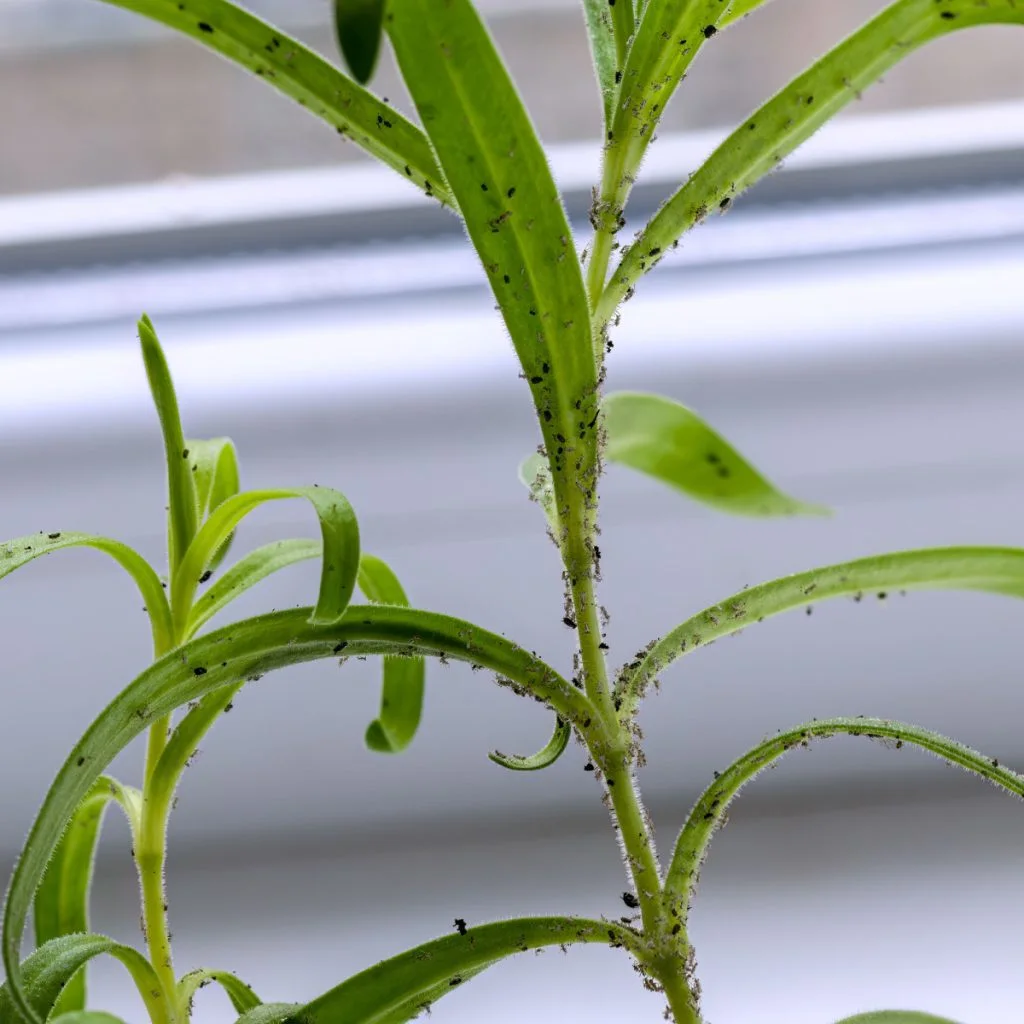
Once inside, they discover a very comfortable environment where temperatures are steady and there are no natural outdoor predators to keep their population in check. And that combination allows them to establish themselves quickly!
How Aphids Feed
When aphids begin feeding on a plant, they use their small, needle-like mouths to pierce plant tissue and suck out the sap.
This weakens the plant and robs it of energy needed to grow and stay healthy. Leaves begin to curl, yellow, and wilt. New growth becomes deformed. Flowers fail to bloom, and entire plants can eventually die if the infestation becomes severe enough.
Another serious issue comes from the sticky residue aphids leave behind. As they feed, they produce a sugary substance known as “honeydew.” This sticky coating covers leaves. Not only is it messy, but it also encourages mold growth. And before long, a small aphid problem becomes a messy, frustrating issue that can take out your plants.
The good news is that aphids are actually one of the easiest pests to control when you use the right methods. You do not need harsh chemicals, expensive sprays, or complicated treatments. In fact, there are two simple solutions that stand out as incredibly effective at getting rid of aphids quickly, safely, and for good: a basic water and soap spray, and neem oil. Here is a look at how to use both!

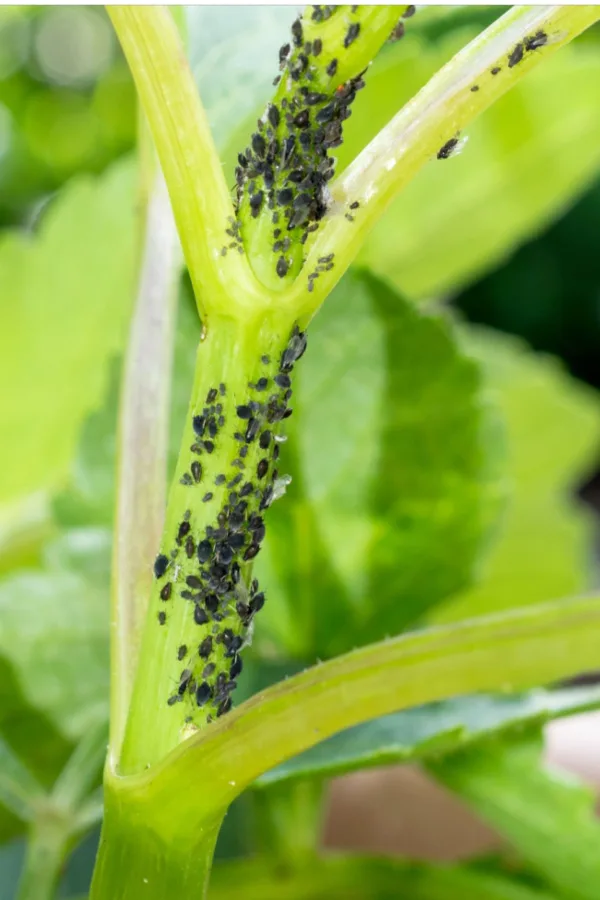
How To Get Rid Of Aphids On Houseplants
Using A Simple Soap And Water Spray To Get Rid Of Aphids On Houseplants
One of the easiest, cheapest, and most reliable ways to eliminate aphids on houseplants is with a simple mixture of soap and water. It works incredibly well, uses ingredients most people already have at home, and is very gentle for indoor use.
Aphids have soft, delicate bodies that are protected by a thin waxy coating. This coating helps them hold in moisture and survive. When mixed with water, mild liquid soap breaks down that protective coating. Once the coating is gone, aphids quickly dehydrate.
In simple terms, the soap causes the aphids to dry out and die without harming the plant when applied correctly. It also disturbs the aphids’ ability to breathe. Soap clings to their bodies and blocks their breathing pores, causing them to suffocate. Because of this double effect, soap sprays are incredibly powerful pest control tools even though they are so basic and simple.
How To Make A Soap Spray For Aphids
Making soap spray is quick and extremely simple. Start by filling a spray bottle with warm water. Add a few drops of mild liquid dish soap and mix gently. You do not need to create thick, bubbly foam. The idea is to have just enough soap in the water to coat the aphids.
A good rule of thumb is to use around one teaspoon of soap per quart of water. Avoid using heavy de-greasing soaps, antibacterial soaps, or soaps with strong perfumes. A gentle, basic liquid dish soap works best. Affiliate Link: Dawn Free & Clear EZ-Squeeze Dish Soap Liquid


How To Apply Soap Spray On Houseplants To Get Rid Of Aphids
When spraying, focus especially on areas where aphids usually gather: the undersides of leaves, new growth tips, flower buds, and stem joints. Aphids love tender growth, so take your time to carefully inspect these spots.
Coat the insects directly. They must come in contact with the soap solution for it to work. The spray does not work as a long-term residue but rather as a direct contact treatment.
Let the soap sit on the plant for about 20 to 30 minutes so it can do its job. After that, gently rinse the plant with clean, lukewarm water. This helps remove dead insects, honeydew residue, and any leftover soap that could irritate the plant if left on too long.
Repeat the process every two to three days until no more aphids are present. Most infestations clear up after only a few treatments, especially if caught early. But if you have a serious aphid issue – neem oil is the way to go!
Using Neem Oil Spray: A Natural And Powerful Solution
Another incredibly effective and completely natural way to get rid of aphids on houseplants is by using neem oil. Neem oil comes from the seeds of the neem tree and has been used for hundreds of years for pest control. It’s safe to use indoors, and non-toxic when used correctly. It is also very powerful against aphids.
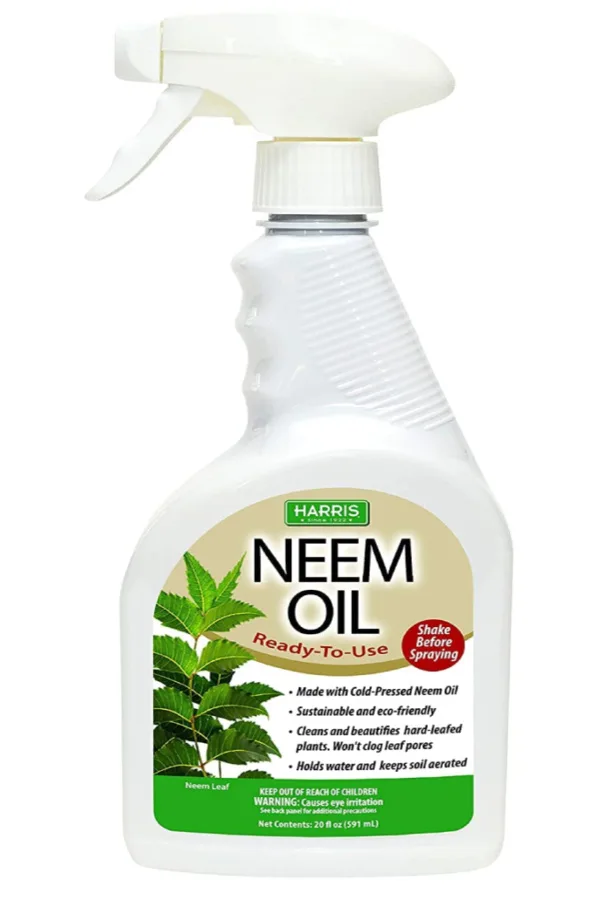
Neem oil does far more than simply kill aphids on contact. It works in several different ways, which makes it one of the best long-term solutions for indoor plant pest problems. Affiliate Link: HARRIS Neem Oil Spray for Indoor and Outdoor Plants, Cold Pressed Ready to Use

First, neem oil coats the body of the aphid. Much like soap spray, it suffocates them and blocks their ability to breathe. But neem oil goes beyond that. It also interferes with aphids’ natural life cycle. It affects their hormones and disrupts their ability to reproduce.
Since aphids multiply rapidly, stopping their reproduction cycle is extremely important. Neem oil prevents new generations from forming, which means the infestation ends rather than continuing. Neem oil also has a natural repellent effect. After treatment, aphids and many other pests are far less likely to return to the plant.
How To Use Neem Oil On Houseplants
You can purchase neem oil in ready-to-use spray bottles, or as a concentrated oil that you mix yourself with water according to label directions. Both work well. If you use a concentrate, always follow the instructions carefully to avoid using too strong of a mixture.
Spray all surfaces of the plant thoroughly, including the tops and bottoms of leaves, stems, and new growth. Neem oil must coat the aphids to be effective, so do not rush the process. Apply the spray until leaves are lightly wet but not dripping heavily.
Unlike soap spray, neem oil does not need to be rinsed off. Instead, it remains on the plant and continues working for days. It is best to keep the plant out of direct bright sunlight while neem is fresh on the leaves, as strong light may cause leaf burn on some plants.
Repeat neem oil treatments every 7 to 10 days until aphids are gone. Because neem oil disrupts the full life cycle of the insect, it works especially well for persistent infestations. Neem oil has many uses for pests. It can be used outdoors on plants and even your lawn to help get rid of grubs – and ground moles! See: How To Eliminate Ground Moles.
One thing is for sure, keeping aphids under control does not need to be stressful, complicated, or expensive. With a simple soap and water spray or a natural neem oil treatment, you can get rid of aphids, protect your houseplants, and stop the tiny pests from taking over your home and plants!
This Is My Garden
Follow Our Facebook Page For Great Gardening Tips And Advice! This Is My Garden Facebook Page
This Is My Garden is a garden website created by gardeners, for gardeners. Jim and Mary Competti have been writing gardening, DIY and recipe articles and books and speaking for over 15 years from their 46 acre Ohio farm. They publish three articles every week, 52 weeks a year. Sign up today to follow via email, or follow along!