
If you want to grow bigger, better and more flavorful onions in your garden next year, one of the best things you can do is plant your onions in the ground this fall!
While onions can certainly be planted in early spring, planting them in late summer or early fall can give them a huge head start. Fall-planted onions have extra time to establish strong roots before winter arrives. Then, as soon as the weather warms in spring, they are ready to take off with fast, healthy growth – and eventually produce bigger, more impressive bulbs.
Even better, fall planting helps onions avoid one of their biggest growing challenges – excessive heat. Onions thrive in the cooler temperatures of fall and early spring, but they can struggle when hot summer weather arrives. Spring-planted onions often have a much shorter window to establish and grow before that heat sets in.
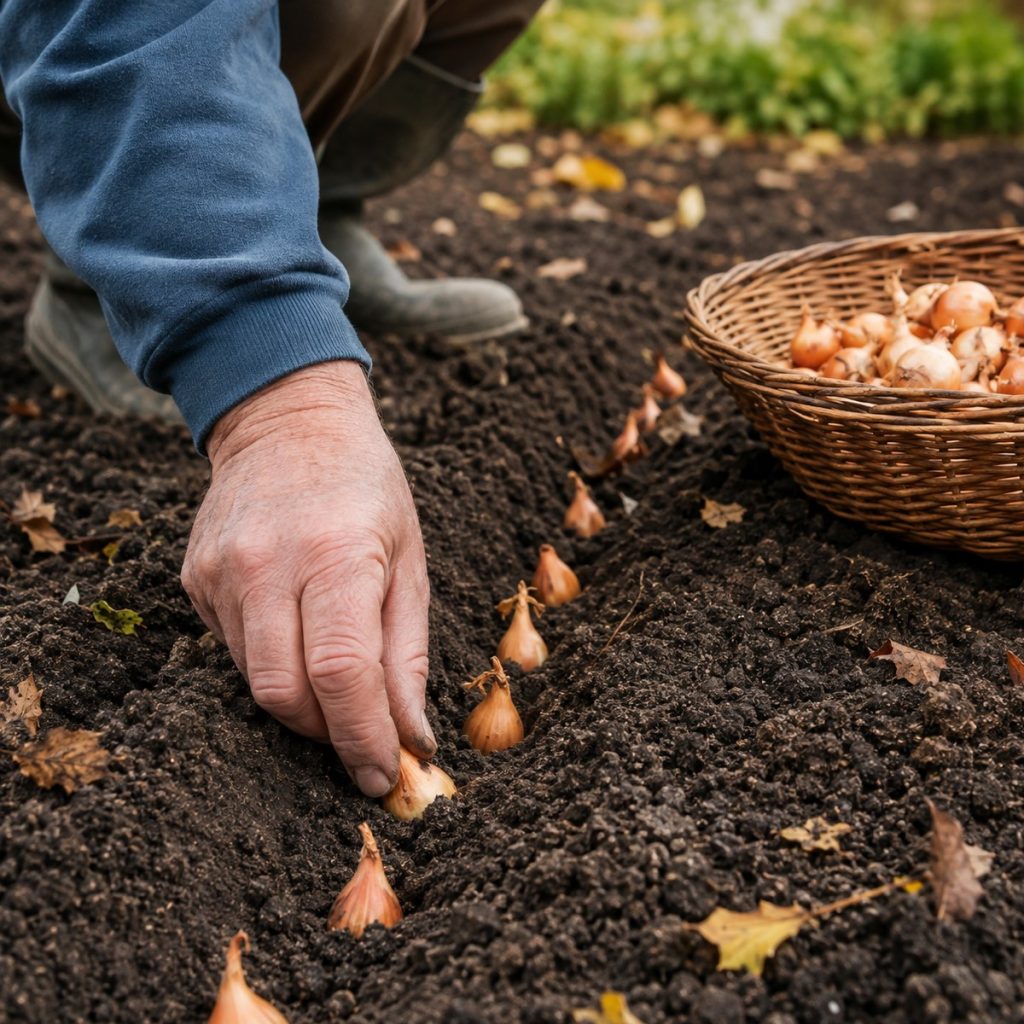
By planting in the fall, your onions can develop a strong root system while temperatures are cool and comfortable. After resting through winter, they can spring back to life early the following year with a major advantage. And that head start can make all the difference when it comes to harvesting larger, healthier and more flavorful onions!
Why To Plant Onions In The Fall
How To Plant Onions In The Fall
When planting fall onions, the timing of planting all depends on where you live. Onions can usually be planted around the same time you plant fall garlic. Both crops need around 4 to 6 weeks to set and grow before a hard freeze or heavy frosts set in.
As an example, if you live in an area where November starts to see the true cold winter temperatures arrive, you will want to plant mid-September. This allows enough time for the crop to settle in. If you are unsure of your average freeze and frost dates, your local extension office is a great place to ask for local planting information.
When planting in the spring, onions can be planted by seed or with bulbs (onion sets). For fall planting, it is best to always use sets. Why? Because onion seeds simply take too long to become established for a fall planting.
If you do opt to try the seed route, you will need to plant at least 8 to 10 weeks before your hard freeze date. Unfortunately, by starting that early, it is usually smack in the middle of the heat of summer – which can make sprouting seed difficult. See our article: The Best Way To Plant Onions – How To Choose Between Onion Sets Or Onion Seeds!
The Best Method For Planting Onions In The Fall
When planting fall onion sets, the trench method works best. Not only is it easy, it gives your onions the best chance of success. Sets can be hard to find in the fall (we have a few links below), but check with your local garden centers early as well to see if they will be carrying sets.
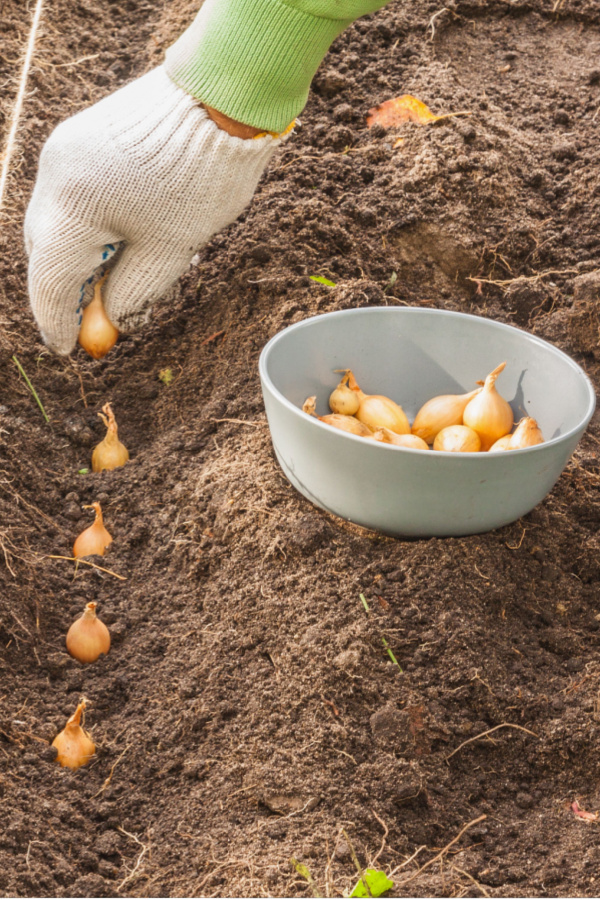
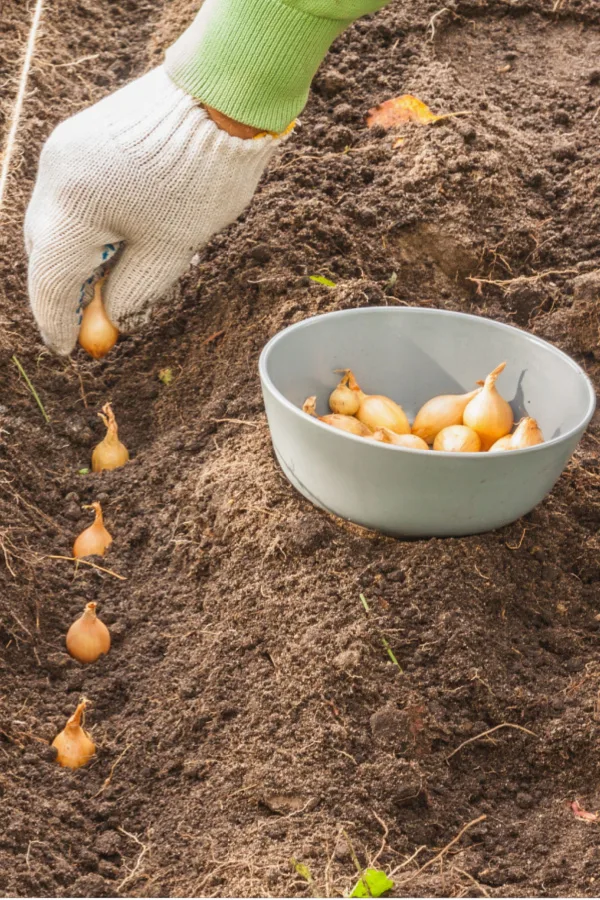
To start, dig a two to three inch deep trench in the soil that is around two inches wide. This will allow plenty of space for loose soil. This helps the onion bulbs to set their roots with ease. Just as with any root crop, the more loose the soil, the better the harvest will be.
Once you have created your trench, fill it up two-thirds full of compost. Compost is a huge key to onion growing success. The rich, fertile compost not only help bulbs germinate quickly, it also provides plenty of gentle and balanced nutrients as they grow and settle in.
Last but not least, when planting onion bulbs, always be sure to plant with the pointed end up. This is where the shoots will develop from, and by planting it up, it helps the bulbs send their shoots to the surface fast.
Planting Into The Compost
As you plant, set each bulb halfway down into the layer of compost. Space the onions approximately four to six inches apart when planting. This allows plenty of room for their roots to grow freely and allows for easier maintenance between the bulbs. Remember that fall onions will grow larger, so giving them more space is important. Affiliate Link: R&M Organics Compost Soil Amendment Fertilizer
Once the bulbs are set into the compost, fill in the trench with the remaining soil. When planted, the bulbs should be covered in full with about 1/2 to 3/4 inch of soil. To complete the planting, water the soil on top to help set the bulbs in place and provide them with a bit of moisture.
Listen In Below To Our Latest Podcast


Mulching Your Crop
Last but not least, one of the most important things you can do to help your crop after it’s in the ground is to mulch the soil over top of them. Immediately after planting, put down a thin layer of straw or shredded leaves.
Mulch has several big advantages for your crop. For starters, it will help to keep competing weeds at bay. More importantly, it helps keep moisture in the soil to help with the germination process. With that said, it’s important to keep the mulch light at first to allow the seeds to germinate.
Once seedlings emerge through the ground, you will need to add additional mulch to provide full protection. Be sure to water at least every few days for the first few weeks until established.
As the cold weather approaches, apply a few more inches of straw or shredded leaves to help insulate the crop for the winter. Through winter, your onions should be mulched to a depth of about 4 to 6 inches. The onions will go dormant after a few hard frosts or a hard freeze – and remain that way until spring when they begin to grow again.
What Happens In The Spring…
Once spring arrives and your onions begin growing again, care is simple. You may need to add a bit of mulch to keep them free of weeds, but other than that, allow the onions to grow to size and harvest as needed.
You can harvest fall planted onions at any point in the spring or summer. They are great as tender “young” onions, or, allow them to grow to full size for a summer harvest. If your onions begin to send up flowers, always cut the flower stems off as soon as you spot them. It will allow the onions to continue to develop and grow and not go to seed.
This Is My Garden
Follow Our Facebook Page For Great Gardening Tips And Advice! This Is My Garden Facebook Page
This Is My Garden is a garden website created by gardeners, for gardeners. Jim and Mary Competti have been writing gardening, DIY and recipe articles and books and speaking for over 15 years from their 46 acre Ohio farm. They publish three articles every week, 52 weeks a year. Sign up today to follow via email, or follow along!