
Looking for a simple way to create a DIY compost bin that’s not only easy and affordable – but is also durable and looks great too?
Creating compost at home is one of the easiest and most effective ways to improve garden soil. By turning everyday kitchen scraps and yard waste into rich, organic matter, compost helps plants grow stronger, improves drainage, and adds nutrients back into the soil naturally.
While there are plenty of compost bins available for purchase, many are expensive, flimsy, or simply don’t hold up over time. But that is where making your own can save the day! A well-built DIY compost bin gives you complete control over the size, materials, and design, ensuring it fits your space and works efficiently through every season.
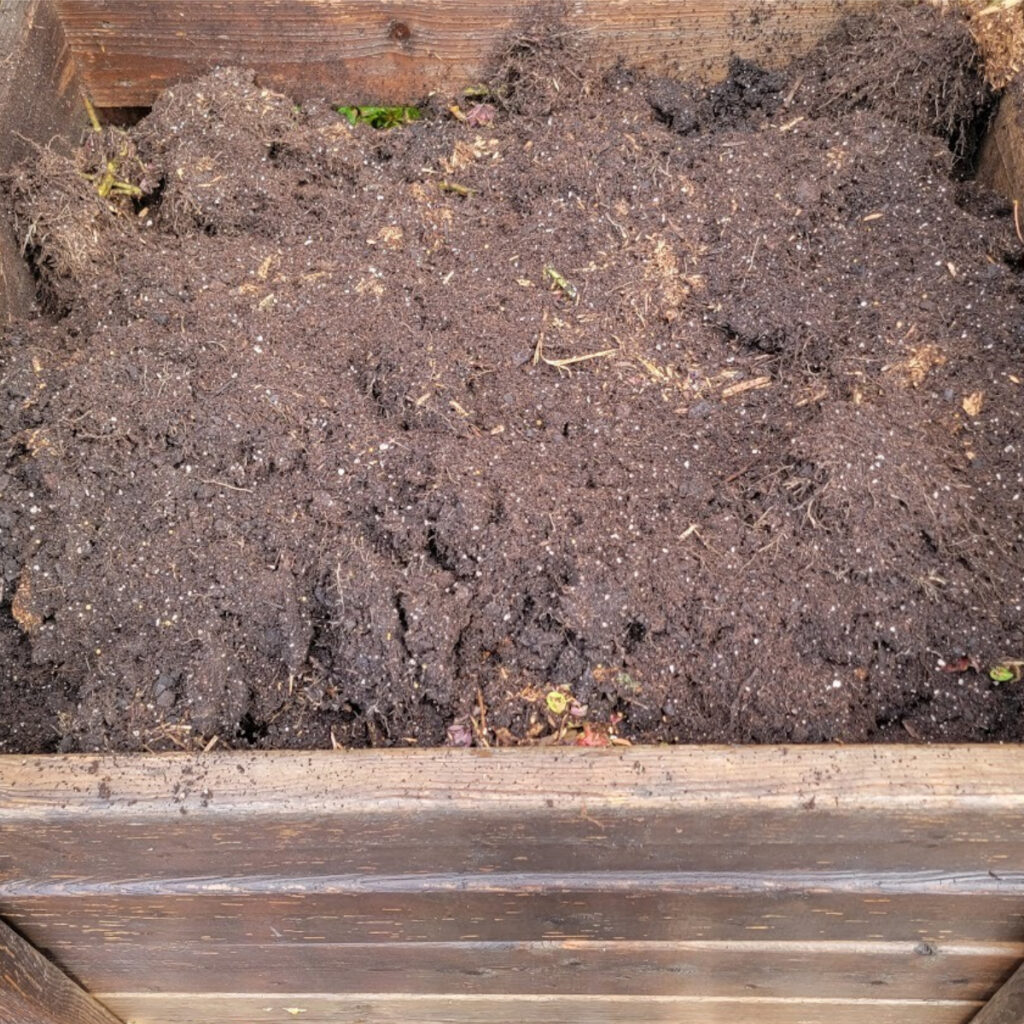
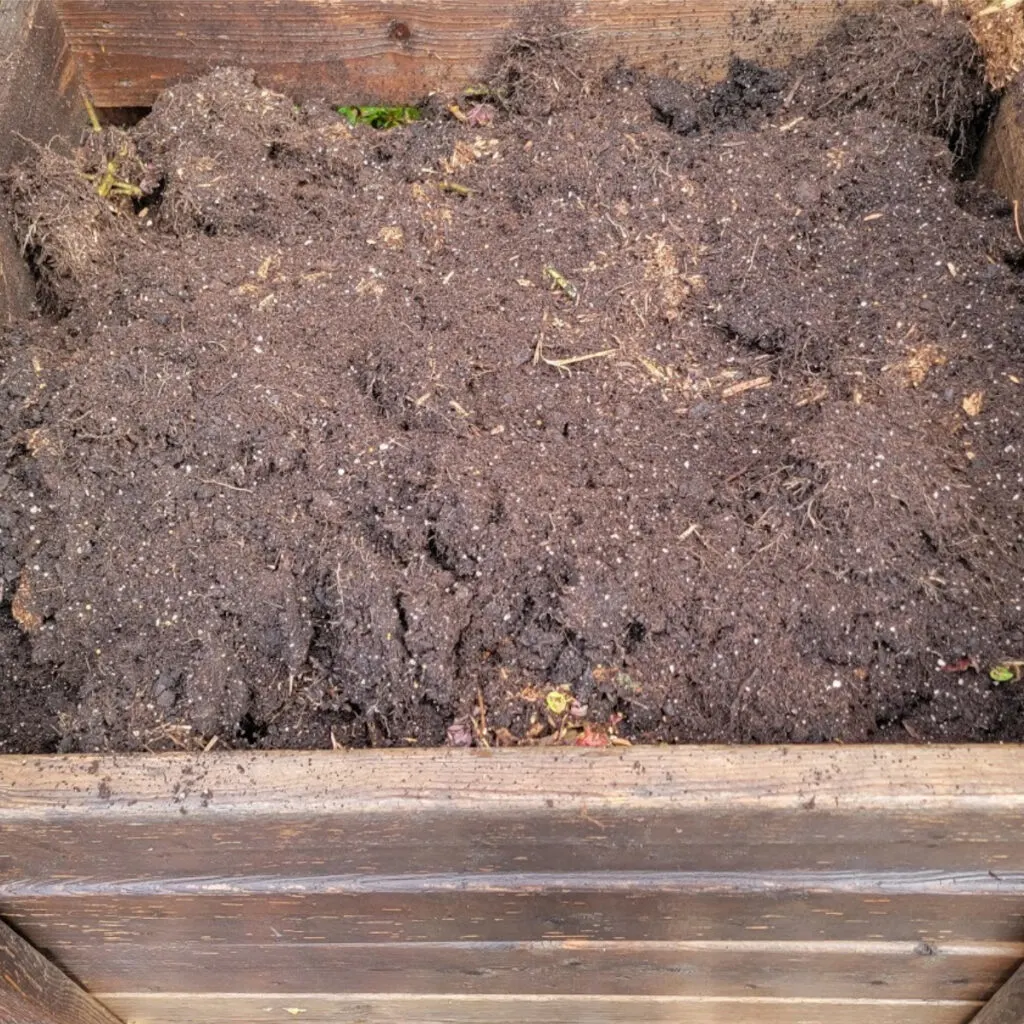
The good news is that building a compost bin doesn’t require special tools or costly supplies. With a simple design and a few affordable materials, you can create a sturdy bin that looks good in the backyard and handles everything from kitchen scraps to fall leaves with ease.
Here’s a look at what makes a great backyard compost bin – and how to build the perfect DIY compost bin that is simple to assemble, budget-friendly, and designed to last for years!
The Perfect DIY Compost Bin
What Makes For A Great Compost Design
There are 3 key factors to a good homemade compost bin design. Together, they play a huge role in the success of a pile that heats up fast, and delivers great compost.
First, the bin must be easy to use. That means ample room for loading in compost materials, turning the materials, and scooping them out. Bins with narrow designs or limited access points can be hard to load, and even harder to turn and work.
Secondly, the bin must allow for good air flow to the pile, all while holding it together for good decomposition. Ample oxygen is a huge key for heating up and decomposing a pile. Unfortunately, if there is no room for air to enter, a pile will quickly stall.
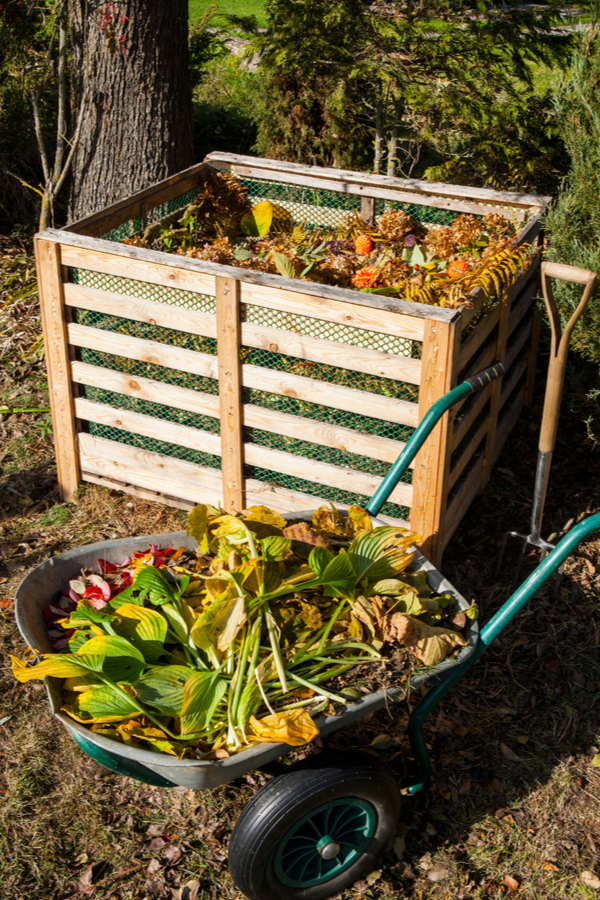
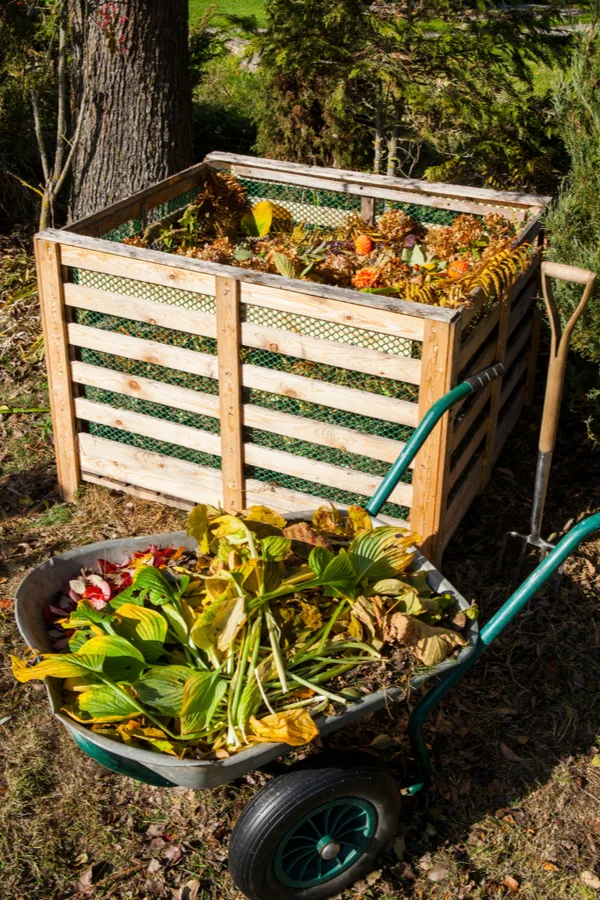
Third and perhaps most important, a compost bin has to be just the right size. It must be large enough to hold adequate material to facilitate composting, but still small enough that it’s manageable to turn and work. See: How To Create A Great Compost Pile – 3 Simple Secrets To Make Compost Fast!
The Ideal Size For A DIY Compost Bin
The ideal size for a fast working home compost pile is 3′ wide x 3′ high x 3′ deep. A 3 x 3 x 3′ pile allows enough mass for materials to heat up internally. Any smaller, and the pile is not thick enough to hold heat for extended periods. A smaller pile also tends to dry out at a much faster rate. Both of which will slow decomposition to a crawl.
So what about a larger pile? Although piles bigger than 3 x 3 x 3′ certainly will hold in the heat and moisture, they can be immensely difficult for the average gardener to turn and manage. Not to mention, they take up more space than most gardeners have!
Listen To Our Podcast On How To Use Compost To Make Compost Tea Fertilizer!
Creating The Perfect Bin
Even though there are a multitude of compost bins for sale commercially, it’s actually quite easy and inexpensive to build your own DIY compost bin with basic materials and tools. Commercial bins are created from all kinds of materials, but even so, wood remains one of the best options around. Not only is it economical, but it also helps with moisture levels in the pile.
Unlike plastic or metal, wood both absorbs and releases moisture. Instead of water pooling at the bottom or sides of a non-porous bin (which severely slows decomposition), a wood compost bin can wick it away. Especially when it incorporates an open or wooden slat design that allows for air to the pile.
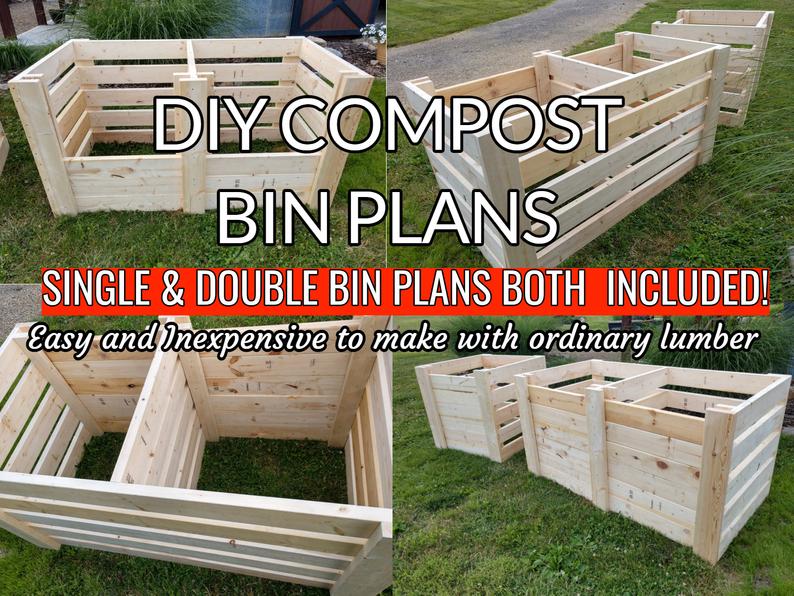
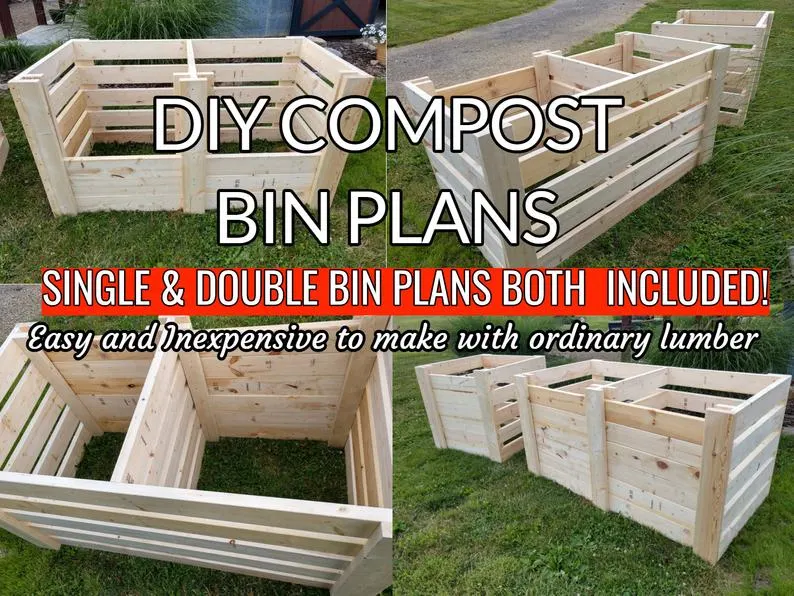
A few years back, on our Old World Garden Farms sister site, we created two such compost bin designs from ordinary 2x lumber. A single 3 x 3 x 3′ bin, and a 6 x 3 x 3′ double bin for additional composting space.
2x framing lumber is actually an excellent choice for creating homemade compost bins. Not only is it inexpensive, it is also untreated. And that is extremely important when creating compost that will be used on vegetable gardens. Because of its thickness, it also lasts for years and years!
A Look At Our DIY Compost Bins
At 36″ wide and deep, and 36″ tall, the single compost bin takes advantage of the ideal 3 x 3 x 3′ pile size guidelines. And with wooden slat slides and a removable front, it allows for plenty of air flow and easy access.
Built with just (6) 2 x 6 x 12’s and a single 2 x 4 x 8′ board – the single compost bin is both economical and easy to build. It uses a simple stack system to assemble the board with screws. It is both strong and durable!
The double bin can be made from just (11) 2 x 6 x 12’s and a single 2 x 4 x 12′ board. At just a bit more cost in materials, it’s a great solution for those with larger gardens and landscapes. (For those wanting step by step plans, the instant download plans (both are included) are available here : DIY Compost Bin Plans.)
With the thicker 2X construction, these bins keep on looking good and lasting for years. Best of all, both the single and double bin can be built in just a few hours with nothing more than a circular saw and a drill driver. All for a fraction of the cost of commercial composting bins!
Here is to making your own DIY compost bin for your garden, and to making great compost next year!
This Is My Garden
Follow Our Facebook Page For Great Gardening Tips And Advice! This Is My Garden Facebook Page
This Is My Garden is a garden website created by gardeners, for gardeners. Jim and Mary Competti have been writing gardening, DIY and recipe articles and books and speaking for over 15 years from their 46 acre Ohio farm. They publish three articles every week, 52 weeks a year. Sign up today to follow via email, or follow along!