Saving Annual Flower Seeds - The 4 Easiest Flowers To Save Seeds From This Fall!
Saving annual flower seeds in the fall is one of the easiest and most economical ways to grow a beautiful garden year after year. Instead of purchasing new seed packets every spring, you can collect hundreds of seeds from the flowers already growing in your beds, containers and landscape.
Even better, many annual flowers produce seeds that are incredibly easy to identify, harvest and store. There is no complicated equipment required and no special gardening experience needed. In most cases, all you need is a paper bag, a pair of scissors and a dry place where the seeds can finish curing before winter.
Marigolds, zinnias, cosmos and sunflowers are four of the best and easiest annual flowers for seed savers. All four produce large quantities of easy-to-collect seeds. And as long as you harvest and store them correctly, those seeds can be planted next spring to fill your flowerbeds with color – all for free!
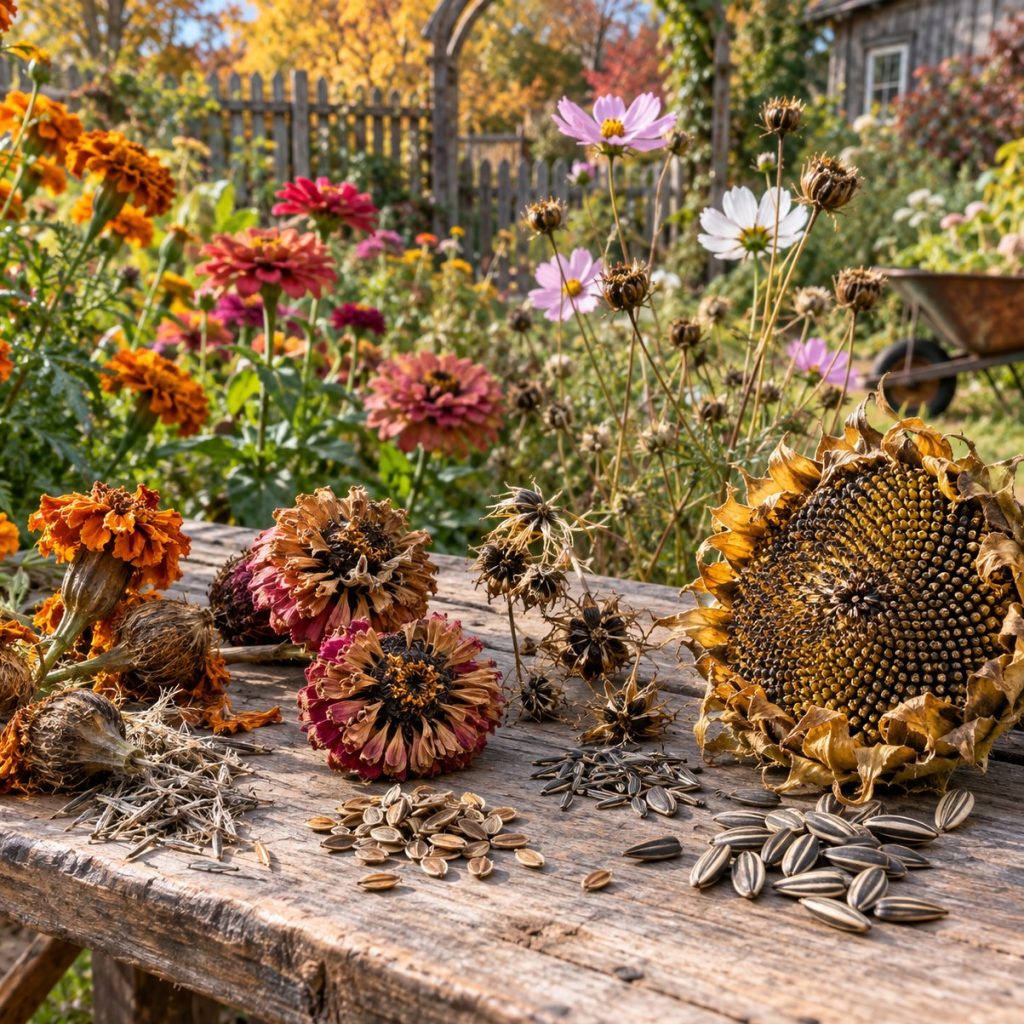
Saving Annual Flower Seeds
When To Start Saving Flower Seeds
The biggest key to successfully saving flower seeds is allowing the seeds to mature on the plant. Flowers need time to fade, dry and develop viable seeds before you remove the flower heads.
Unfortunately, cutting flowers too early is one of the most common seed-saving mistakes. A faded bloom might not look attractive, but that doesn’t necessarily mean the seeds inside are ready. If the flower head is still soft, green or moist, the seeds usually need more time to mature.
For best results, allow the flower heads to remain on the plant until they turn brown and dry. The petals will fall away, and the seed head will become brittle. In many cases, the seeds will begin to loosen and come out easily when you rub the flower head between your fingers.
Try to collect seeds on a warm, dry day. Avoid harvesting immediately after rain or heavy morning dew. Wet seeds are more likely to develop mold and rot during storage. If frost is approaching and the seed heads are nearly ready, you can cut them from the plants and allow them to finish drying indoors.
The 4 Easiest Annual Flowers For Seed Saving
#1 Marigolds
Marigolds are one of the easiest annual flowers of all to save seeds from. A single dried bloom can contain dozens of seeds, and one healthy plant can provide more than enough seed to fill an entire flowerbed the following year.

Allow the blooms to remain on the plant after they begin to fade. The petals will eventually turn brown, and the base of the flower will become dry and papery. Once the entire flower head feels dry, gently pull it from the stem.
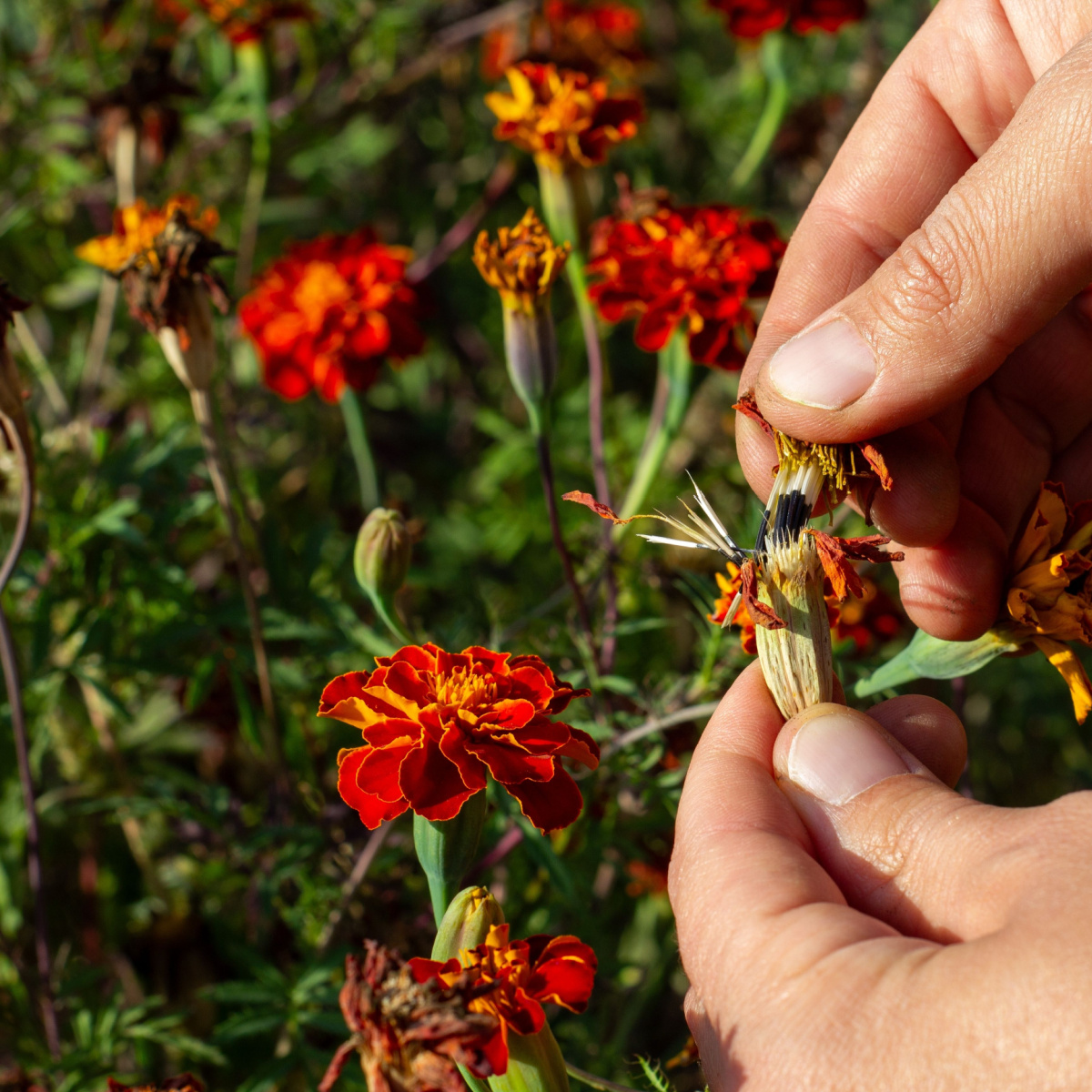
Break the dried flower head apart with your fingers. Inside, you will find long, narrow seeds that are dark on one end and lighter on the other. Separate the seeds from the dried petals and plant debris, and then spread them out on a paper towel or paper plate.
Allow the seeds to dry indoors for another week or two before storing them. Marigolds are prolific bloomers, so you only need to save a few flower heads to collect a large supply of seeds. See our article: The 3 Best Marigolds To Plant In Your Flowerbeds & Garden This Year!
#2 Zinnias
Zinnias are another excellent choice for saving flower seeds in the fall. Their large, colorful blooms attract bees and butterflies throughout the summer. Once the flowers fade, each mature flower head can hold dozens of seeds for next year’s garden.
For viable seeds, leave the flower heads on the plant until they are completely brown, dry and brittle. The longer they can mature in dry conditions, the better. Cut the heads from the plant and place them in a paper bag or open container.

When you pull the dried flower head apart, you may notice seeds in several different shapes. Some are flat and shield-shaped, while others are longer and attached to dried petals. Healthy zinnia seeds are usually firm and filled out. Thin, empty or damaged seeds can be discarded.
Spread the seeds out in a single layer and allow them to dry for another week or two. Be sure to label the seeds as you collect them, especially if you want to keep certain colors or varieties separate.
Zinnias cross-pollinate easily, so saved seeds may not always produce flowers identical to the parent plant. If you grow several varieties close together, the resulting flowers can have an interesting mix of colors, sizes and petal shapes.
#3 Cosmos
Cosmos are beautiful, low-maintenance annuals that produce an incredible number of seeds. Their delicate, daisy-like flowers bloom on tall, airy stems, making them perfect for cottage gardens, pollinator beds and the back of flower borders.
After a cosmos flower fades, it develops a starburst-shaped seed head. At first, the developing seeds will be green. As they mature, they become brown or nearly black and feel dry and firm. Cosmos seeds are long, slender and slightly curved. Once they are mature, they loosen easily from the flower head. This makes timing important because the seeds can fall to the ground or blow away if they are left on the plant too long.

Check the plants every few days as the flower heads begin drying. When the seeds have turned dark but are still attached, pinch or cut the entire seed head into a paper bag. You can then separate the seeds from the dried plant material indoors.
Allow the seeds to dry for one to two additional weeks before storing. Cosmos also self-seed readily, so don’t be surprised if a few volunteer plants appear on their own the following spring.
#4 Sunflowers
Sunflowers produce some of the largest and easiest seeds to harvest. Depending on the variety, a single flower head can provide anywhere from dozens to hundreds of seeds. These seeds can be saved for planting, or certain edible varieties can be roasted for snacking.
Allow the flower head to remain on the stalk as long as possible. The back of the head will change from green to yellow and eventually brown. The petals will fall, and the seeds will become plump and develop their mature coloring.
When the back of the flower head is brown and dry, cut it from the stalk, leaving several inches of stem attached. If birds and squirrels are trying to eat the seeds before they mature, cover the flower head with a breathable paper bag or fine mesh. Avoid using plastic because it can trap moisture and cause mold.

Once the head is dry, rub your hand across the seeds or gently work them loose with your fingers. Spread the seeds out in a single layer and allow them to dry thoroughly before storing.
Keep in mind that many ornamental sunflowers are hybrids. Seeds saved from them may produce flowers that look different the following year. For dependable results, collect seeds from open-pollinated or heirloom sunflower varieties.
How To Dry And Store Flower Seeds
No matter which flowers you collect seeds from, proper drying is essential. Even a small amount of moisture can cause seeds to mold, rot or lose their ability to germinate.
After removing the seeds from the flower heads, spread them out on paper towels, newspaper, paper plates or a window screen. Keep them in a warm, dry location away from direct sunlight. Allow plenty of air to circulate around them and stir or turn the seeds every few days. Affiliate Link: Seed Envelope Resealable Brown Paper Self Adhesive Sealing Seeds Saving Envelopes
Most flower seeds should be allowed to dry indoors for at least one to two weeks. Larger seeds, including sunflower seeds, may need a little longer. The seeds should feel hard and completely dry before going into storage.
Place the dried seeds in labeled paper envelopes. Write the flower name, variety, color and collection date on each envelope. Paper allows any remaining moisture to escape, making it a safer choice than sealing freshly collected seeds directly in plastic.
Store the envelopes in a cool, dark and dry location. You can place them together inside a glass jar or an airtight container once you are certain they are completely dry. A basement shelf, cool closet or refrigerator can work well as long as the seeds stay dry.
Before you pull out your fading annuals this fall, take a closer look at those dried blooms. They may not be as colorful as they were during the summer, but inside are all the seeds you need to grow another season of beautiful flowers – without spending a dime!
This Is My Garden
Follow Our Facebook Page For Great Gardening Tips And Advice! This Is My Garden Facebook Page
This Is My Garden is a garden website created by gardeners, for gardeners. Jim and Mary Competti have been writing gardening, DIY and recipe articles and books and speaking for over 15 years from their 46 acre Ohio farm. They publish three articles every week, 52 weeks a year. Sign up today to follow via email, or follow along!