Why November Is The Most Important Time To Mulch Flowerbeds- And The Best Way To Do It!
Did you know that November is an incredibly important time to mulch flowerbeds? And that it can actually be even more important than spring mulching?
By November, most of the flowers have faded, the leaves are coming down, and it’s easy to feel like the flowerbeds are finished for the year. But before you put away the wheelbarrow, there’s one more job you definitely need to do - and that is put down mulch!
A good layer of mulch is vital to help protect perennial roots through winter. It also gives spring weeds fewer places to get started. Even more - it will protect your beds from more weed seeds blowing in over the fall and winter months.
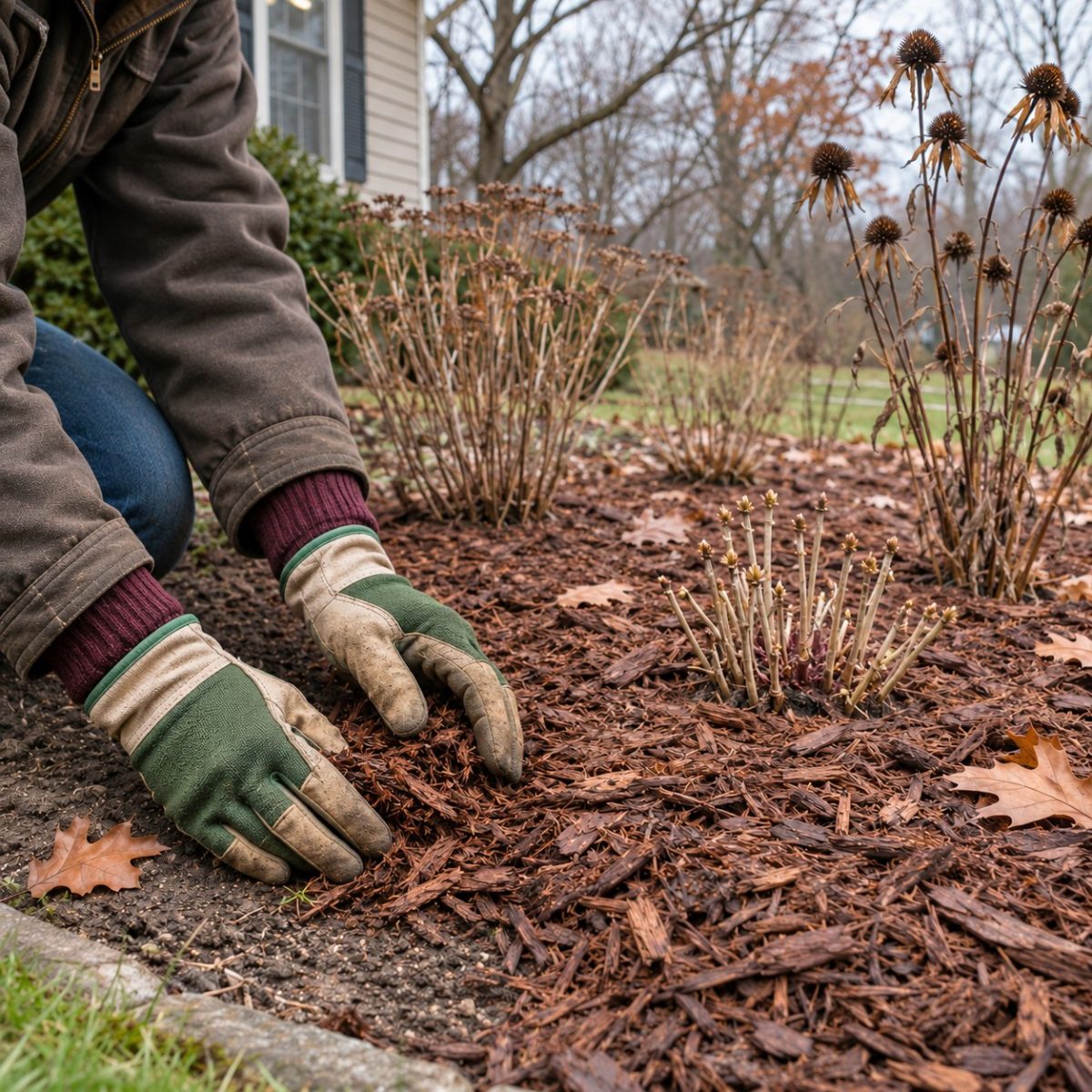
The trick to success is knowing where you need more mulch, how much to add, and where to leave a little breathing room for plants as well!
The Most Important Time To Mulch Flowerbeds - November!
Protecting Beds Before Winter
Winter can be especially hard on shallow-rooted perennials and anything you planted or divided in the fall. During a mild spell, the top layer of soil can thaw and then freeze again when the temperature drops.
When that cycle repeats, it can gradually lift a plant’s crown and roots out of the ground. That’s called frost heaving, and it’s one reason a plant that looked fine in October can be sitting crooked or partially out of the soil by March.
Mulch helps slow those swings in soil temperature. It’s especially useful around new perennials that haven’t had a full growing season to put down roots. Give those areas a little extra attention, along with the exposed edges of beds where mulch tends to wash or blow away.
Then there are the weeds. Cool-weather weeds such as chickweed can get established in fall and take off during mild stretches. By the time you’re ready to work in the beds in spring, a handful of small plants can have spread into a broad patch.
Covering exposed soil now makes it harder for those new weed seedlings to ever get established.
Pull Existing Weeds Before You Add Mulch
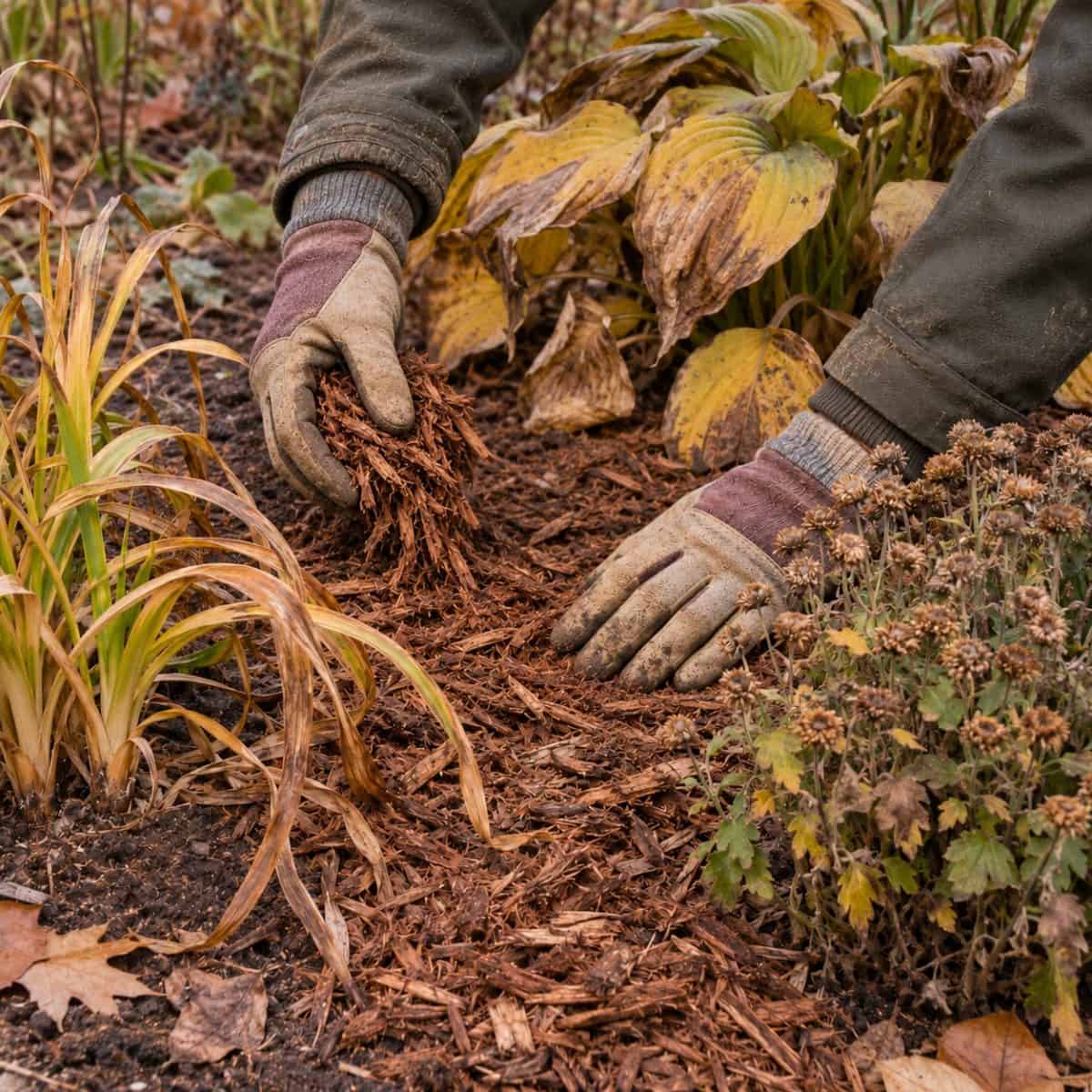
Before you spread a single wheelbarrow load, walk the bed and pull the weeds you can see. Look under the edges of plants and along paths, where little patches can hide. If you catch chickweed while it’s small, you can often lift the whole patch at once. Especially when the soil is slightly damp.
Spend your time on the weeds themselves and leave the surrounding soil and mulch as undisturbed as possible. Turning over a whole bed can bring buried weed seeds closer to the surface. It also breaks up the cover you already have, leaving gaps that you’ll have to fill again.
If a bare patch opened up where you pulled a weed, cover it as you go. It’s easy to miss small spots once you start working on the whole bed, and those openings are often where the first weeds show up again.
How Much Mulch Should You Put On Flowerbeds In November?
Check what’s already there before deciding how much to add. Push your fingers through the mulch in a few spots. You might find that the back of the bed still has a good layer, while the front edge has barely an inch. Give the thin areas more attention and leave the well-covered spots alone.
For loose, coarse mulch such as shredded bark or wood chips, the best course of action is 4 full inches of mulch. That includes whatever mulch is already in place. If you have 2 inches left from summer, a couple of fresh inches will usually do the job.
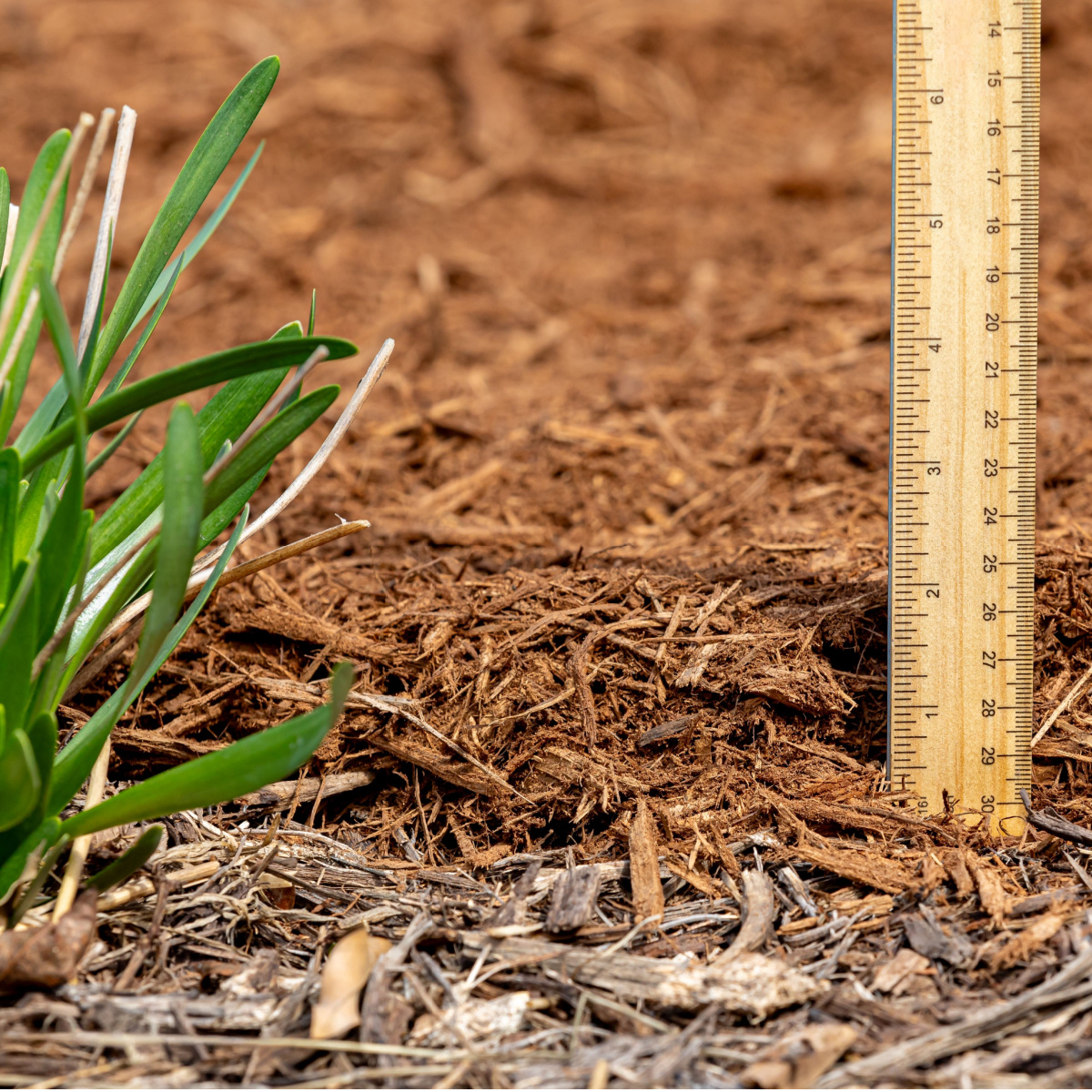
Taper the mulch as you approach the base of each plant. Keep it off perennial crowns and leave a few inches of space around the stems of shrubs and the trunks of trees.
What’s The Best Mulch For November Flowerbeds?
Shredded bark is easy to spread in established beds and stays in place well. Coarse wood chips work nicely in larger spaces between shrubs and perennials. If you already have either one in your beds, topping it off with the same material makes for an even finish and saves you from having to start over.
Shredded leaves are another good option, especially if you have plenty in the yard. Run dry leaves over with the mower, then spread the pieces loosely around your plants. Shredded leaves settle into the spaces between stems more readily than whole leaves, which can clump together when wet.
If your leaf mulch keeps blowing out of an exposed bed, scatter a light layer of shredded bark over the top to help hold it in place.
You can also use what you have where it makes the most sense. Use shredded leaves in sheltered beds and save your bark or wood chips for exposed edges or places where rain tends to move lighter material.
Listen To Our Garden Podcast Below

Leave The Old Mulch In Place When You Top It Off
Although November might be the most important time to mulch your flowerbeds, it doesn't have to be a difficult chore. There’s no need to stir up last year’s mulch to make the bed look fresh. See our article: Are You Mulching Wrong? 3 Big Mistakes That Invite Weeds Into Your Flowerbeds!
As the bottom layer breaks down, it adds organic matter to the soil. Spread fresh mulch right over the existing layer where it has worn thin.
It is best not to disturb the existing mulch with a rake. Why? Because it can allow weed seeds on top a chance to get to the soil below. And that means they will just be waiting to sprout come next spring!
This Is My Garden
Follow Our Facebook Page For Great Gardening Tips And Advice! This Is My Garden Facebook Page
This Is My Garden is a garden website created by gardeners, for gardeners. Jim and Mary Competti have been writing gardening, DIY and recipe articles and books and speaking for over 15 years from their 46 acre Ohio farm. They publish three articles every week, 52 weeks a year. Sign up today to follow via email, or follow along!

More Uncategorized
- 7 Perennials You Should Divide In Early September – Get More Flowers For Free Now!
- How To Fertilize Creeping Phlox In Early Spring For Massive, Show-Stopping Blooms!
- Plant These 5 Perennials - And Watch Bees, Butterflies & Pollinators Flock To Your Yard!
- The Easiest Houseplants To Grow - 8 Plants Anyone Can Keep Alive!