3 Things You Need To Do For Rose Bushes In November – Before Winter Arrives!
Wondering what your rose bushes need in November to help them make it through winter and thrive next year?
Roses can look surprisingly different at this time of year. One bush might already be nearly bare, while another still has green leaves and a few flowers hanging on. That can make it difficult to know whether to clean them up, cut them back or simply leave them alone.
For roses heading into a cold winter, November care comes down to three important jobs. Clean up around the plants, check their moisture, and prepare the protection they need once cold weather settles in.
3 Things To Do For Rose Bushes In November
1. Clean Up Fallen Leaves And Protect Healthy Canes
One of the best places to begin is underneath your rose bushes. Fallen leaves can collect between the canes, settle into the mulch and disappear beneath the next layer of autumn leaves.
If your roses struggled with black spot or other leaf diseases during the growing season, that debris deserves attention. Disease organisms can survive on infected plant material, creating problems when favorable growing conditions return.
Gather fallen rose leaves from beneath the bushes and remove broken pieces of cane lying on the ground. Bag diseased debris for disposal instead of placing it in a home compost pile that may never become hot enough to destroy pathogens.
Use your hands or a small rake to reach between the stems. There’s no need to dig into the soil or turn over the entire bed. Simply remove the loose debris resting on the surface.
No Major Pruning For Rose Bushes In November
As you work, check the canes for damage. A branch snapped by a storm or hanging against another stem can be removed with clean, sharp pruners.

Keep that cleanup separate from your annual pruning. Heavy fall pruning can leave roses more vulnerable to winter injury. Most repeat-blooming bush roses are better assessed and pruned in spring, when you can see which canes survived.
Once-blooming roses and some climbers have different pruning schedules because they flower on older wood. Cutting those canes back heavily now can remove next season’s flowers. See our article: Pruning Rose Bushes In Late Winter - The Secret To Big Blooms.
If a few exceptionally long canes are whipping around in the wind, shorten only what’s necessary to prevent damage. Tall canes can also be loosely gathered with soft garden ties.
On climbing rose bushes, check the supports in November and secure loose canes so winter winds cannot repeatedly pull them against a fence or trellis. Leave enough room in the ties to avoid pinching or rubbing the stems.
2. Check The Soil And Water Before The Ground Freezes
Cool weather makes it easy to forget about watering. The flowers are fading, the days are shorter, and you may have already put away the garden hose.
But a chilly November can still be dry. Wind, limited rainfall and soil that drains quickly can leave the roots short on moisture as winter approaches.
Listen To Our Garden Podcast Below!

Check beneath the mulch before deciding whether your roses need a drink. Push a finger or small trowel a few inches into the soil. If it feels dry, water slowly around the root area and give the moisture time to soak in.
A quick splash on the surface does little for the deeper roots of your rose bushes in November. Use a gentle flow that soaks into the ground instead of running across it.
Continue checking during dry stretches until the ground freezes. Newly planted roses deserve particular attention because their roots have had less time to spread into the surrounding soil.
Don't Fertilize Before Winter
As the bushes settle into dormancy, skip fertilizer intended to push new growth. Allow the plants to finish their season, and save routine feeding for the next growing season.
You can also stop regularly removing the last spent flowers. Leave healthy rose hips in place and let the bushes move through the end of their growing cycle.
3. Add Winter Protection For Your Rose Bushes In November
Once the bed is clean and the soil has adequate moisture, it's time to turn your attention to winter protection.
The amount your roses need depends on the variety and the severity of your winters. A cold-hardy shrub rose suited to your growing zone may need little beyond its normal mulch layer. A tender hybrid tea or grafted rose can need considerably more protection.

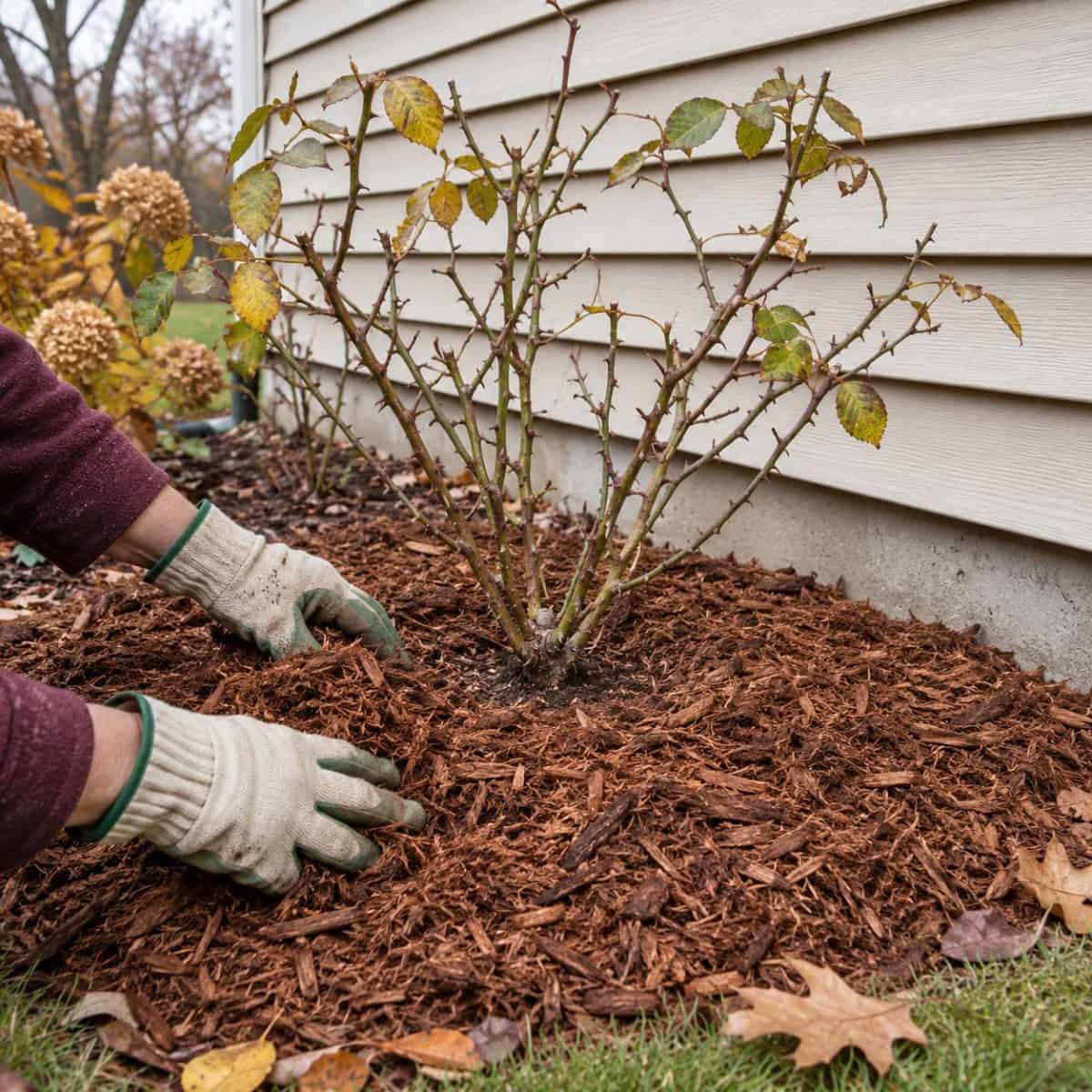
Check the mulch already around each of your rose bushes in November before adding another load. For hardy shrub roses, a total layer of roughly 2 to 4 inches over the root area is a useful starting point.
Spread it evenly and leave a little breathing room immediately around the stems. Shredded bark and other loose organic mulches help cover the soil without forming a heavy, compacted mat. Saw dust can be great for this as well.
Winter protection helps moderate changes in temperature. Repeated freezing and thawing can be damaging, especially when a warm spell is followed by a sharp drop in temperature.
Let You Roses Go Dormant Before Heavy Covering
Wait until the rose is dormant and several hard freezes have occurred before adding substantial winter covering. In some gardens that happens in November. In others, the right conditions arrive later.
Tender hybrid tea, grandiflora and floribunda roses in cold climates often benefit from a mound of loose, well-drained soil covering the bottom 10 to 12 inches of the canes. This helps protect the lower plant and the graft union where present.
Bring that soil in from another part of the garden or use suitable purchased material. Scraping soil away from directly around the bush exposes the roots you’re trying to protect.
Insulating For Winter
Once the mound freezes, an additional loose covering of clean straw or leaves can provide insulation. If the material blows away easily, a wire cylinder around the bush can help hold it in place.
Keep the covering loose and airy. When conditions warm in spring, remove temporary winter protection gradually and spread or remove the excess material so it does not remain piled against the plant throughout the growing season.
For climbing rose bushes, protect the base as needed in November and keep the long canes secured to their support. Preserving those canes is especially valuable on varieties that bloom on older growth.
Check the ties after strong winds so they continue to support the stems without rubbing or cutting into them.
This Is My Garden
Follow Our Facebook Page For Great Gardening Tips And Advice! This Is My Garden Facebook Page
This Is My Garden is a garden website created by gardeners, for gardeners. Jim and Mary Competti have been writing gardening, DIY and recipe articles and books and speaking for over 15 years from their 46 acre Ohio farm. They publish three articles every week, 52 weeks a year. Sign up today to follow via email, or follow along!

More Fall Garden And Landscape
- Don't Cut Back Ornamental Grasses Too Soon In The Fall! When & How To Cut Back Grasses
- How To Use Wood Ashes To Recharge Raised Beds & Garden Soil! This Fall!
- 3 Things You Should Never Do To Lavender Plants In November
- 3 Easy Ways To Use Coffee Grounds This Fall To Recharge The Soil In Your Flowerbeds & Garden!