
Want to know the biggest secret to planting tulips in the fall for big beautiful flowers early next spring?
A bed full of tulips in spring begins with a few simple decisions in fall. You need healthy bulbs, a good planting spot, the right depth and enough time for roots to develop before the ground freezes. But there is one step gardeners often forget about when they begin digging: and that’s making sure to add a little bone meal to each of their planting holes!
Bone meal has long been recommended for tulips because it supplies phosphorus, a nutrient that supports root growth. It can be incredibly helpful in boosting soil levels of phosphorus, especially if you hope your bulbs will return and bloom in future years.
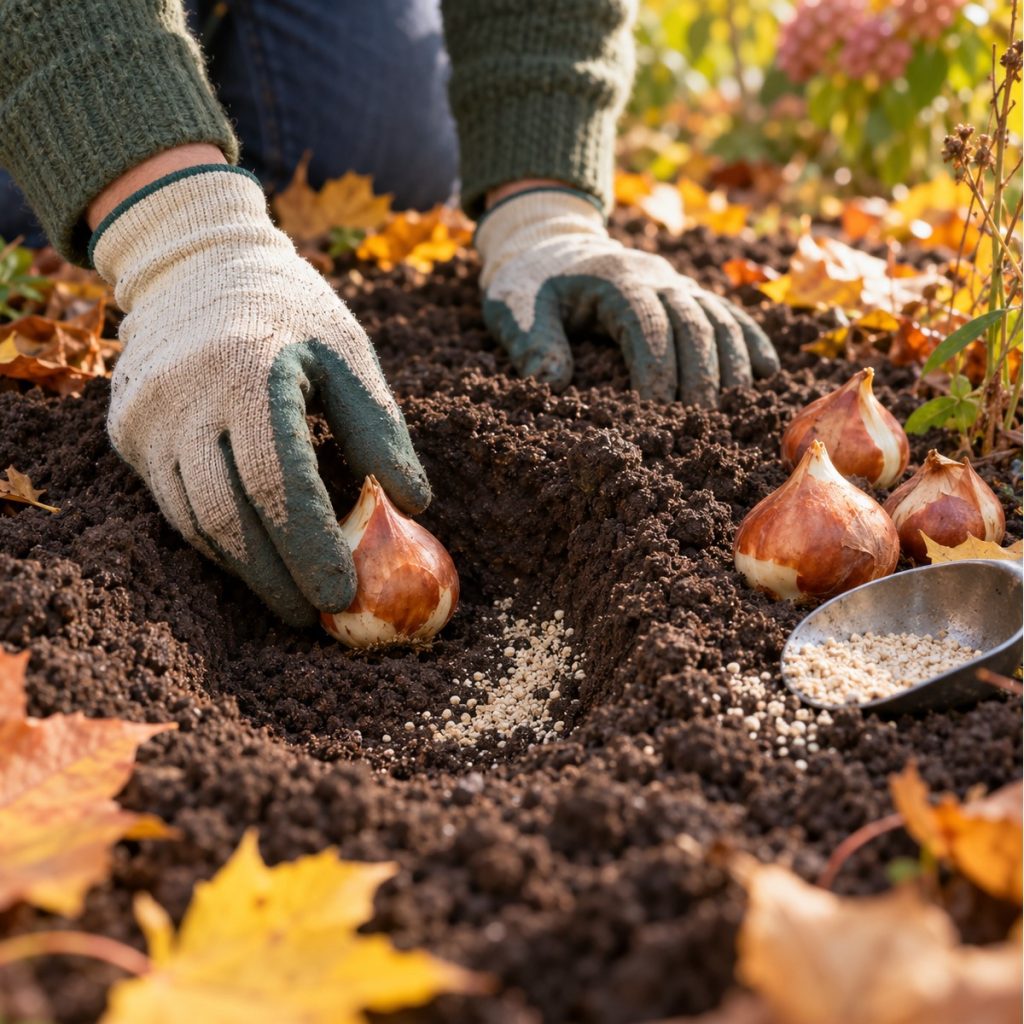
How & Why To Add Bone Meal When Planting Tulips In The Fall
What Bone Meal Does For Tulip Bulbs
Bone meal is a slow-release source of phosphorus. Tulip bulbs use phosphorus as they develop roots, and healthy roots help them take up the water and nutrients they need from the soil. Bone meal can also supply calcium.
When you plant a tulip bulb in fall, much of the flower you’ll see next spring is already formed inside it. That is why a healthy, good-sized bulb can bloom well in its first year without fertilizer. Bone meal won’t turn a small or damaged bulb into a huge flower overnight. Where it may helps is when you plan to leave the tulips in place and hope they bloom again.
For individual planting holes, use about one tablespoon per bulb. Work it into the soil at the bottom of the hole, then add a little plain soil before setting the bulb in place. Affiliate Link: Burpee Bone Meal Fertilizer
For a larger bed where you are planting tulips in groups, follow the rate on the bone meal package and mix it evenly into the soil across the planting area. Avoid dropping a pile directly beneath every bulb or letting the bulb sit against concentrated fertilizer.
More is not better. Bone meal releases nutrients gradually, and adding extra won’t force tulips to produce larger flowers next spring. Beyond the bone meal – it’s also very important to make sure to plant your tulips at the right time!
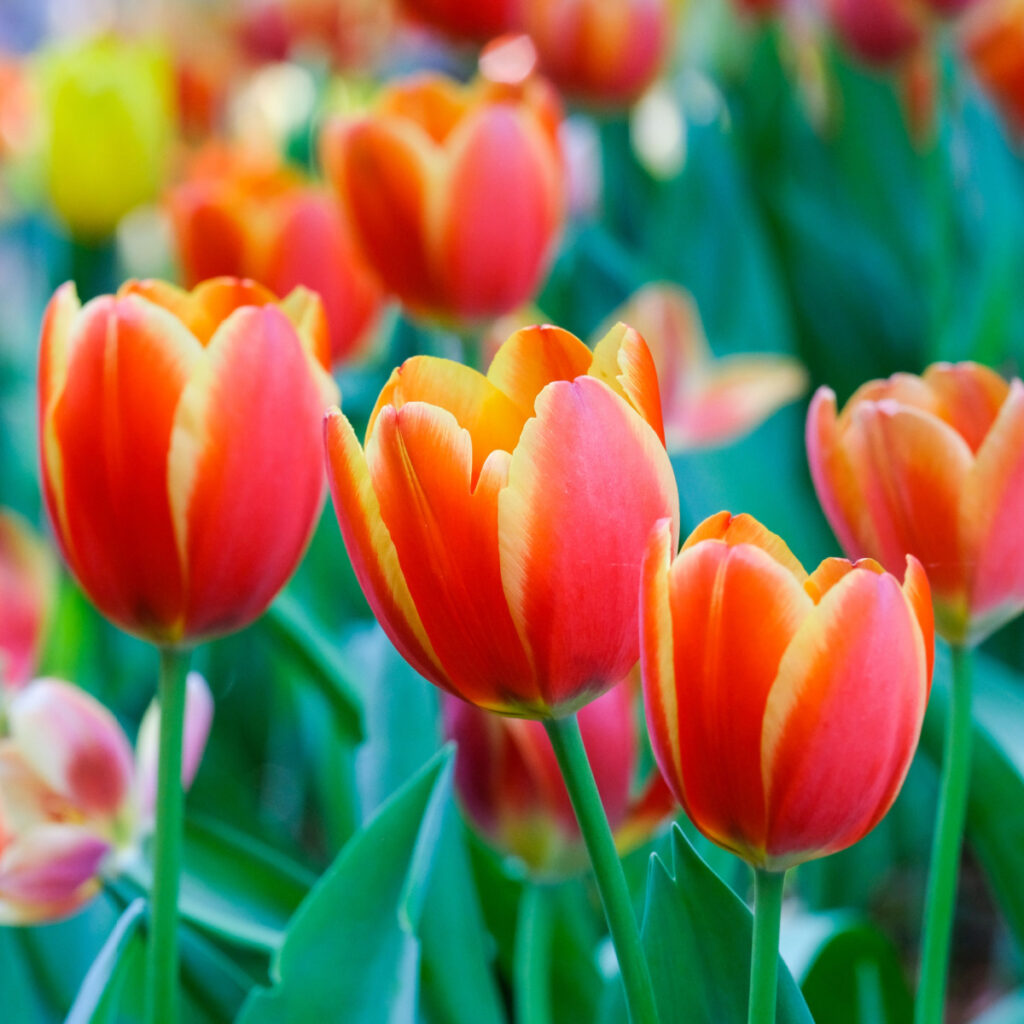
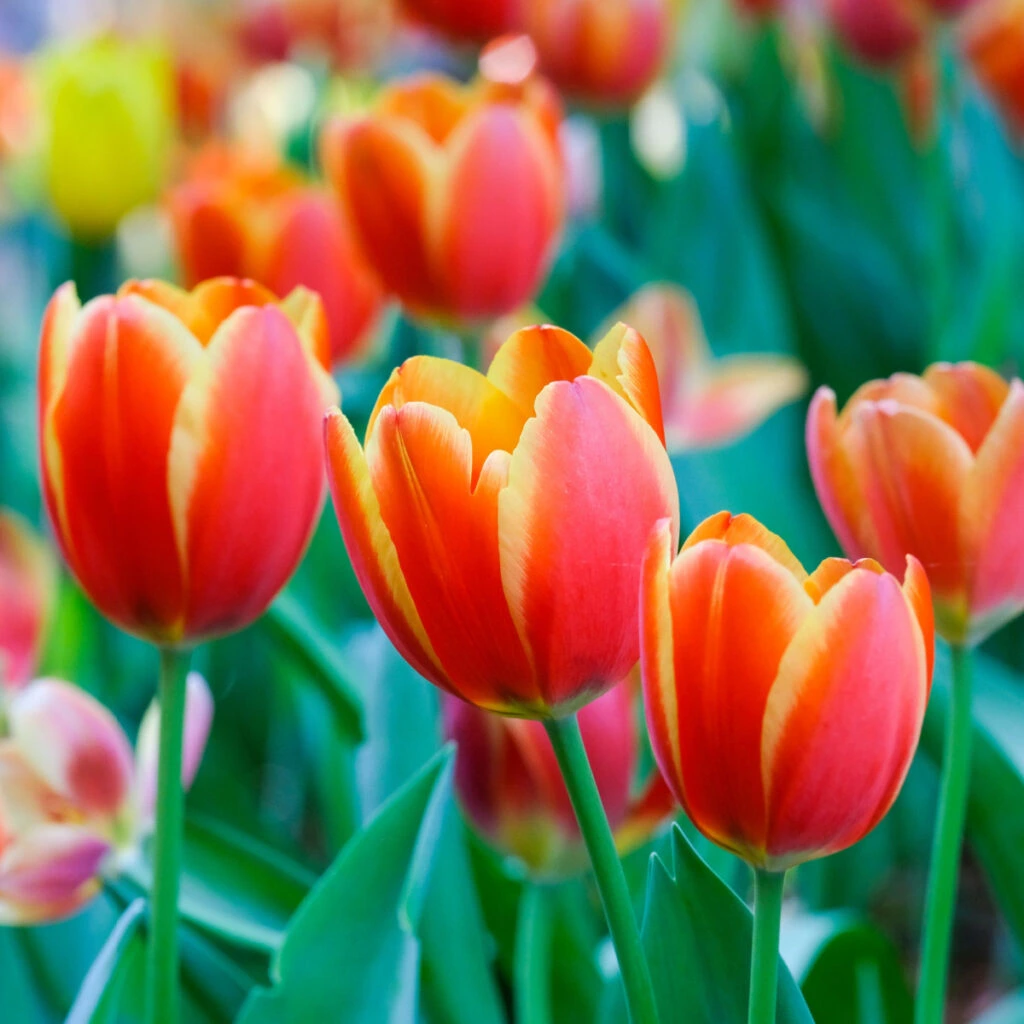
Planting Tulips In The Fall At The Right Time
Timing is one of the most important parts of planting tulips. They need a period of cold weather to bloom, but they also need time to develop roots before winter. The goal is to plant when the soil has cooled in fall, generally after warm weather has passed but before the ground freezes solid.
There isn’t one planting date that works everywhere. In colder regions, the right window arrives earlier. In milder regions, you may be able to plant much later in fall or even into early winter. Let your local weather and soil conditions guide you rather than relying on a single date on the calendar.
Avoid planting bulbs while the soil is still warm from summer. Warm conditions can encourage premature growth and may increase the risk of bulbs rotting in wet soil. On the other hand, don’t leave purchased bulbs sitting in a warm room for months while you wait for a perfect day.
If you have healthy bulbs and the ground is workable, get them planted during your fall window. Tulips are far better off rooting in the ground than drying out in a bag in storage.
Choose A Spot With Good Drainage
Tulips need a place where water can drain away when planting in the fall. Bulbs that sit in soggy soil through fall and winter are more likely to rot, no matter how carefully you plant them or how much bone meal you add.


Choose a spot with well-drained soil and plenty of sunlight in spring. A bed beneath a deciduous tree may work if the tulips receive good light before the tree fills out with leaves. Avoid low spots where water collects after rain.
If your soil is heavy, loosen a wider planting area rather than digging a narrow, deep hole that holds water. Mixing in finished compost can improve the condition of the bed over time, but don’t pack a planting hole with soft amendments and leave the surrounding soil hard and compacted.
Tulips also look their best when planted in groups. Instead of lining bulbs up one by one, try planting several together in a broad hole or trench. The flowers will make a stronger display when they emerge in spring.
How Deep Should Tulip Bulbs Go?
Planting depth is another detail that affects how well tulips grow when planting in the fall. For most standard tulip bulbs, a depth of about six to eight inches works well. Measure from the bottom of the bulb to the soil surface, and check the instructions that came with your variety if its bulbs are unusually small or large.
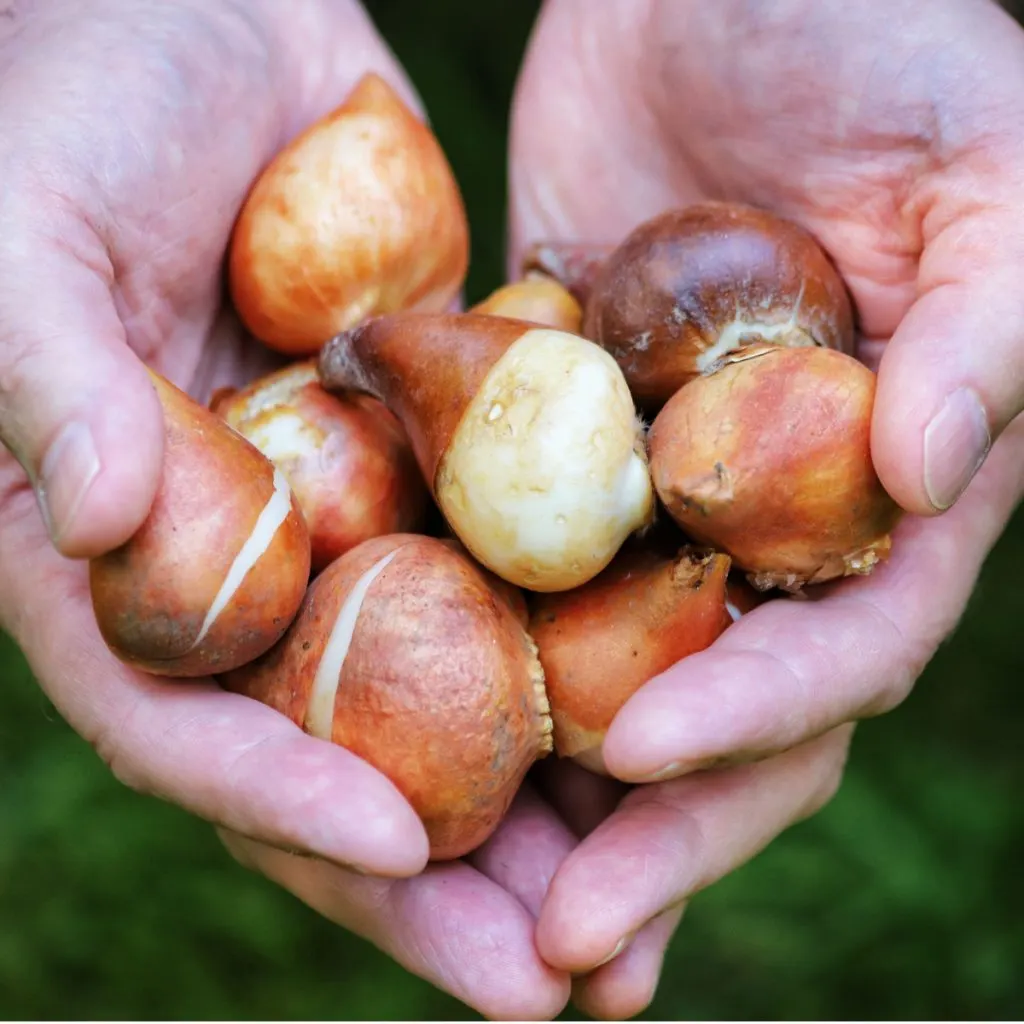
Set each bulb with its pointed end facing up and its flatter root end facing down. If you cannot easily tell which end is which, lay the bulb on its side. It will usually find its way upward as it grows.
Space standard tulip bulbs about four to six inches apart, depending on how full you want the display to look. They can be closer together in a dedicated display bed, as long as they are not pressed against one another.
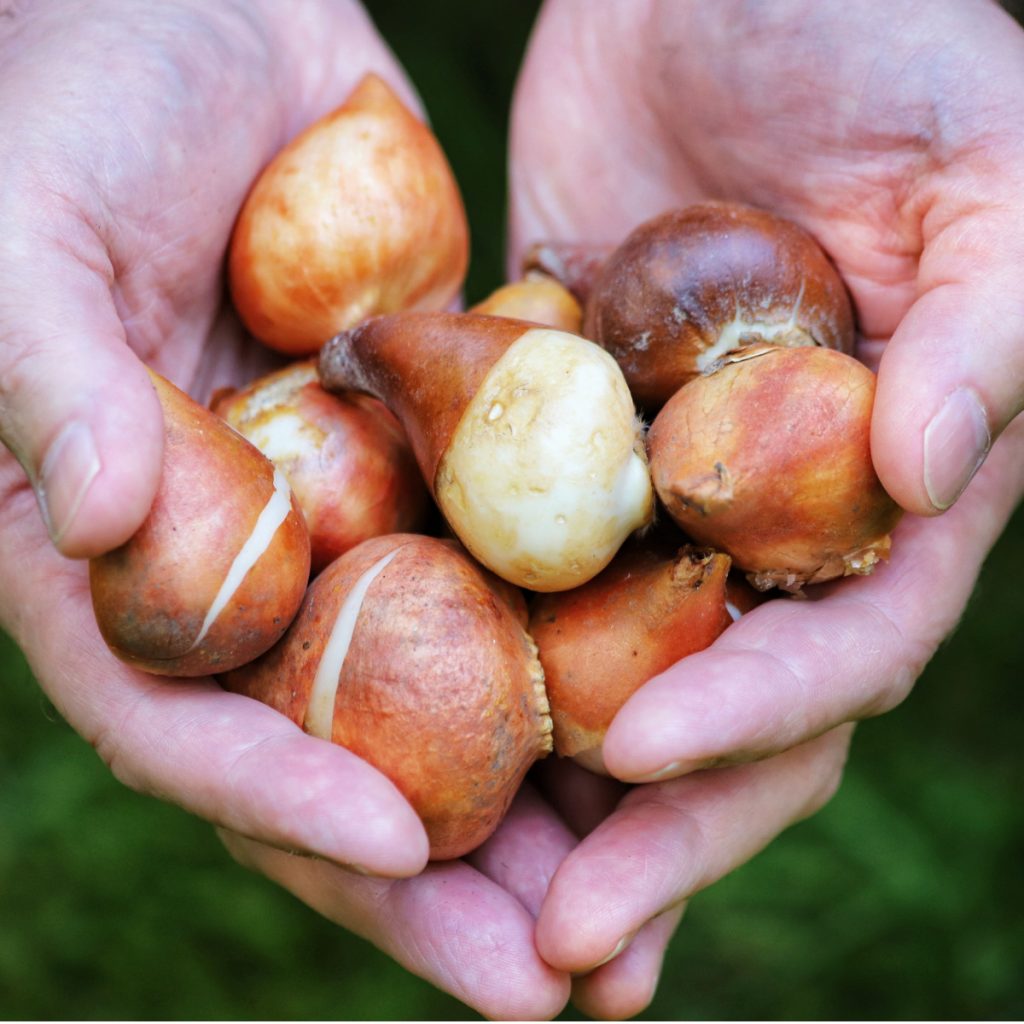
Once the bulbs are in place, cover them with soil and water the bed thoroughly. That first watering settles soil around the bulbs and helps them begin rooting. Afterward, normal fall rain is often enough, provided the soil does not become extremely dry.
The Real Secret To Bigger Spring Blooms
Bone meal can be a helpful addition when planting tulips in the fall, but it is only one part of successful tulip planting. A large, firm, healthy bulb has the best chance of producing a strong flower. Proper planting depth, good drainage and the right fall timing give it the conditions it needs to do so.
When buying bulbs, choose ones that feel firm and heavy for their size. Pass over any that are soft, moldy or badly damaged. Give your tulips healthy bulbs, a well-drained spot and the right planting depth, and you’ll have the best foundation for a beautiful spring display! For more on fall bulb planting, check out our article: The 5 Best Bulbs To Plant In The Fall – And How & When To Plant Them!
This Is My Garden
Follow Our Facebook Page For Great Gardening Tips And Advice! This Is My Garden Facebook Page
This Is My Garden is a garden website created by gardeners, for gardeners. Jim and Mary Competti have been writing gardening, DIY and recipe articles and books and speaking for over 15 years from their 46 acre Ohio farm. They publish three articles every week, 52 weeks a year. Sign up today to follow via email, or follow along!