5 Things To Do To Your Tomato Plants In Late Summer To Get More Tomatoes
Wondering what you should be doing for your tomato plants in late summer to help them produce even more tomatoes?
After months of growing, flowering and producing tomatoes, even the healthiest plants can begin to slow down. Leaves may start to yellow or brown. Plants can become tangled and overgrown. And even though there might still be plenty of green tomatoes hanging on the vines, new blooms and fruit can become fewer and farther between.
But that doesn't mean your tomato season has to come to an end! In fact, with a little late summer care, you can help your tomato plants stay healthy and productive long enough to ripen more of the fruit already on their vines. Even better, you can help the plants put their remaining energy where it matters most - into developing and ripening tomatoes before cooler fall weather arrives.

5 Things To Do For Tomato Plants In Late Summer
#1 Remove Damaged & Diseased Foliage
One of the best things you can do for tomato plants in late summer is to remove any damaged, dying or diseased foliage.
By August and early September, tomato plants have usually developed a thick canopy of stems and leaves. Unfortunately, that dense growth can reduce airflow through the plant. Even worse, it can create the perfect conditions for blight, mildew and other diseases to spread.
Start by removing any yellow, brown or spotted leaves. Always use a clean, sharp pair of pruners instead of pulling or tearing foliage from the plant. Pay special attention to the bottom portion of your tomato plants. Leaves near the soil are often the first to develop issues because they are more likely to get splashed with soil and moisture when it rains or when plants are watered.
Removing this damaged growth instantly improves airflow. It also allows more sunlight into the plant to help ripen tomatoes. One important note - don't get carried away with pruning. Your plants still need plenty of healthy foliage to photosynthesize and protect developing tomatoes from sunscald. The goal is simply to remove foliage that is no longer helping the plant.
#2 Give Your Tomato Plants A Final Boost Of Energy In Late Summer
Tomato plants are heavy feeders. By late summer, they have spent months pulling nutrients from the soil to grow foliage and produce fruit. If your plants are still healthy and actively flowering and producing new tomatoes, a light feeding can help give them enough energy to finish the season strong.
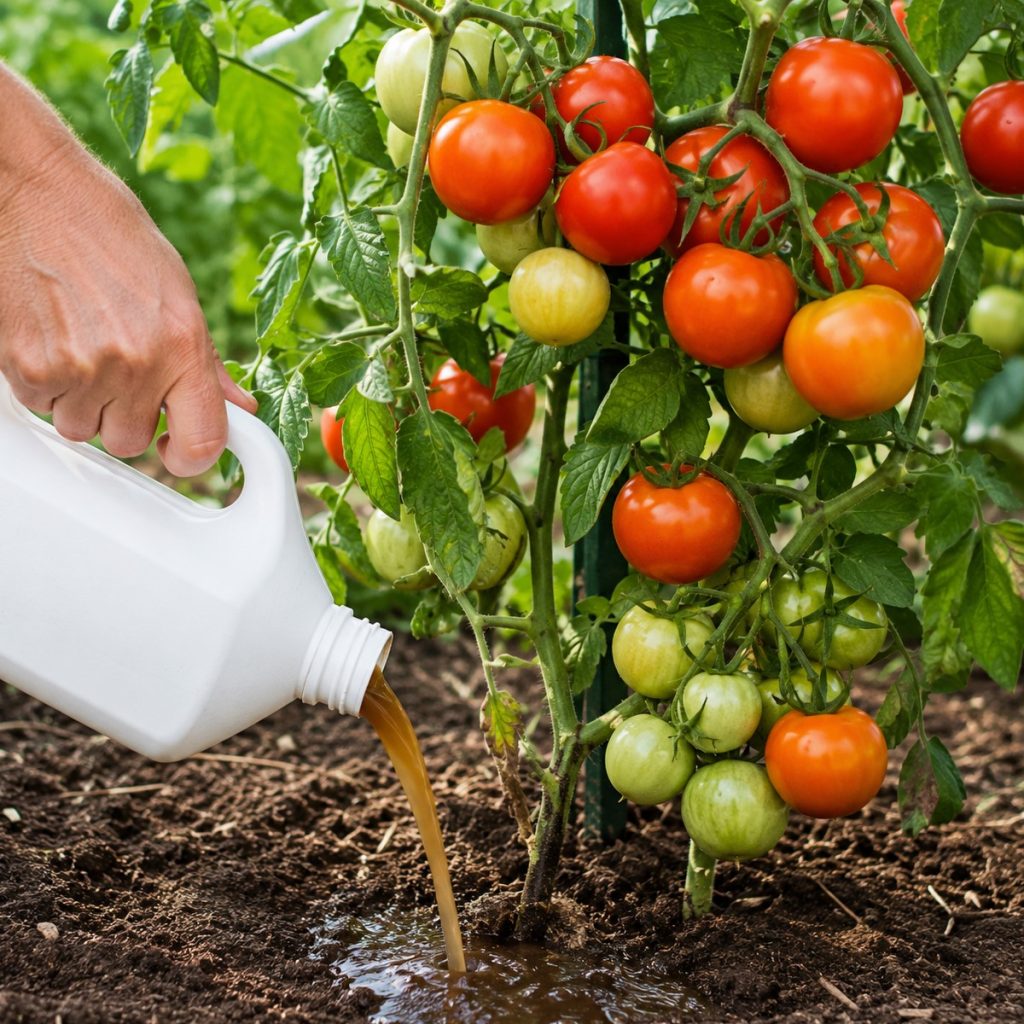
The key is to avoid fertilizers that contain high levels of nitrogen. Too much nitrogen encourages tomato plants to produce more stems and foliage instead of putting their energy into fruit production. See: How To Fertilize Tomato Plants In The Summer For A Bigger Harvest
Instead, use a fertilizer that contains more phosphorus and potassium. These nutrients help with flowering, fruit development and ripening. Liquid fertilizers work especially well for a late summer boost because their nutrients are available to plants quickly. But there is no need to overdo it. A light application is usually all plants need at this point in the season. Affiliate Link: Farmer's Secret Tomato Booster Fertilizer - Super Concentrated - 3:8:7
#3 Keep Watering
One of the biggest mistakes gardeners make in late summer is backing off on watering too soon. Even though temperatures may begin to cool slightly, tomato plants that are loaded with fruit still require consistent moisture. Allowing the soil to repeatedly dry out and then become saturated can cause all kinds of problems.
Inconsistent watering can lead to cracked tomatoes, blossom end rot and poor fruit development. It can also stress plants at a time when they need all of their energy to finish ripening their crop. Tomato plants generally perform best with about one to two inches of water per week, depending on temperatures, rainfall and soil conditions.
Water deeply and slowly at the base of the plant. Avoid spraying the foliage whenever possible. Wet leaves, especially in late summer when nights are becoming longer and cooler, can increase the risk of fungal disease.
A layer of mulch around the base of your plants can also help tremendously. Straw, shredded leaves or grass clippings can help regulate soil temperature and retain moisture. Consistent moisture keeps plants from becoming stressed and allows them to continue filling out and ripening their tomatoes.
Listen In Below To Our Latest Podcast

#4 Remove New Blooms As Fall Gets Closer
This might seem strange, but one of the best ways to get a bigger final harvest is to stop your tomato plants from trying to produce more tomatoes!
As the growing season begins to wind down, tomato plants often continue producing flowers. The problem is that many of those flowers simply don't have enough time to turn into mature tomatoes before the first frost arrives. Unfortunately, the plant doesn't know that.
It will continue sending nutrients and energy to those flowers in an attempt to produce new fruit. That takes valuable resources away from the tomatoes already growing on the vines. Once you are about four to six weeks away from your average first frost date, begin pinching off new blooms as they appear.
At this point, your goal is no longer to create additional tomatoes. Instead, you want the plant to concentrate on sizing up and ripening the fruit it already has.
This simple task takes only a few minutes but can make a big difference in how many tomatoes are able to mature before the season ends.
#5 Top Your Tomato Plants To Help Ripen The Final Crop
Along with removing new blooms, late summer can also be a good time to top indeterminate tomato plants. Indeterminate tomatoes continue growing upward and outward until frost kills them. In a long growing season, that is a wonderful trait. But as fall approaches, all of that new growth can become a drain on the plant.

Topping simply means removing the growing tips from the main stems. Much like removing flowers, topping tells the plant that it is time to stop concentrating on new growth. This allows more of its remaining resources to go toward the tomatoes already hanging on the vines.
Use a clean pair of pruners to remove the growing tip above the highest cluster of tomatoes you want the plant to finish.
Again, don't remove large amounts of healthy foliage. Tomatoes still need their leaves to produce energy and shade fruit.
Topping is most beneficial for indeterminate varieties. Determinate tomatoes naturally reach a set size and produce their crop in a shorter window, so they usually don't require this step.
A Few Extra Ways To Help Tomatoes Ripen
In addition to these five tasks, there are a few other simple ways to help your tomato plants finish strong. First, keep harvesting tomatoes as soon as they begin to turn color. Tomatoes do not need to remain on the vine until they are completely red.
Once a tomato reaches the breaker stage - when it begins changing from green to its mature color - it can finish ripening indoors without sacrificing flavor. Picking these tomatoes also takes weight off the plant and allows it to focus on the remaining fruit.
You should also continue tying up loose branches and supporting heavy clusters of tomatoes. Late summer storms can easily snap branches that are loaded with fruit.
Finally, keep weeds under control around your plants. Weeds compete for both water and nutrients, two resources your tomato plants need to finish their final crop!
This Is My Garden
Follow Our Facebook Page For Great Gardening Tips And Advice! This Is My Garden Facebook Page
This Is My Garden is a garden website created by gardeners, for gardeners. Jim and Mary Competti have been writing gardening, DIY and recipe articles and books and speaking for over 15 years from their 46 acre Ohio farm. They publish three articles every week, 52 weeks a year. Sign up today to follow via email, or follow along!

More Vegetable Garden Plants
- How To Plant Garlic In Fall – 5 Secrets To Growing Big, Healthy Bulbs!
- Why You Need To Plant A Cover Crop In Your Garden This Fall – Stop Weeds & Build Better Soil!
- How To Save Vegetable Seeds In Late Summer – Grow Next Year’s Garden For Free!
- The Best Way To Stop Squash Bugs In Late Summer - Get Rid Of Squash Bugs Now & Next Year Too!