5 Perennials You Need To Mulch In November – Before Winter Arrives!
Mulching perennials in November is one of the easiest ways to help protect your flowerbeds before winter arrives. And for a few popular flowering plants, that extra layer of protection can make a big difference in how well they come back next spring!
Although the stems and leaves above ground may be fading, the crowns and roots below are still very much alive. Keeping those roots protected is especially important for shallow-rooted plants and perennials that have only recently been planted.
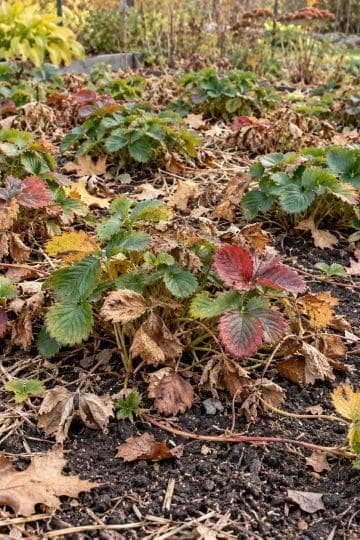
But winter damage is not always caused by one extremely cold night. Repeated freezing and thawing can be just as troublesome. As soil expands and contracts, it can push plants upward, leaving roots exposed to cold air and drying winds.
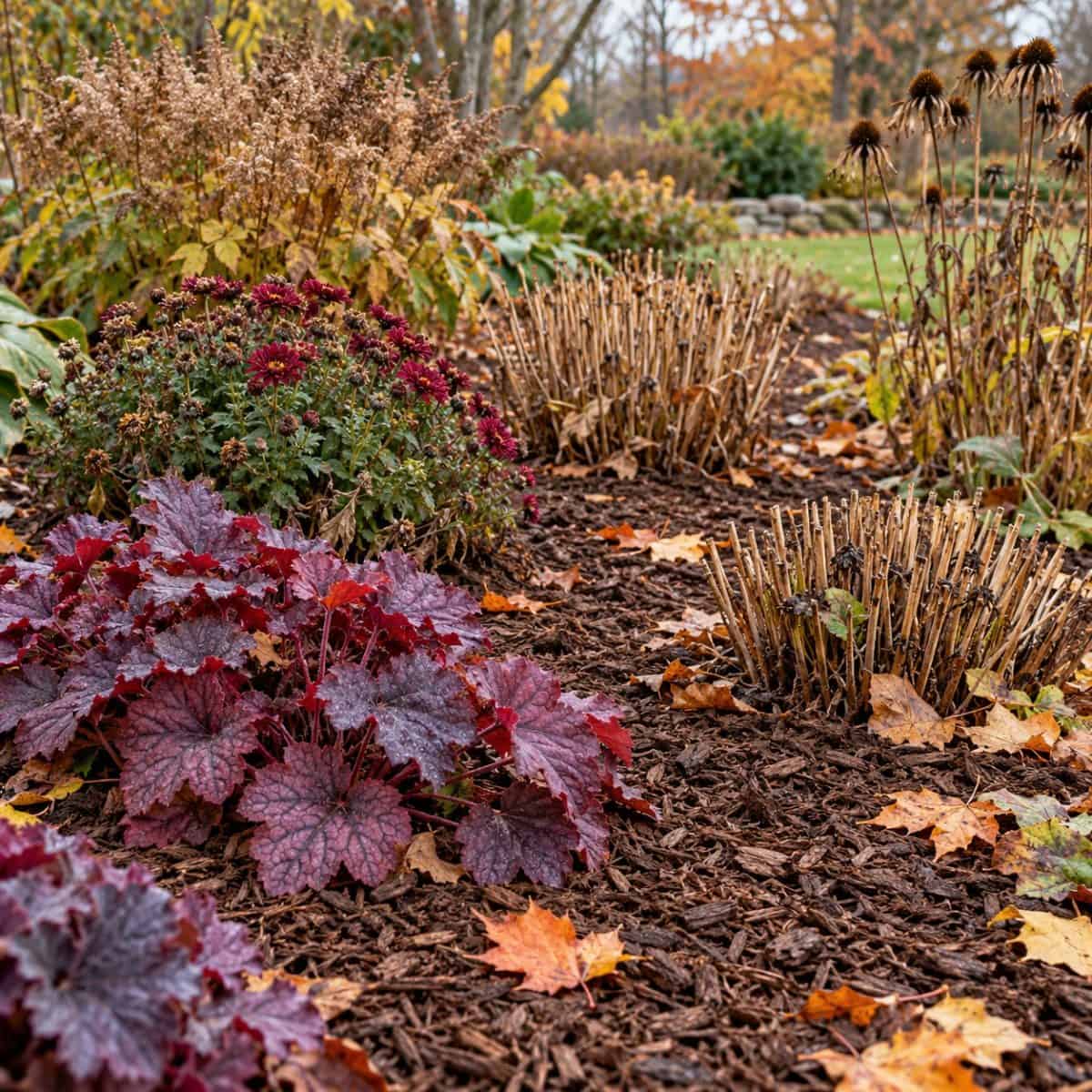
A good layer of mulch helps reduce those temperature swings. It also slows moisture loss, protects exposed soil, and helps limit weeds.
The key is knowing which plants benefit most, when to mulch, and how to apply it without burying the very plants you are trying to protect!
5 Popular Perennials You Need To Mulch In November
Why November Is A Good Time To Mulch Perennials
In many areas with cold winters, November brings the right conditions for adding winter protection. Plants are heading into dormancy, the soil is cooling, and lasting winter weather is getting closer. But follow the weather rather than the calendar alone.
For an extra winter covering, wait until plants are dormant and the ground has become consistently cold, usually after several hard frosts. Applying a heavy covering too early can hold warmth and moisture around plants that are still growing.
1. Coral Bells
Coral bells bring beautiful foliage to flowerbeds, but their shallow crowns can make them especially prone to being pushed out of the ground during winter.

Often, the first sign appears in spring. A plant that looked fine in fall suddenly seems to be sitting above the soil, with part of its root system exposed. Mulch helps moderate the freezing and thawing that causes that movement.
Spread a loose layer around the root area, keeping the central crown clear. Do not pack bark into the center of the plant or bury its leaves beneath a wet mound.
Coral bells often keep some foliage through winter. Leave healthy leaves in place rather than shearing the plant flat during fall cleanup.
Pay particular attention to plants added this year and any clumps already sitting high in the soil. If roots are exposed, gently restore soil around them without burying the crown, then mulch the surrounding area.
2. Shasta Daisies
Shasta daisies can fill summer flowerbeds with bright white blooms, but winter moisture can be hard on their crowns. That makes the way you mulch them just as important as whether you mulch them.
A loose layer over the surrounding root area can help protect against temperature swings. But piling dense mulch directly over the center can trap moisture where the plant is most vulnerable.
Begin by removing fallen material that has formed a soggy mat around the crown. Check that water can drain away rather than collect around the plant. Then spread mulch between and around the clumps, leaving the center open.
3. Astilbe
Astilbe is a favorite for shady flowerbeds, producing soft flower plumes above attractive foliage. It also prefers soil that stays evenly moist.
Unlike plants that thrive in dry conditions, astilbe can struggle when its root area repeatedly dries out. That makes maintaining a protective mulch layer useful throughout the year, including the months leading into winter.
Listen In To Our Garden Podcast Below

Check around each clump in November. Areas beneath trees or near the edge of a bed may have less mulch than you expect.
Add enough to restore an even layer over the surrounding soil, while keeping material away from the crown. Loose organic mulch helps slow moisture loss and moderate soil temperature.
If autumn has been unusually dry, check the soil before the ground freezes. Water when needed, allowing moisture to soak into the root area without leaving it waterlogged.
Mulching dry soil does not replace watering. The two jobs work together to help plants enter winter in better condition.
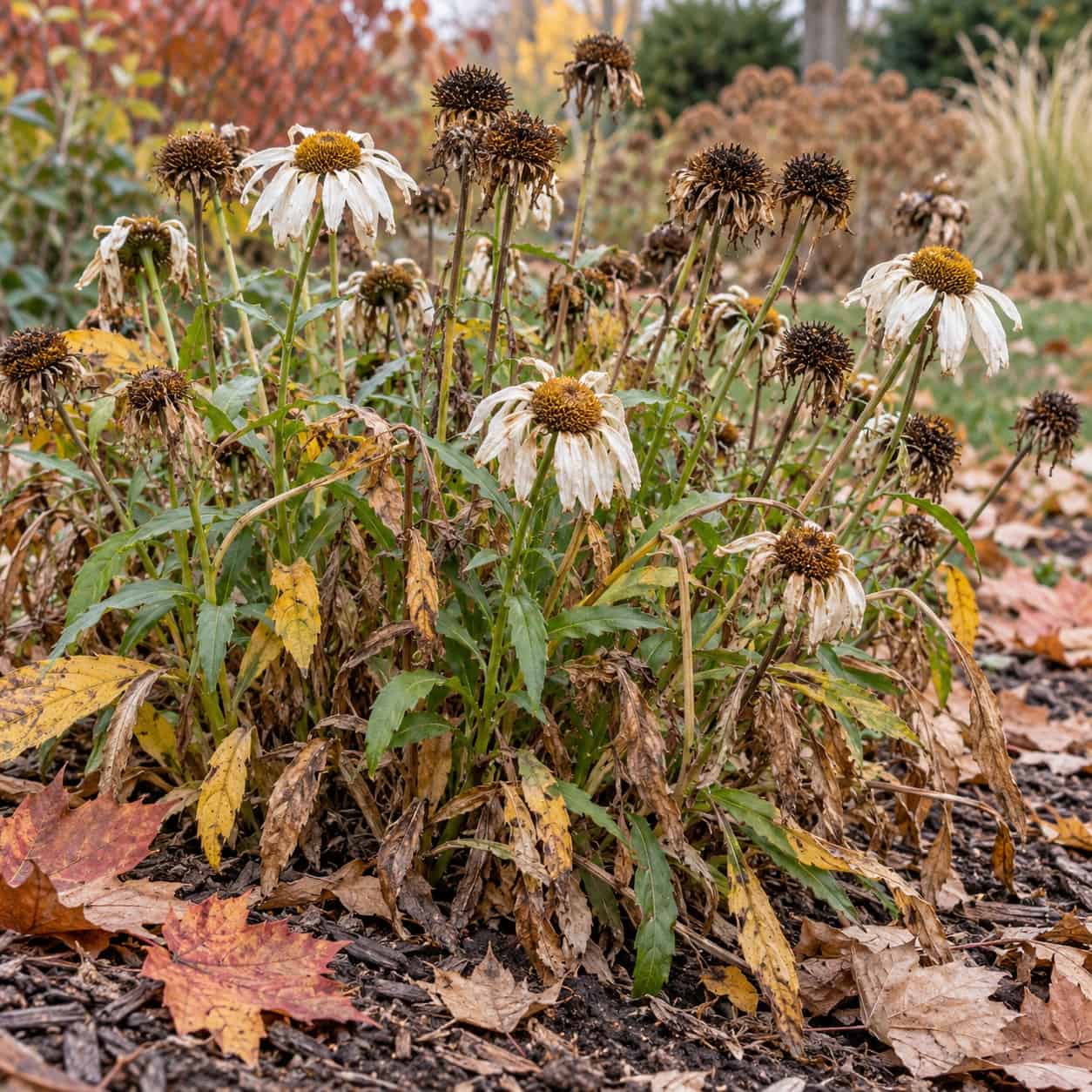
4. Coneflowers
Established coneflowers are tough plants, and many handle winter with little extra attention. Newly planted coneflowers deserve a closer look.
A plant added in late summer or fall has had less time to anchor itself than one that has grown in the same bed for several years. That limited root growth can leave it more vulnerable to frost heaving and drying.

Protect the surrounding soil with a loose mulch layer, keeping the central crown uncovered. Avoid a thick, damp mound over the plant, especially in heavy soil.
If you leave the stems standing for birds or winter interest, you can still mulch around the base. There is no need to cut every stem down to protect the roots.
The same extra attention is useful for coneflowers recently moved or divided. Their established neighbors may need only a light touch-up, while those newer plants benefit from more careful protection.
5. Garden Mums
Garden mums are one of the most important perennials to protect before winter, especially when they were planted during the fall.
Those big flowering plants often arrive in tightly packed nursery pots. Once planted, they need time to grow roots into the surrounding soil. A mum moved into a flowerbed late in the season may enter winter with a much smaller root system than an established plant.
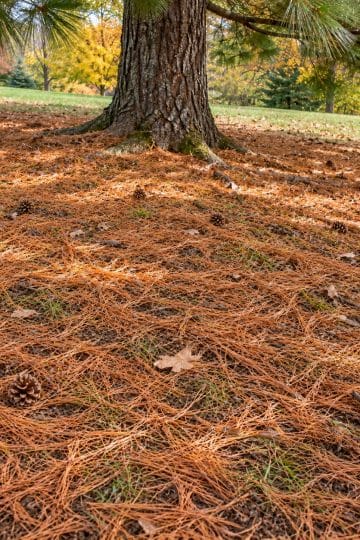
Their shallow roots also make them vulnerable to frost heaving. After the plants become dormant and cold weather settles in, add several inches of loose winter mulch around them. Clean straw or pine needles can provide protection without forming a heavy, compacted blanket.

Leave the old stems standing through winter rather than cutting the entire plant down. You can remove unwanted seed heads while keeping the remaining growth in place.
How Much Mulch Should You Add To Perennials In November?
Check what is already there before spreading more. In open spaces between plants, a total layer of roughly four inches of loose, coarse organic mulch can provide good soil coverage.
That measurement is the total depth, not the amount to add every November. If a bed already has close to four inches, it may need only a little more in thin spots. Repeatedly adding thick layers can eventually bury crowns and create overly wet conditions.
Leave Existing Mulch In Place
Before adding mulch, pull existing weeds and remove unwanted seed heads. Then place fresh material gently over areas that need coverage. Avoid turning or stirring the entire mulch layer.
Disturbing it can bring buried weed seeds closer to the surface and mix soil into the mulch, creating places where incoming seeds can sprout. See our article: Why You Need To Mulch Flowerbeds In The Fall - How To Stop Next Year's Weeds Now!
If weeding exposes a small patch of soil, smooth that spot and cover it again. There is no need to rake through the rest of the bed.
In spring, pull back temporary winter coverings as the ground thaws and plants begin growing. Keep a regular mulch layer between plants, but give emerging shoots and crowns room to breathe.
This Is My Garden
Follow Our Facebook Page For Great Gardening Tips And Advice! This Is My Garden Facebook Page
This Is My Garden is a garden website created by gardeners, for gardeners. Jim and Mary Competti have been writing gardening, DIY and recipe articles and books and speaking for over 15 years from their 46 acre Ohio farm. They publish three articles every week, 52 weeks a year. Sign up today to follow via email, or follow along!