The Best Winter Bird Feeders For Cardinals, Woodpeckers & Overwintering Birds!
Looking for the best choices for winter bird feeders to have cardinals, woodpeckers, chickadees and more filling your backyard with activity?
There’s nothing quite like watching a cardinal land at a bird feeder after a fresh snowfall. But if you’ve ever gone out the morning after a storm and found the seed tray buried or the seed packed into a frozen clump, you know how quickly a full feeder can become useless to birds.
That’s where the design of your feeder makes a big difference. A good winter feeder has a roof or cover that extends past the feeding area, a way for water to drain, and a place for birds to perch even when snow starts to pile up. It also needs to be easy to refill on a cold morning, especially if you get a steady crowd of visitors.
The Best Winter Bird Feeders
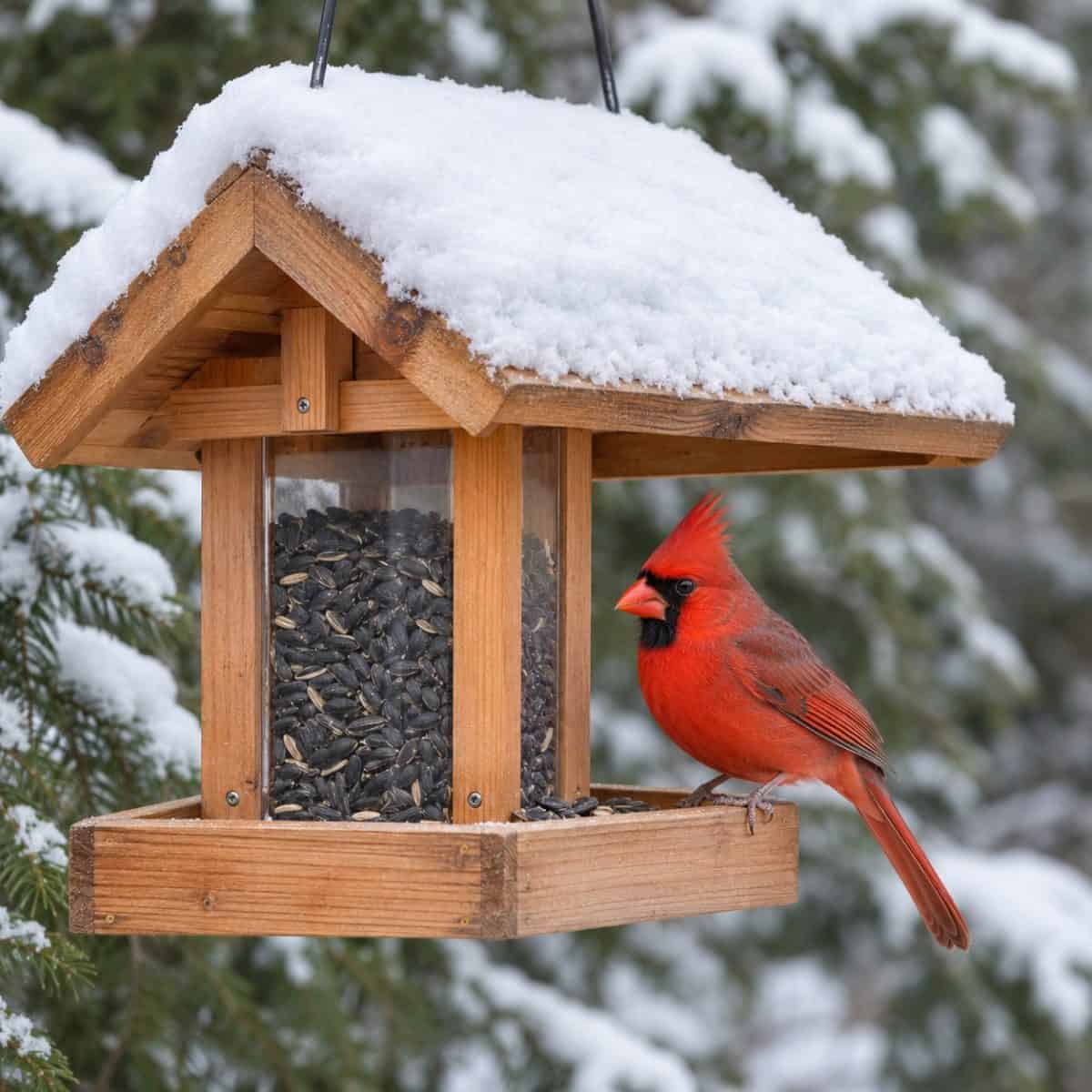
So what's the top choice? A covered hopper feeder is the best all-around choice for most backyards. Add a roofed tray for birds that like a little more room, a tube feeder for smaller birds, and a sheltered suet feeder for woodpeckers.
The right combination depends on which birds already visit your yard and how much weather your feeders have to take.
Why A Covered Hopper Feeder Is The Best All-Around Choice For Winter Bird Feeders
A hopper feeder holds seed in a central compartment and lets it trickle into a feeding trough as birds eat. Most have a roof, but look closely at how far it extends.
A roof that stops at the edge of the seed compartment leaves the trough exposed. A generous overhang helps keep falling snow and dripping water away from the seed birds are actually eating.
Look for a feeder with drainage holes in the trough and a lid that closes securely. If your feeder hangs in an exposed spot and swings hard in the wind, a pole-mounted hopper can offer a steadier landing area. Affiliate Link: Kingsyard 4 lbs Large Bird Feeder House for Outdoors Hanging
If cardinals are your favorite winter visitors, look for a model with a broad ledge where they can land and turn around comfortably. A narrow perch can make feeding awkward for a larger bird.
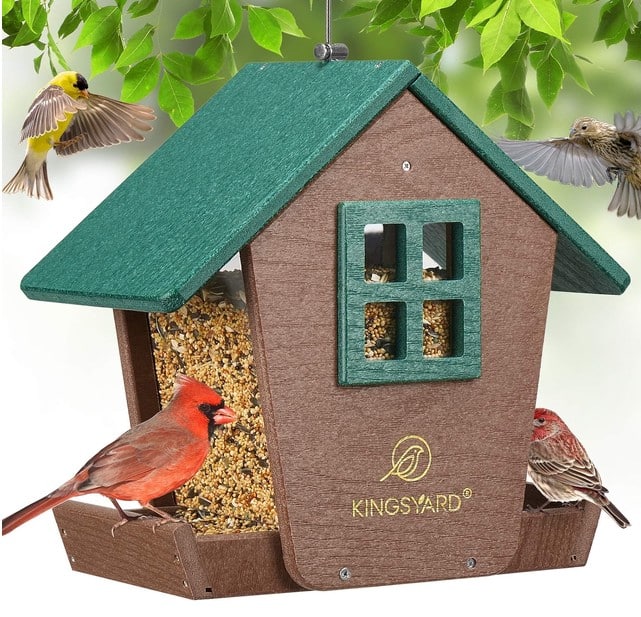
Black oil sunflower seed is a great first choice for a hopper feeder. Cardinals, chickadees, titmice, nuthatches and finches can all use it.
Sunflower hearts are another option if you want fewer shells piling up under the feeder. They’re especially handy over a patio or along a walkway. Since the shells have already been removed, put out smaller amounts when the weather is damp and check the trough after a storm.
A Tube Feeder With A Weather Dome Keeps Seed Available In Snow
Tube feeders work well for chickadees, titmice and finches. Their enclosed design keeps most of the seed covered, and the small feeding ports let birds take a few seeds at a time.
The spot to watch is the bottom of the tube, where damp seed can collect and pack together.
Choose a tube feeder that comes apart easily and has drainage at the base. If yours has a small cap, add a wider weather dome above it. A dome that extends beyond the perches gives the birds a little shelter and helps keep snow and freezing rain from hitting the ports directly.
For an everyday tube feeder, start with black oil sunflower seed or sunflower hearts. If you regularly see goldfinches and want to give them a feeder of their own, use Nyjer in a tube with ports made for that tiny seed.
Fill it partway at first so you can see how quickly the birds go through it. A smaller supply is easier to keep fresh during stretches of wet weather.
Listen To Our Garden Podcast Below!

A Roofed Platform Feeder Gives Cardinals And Juncos Room To Land
An open platform can be one of the best and busiest winter bird feeders in the yard on a clear winter day. It can also turn into a shallow snow shovel overnight.
For winter, choose a platform feeder with a wide roof and a mesh floor. The roof helps keep food covered, and the mesh lets melting snow drain away before it can pool around the seed.
A sheltered platform is a good place for cardinals, mourning doves and juncos. Set it lower if you’re trying to attract juncos, which often look for food on or near the ground. Keep the feeding surface high enough to stay above the snow you typically get.
Try a small handful of white proso millet for juncos and doves, or use sunflower hearts to draw a wider variety of birds. Put out only what the birds are likely to eat that day, particularly when snow is blowing sideways.
Even a good roof can only do so much in a windy storm, and a light scattering of seed is easy to clear away and replace.
A Covered Suet Feeder Is A Winter Favorite For Woodpeckers
If you want to see more downy, hairy or red-bellied woodpeckers, hang a suet feeder. Chickadees and nuthatches will often visit it, too. See our article: 3 Beautiful Birds You Can Attract To Your Yard With Suet In November
A wire cage with a solid top is a simple choice. If you already have a basic cage, hang it beneath a weather dome or under the edge of a roof where it stays clear of drips.
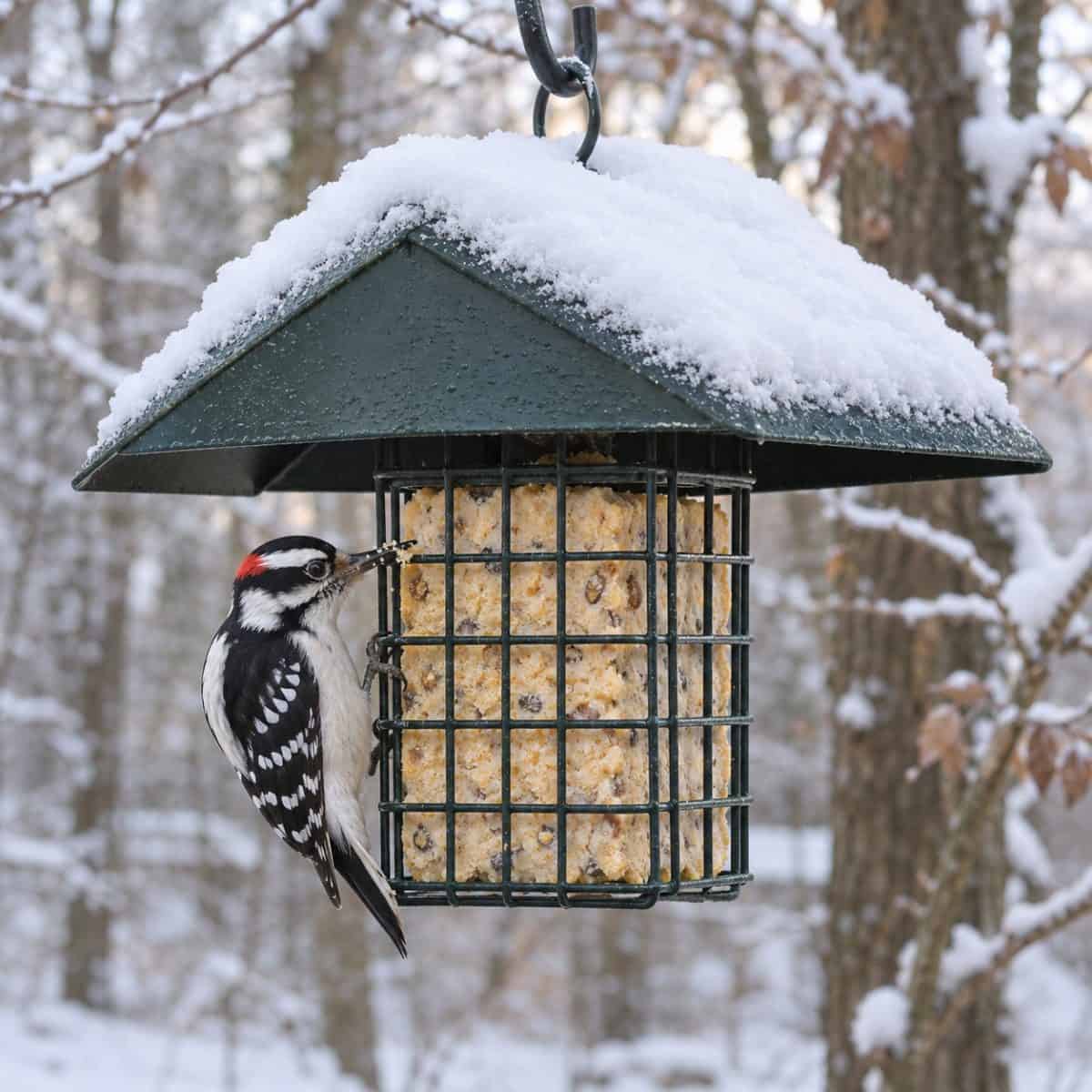
Plain suet cakes and cakes with sunflower seeds or peanuts are good options. If starlings crowd the feeder, try an upside-down suet holder. Woodpeckers and nuthatches can cling underneath to feed, and the solid top helps shed snow.
If you’re putting up your first suet feeder and want it to be easy for a variety of birds to use, start with a simple covered cage. Hang the feeder where birds can approach it from a nearby tree.
Where To Place Bird Feeders In Winter
Even the best winter bird feeders can have issues if you place them in bad locations. Watch where snow drifts and where water runs off your roof during a thaw. A spot may look sheltered in November and end up directly under a downspout or a dripping roof edge in January.
The sheltered side of a building or an area near evergreens can work well if birds have a clear flight path and you can get to the feeder easily.
Nearby shrubs or trees give birds a place to wait for an opening at the feeder or retreat when startled. Leave some open space around the feeder, especially if cats roam through the yard.
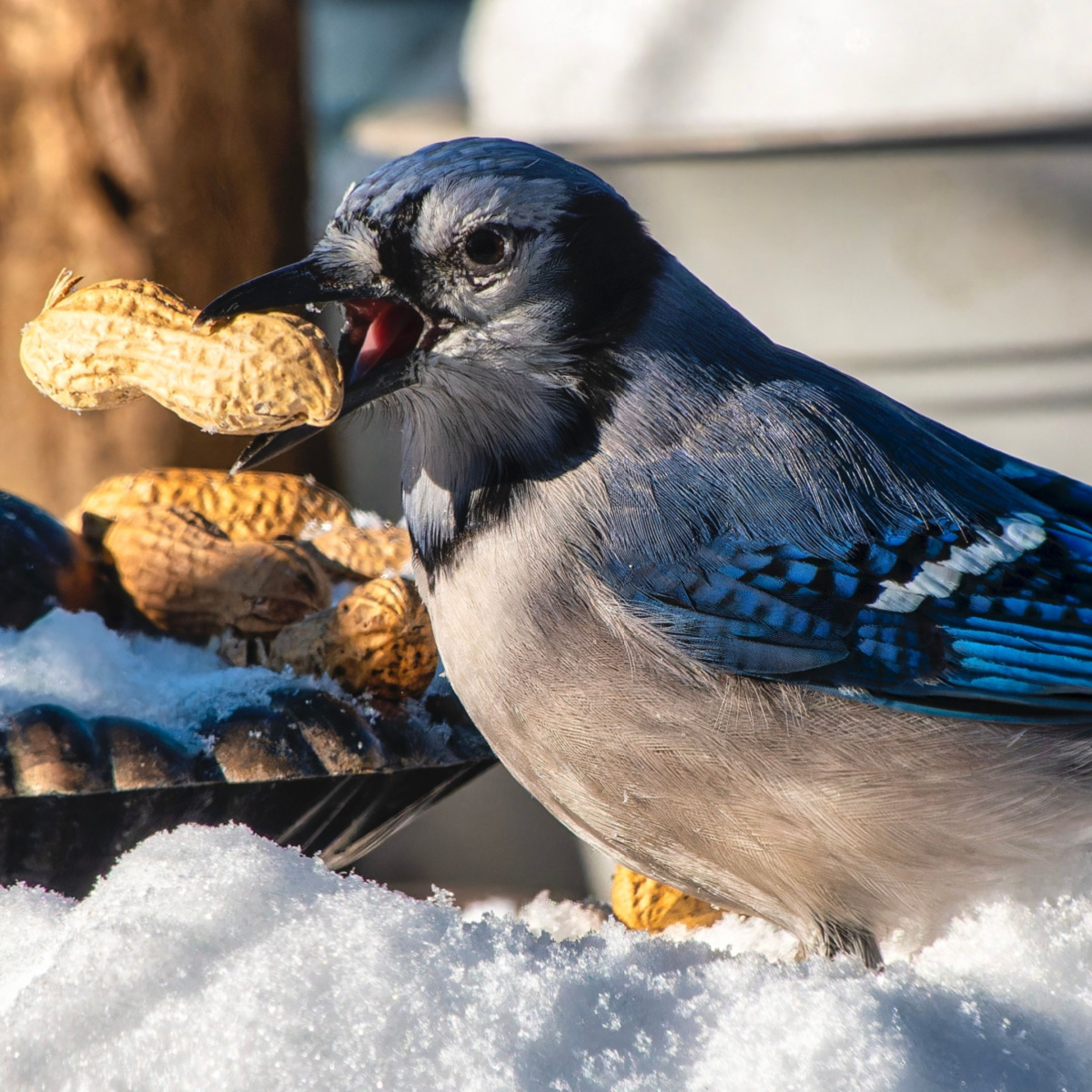
It helps to spread feeders out if you have the space. A woodpecker can work on a suet cake while cardinals eat at the hopper and juncos pick through millet on a low tray. That also gives smaller birds another place to go when a busy flock takes over one feeder.
Check Your Feeders After Snow, Rain And Thaws
One of the best times to check winter bird feeders are after the weather changes. Brush snow off the perches and clear ice from the feeding ports. If seed has gotten wet, remove it and let the feeder dry before refilling. A hopper can look full even when a clump of damp seed is blocking the openings at the bottom.
Wash feeders regularly, rinse them well and let them dry completely before adding fresh seed. Clear out wet hulls and spilled seed beneath them, too. On a mild day, take a minute to check whether drainage holes are plugged and whether the roof still sits squarely over the feeding area. Those two small details can make the difference between a feeder birds can use the next morning and one that freezes solid overnight.
This Is My Garden
Follow Our Facebook Page For Great Gardening Tips And Advice! This Is My Garden Facebook Page
This Is My Garden is a garden website created by gardeners, for gardeners. Jim and Mary Competti have been writing gardening, DIY and recipe articles and books and speaking for over 15 years from their 46 acre Ohio farm. They publish three articles every week, 52 weeks a year. Sign up today to follow via email, or follow along!