
Wondering whether you can or need to remove all of those old and fading hydrangea blooms on you hydrangeas bushes this fall?
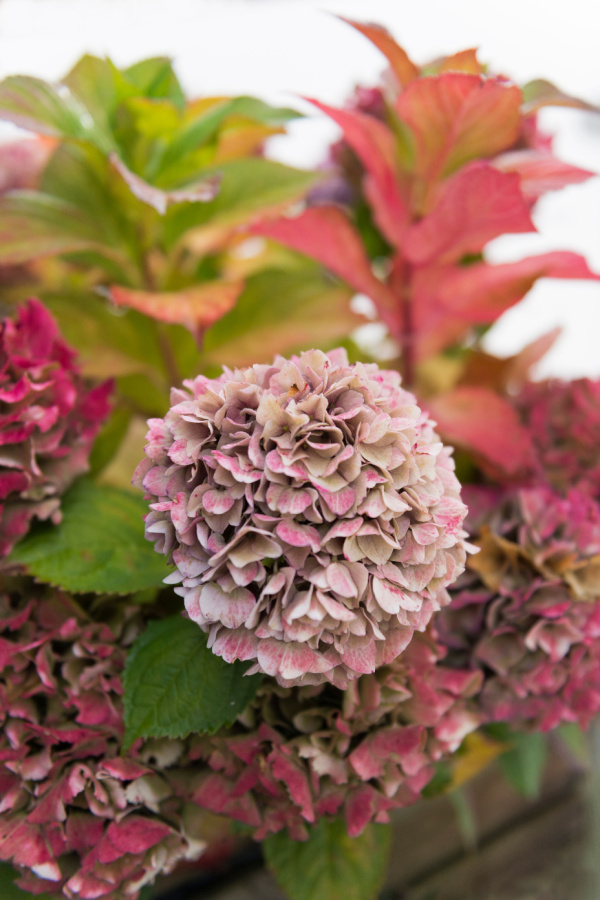
By fall, the colorful blooms that covered your hydrangeas all summer have usually faded to shades of tan, brown or dusty pink. Some gardeners love the look of those dried flowers. Others are ready to snip them off and tidy up the flowerbeds before winter.
So, should you remove old hydrangea blooms in the fall? The good news is that as it turns out – either choice is fine. Leaving the flowers in place won’t hurt the plant, and removing them won’t hurt it either – as long as you cut only the spent flower and a tiny bit of stem!
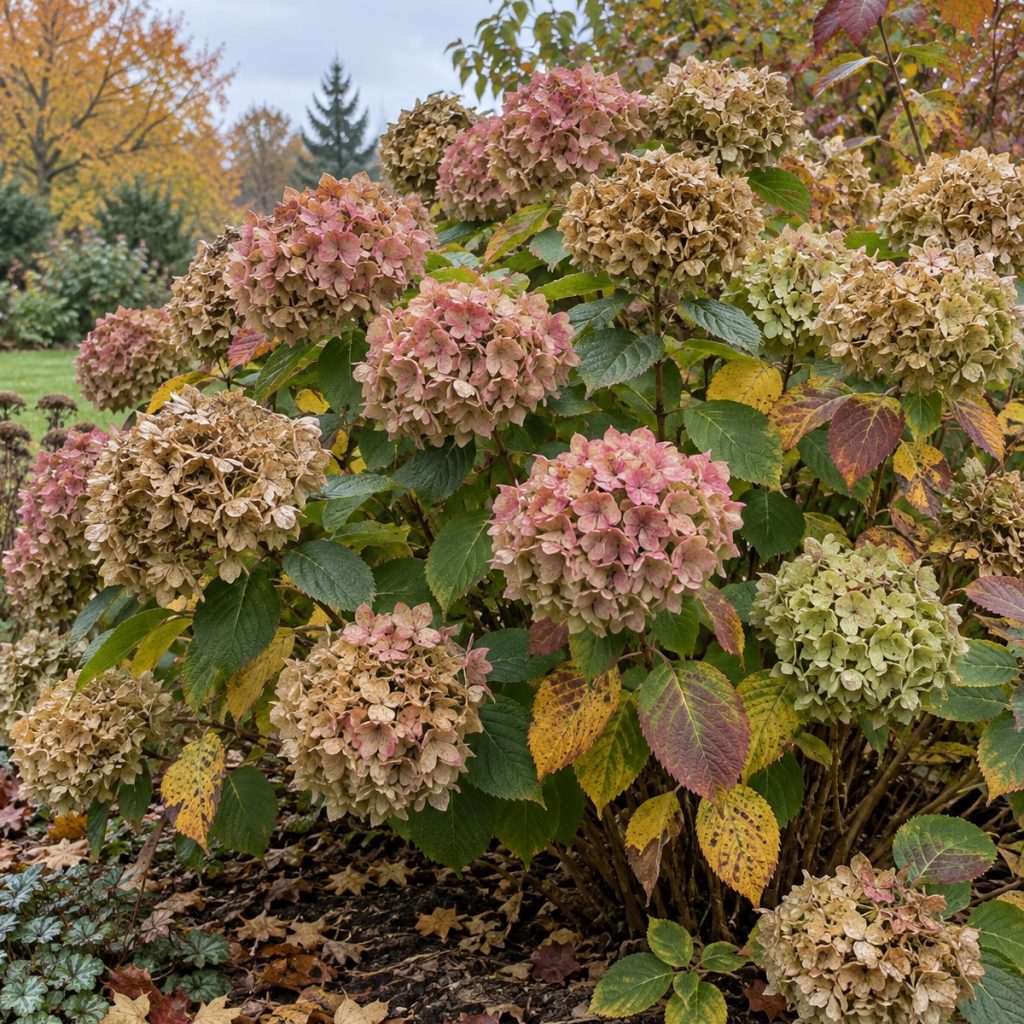
That last detail matters. Some hydrangeas already have next year’s flower buds forming on their stems by fall. And – if you cut too far down while cleaning up old blooms, you may be cutting away next summer’s flowers, too. Here is how to make the right choice for your hydrangeas – and how to give them the care they need before winter arrives.
To Remove Old Hydrangea Blooms In The Fall – Or Not?
Why You Can Leave Old Hydrangea Blooms In Place
There is no need to remove faded flowers to keep a hydrangea healthy. In fact, dried blooms can give an otherwise quiet winter garden some beautiful texture. They look especially striking after a frost or a light snowfall, when their papery flower heads stand above the bare garden.
Leaving them in place also gives you one less fall chore. If you like their appearance, simply enjoy them through winter and decide whether to remove them when you check the plant in spring. Deadheading – the removal of spent flowers – is optional for hydrangeas.
Don’t worry if the flowers turn completely brown or lose a few petals. That is a normal part of the season, not a sign that the plant is struggling. What matters more is the condition of the stems and buds beneath those blooms.
How To Remove Old Blooms Without Cutting Off Next Year’s Flowers
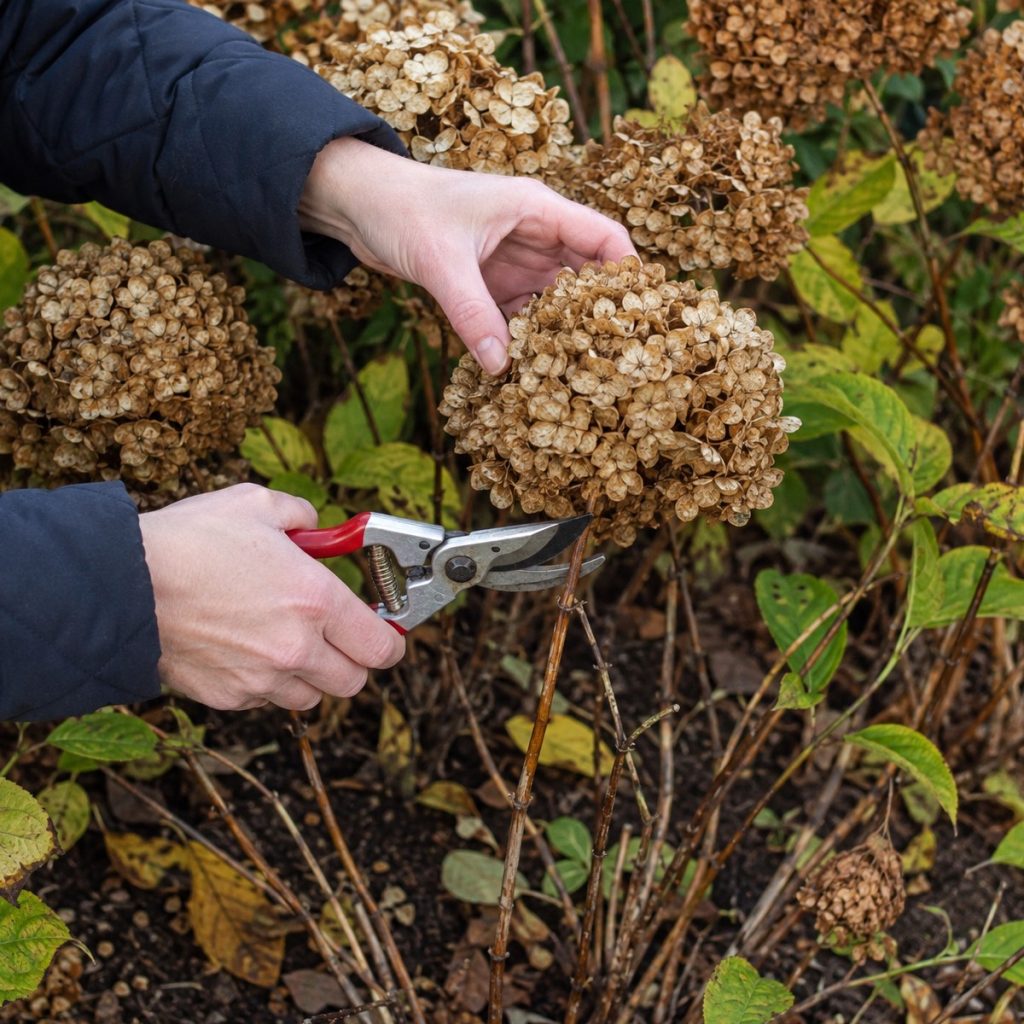
If you prefer a neater look, you can remove old hydrangea blooms in fall. Use clean, sharp pruners and follow each flower head down to where it joins the stem. Make your cut immediately below the spent flower, taking as little stem as possible. Look closely for pairs of buds farther down the stem and leave them untouched.
The key is to treat this as deadheading, not pruning. Don’t cut the stem back to the next large set of leaves, shorten branches to make the shrub smaller, or trim the whole plant into shape. Even a few extra inches of cutting can matter on a hydrangea that has already set its buds for next year. University of California guidance describes deadheading as clipping off the spent flower with as little stem as possible.
If you can’t clearly see where the flower ends and the healthy stem begins, leave that bloom alone until spring. There is no deadline for getting it off, and waiting is much better than accidentally removing a bud you wanted to keep.
Know Your Hydrangeas
Hydrangeas don’t all produce their flowers the same way. Bigleaf hydrangeas – including many mophead and lacecap varieties – and oakleaf hydrangeas generally bloom on old wood. That means they form flower buds on stems that grew during the previous season. By fall, those buds may already be in place, waiting for next year.
For these shrubs, a heavy fall pruning can mean few flowers the following summer. That is why the safest approach is to leave the plant’s stems alone and, if you want to tidy it, remove only the dry flower heads. If your hydrangea has beautiful blue, pink or purple mophead blooms, be especially careful with those fall cuts.
Panicle hydrangeas, which often have cone-shaped flower heads, and smooth hydrangeas, all bloom on new wood produced during the growing season. Their pruning needs are different, but you still don’t need to give them a major haircut just because their blooms have faded. If you don’t know which kind you have, a flower-only snip is the simplest safe choice.
Reblooming varieties can add another wrinkle because they may flower on both old and new growth. Keeping as much healthy stem as possible gives them the best chance to produce their full display. When in doubt, enjoy the dried flowers for now and save decisions about shaping the shrub for a time when you know its variety.
Don’t Fertilize Hydrangeas In Late Fall
Whether you remove old hydrangea blooms back in the fall or not, it still might feel like a good time to give plants one final feeding. But hydrangeas don’t need a late-season push. Fertilizer, especially one high in nitrogen, can encourage tender new growth. And that is not good for when cold weather arrives.
That new growth may not have time to harden before freezing temperatures arrive. Fertilizer also won’t replace the flower buds lost through improper pruning. If your hydrangea grew and bloomed well this year, there is no reason to feed it simply because fall has arrived. Guidance for established shrubs cautions against late-summer nitrogen applications that can trigger frost-sensitive growth.
Instead, let the plant ease into dormancy naturally. You can reassess its feeding needs when growth starts again in spring. Healthy soil, sensible watering and proper pruning timing will do far more for its future blooms than a last-minute dose of fertilizer. See our article: The Best Way To Fertilize Hydrangeas – When & How To Fertilize In Early Spring For Big Blooms!


Keep Watering When Fall Is Dry
Cooler weather doesn’t always mean your hydrangeas are getting enough water. A dry September or October can leave the soil around their roots surprisingly parched, even as the leaves begin to change color. This is especially important for hydrangeas planted this year, which have had less time to establish a wide root system.
Check the soil a few inches below the surface rather than judging it by how the top looks. If it is dry and rain has been scarce, give the plant a thorough, slow watering at its base. Then allow the soil to drain before watering again. The goal is evenly moist soil, not constantly soggy ground.
Continue to pay attention to moisture until the ground freezes. A layer of mulch over the root area can help hold moisture and moderate changes in soil temperature. Keep mulch a few inches away from the stems so it doesn’t pile against the base of the shrub. Thorough watering before the ground freezes is a useful step for shrubs heading into winter.
The Best Fall Plan For Your Hydrangeas
So whether you want to remove old hydrangea blooms in the fall – or leave them be – the choice is yours!
If you have an old-wood hydrangea, those stems may be carrying next year’s flowers already. Make only a tiny cut right below each spent bloom, and leave the rest of the healthy stem in place. If you aren’t sure what variety you have, leaving the blooms alone is an easy way to protect what’s there.
After that, fall care is simple: skip the late fertilizer, keep an eye on moisture during dry stretches, and let the shrub settle in for winter. A little restraint now can help preserve the beautiful display you’re hoping to see next year!
This Is My Garden
Follow Our Facebook Page For Great Gardening Tips And Advice! This Is My Garden Facebook Page
This Is My Garden is a garden website created by gardeners, for gardeners. Jim and Mary Competti have been writing gardening, DIY and recipe articles and books and speaking for over 15 years from their 46 acre Ohio farm. They publish three articles every week, 52 weeks a year. Sign up today to follow via email, or follow along!