The Best Way To Water Poinsettias - How To Keep Your Plants Beautiful Through The Holidays!
Looking for the best way to water your poinsettias this year to keep it looking blooming and bright all through the holiday season?
Without proper watering, that beautiful poinsettia you brought home for the holidays can quickly fail. When the lower leaves turn yellow, and more leaves seem to fall every time you walk past - it's tempting to give it another drink. But before you reach for the watering can, lift the pot out of its decorative wrapper and take a look.
One of the biggest mistakes people make with poinsettias is letting the pot sit in water. And one of the easiest ways to do it is to water the plant while it’s still tucked inside that shiny foil sleeve it came home in.
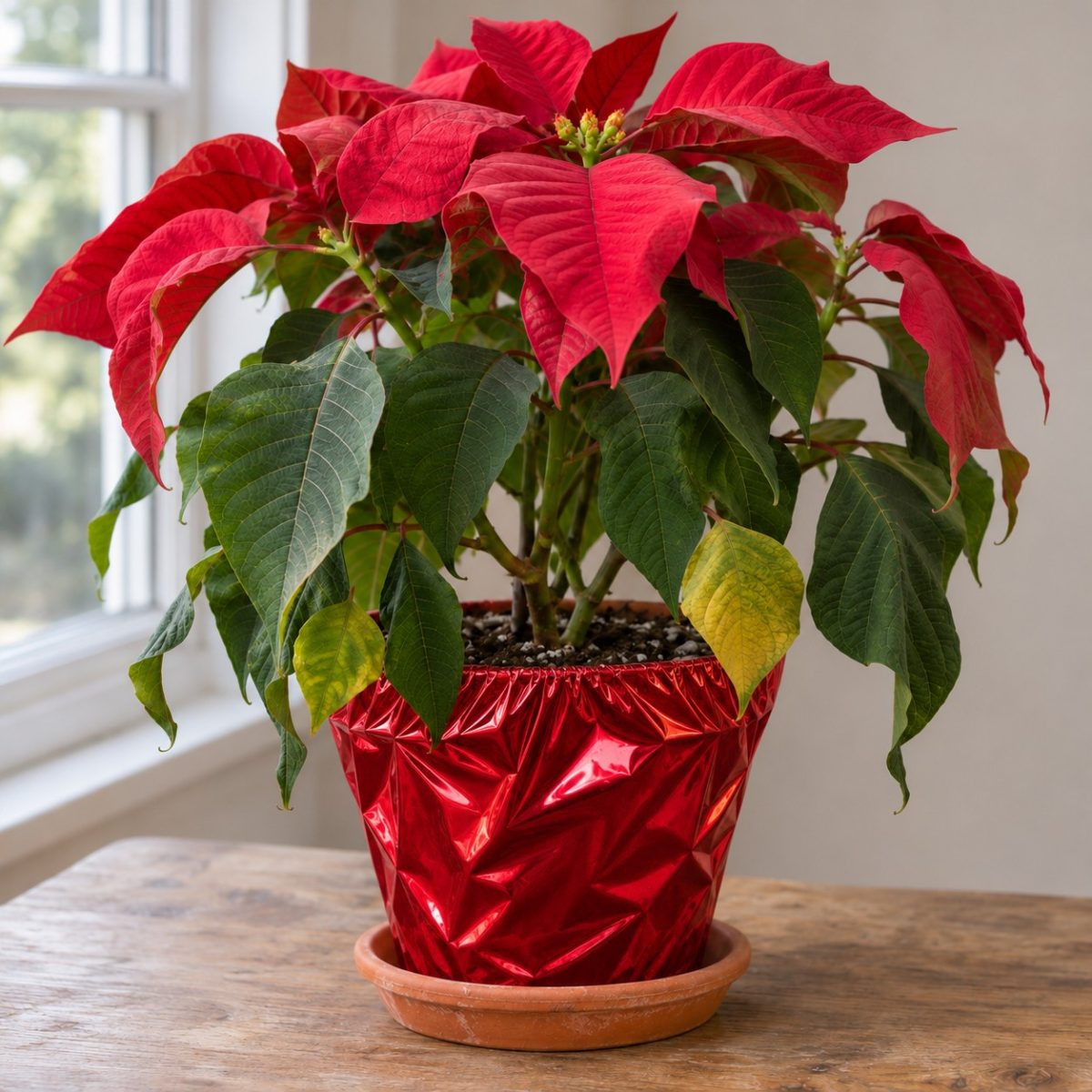
The plant’s nursery pot usually has holes in the bottom so excess water can escape. The foil, decorative basket or outer pot often catches that runoff. The top of the soil can start to look dry while the bottom of the pot is still sitting in water. And when you give the plant another drink, you add more water right where the roots are already struggling.
The Best Way To Water Poinsettias
Why Too Much Water Makes A Poinsettia Wilt
Poinsettia roots need air as well as moisture. When the potting mix stays saturated, there’s less air around the roots. Over time, the roots can become damaged or rot, making it harder for the plant to take up water.
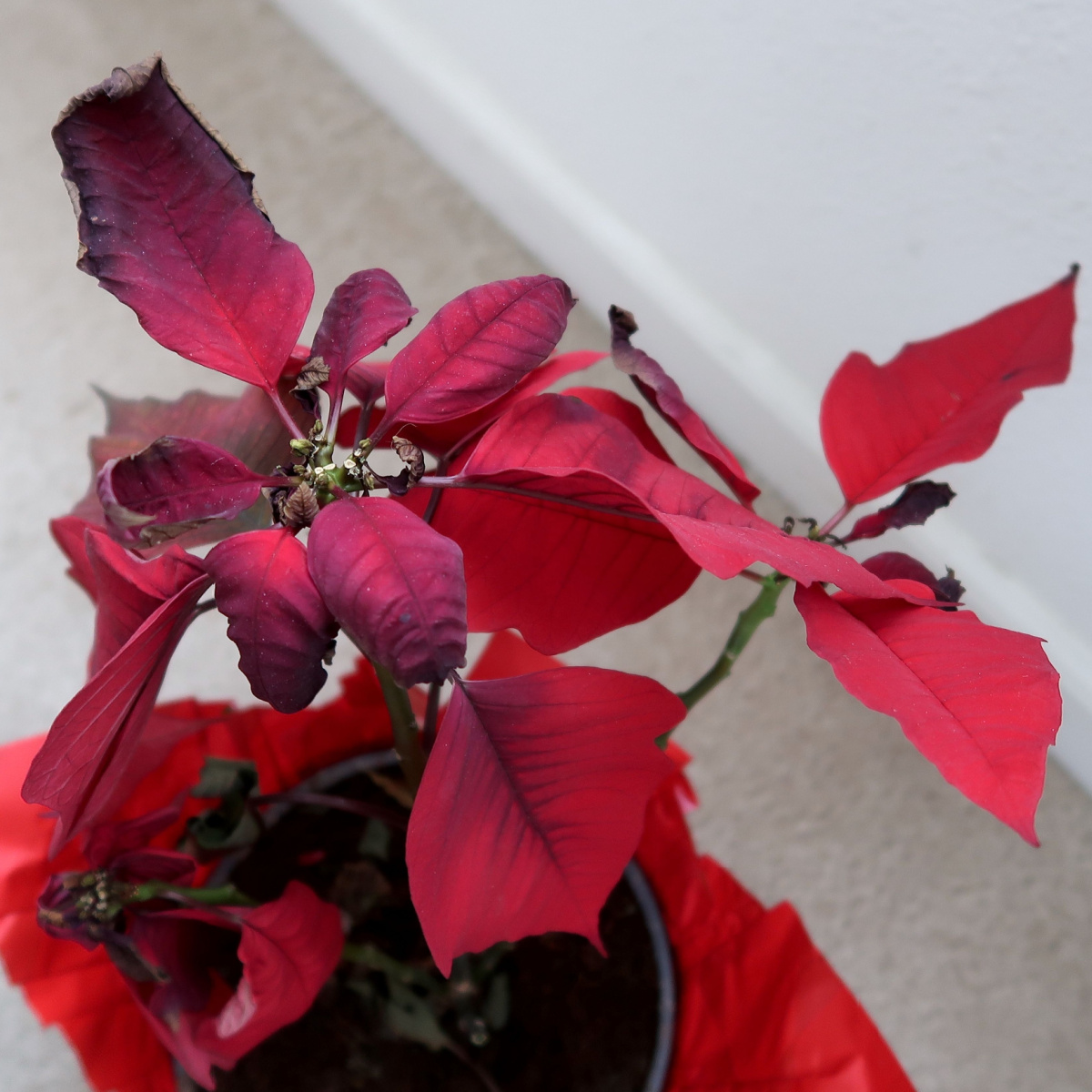
That’s how a poinsettia can look thirsty even when its soil is soaking wet. Yellowing lower leaves, leaf drop and drooping stems can all be signs that the plant has stayed wet too long. But a poinsettia can also wilt when it gets too dry.
The quickest way to tell which problem you’re dealing with is to feel the soil and lift the pot. A heavy pot with damp soil can wait. A light pot with dry soil is ready for a drink.
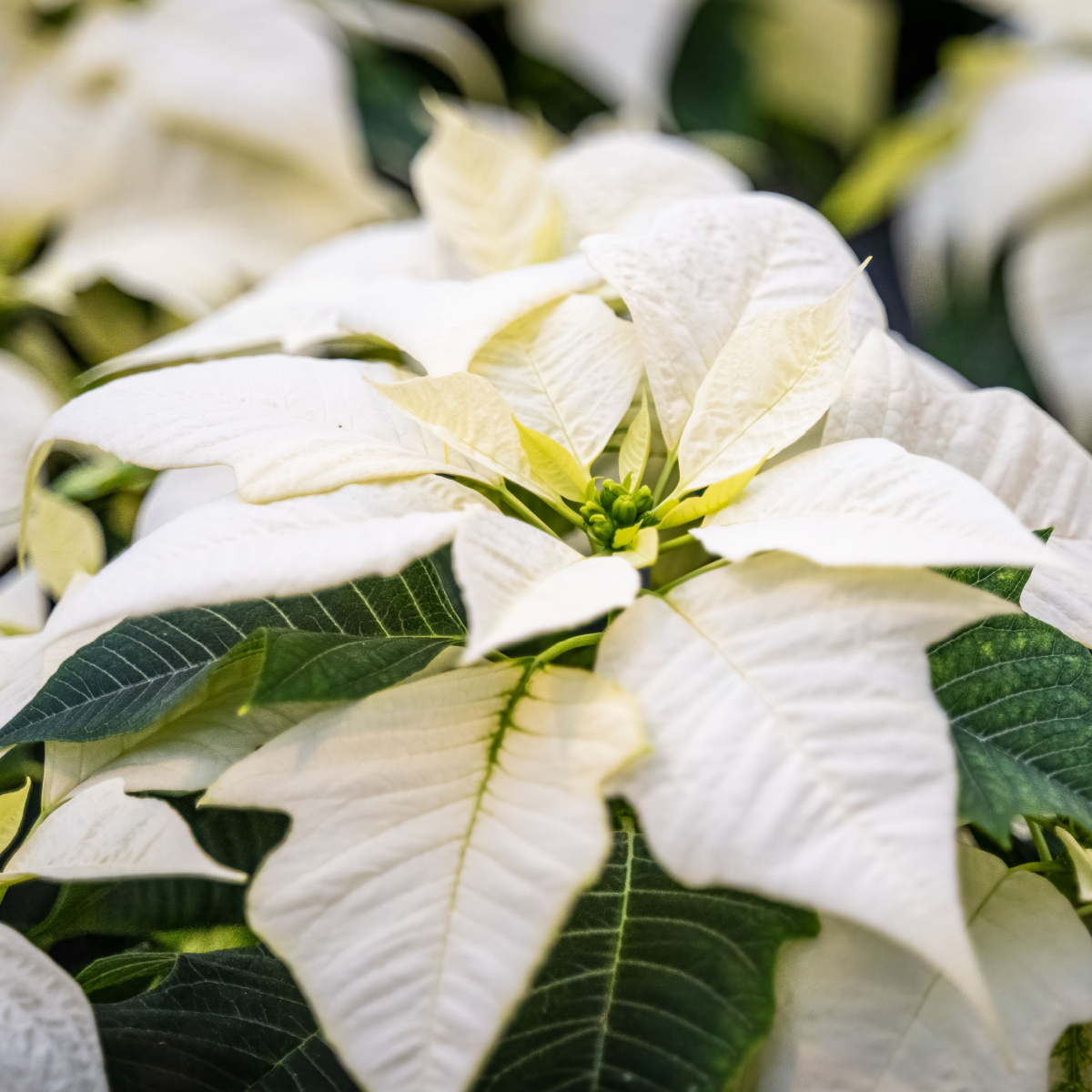
Knowing When To Water Poinsettias
Check the soil every few days, especially during the first week after you bring the plant home. Press a finger gently into the surface of the potting mix. When the top inch or so feels dry, it’s time to water. If it still feels moist, check again in a day or two.
How often that happens depends on the plant and where you keep it. A small poinsettia in a warm room may dry out fairly quickly. A larger pot in a cooler spot can hold moisture much longer. Even two poinsettias sitting side by side may need watering on different days if their pots are different sizes.
Try to catch the plant before the entire root ball dries out and the leaves start to sag. A quick soil check when you’re passing by is usually all it takes.
The Best Way To Water A Poinsettia
Take the nursery pot out of its foil sleeve or decorative container and set it in the sink. Pour room-temperature water slowly over the soil until you see it come out of the drainage holes. Then leave the pot in the sink until it stops dripping. Empty any water that’s already in the sleeve or outer container before putting the plant back.
If your poinsettia sits on a saucer, you can water it in place. Just empty the saucer once the pot has finished draining. You can keep the pretty foil, too. Lifting the pot out each time you water lets you enjoy the holiday display and see exactly how much water drains away.
Listen To Our Podcast On Watering Poinsettias Below
A thorough watering when the soil is ready gives the whole root ball a chance to take up moisture. A little splash every day can leave parts of the root ball dry while keeping other areas damp. Water slowly enough to soak the mix evenly, then let the pot drain freely.
What To Do If Your Poinsettia Is Already Drooping
If the soil is wet, take the plant out of its wrapper, dump any standing water and let the pot drain. Put it in a spot with bright, indirect light and hold off on watering until the surface begins to dry.
Some damaged leaves may still drop, so use the moisture in the pot to decide when it’s ready for its next drink.
If the pot is very light and the soil has pulled away from the sides, water may run straight down the gap and out the bottom. In that case, water slowly in two or three passes, pausing briefly between each one so the dry mix has time to absorb it. Then let the pot drain thoroughly.
Once you’ve sorted out the watering your poinsettias, take a look at where the plant is sitting. A heat vent can dry out a small pot quickly, and a drafty door or cold window can contribute to leaf drop. A bright spot away from hot and cold drafts makes it easier to keep the soil evenly moist through the holidays.
After Holiday Care
Once your poinsettia’s colorful bracts begin to fade, keep the plant near a bright window away from cold drafts and heat vents. Water when the top of the soil feels dry, and let the pot drain completely before slipping it back into its decorative foil wrap. See our article: What To Do With Poinsettias After They Finish Blooming - How To Keep Your Poinsettia Plant Alive!
In spring, trim the stems back to about 4 to 6 inches tall to encourage fresh growth. If the roots have filled the pot, move it into a slightly larger container with drainage holes. Once new leaves appear, start feeding it with a balanced houseplant fertilizer according to the label.
If you want your poinsettia to color up again for Christmas, start in late September or early October. Give it about 14 hours of uninterrupted darkness each night and bright light during the day for 8 to 10 weeks. A dark closet works well, as long as you bring the plant back into the light each morning.
This Is My Garden
Follow Our Facebook Page For Great Gardening Tips And Advice! This Is My Garden Facebook Page
This Is My Garden is a garden website created by gardeners, for gardeners. Jim and Mary Competti have been writing gardening, DIY and recipe articles and books and speaking for over 15 years from their 46 acre Ohio farm. They publish three articles every week, 52 weeks a year. Sign up today to follow via email, or follow along!

More Houseplants
- What To Do With Poinsettias After They Finish Blooming - How To Keep Your Poinsettia Plant Alive!
- How To Save Your Geraniums This Fall! Overwintering Geraniums
- The Perfect Houseplant For Indoors Or Outdoors - Why You Need To Grow A Pothos Plant!
- The Secret To Getting A Christmas Cactus To Bloom A Second Time