Whether it be insects or animals, pests can cause big headaches in the garden. Check out our latest articles below on how to handle pests in your backyard!


Whether it be insects or animals, pests can cause big headaches in the garden. Check out our latest articles below on how to handle pests in your backyard!
Looking for some of the best deer resistant bushes to plant in your yard this year to finally put an end to deer damage?
Deer are notorious for wreaking havoc on gardens, flowerbeds – or any area with vegetation they find appealing. Especially once winter arrives and fresh leaves, berries, and fruits become more and more scarce.
Watching deer damage the plants and shrubs around your home can be both disheartening and costly. It hits home even harder when you find yourself repeatedly replacing expensive perennial bushes and shrubs. But is there really anything you can do?


Sadly, even the most reliable deer proofing deterrents aren’t foolproof. While homemade sprays made with ingredients like hot peppers, garlic or eggs can provide some protection, they can lose their effectiveness if not reapplied regularly. And the same goes for commercially available repellents and sprays as well.
That leaves fencing as the only real option to stop deer in their tracks. And to work against deer, fencing has to be both high and strong enough to work – and that can come with a hefty price tag. But believe it or not, there is another option – to simply to plant and grow bushes and shrubs that deer don’t find appealing in the first place!
Adding deer-resistant plants to your landscape not only protects those specific bushes – but it can also help safeguard nearby plants that deer might typically enjoy. And by making your yard a less inviting food source overall, deer are more likely to move on to other areas.
It’s important to note that deer resistant does not mean deer proof. But planting varieties that deer don’t find to their liking will certainly lead to keeping plants far safer than if you don’t!
Even better, choosing deer-resistant shrubs doesn’t mean sacrificing beauty. In fact, there are actually quite a few deer resistant bushes that offer incredible beauty, texture and color to your yard. And with that in mind – here is a look at some of the best of the best choices to keep deer out!
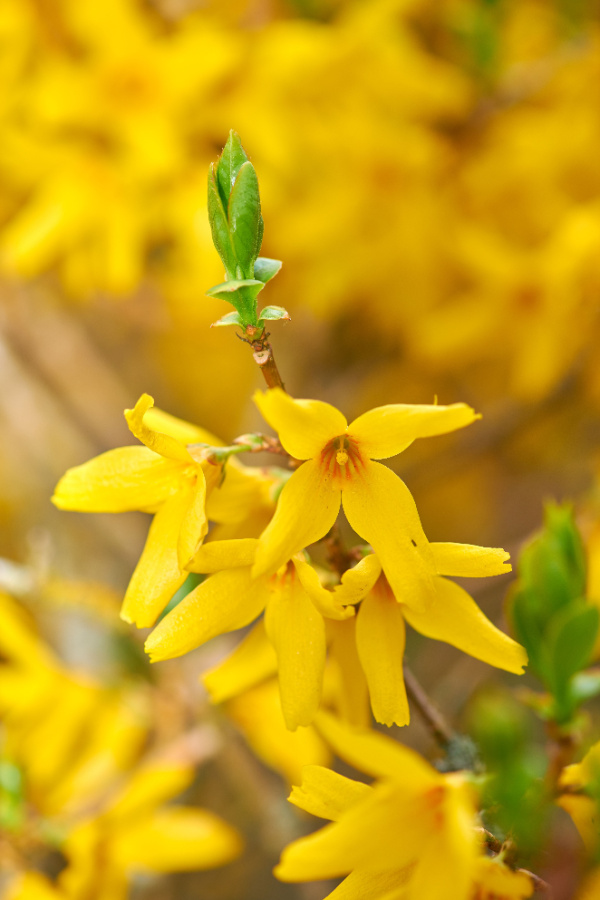
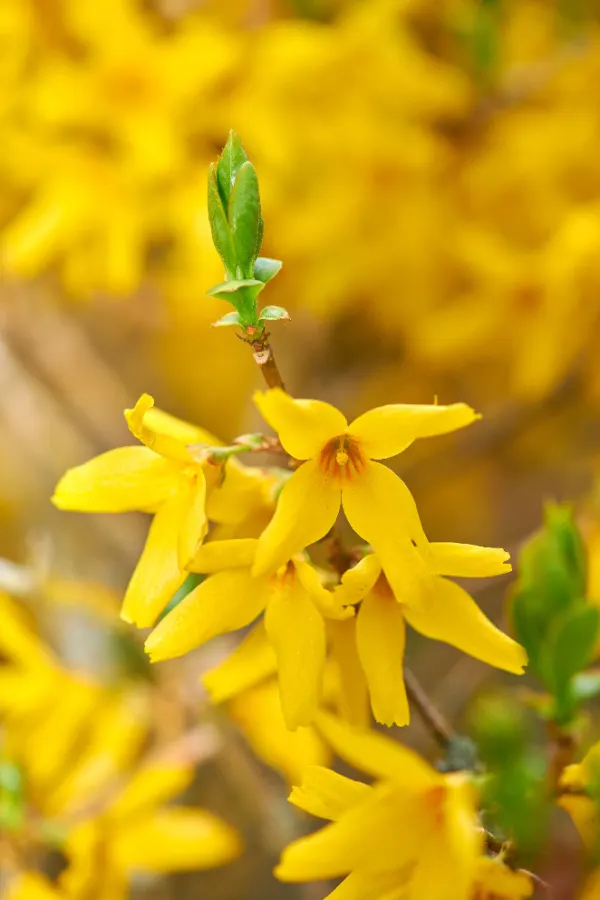
If you’re searching for a deer-resistant shrub that adds vibrant early season color to your yard, forsythia is an excellent option. The hardy bush blooms in striking golden hues, well before its leaves ever appear in the spring. And can it ever bring life to the landscape!
Not only is it attractive in bloom, it’s also a big favorite among pollinators like bees and butterflies. Birds, too, are drawn to its dense foliage, which offers excellent cover. But when it comes to being a food source for deer – they simply do not like the bitter taste of the plant. Because of this, they usually steer clear of it. Affiliate Plant Link: Brighter Blooms – Lynwood Gold Forsythia Shrub, 1 Gal.
Forsythia works well as a standalone plant or when planted in a row to create a thick, long hedge. The hedges can work quite well as a natural “deer barrier,” offering extra protection for other plants in your garden. Forsythia thrives best in moist, fertile soil for optimal growth.
There are actually several reasons deer are not fond of boxwoods. For starters, the bush contains alkaloids that are toxic to deer. But if that wasn’t enough, the aroma of boxwoods also keeps deer far away as well. Together – the two features make them highly unattractive to deer.


Boxwoods require very little upkeep and offer incredible flexibility for growing almost anywhere in the landscape. Whether planted alone or in clusters, they work well for lining walkways and entrances. They’re also among the easiest shrubs to trim into different shapes. But best of all, they are very unattractive to deer!
With many varieties available, there’s a boxwood for every need. Some types even do well in pots, making them perfect for patios and porches. Since they tolerate both full sun and partial shade, and are also drought-resistant – they’re a great choice for almost anywhere in your yard!
Barberry bushes are another excellent choice for keeping deer at bay, thanks in part to their sharp, thorny branches. Deer typically avoid plants with spines or tough textures, and most barberry varieties have them. It certainly makes them the perfect natural deterrent in the landscape.
In addition to their prickly defense, barberry bushes have a slightly bitter taste, which deer prefer not to eat. The hardy shrubs thrive in a variety of conditions and can grow well in growing zones four through eight. Making them ever more desirable, they can be found in reds, greens and even yellow foliage colors.
Barberry bushes prefer well-drained soil and can tolerate both full sun and partial shade, though they produce the best color and growth in sunnier locations. Once established, it is also highly drought-resistant bush, making it a great choice for low-maintenance landscaping.


Whether used as a hedge, border plant, or accent shrub, barberry offers both beauty and protection for your outdoor space and for nearby plants that deer might find to their liking.
No deer resistant list would be complete without mentioning lilacs. Lilac bushes are among the most aromatic plants, especially when they’re in full bloom. Their strong, sweet scent is overwhelming for deer, and usually keeps them at a distance.
They can also grow quite large and serve as a shield for other plants that deer typically enjoy. Their powerful fragrance is so strong that it can help to keep deer from wondering in to check out other plants that are growing nearby.
One of the best things about lilacs is just how low-maintenance they are. Suitable for growing in zones three all the way to seven, they thrive in full sun and with well-draining, nutrient-rich soil. Once planted – they require very little care at all!
In addition to the top four bushes highlighted today, if you are looking for a few more excellent shrubs that deer don’t prefer to eat – you can also try Viburnum & Butterfly bushes. Both are also highly deer resistant and also quite easy to care for.
Here is to filling your landscape with beauty and color – and not deer! And for more great deer stopping info, check out our article: How To Keep Plants Safe From Deer In The Fall & Winter – 5 Great Ways To Stop Deer!
Follow Our Facebook Page For Great Gardening Tips And Advice! This Is My Garden Facebook Page
This Is My Garden is a garden website created by gardeners, for gardeners. Jim and Mary Competti have been writing gardening, DIY and recipe articles and books and speaking for over 15 years from their 46 acre Ohio farm. They publish three articles every week, 52 weeks a year. Sign up today to follow via email, or follow along!
Want a few simple but effective tips to keep mice and the damage they cause out of your stored camper, car or lawn equipment this winter?
As the weather grows colder, mice love to look for warm, enclosed spaces. And unfortunately, campers, cars, lawn mowers and every type of power equipment that you store for the winter can become a prime target for them to take up residence!
Mice might be small, but they can be incredibly destructive creatures. Ones that if they find a way inside of your equipment can cause thousands of dollars in damage to interiors, wiring, and engines. But whether you store your equipment outside, in a barn or shed – or in a garage, there are few simple but incredibly effective methods that can keep them out!
One thing is for sure, mice are opportunistic creatures. As temperatures drop, they quickly start to look for any space or place that offers warmth and protection. And if that same space happens to offer a source of food, it’s even more inviting!
Campers, cars, and lawn equipment that are in storage are perfect shelters for mice because the enclosed spaces inside the engine compartment or inside of the vehicle itself retain heat. They also provide protection from wind, rain and snow.
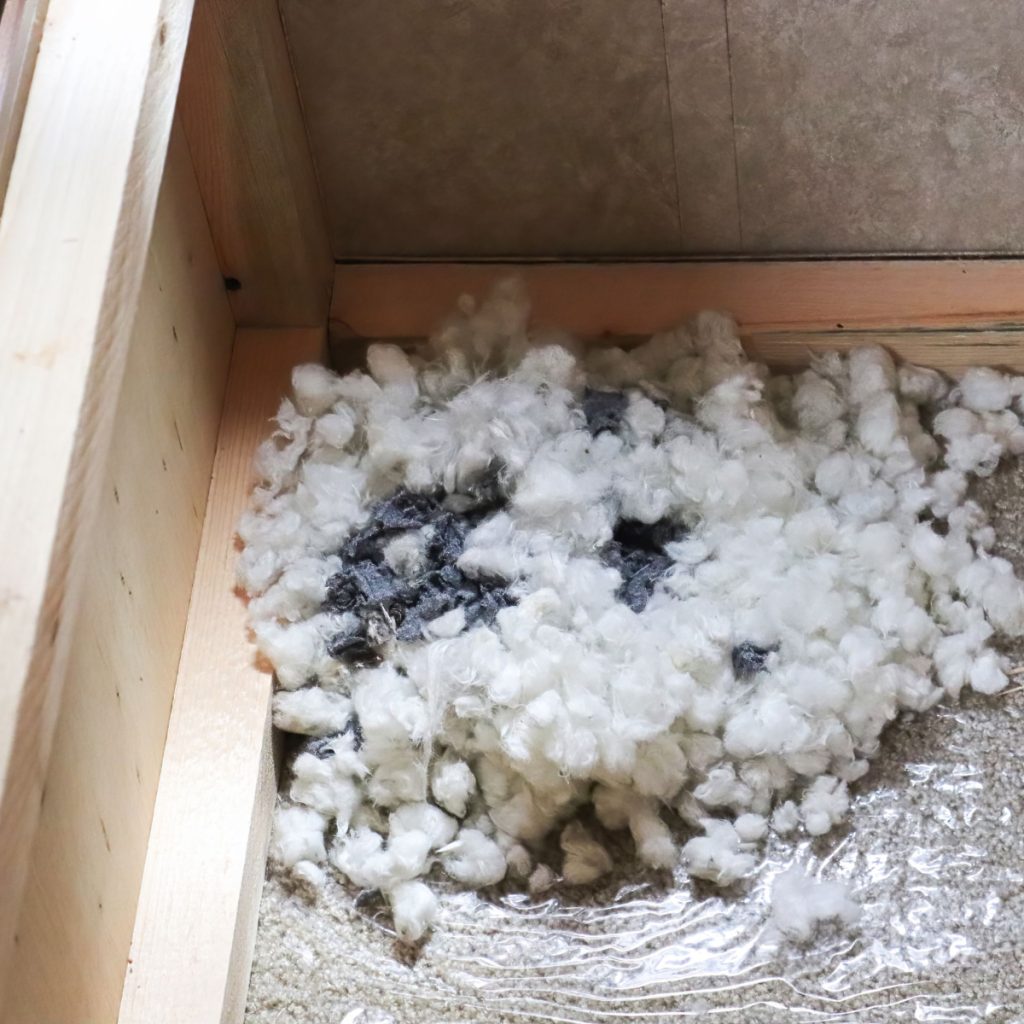
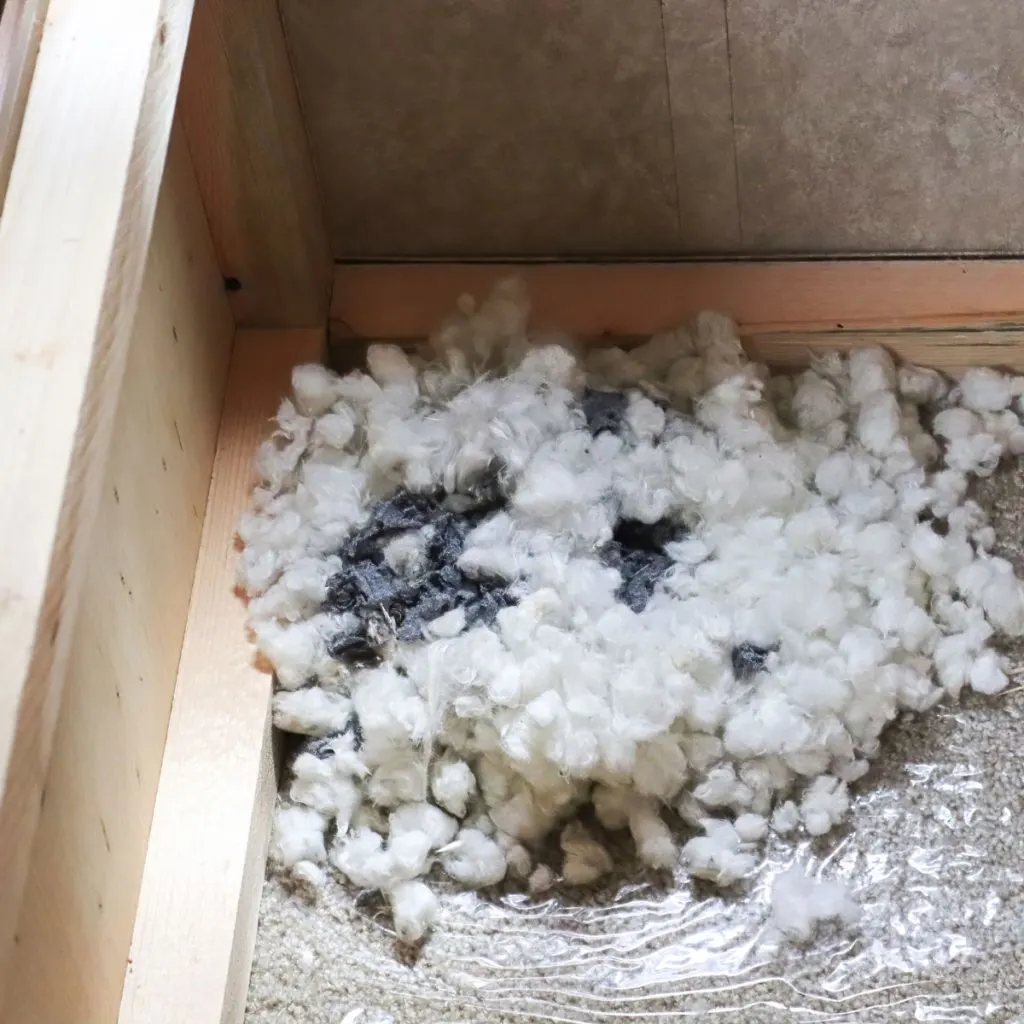
But even more, they often also contain the perfect supply of materials for building nests. Soft and chewable materials like fabric and insulation are ideal for building nests. And in the case of campers, any crumbs, leftover food, or even pet food left from summer’s camping activities is a real bonus. And once mice find a way inside – the damage can be swift and severe!
Mice cause a lot of damage in a lot of different ways. For starters, they will shred upholstery, carpets, and insulation when looking for nesting material. Even worse, as they do, they leave behind their droppings and urine. At the least it can cause awful odors and a lot of clean-up. But often, it completely ruins seats, flooring and more.
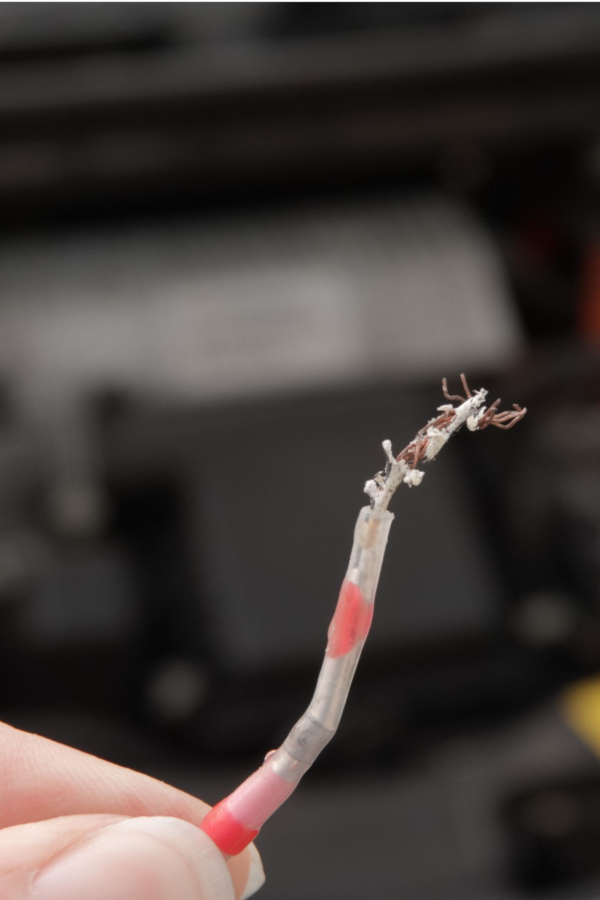
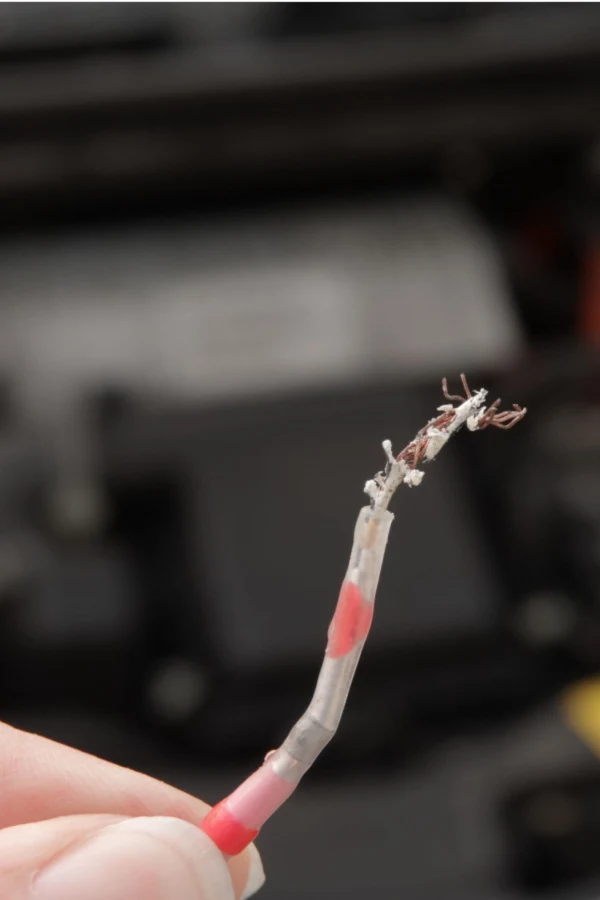
If that wasn’t enough, mice are constantly gnawing in an effort to keep their teeth from overgrowing. And what do they gnaw? One of their favorite choices in cars, campers and mowers is the wiring. This can result in serious and expensive electrical issues, engine malfunctions and more.
So how can you keep them out? Well, the answer might be easier than you think with just a few simple tricks!
Before we get to a couple of secrets that work like a charm to deter mice, there are a few critical things that are important to take care of to ensure success.
When it comes to cars, campers and trucks, it’s vital to make sure you clean out every crumb of food. Pay special attention to hidden areas under seats, in glove compartments and in storage bins. Even if a mouse can’t get to the food item, smelling it will draw them in.
Take time to vacuum in the crevices of seats and underneath to get rid of any possible crumbs. This little step can save a lot of trouble down the road!
Last but not least, make sure you clean out any napkins, tissues and paper towels. These materials make excellent nesting supplies for mice. And they will quickly find and use them to create their homes. For all vehicles, always be sure to close windows and vents to prevent easy entry.
Now it’s time to use a couple of tricks that will keep mice out for good – mothballs and cinnamon & mint spray and scent packets!
Whether you have a stored car, camper, tractor or a riding mower, placing moth balls on the top and around the bottom of each tire can do wonders in keeping mice away. Tires are an easy way for mice to get in.
In cars and campers, they can use the tread to easily climb up to the top of the tire. From there, it makes it easy for them to gain entry into side panels – and continue right on inside. But there is a quick way to stop this with moth balls!
Mice hate the pungent smell of moth balls. And by simply putting them on the tires of stored equipment, you eliminate an easy point of entry. You can place a few in the engine compartments of mowers, tractors, cars and trucks as well to keep mice from chewing wires and building nests there.
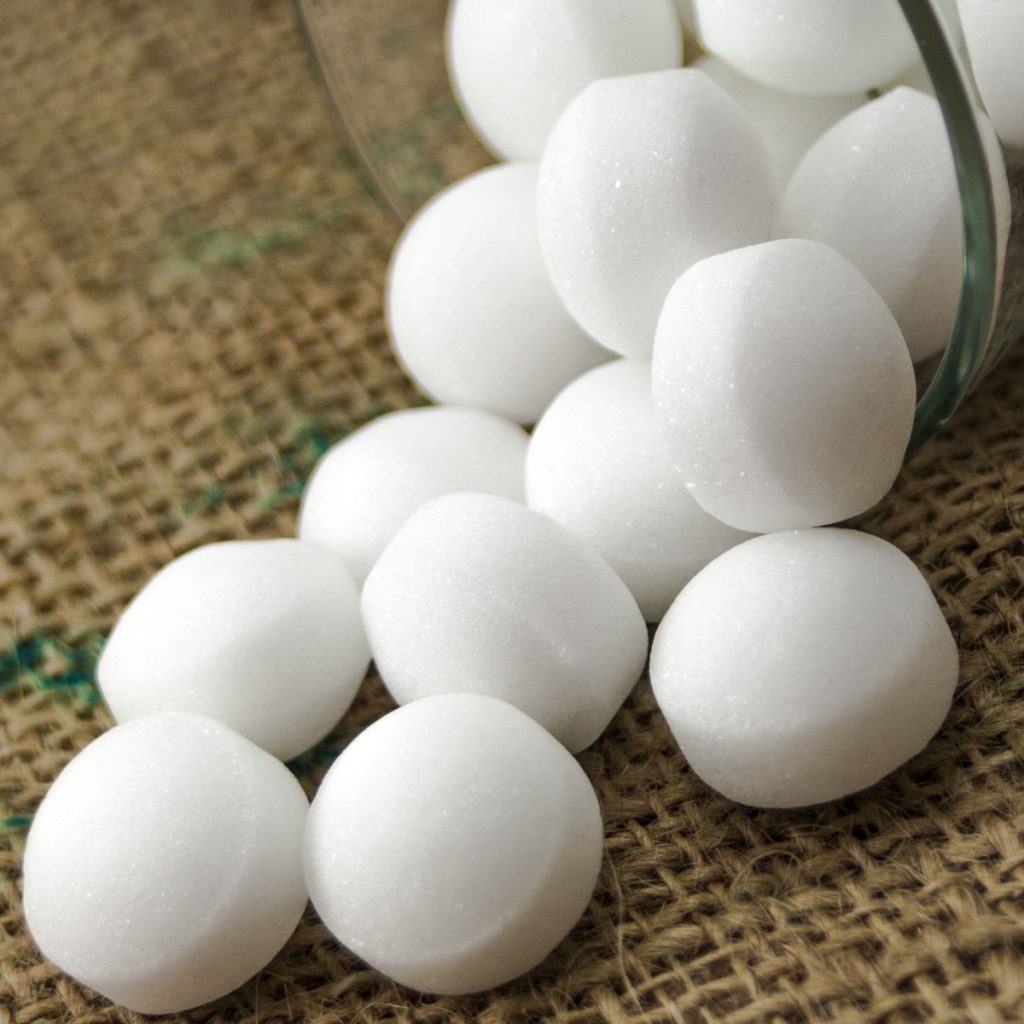
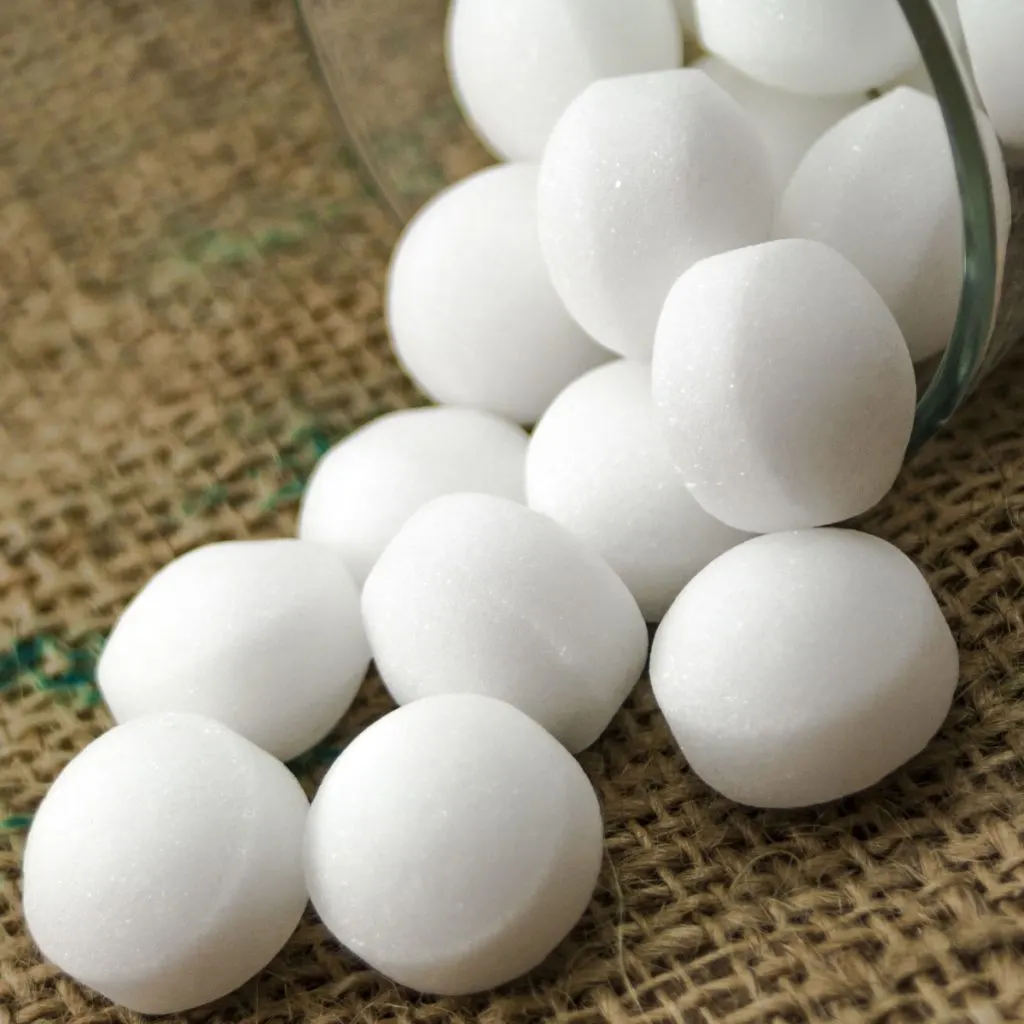
One note with moth balls, they should be used with caution. They can be toxic to pets and children, so always use with care. Affiliate Product Link: 36 Pack Natural Mice Repellent for Car Engines, Peppermint Oil Moth Balls
Mice have an acute sense of smell. And just as they do with mothballs, they detest the strong scent of cinnamon and peppermint. These natural deterrents are safe, non-toxic, and easy to use. Especially when it comes to protecting the inside of campers and cars where you might not want the mothball odor to linger!
The good news is that there are some powerful, all natural cinnamon & mint spray & pouch products on the market that work incredibly well to keep mice out. And are they ever easy to use! Affiliate Link: Grandpa Gus Cinnamon Spray & Pouches For Mice
Mint spray can be used to protect from mice damage all over. Use the spray to coat entry points, around tires and near engine bays. You will need to reapply throughout the winter to keep the scent strong and effective.
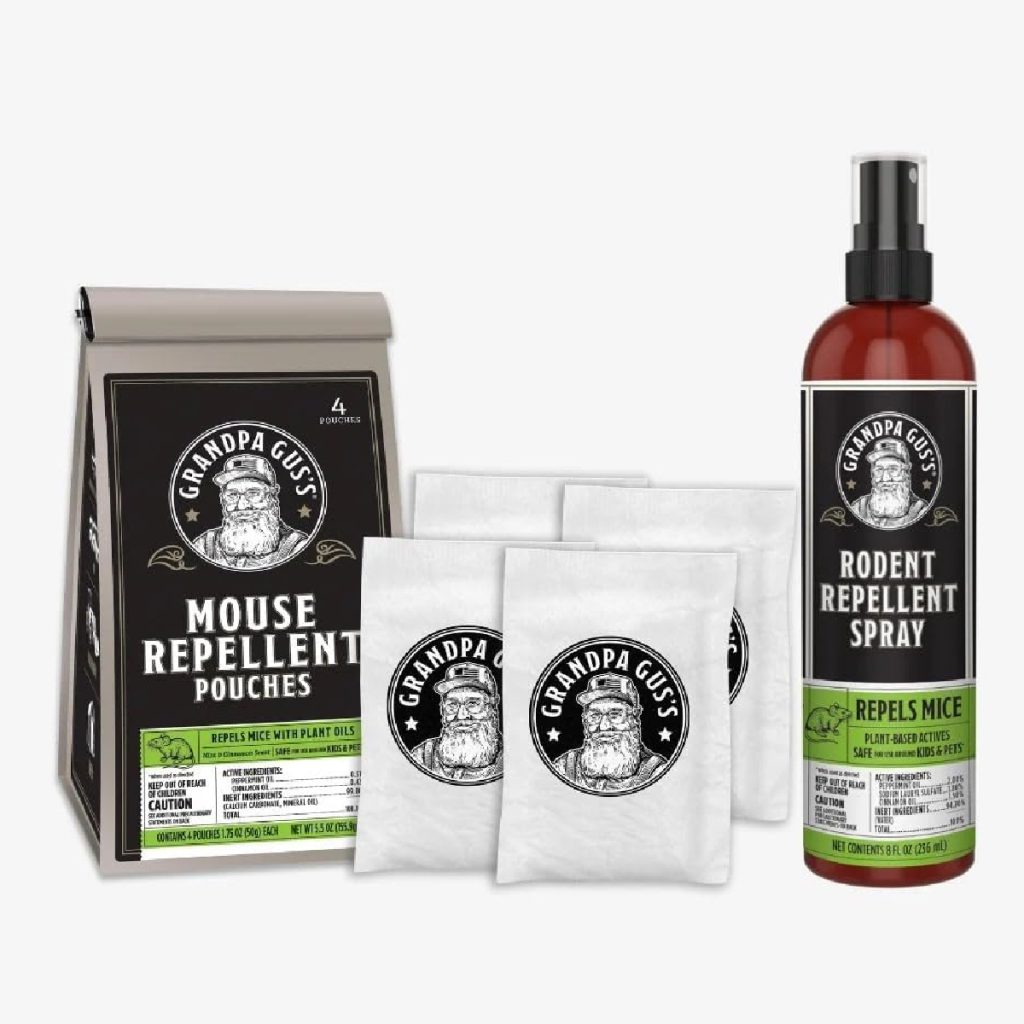
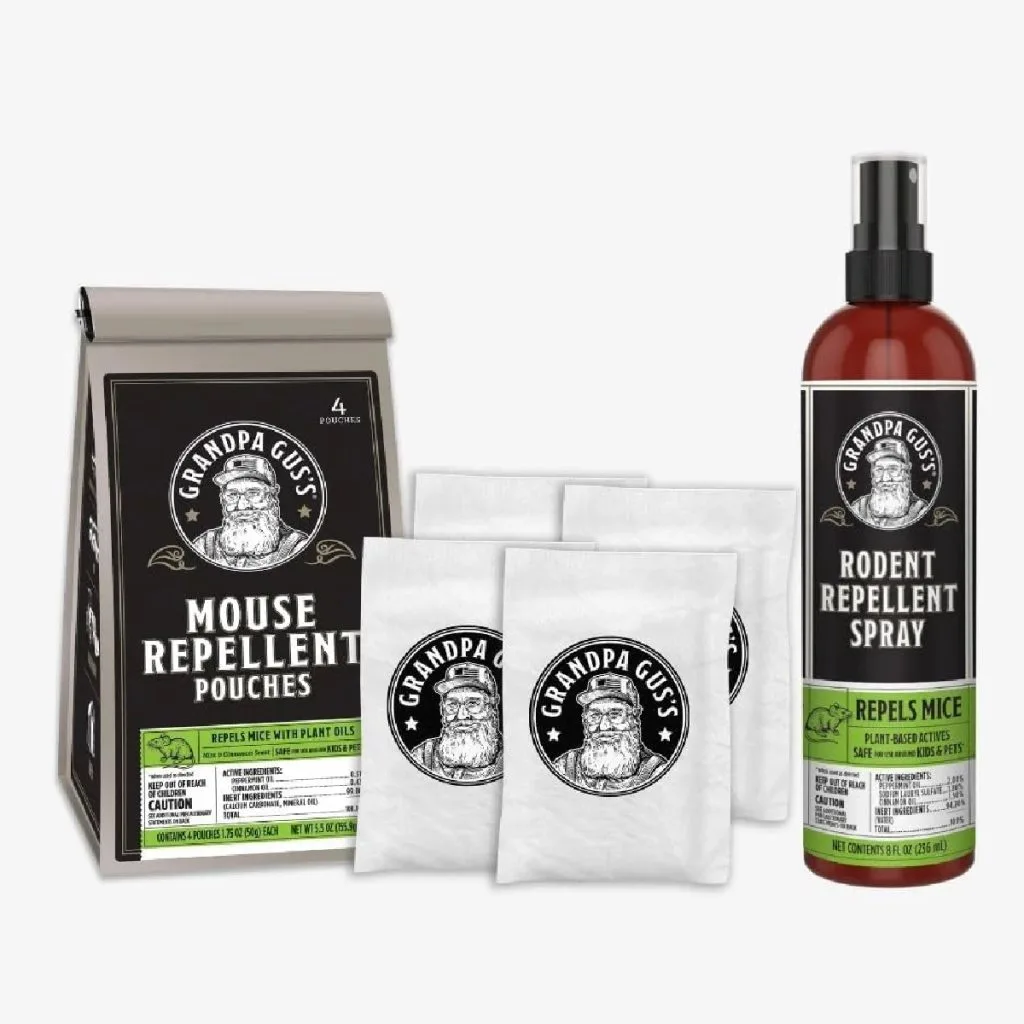
The pouches are great for putting inside of cars and campers to fill the interior with minty, cinnamon freshness. Freshness that mice simply can’t stand! Place these pouches in your camper, car, or lawn equipment, focusing on target areas such as under seats, near wiring, and in storage compartments.
The scent remains effective for weeks, requiring minimal maintenance. It’s also perfect for families with pets or children, as they don’t contain harmful chemicals. Again, you will need to put new packets in when the scent starts to wear off.
By the way, cinnamon and mint are also highly effective in deterring spiders too. See: 2 Simple Ways To Keep Spiders Out Of Your House – With Cinnamon!
Here is to keeping mice out of your stored campers, cars and equipment this year – with ease!
Follow Our Facebook Page For Great Gardening Tips And Advice! This Is My Garden Facebook Page
This Is My Garden is a garden website created by gardeners, for gardeners. Jim and Mary Competti have been writing gardening, DIY and recipe articles and books and speaking for over 15 years from their 46 acre Ohio farm. They publish three articles every week, 52 weeks a year. Sign up today to follow via email, or follow along!
Did you know you cinnamon is one of the best natural ingredients to use to keep spiders out of your house? Not only is it effective – you won’t believe how easy it is to use!
Even though spiders might be quite beneficial in controlling other pests, they can be more than an unwelcome guest when they enter your home. Let’s face it, no one really enjoys being startled by a spider as it scurries across the floor or up and down a wall!
But keeping spiders out can be a tough task. Especially in the fall and winter months when they are searching all over for a way indoors. And it can be even tougher when you are trying to do so without using harsh chemical sprays and repellents.


But the good news is that there is actually a way to keep spiders out without having to resort to products that might be harmful to humans and pets. All by simply using the power of cinnamon and cinnamon oil!Cinnamon offers a safe, non-toxic, and eco-friendly option to deal with spiders.
The fragrant spice, known mostly for its culinary uses, actually doubles as a potent deterrent for spiders. So why does it work so well? Because the strong scent found in cinnamon is all due to an active natural compound that is found within it.
That active compound is on that not only spiders but many other insects as well simply detest. And when that scent is placed where they try to enter or live – they stay far away!
Spiders rely heavily on their sense of touch and smell to navigate their surroundings. They actually use sensitive hairs on their legs to detect chemical signals wherever they travel.
Strong odors, such as that of cinnamon and its concentrated oil form interfere with those hairs and disturb and even block their ability to navigate. It also disrupts their ability to communicate effectively with other spiders as well.


But if that wasn’t enough, cinnamon oil also contains compounds that act as irritants to spiders. And together, both of those lead to spiders simply avoiding any areas where the strong scent of cinnamon is present.
Ground cinnamon is an easy and inexpensive way to ward off spiders. And it can be used in several basic ways to keep spiders out of almost anywhere.
One of the easiest ways to use ground cinnamon is to sprinkle it along the areas where spiders are likely to enter your home. This includes window sills, doorways, and around cracks or gaps in walls or floors. The strong scent from the ground cinnamon will act as a barrier.
It’s importatn to use a fair amount of cinnamon in cracks and gaps. Unfortunately, a light dusting does not usually put off enough of a scent to deter them. Affiliate Link: 15 Oz. Ground Cinnamon
Another great way to use ground cinnamon is by placing it in small breathable packets or sachets. Start by using cheesecloth or another breathable fabric to create a small packet filled with cinnamon. Then, tie up and place the packets in closets, under beds, or near windows to keep spiders at bay. The packets or sachets should be refilled every few weeks to maintain their potency.
Last but not least, you can combine ground cinnamon with other natural repellents that carry scents that spiders don’t like. For this, cloves, bay leaves and peppermint all work well. Spiders dislike strong smells, and combining multiple natural deterrents creates a very strong barrier against them.
In addition to ground cinnamon, the essential oil of cinnamon can also be used as a highly effective deterrent against spiders. Concentrated cinnamon oil is much more potent and stronger when it comes to scent than ground cinnamon. And there are several ways to use it to combat spiders.
The first is to make a repellent spray with water and the cinnamon oil. To do this, all you need to do is mix 10 to 15 drops of cinnamon essential oil with water in a spray bottle. It’s important to note that you should always use 100% pure cinnamon oil as diluted oil will not have the same effect. Affiliate Link: Majestic Pure Cinnamon Oil
Shake well to combine the two ingredients – and then simply spray this mixture around entry points like doorways, window frames, and baseboards. You can also apply it to areas where spiders tend to gather, such as corners, basements, and garages. Reapply the spray every few days to keep its effectiveness.
For a more targeted approach to specific areas, you can soak cotton balls in cinnamon oil and place them in strategic locations around your home. Like the ground cinnamon sachets, cotton balls can be placed in dark corners, closets, or other areas where spiders may enter or hide.
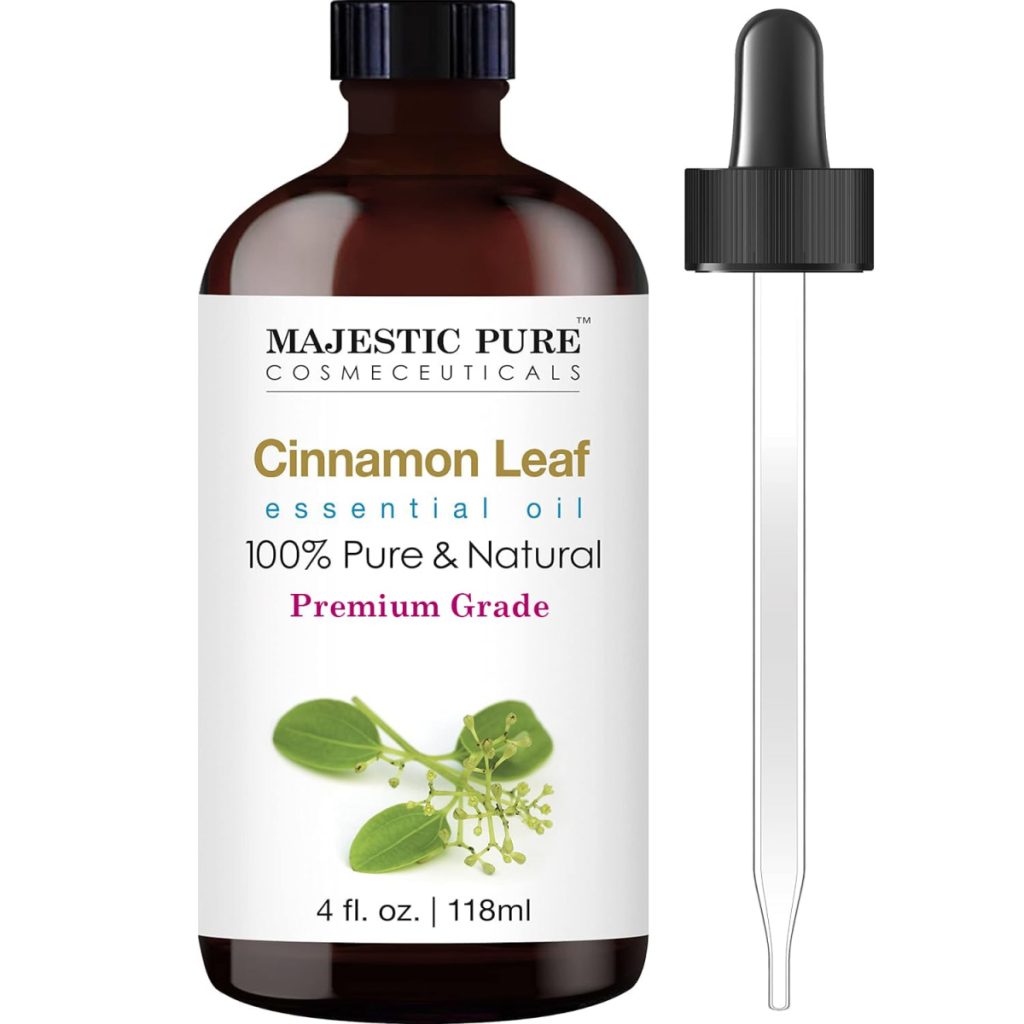
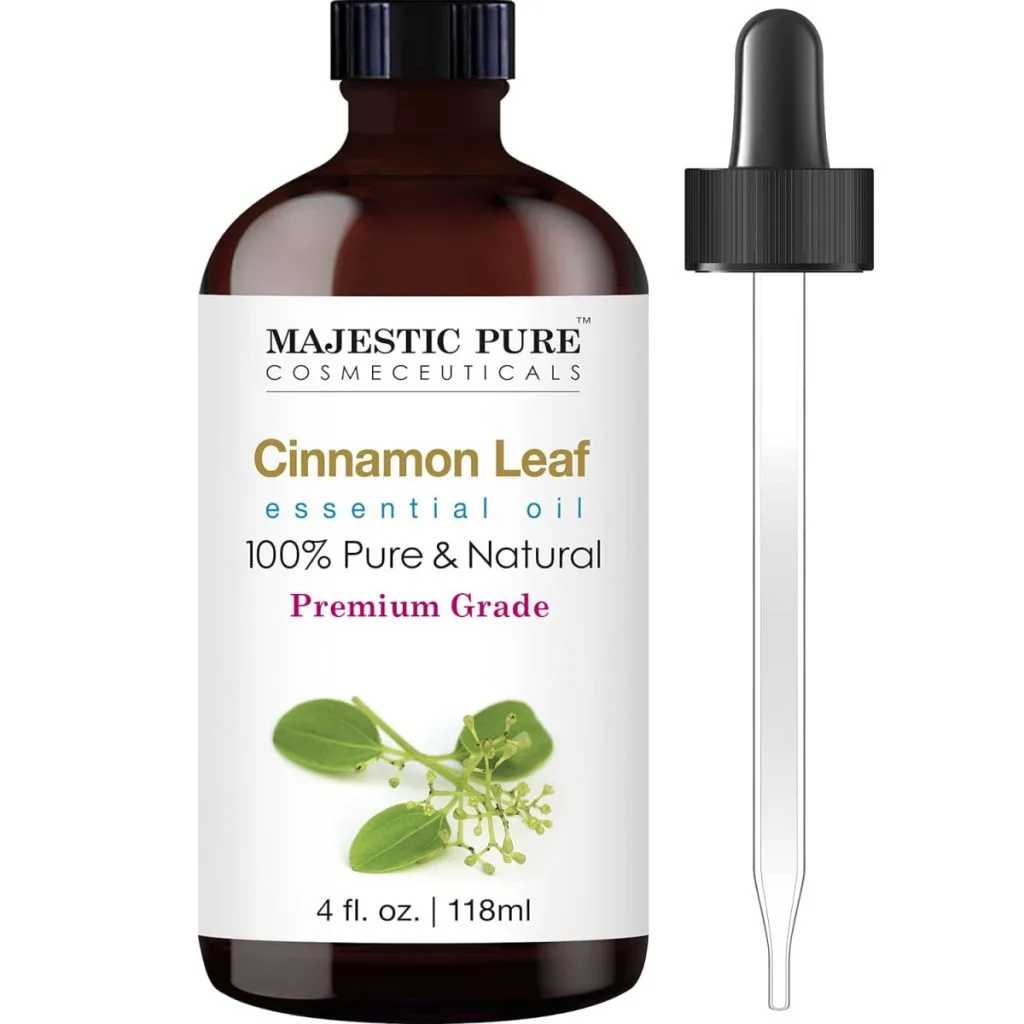
Be cautious, however, as essential oils can stain some surfaces. It’s best to place the cotton balls in small dishes or on top of protective materials. You can also combine cinnamon oil with vinegar, which happens to be another great natural spider deterrent.
Mix 10-15 drops of cinnamon oil with a cup of white vinegar and water in a spray bottle. Shake well and spray it in areas where spiders are most likely to call home or visit. The combination of vinegar and cinnamon oil creates a powerful scent that spiders try to avoid at all costs!
Last but not least, you can also use cinnamon oil in a diffuser to spread the scent of cinnamon all throughout your home. This not only helps to keep spiders at bay but also leaves your living space smelling warm and inviting.
While diffusing the oil may not directly repel spiders from specific entry points, it can create an overall environment that spiders find unpleasant.
While cinnamon and cinnamon oil can be effective, it’s important to remember that they may not completely eradicate a spider problem on their own.
Spiders can enter through tiny cracks and crevices, so make sure to seal any potential entry points in your home. Caulk around windows, doors, and any gaps in walls or floors. Spiders also love to hide in dark, cluttered areas. By keeping your home tidy and reducing clutter, particularly in places like basements, attics, and storage spaces, you can reduce the number of hiding spots for spiders.


Last but not least, regular vacuuming and dusting can help remove spiders and their webs. Be sure to pay extra attention to corners, baseboards, and other areas where spiders tend to spin webs. Here is to using cinnamon to repel and keep spiders out of your house – for good!
For more on stopping pests trying to get inside – be sure to check out our article: How To Keep Mice Out Of A Garage – 3 Simple Tricks That Work To Stop Mice!
Follow Our Facebook Page For Great Gardening Tips And Advice! This Is My Garden Facebook Page
This Is My Garden is a garden website created by gardeners, for gardeners. Jim and Mary Competti have been writing gardening, DIY and recipe articles and books and speaking for over 15 years from their 46 acre Ohio farm. They publish three articles every week, 52 weeks a year. Sign up today to follow via email, or follow along!
Looking for a few tried and true methods for keeping all of your fall planted bulbs safe from being dug up by squirrels, chipmunks and other animals?
If you live in an area where frolicking chipmunks and squirrels abound, you know just how difficult it can be to protect your tulips, iris, crocus and a long list of other bulbs from being dug up and devoured. One thing is for sure, they can all but eliminate a fall planting with their foraging efforts!
Unfortunately, the fall planting of bulbs happens to coincide at exactly the same time squirrels and other animals are beginning to prepare for winter. And nothing makes a more delicious meal than easy to find bulbs.
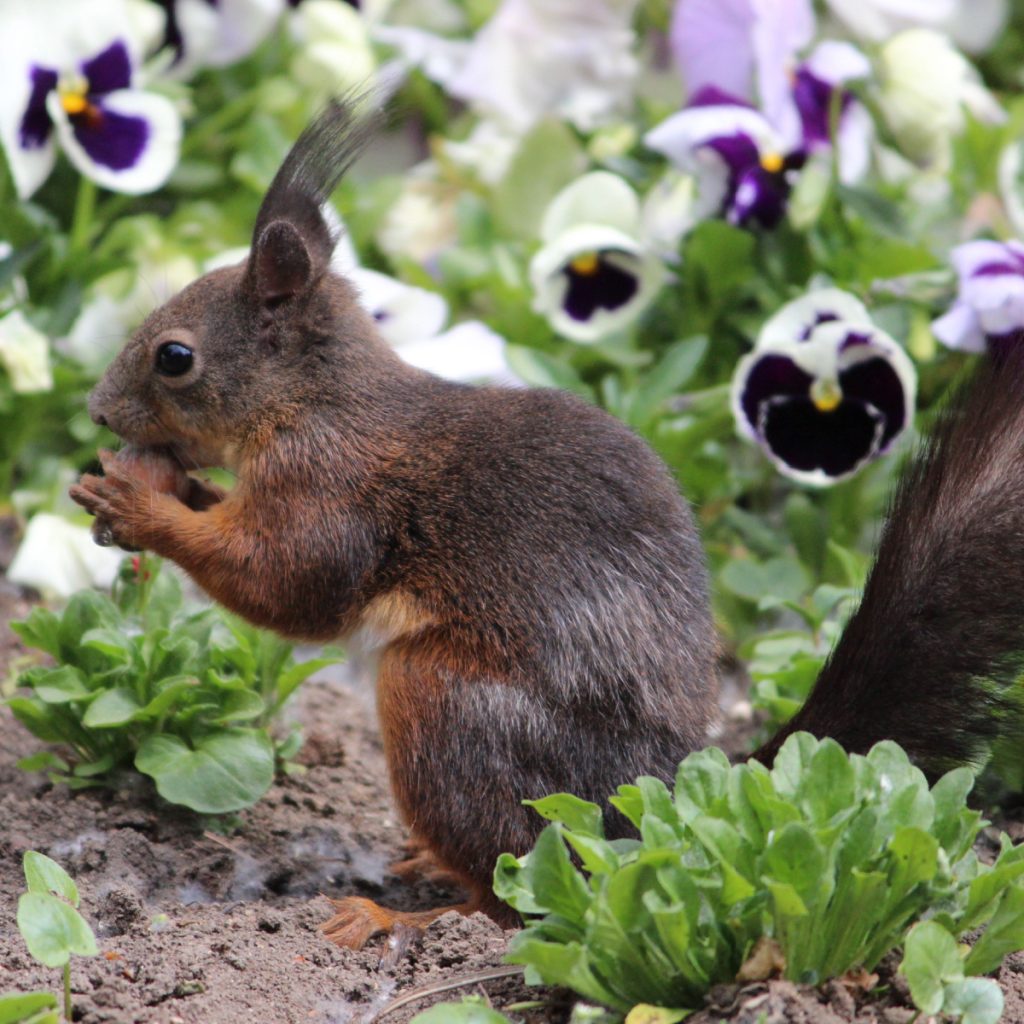
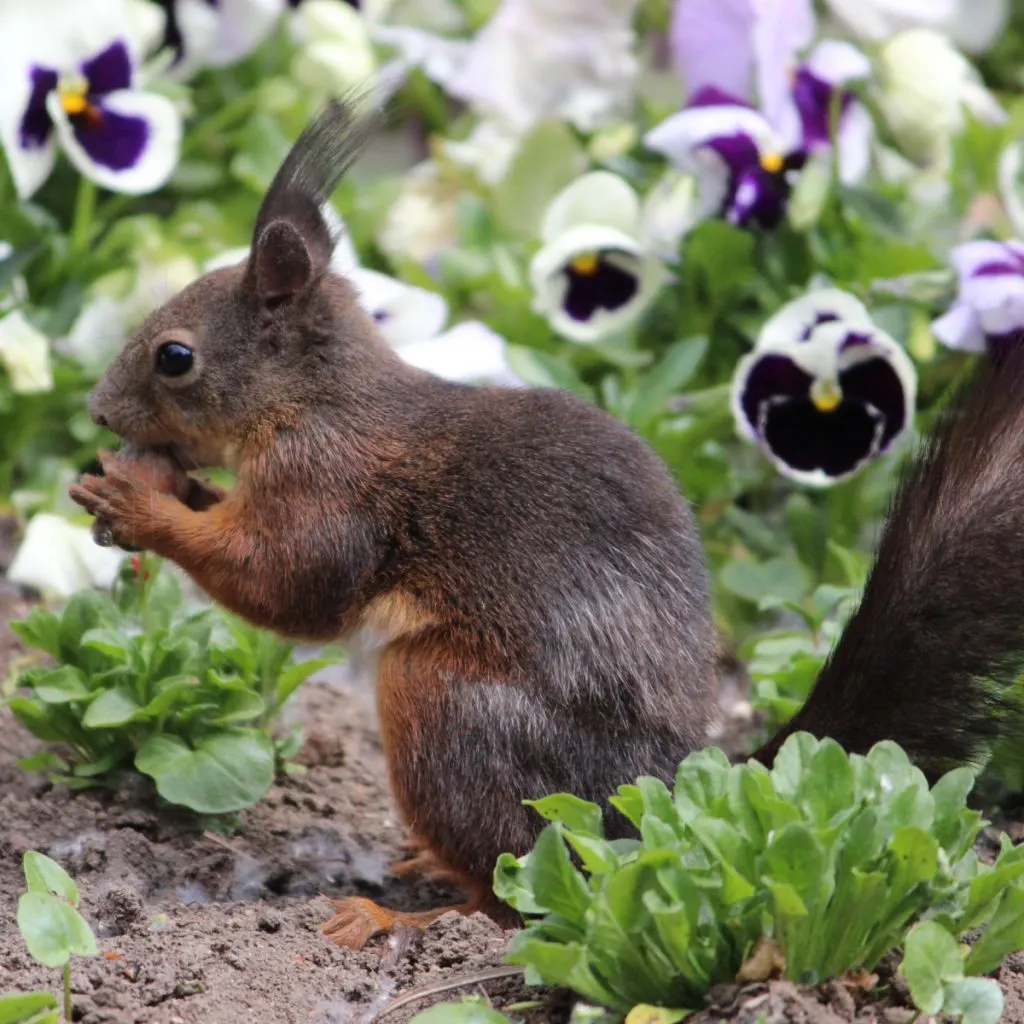
Let’s face it, there is nothing more frustrating than spending an entire afternoon planting bulbs – only to have all of your efforts dug up the next day. The good news? There are actually a few simple but very effective tips and tricks to keep that from ever happening – and to ensure that your flowerbeds are loaded with spring color early next year!
Although all four of the tips below are highly effective at helping to keep your fall bulbs safe, there are a few things you can do right from the start that can deter squirrels and chipmunks from unearthing newly planted bulbs.
For starters, always tamp down the soil as soon as you plant and cover with mulch. Bare soil is an open invitation for all kinds of animals to dig for treasure. And if it’s loose, the scent of the bulbs is far easier for them to detect.
In addition, although fertilizing can help bulb growth and flowering, it also attracts pests. If you live in an area where squirrels and chipmunks are prevalent, it is best to skip adding bone meal or fertilizer. If you do need to fertilize, add it at the very bottom of the planting hole only. To make it even more safe, be sure to cover the soil with mulch as well.
Now that we have covered the basics in protecting bulbs, here is a look at four effective protection methods, starting with by far the best and most effective of all – encasing your bulbs in protective cages or screens.
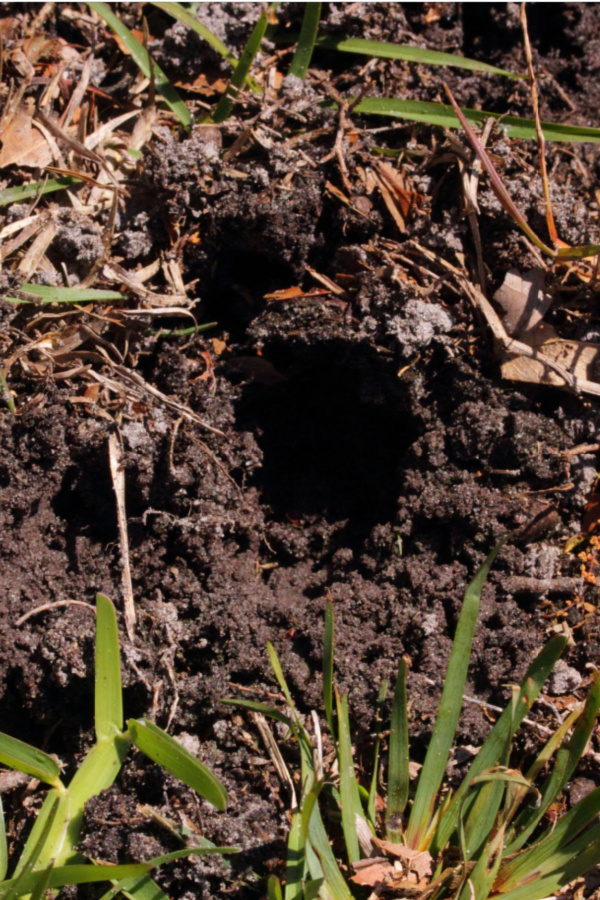
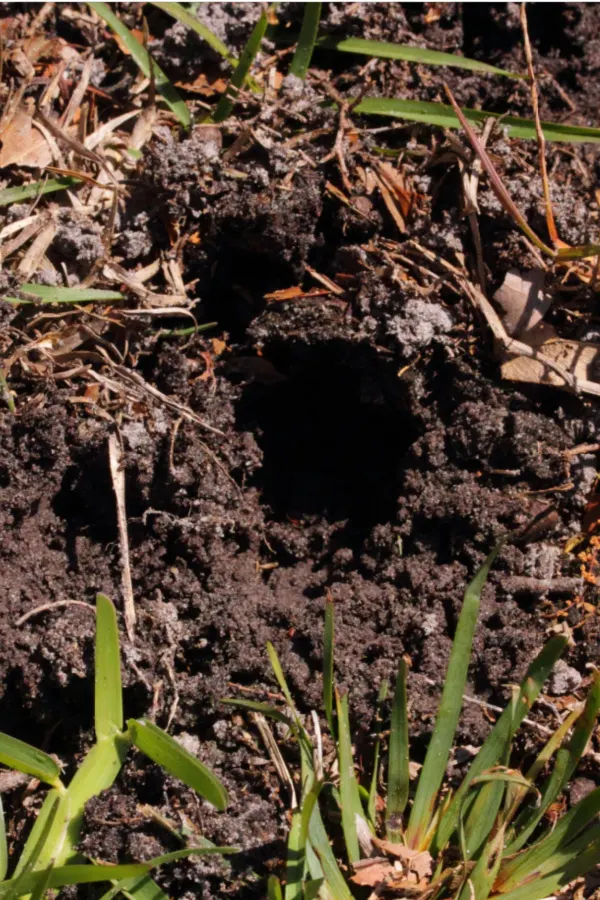
When it comes to the ultimate form of protecting your tulip bulbs, nothing works better than using bulb baskets, cages or hardware cloth coverings. Cages are nothing more than a protective casing around your bulbs that keeps small critters from getting at them. But they are incredibly effective!
The bulbs sprout and then grow through the opening in the cages or baskets. The plant grows just fine, but squirrels and chipmunks simply can’t get to the bulb. Affiliate Link: Plant Baskets – 1 Quart, Pack of 4 – Protect Plants, Trees, Flowers and Bulbs from Voles, Gophers and Moles
Cages can be a bit more cumbersome to plant and bury. But in terms of effectiveness, they are pretty much impenetrable. When correctly used, it makes getting at the bulbs impossible. They are the perfect solution for those who have massive squirrel or chipmunk populations around them.
You can purchase cages and baskets, or make them at home from hardware cloth. To create your own, cut the cloth with wire cutters and bend into a cage to surround the bulb. You can make single bulb cages or make them larger to accommodate multiple bulbs. If making your own, always use hardware cloth with less than 3/4 inch openings.
Another effective way to protect bulbs is to simply cover the bulbs with a large piece of hardware cloth. This is highly effective for large planting areas of hundreds of bulbs where individual baskets are simply not practical.
To use, just dig an area out, plant your bulbs and then cover on top of the hardware cloth. When the squirrels or chipmunks dig down and encounter the wire, they quickly give up. Affiliate Product Link: YARDGARD 309312A Cage Wire Fencing, 24 Inches x 25 Ft, Galvanized
When using this method, you do need to make sure to cover a few inches beyond the bulbs. If not, squirrels can dig from the side and get under the wire to get at the bulbs.
Squirrels and chipmunks are not fond of gravel. Especially when they have to dig through it to get to a food source. And that can be used to your advantage when planting tulip bulbs.
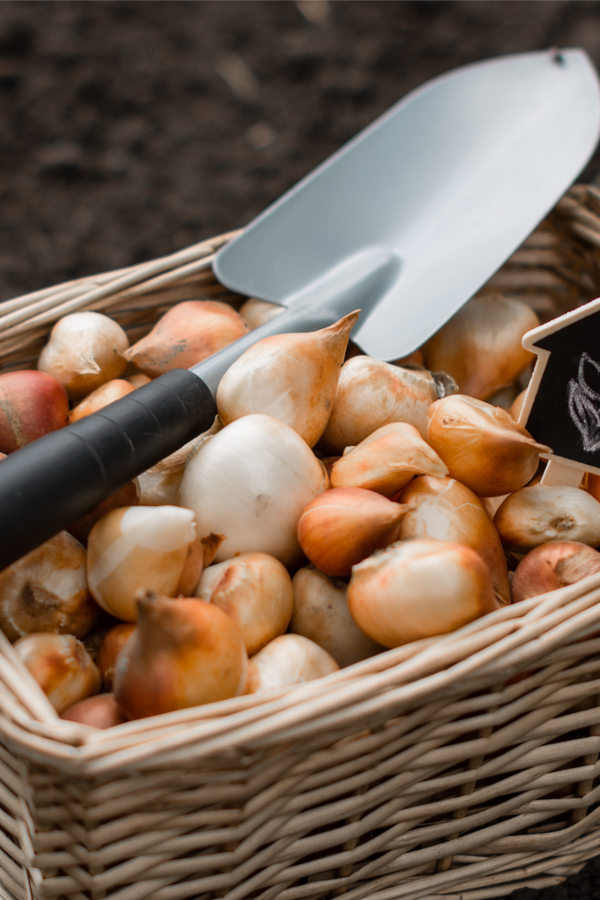
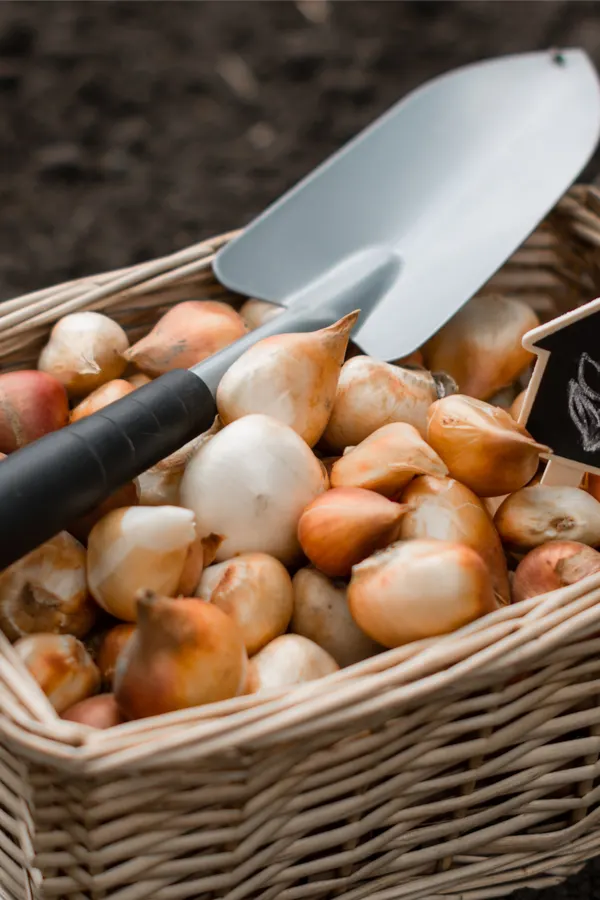
One of the best ways to keep your bulbs safe without a lot of extra hassle is to plant them with pea gravel. Simply dig your holes as usual. Then, surround the bulbs with a half inch or so of gravel. All you need to do is then fill the remainder of the hole with dirt, tamp down, and mulch.
When the squirrels and chipmunks dig down into the soil and encounter the rock, it is usually not worth their time and effort. Best of all, the rounded form of pea gravel also doesn’t harm the bulbs.
In addition to protecting against damage, the rock has an added benefit. Tulip bulbs can often suffer from rot when they are in the ground during the cool, wet fall season. But the gravel helps to provide instant drainage and helps keep rot at bay.
In addition to using rock in the holes, many gardeners also cover the soil on top with rock as a mulch as an added deterrent.
Last but not least, another effective way to keep pests from digging up your bulbs is by planting them with or near plants that both squirrels and chipmunks simply don’t like.
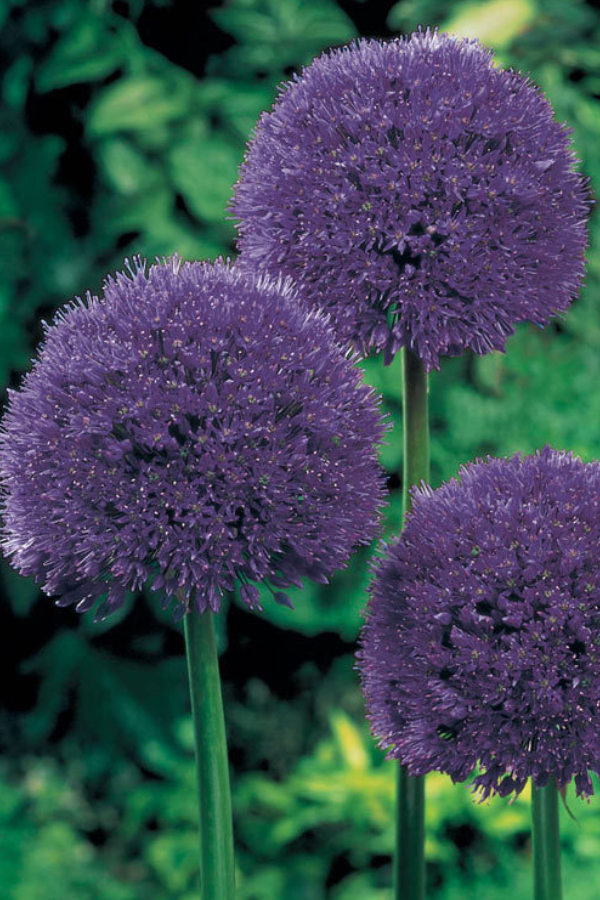
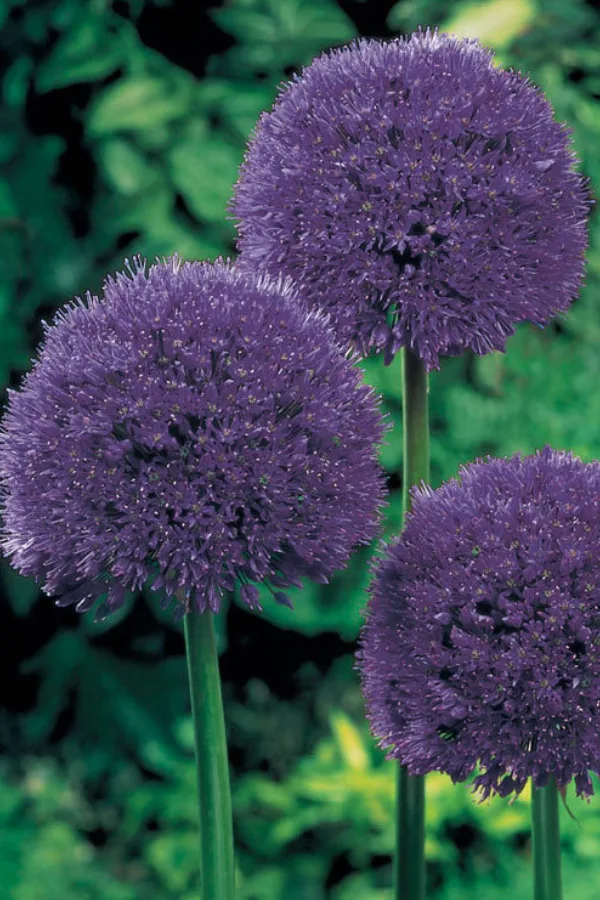
Much like companion planting in the garden that can deter insects and animals, you can plant your bulbs near other plants that squirrels and chipmunks don’t like. And some of those are actually other fall bulbs!
At the top of the list are allium, daffodils and hyacinth bulbs. Not only are these three choices great bulbs for spring color, you can plant at the same time in the fall with tulip and iris bulbs that squirrels and chipmunks love.
Not only will it give you protection, but even more spring color. Here is to protecting your fall planted bulbs – and to keeping squirrels and chipmunks at bay! For more on squirrel protection, check out our article: How To Keep Squirrels Away From Bird Feeders.
Follow Our Facebook Page For Great Gardening Tips And Advice! This Is My Garden Facebook Page
This Is My Garden is a garden website created by gardeners, for gardeners. Jim and Mary Competti have been writing gardening, DIY and recipe articles and books and speaking for over 15 years from their 46 acre Ohio farm. They publish three articles every week, 52 weeks a year. Sign up today to follow via email, or follow along!
Looking for a few effective methods to keep your plants, bushes and trees safe from deer this fall and winter?
Deer can certainly do a lot of damage during the spring and summer months, but as their food sources begin to dry up late in the year, they often turn their attention even more to the plants growing in your landscape. This can be especially true if you happen to live in an area where the deer population is out of control.
Since there is little in the way of fresh growth in late fall and winter, deer turn their hungry appetites to whatever is left – including chewing the limbs and bark off of trees, or devouring the foliage of small bushes and perennial plants.
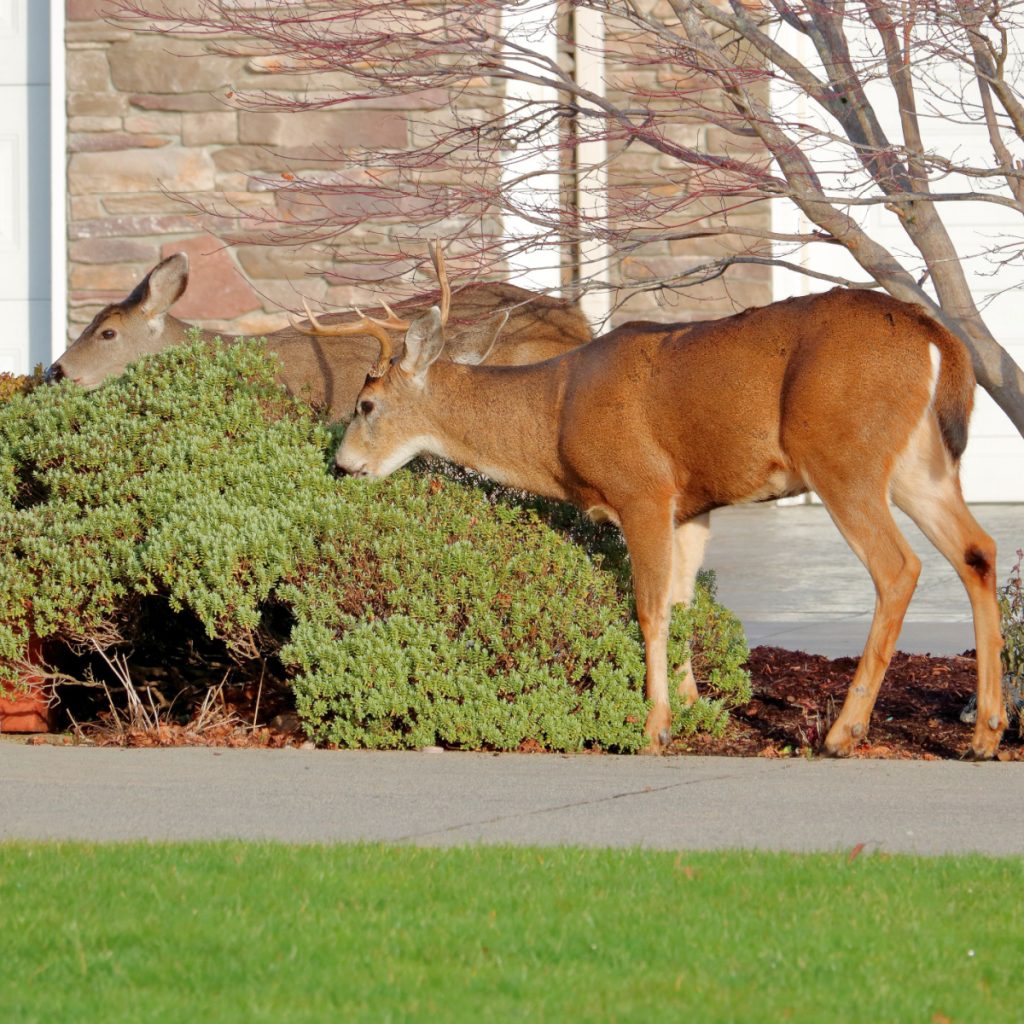
Unfortunately, when it comes to any plant, winter damage can be hard to overcome. In fact, quite often, it can be deadly. When a plant is dormant, it has zero ability to repair damage. And if the winter is severe enough, it can easily freeze or kill the plant off.
But can you really stop deer? Let’s face it, short of installing an 8′ fence around your property, it can seem a daunting task. But the good news is there are a few defensive methods that are quite effective when it comes to eliminating or highly reducing winter deer feeding of plants – and by simply being diligent with these methods through the winter months, you can successfully protect your plants.
More than anything else, the key to success for stopping winter deer damage is to get your defenses in place early. Waiting until winter arrives not only puts your plants at risk of an early attack, but it can also make it extremely difficult for you to work out in the elements.
Before we cover the defensive efforts, it’s important to note that by far, one of the biggest keys to success for preventing deer damage is to always try to plant varieties they simply don’t like.


Planting deer-resistant varieties helps not only in the winter, but all year round. Ornamental grass varieties are a great example. Not only will deer ignore them, but they also help to hide plants that deer love in the summer. See: The Best Ornamental Grass Varieties To Plant For Easy Care & Big Interest!
When you do plant deer favorites, plant in areas close to the house, or that are easy to protect with a net or simple deer fence. It will go a long way in keeping deer damage – and your frustration levels down. But with that said – there are some great ways to protect the plants they do love – and one of the best is using a little “hidden” fencing trick using fishing line.
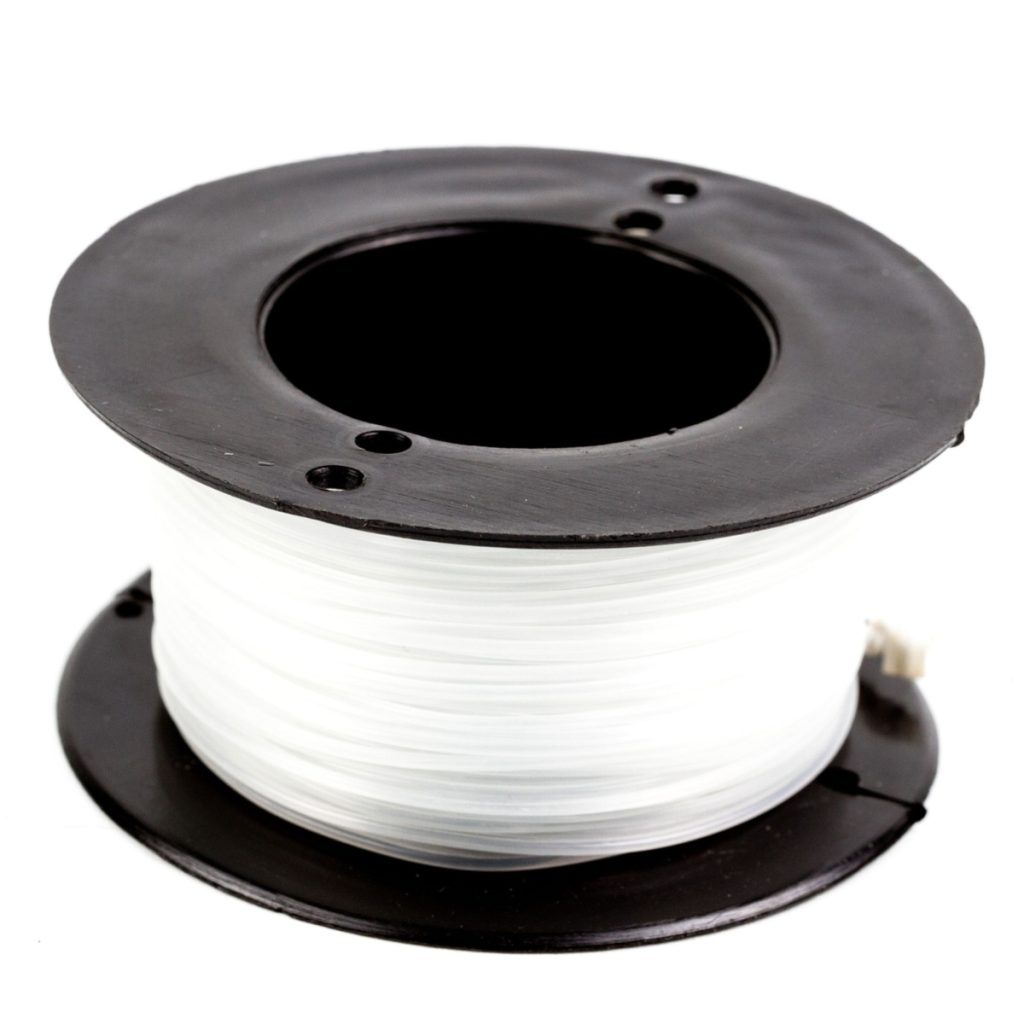
Believe it or not, a few metal posts and fishing line can go a long way in helping prevent damage to flowerbeds. Deer do not like coming in contact with fishing line in the least. Mostly because they can’t see it and don’t like it to touch them.
Start by driving in a few 4′ to 5′ metal or plastic fencing posts to surround your beds or anywhere you want to protect. Be sure to keep them at least a few feet out from the plants. Then, string a few lines of fishing line up – one a the top of the poles, one in the middle and one near the bottom.
The deer will come in contact with the line and not know what it is. And almost without fail, they will not attempt to go through it again to get to the plants. Affiliate Link: Fishing Line Nylon String Cord Clear
Homemade egg spray is another great option for protecting trunks, branches and plant foliage. There are several natural substances that deer tend to avoid, and two of the best just happen to be eggs and hot peppers. When you combine the two, they make a surprisingly good deterrent!
To make the spray, mix six fresh eggs with one gallon of water. Use a blender to completely incorporate the two ingredients together.
In a separate pan, place one cup of freshly blended hot peppers (habanero & cayenne are good options) along with 8 cups of water. When working with hot peppers or any hot pepper spray, always remember to use both goggles and gloves. They can be quite the skin and eye irritant if you don’t protect yourself.
Place on a stove and bring to medium heat. Allow the mixture to simmer for 3 minutes to incorporate into the water. Allow the mixture to then cool. Next, strain the hot peppers away and add the hot pepper infused water to the egg mixture. You now have two gallons of deer repellent spray!
The spray can be applied with a pump sprayer to coat the branches and foliage of plants. Be sure to spray high enough (six to eight feet will work) to keep them from foraging the top of plants. Deer do not like the smell or taste, and it usually will have them moving on after a little nibble.
As with all sprays, remember to re-apply after a rain or snow event to keep an effective barrier on foliage and branches in place.
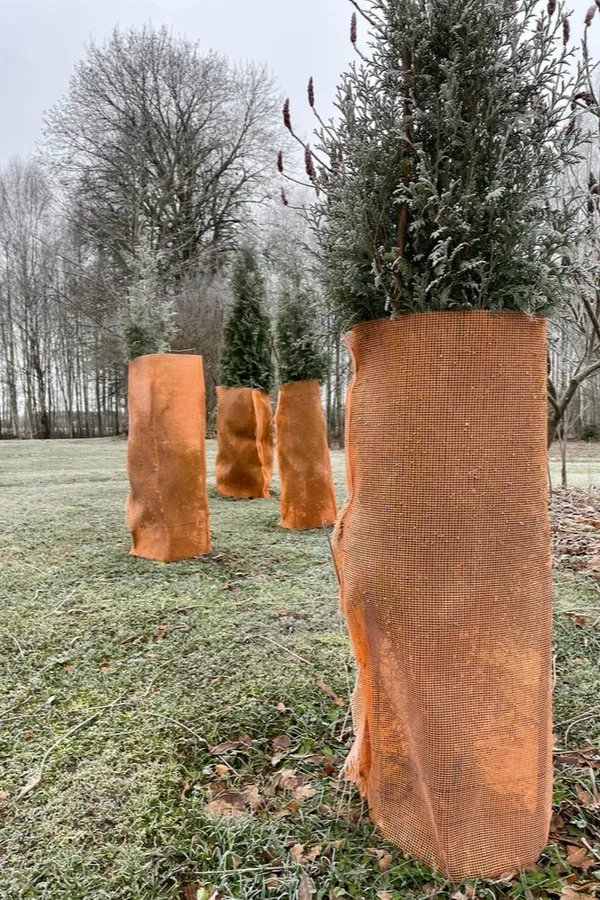
If you have small trees or shrubs, they are always a prime target for deer! The tender young bark and branches make for an easy snack. Especially for young deer looking for a quick meal. And that is exactly where burlap can save the day!
Burlap is an excellent choice for using to wrap the bark on bushes and trees. Deer love to scrape and chew off the bark, and if the damage is severe enough, it can kill the tree or bush.
Burlap works well because it still allows the plant to breath, but makes getting at the bark or branch impossible for the deer. Unfortunately, plastic mesh covers are often not fine or hard enough to deter the scraping of bark.
In addition, the wispy foliage of evergreen shrubs such as Arborvitaes can still poke through mesh, making it easy for deer to chew at will. But a covering of burlap keeps everything out of sight, and out of a deer’s mouth.
When wrapping with burlap, the secret to success is to take it high enough up the trunk or bush so that deer cannot reach any part of the plant. If they can reach it, they will eat it! Look for large burlap in rolls that can be wrapped or cut to size. Product Link : 15′ Burlap Rolls

When it comes to protecting perennial plants in flowerbeds from deer, covering them with a fine-mesh netting is the best way to go.
For best results, wrap several layers loosely around each plant. By layering, it makes it nearly impossible for deer to chew through the mesh to reach the plant. At under $20 for 100’ x 7’ roll, netting is one of the most economical solutions around. Product Link : Fine Mesh Netting 100′ Roll
Even better, it is easy to install with simple zip ties and can be re-used year after year. That same mesh netting is also great for using in the summer. It can do wonders to protect vegetable plants and fruit trees from bird and animal damage.
If covering bushes, use a few stakes on either side to support the netting. Wrap the netting loosely around the stakes to make it difficult for deer to reach the plants. For flowerbeds and small shrubs, simply cover the area and zip tie to a small branch. You can also secure with a few small stakes.
If you simply are overrun with deer, fencing may be the only true option to keep from losing your plants. It goes without saying that the most effective deterrent of all for stopping deer is a fence. But it certainly can be costly.
Unfortunately, to provide total protection, a deer fence needs to be tall enough to keep them away from your plants. That type of fencing can often be prohibitively expensive. Especially for large gardens or yards where deer can enter from many directions.


Deer fencing needs to be a minimum of 8’ high for maximum effectiveness. Smaller fencing will keep some deer at bay, but with their ability to jump, the higher the better.
Deer fencing does not have to be permanent. It can be easily installed using large wood or metal stakes and secured with a few zip ties. It can also be re-used from year to year. This can be quite effective and more cost effective for protecting small areas.
For a small vegetable or flower garden area, a simple metal post and wire fence 5 to 6′ tall can be fairly protective. But the key is it has to be a small space. Deer do not like to jump into confined spaces. If the space is compact enough, a smaller fence really will work wonders in protecting plants.
In addition to the steps above, you can simply choose plants that deer won’t eat – see How To Plant Bushes Deer Won’t Eat – The Best Deer Resistant Bushes For Your Yard! Here is to keeping your plants safe from deer this fall and winter!
Follow Our Facebook Page For Great Gardening Tips And Advice! This Is My Garden Facebook Page
This Is My Garden is a garden website created by gardeners, for gardeners. Jim and Mary Competti have been writing gardening, DIY and recipe articles and books and speaking for over 15 years from their 46 acre Ohio farm. They publish three articles every week, 52 weeks a year. Sign up today to follow via email, or follow along!
Tired of trying to stop mice from getting inside your garage, shed, equipment – or even your house?
If there is one pest that can wreak havoc on your home and possessions, it’s mice! Not only are they unsettling to find scurrying across the floor – they can destroy your property and cause serious damage in the process. And if that wasn’t enough, mice are also a huge carrier and spreader of germs and disease.
As soon as the weather begins to turn cooler in the fall, mice begin to look for a place to call home for the winter. And they will set up shop in any place they can find that can provide them shelter.
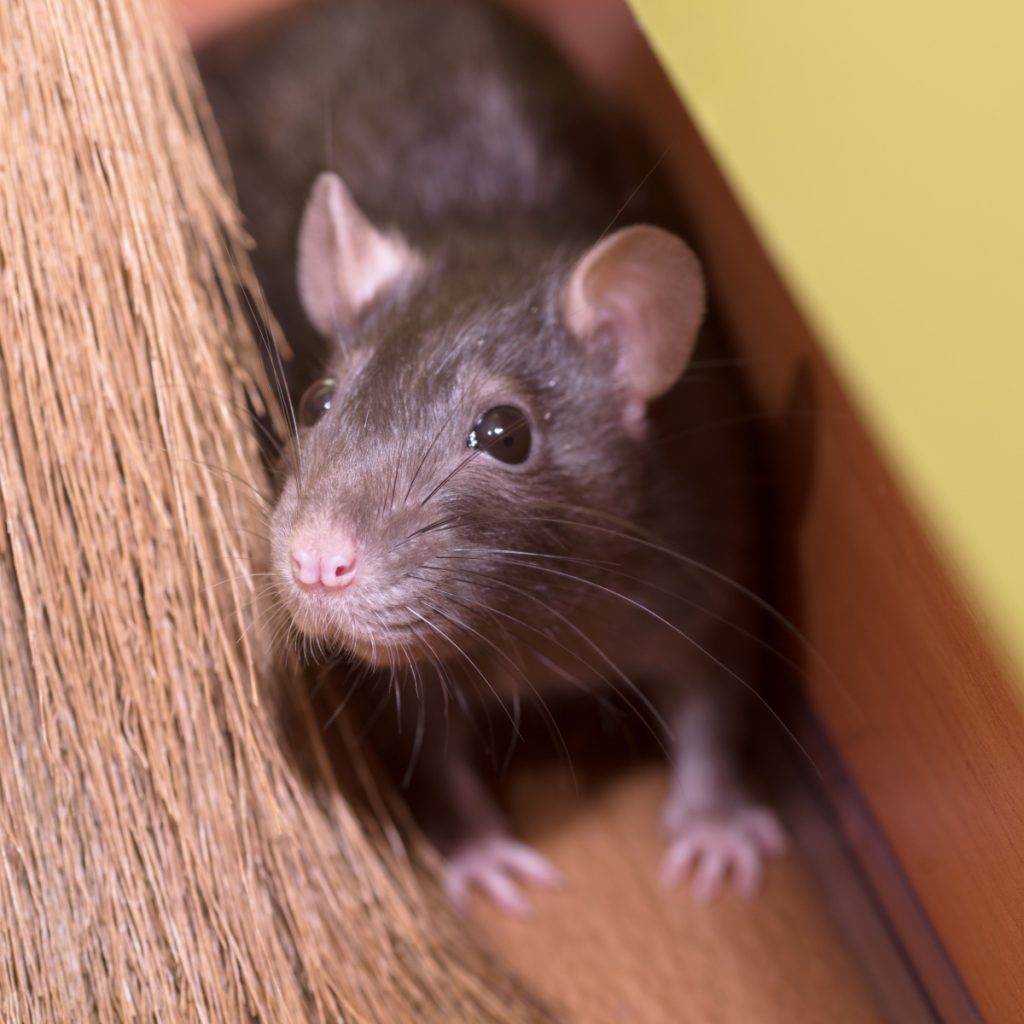
Mice will scurry into garages, sheds, and barns and look for any type of shelter from the winter. They are notorious for making nests in engine compartments of cars, tractors and lawn mowers. Just as they are for creating homes inside of cardboard boxes in basements, garages – or even in kitchen pantries.
One thing is for sure, when it comes to stopping mice from coming indoors or keeping them out of your outdoor sheds, cars and lawn equipment through the late fall and winter months – it can often seem like a losing battle.
But here’s the good news – it doesn’t have to be. In fact, by employing two simple tactics, you can all but eliminate mice from getting in anywhere. And it truly is easier than might ever think!
As you will see in a moment, keeping things sealed and closed off is incredibly effective against mice – but sometimes that can be all but impossible. Especially when it comes to sheds, barns or even parked cars and mowers that might not even be in a shelter.
So what do you do? You use all natural mouse repellent packs and sprays. Not only are they incredibly effective against keeping mice out, they are easy and safe to use. And yes, they work everywhere!
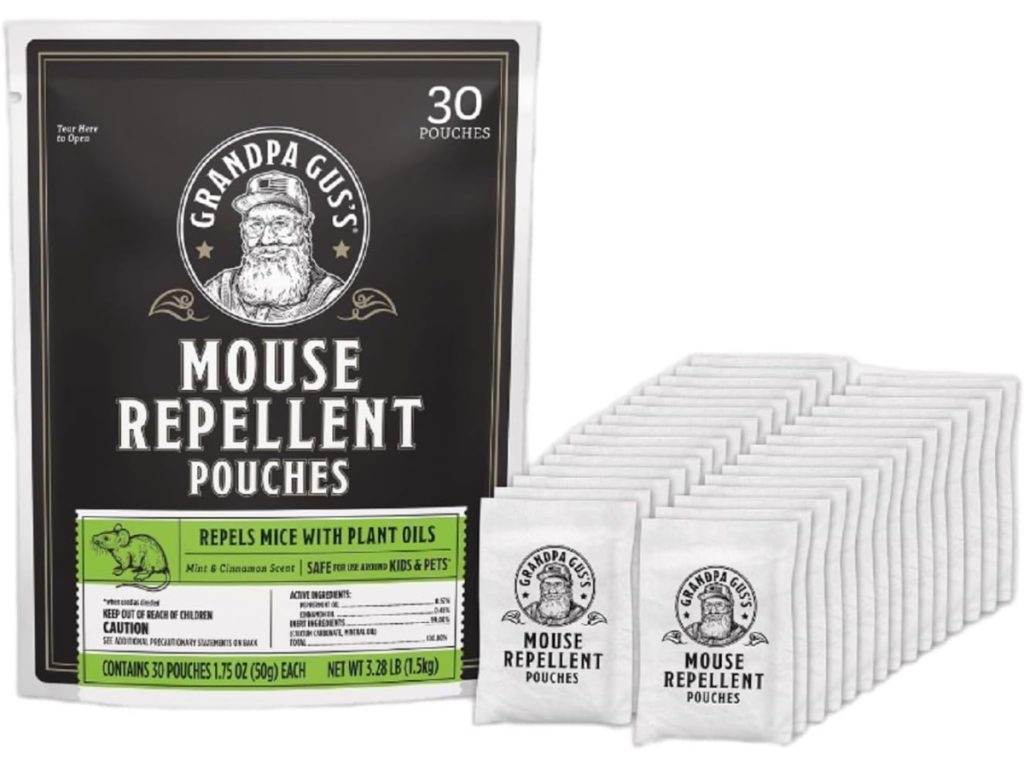
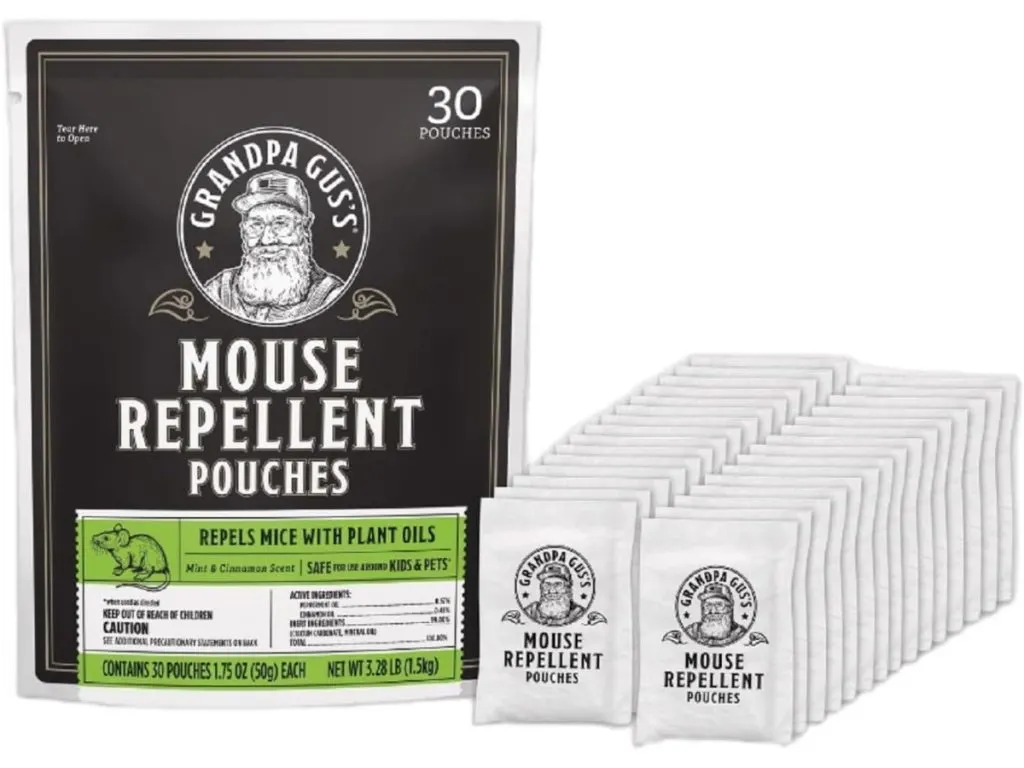
Not only are they good for protecting your home and garage, they are even more incredibly valuable for placing inside of equipment, vehicles, grills and other items that may be outdoors. If you want to protect against mice setting up a home – these are the way to go!
Two of the best all natural repellents of all are peppermint oil and cinnamon oil. Mice simply do not like the strong scent of either. The oils can be used as a spray to scent openings and areas where mice like to frequent. If they do happen to get in – they won’t stay.
Even better, these scents have been made into all-natural packets or sachets that can be placed into engine compartments, vehicles and any small spaces that mice love to live, chew and destroy. Best of all, they are all natural so there is no need to worry about toxic chemicals or poison around pets and children. You just set them in place, and let them work!
When using all natural deterrents, the key to success is to keep the scent strong. It’s best to replace pouches or respray oil every month or two to keep the scent strong. Once the scent weakens, the mice will be more than happy to return.
All natural repellents are a great final defense against mice – but more than anything else, real success comes from sealing everything off and keeping things closed. Especially as the cool weather of fall arrives. Mice are extremely opportunistic. An open garage, barn or shed door is an open invitation to shelter.
Plain and simple, shut doors every time you enter or exit. In early Autumn, mice are on the move looking for winter shelter. If a shed or garage door is left open for hours on end, they can easily enter. Before you know it, they are living in boxes, containers, or inside the hood of your mower or car parked inside. For more information on what to do if these pests do end up getting into your stored equipment, see: How To Stop Mice From Getting Inside – 2 Simple Tips & Tricks That Keep Mice Out!
In addition to keeping your doors closed, take time to inspect the weatherstripping around doors and windows. If you can see light under or through them, mice can and will get in. Now is the time to replace your bottom garage door seals.
Garage door bottoms are one of the easiest entry points of all. Not only will a good seal help keep mice outside, it will help keep drafts and cold out too. Affiliate Link: DGSL Universal Garage Door Seals Bottom Rubber Weather Stripping Kit Seal Strip
Speaking of weatherstripping and sealing, now is the time to take action sealing small entry points too. Make sure dryer and vents have screens in them, especially vents in garden sheds. These are easy entry paths for mice to enter.
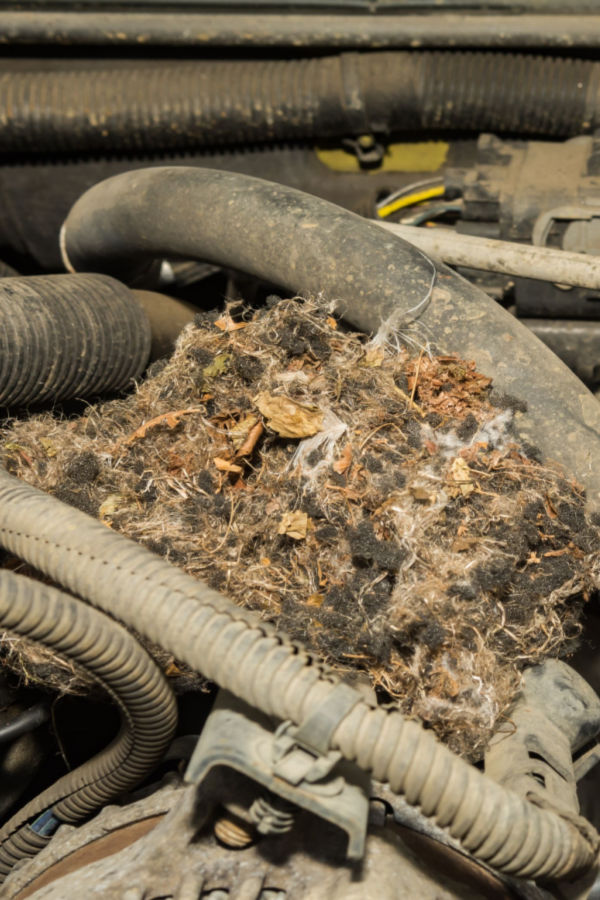
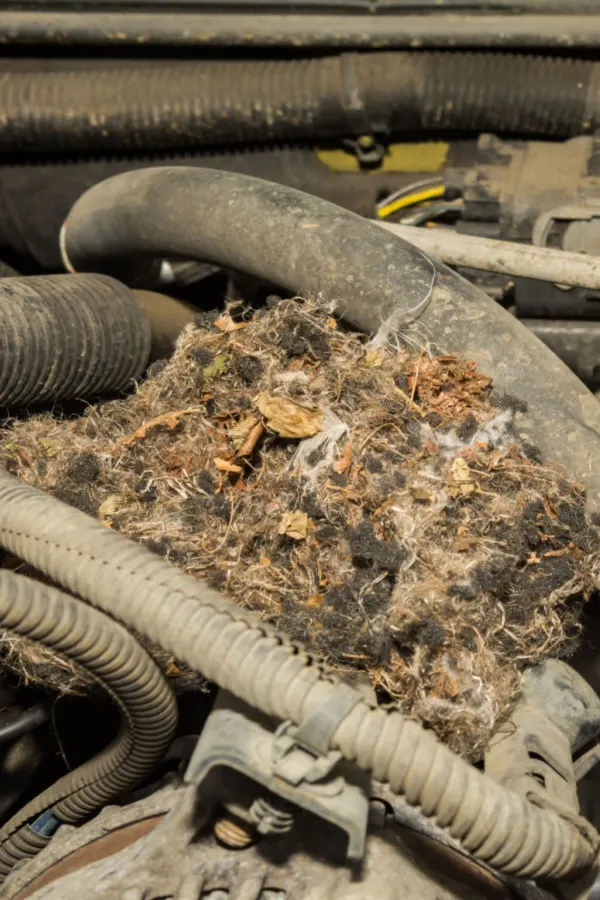
In addition, check any and all locations where electric, water or drains may enter a structure. There are often dime to quarter size holes around pipes, all of which are plenty large enough to allow entry. Seal or foam these off to make it impossible for entry.
Finally, one of the most important things you can do is to seal all vulnerable items within a garage, storage room or shed. And by sealing, it needs to be hard plastic, not cardboard or paper bags.
Not only are paper boxes and bags easy for mice to chew through, they become instant homes or home-building materials for them. In fact, they are ideal for mice to build elaborate nests. Plastic totes are the way to go. They make it virtually impossible for mice to find a home. Affiliate Link: Plastic Air Tight Totes
Store away everything you can in totes, especially sources of food for mice. Bags of dog or cat food, and even bags of grass seed are all wonderful sources of food for mice. By storing these food sources in air-tight containers, they have no food source and can’t survive without moving on.
Here is to keeping mice from getting inside this year – and to protecting your home, garage, shed and equipment in the process. For more on keeping pests out of your home, check out our article: How To Keep Ants Out Of Your House – 6 Simple & Safe Ways To Stop Ants!
Still in search of more info on keeping mice out? Check out: How To Keep Mice Out of Stored Campers, Cars, & Lawn Equipment During The Winter!
Follow Our Facebook Page For Great Gardening Tips And Advice! This Is My Garden Facebook Page
This Is My Garden is a garden website created by gardeners, for gardeners. Jim and Mary Competti have been writing gardening, DIY and recipe articles and books and speaking for over 15 years from their 46 acre Ohio farm. They publish three articles every week, 52 weeks a year. Sign up today to follow via email, or follow along!
Are you looking for a few safe, effective and simple ways to keep ants out of your house – and not have to spray or lay down questionable chemical products that can be scary to use around pets and children?
Even though ants are tiny and mostly harmless, they can become quite a nuisance when they make their way into your home. Especially when they start showing up in places where they can wreak havoc – like in the pantry or kitchen.
Ants often find their way indoors looking solely for food. And unfortunately, what can start out as just a couple of random ants crawling along your kitchen floor can soon become an entire army of ants in the blink of an eye. And one thing is for sure with ants – they aren’t going to go away on their own!
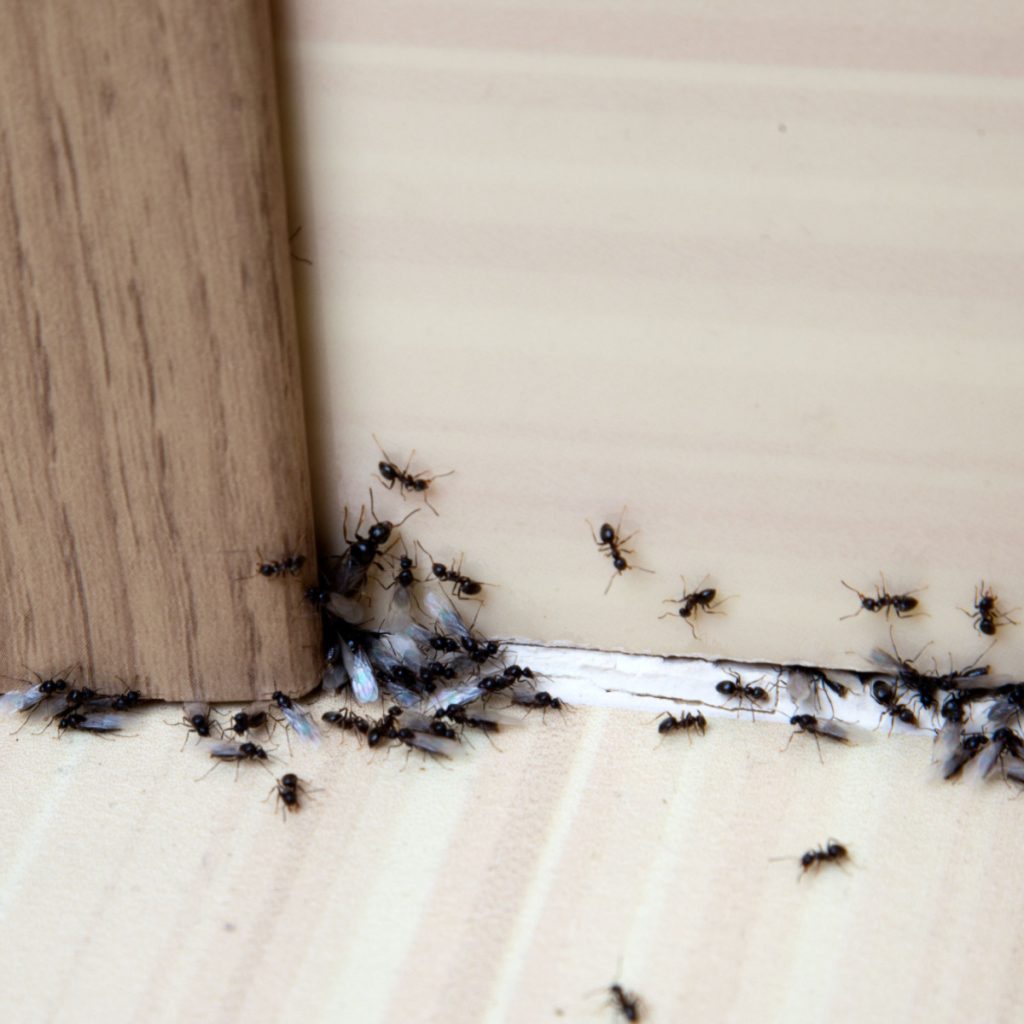
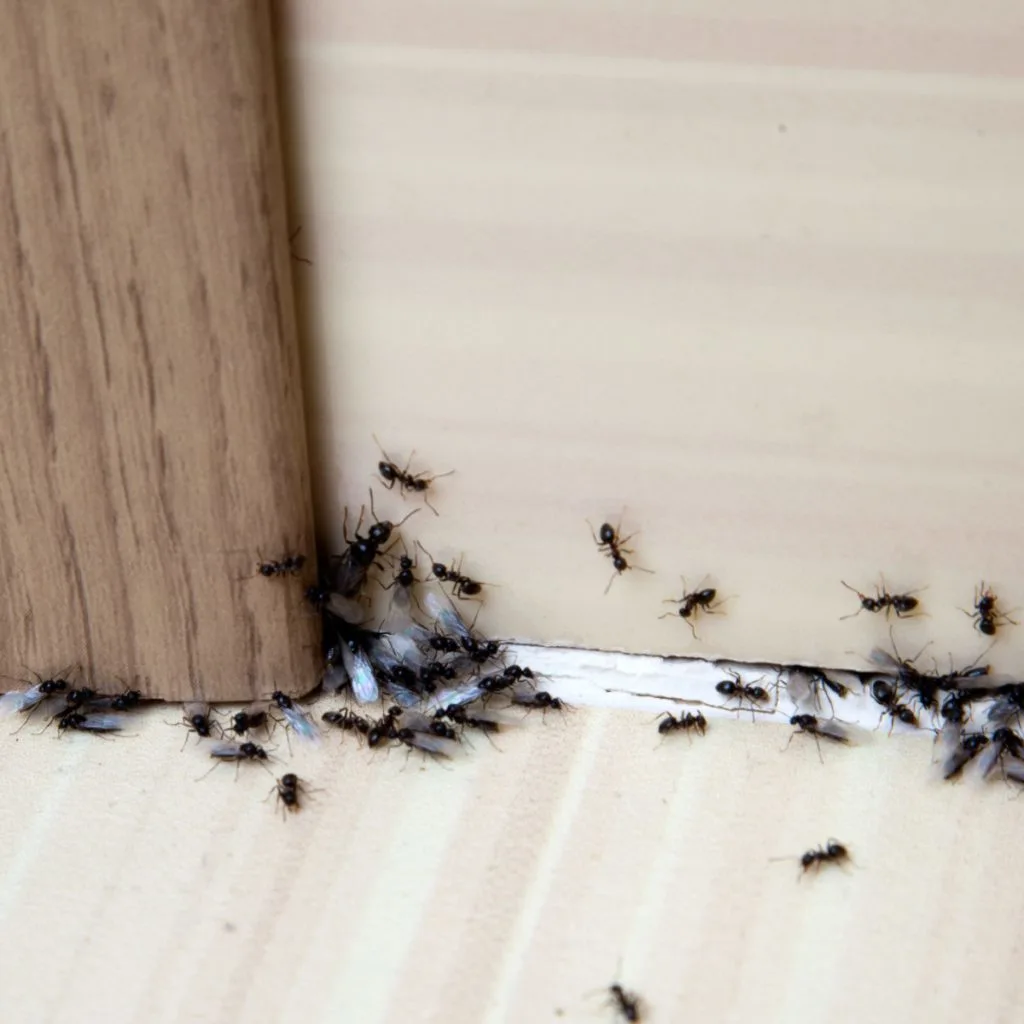
Although there is a wide selection of ant-killing commercial products available today, using them can be a bit worrisome. Many can be toxic to children, pets and even adults if they come in contact with them. And if that wasn’t enough, they can be quite costly too.
The good news? There are a few simple ways of helping to deter ants from taking over your home that are 100% natural. And even better, many of these natural deterrents involve using items that you likely already have on hand in your home. And best of all – they work!
With stopping ants without worry in mind – here is a look at 6 of the best of the best natural remedies for keeping ants from getting indoors.
Before trying any of the 6 methods below to eliminate your ant issue, the first key to success is to identify where they are getting in from. This way, you will know exactly where to go after them. Ants will typically follow the same trail or route to and from their colony. Once you find the trail, see where it leads.
Next, identify what is drawing the ants inside your home and remove the food or item if possible. Once you remove the source the ants are after, you might just luck out and the ants will go away on their own. If not, then it’s time to try one of the following tricks!
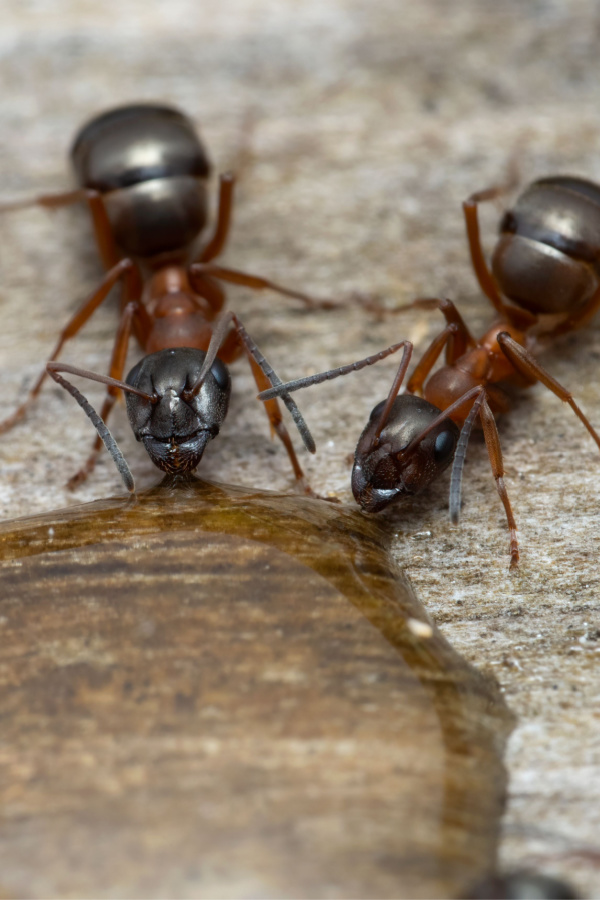
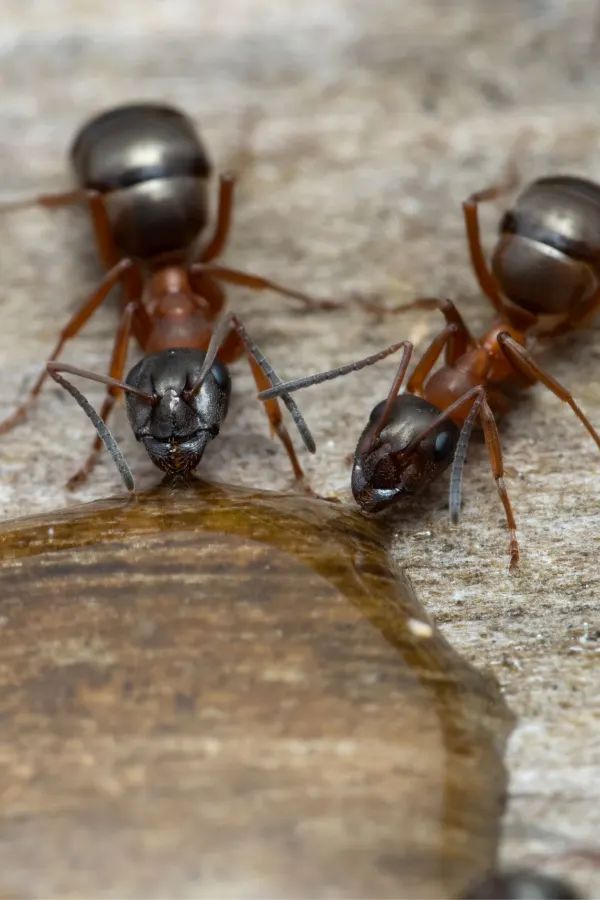
Please note, with any of the following methods, it’s always best to test sprays or items in a hidden spot to make sure they don’t damage surfaces as some may cause staining or discoloring with certain surfaces and fabrics.
Vinegar is great for not only killing ants on the spot but also for removing their scent trail. Ants rely on pheromones in order to find food. As they go, they leave a scent trail for other ants to follow. Using distilled white vinegar mixed with water simply removes the trail.
Just mix one part vinegar with three parts water and put it in a spray bottle. You can also do a stronger mix of 50/50 if you don’t mind the vinegar smell.
Spray the mixture wherever you spot ants. You can also spray around window sills, along baseboards, and at the base of entry points. Repeat spraying at least once a week for best results.
Diatomaceous earth (DE) is made up of crushed fossilized algae and diatoms. It is an inexpensive, all natural, and effective way to eliminate ants as well as other pests like slugs, earwigs, ticks, fleas, beetles, and ticks.
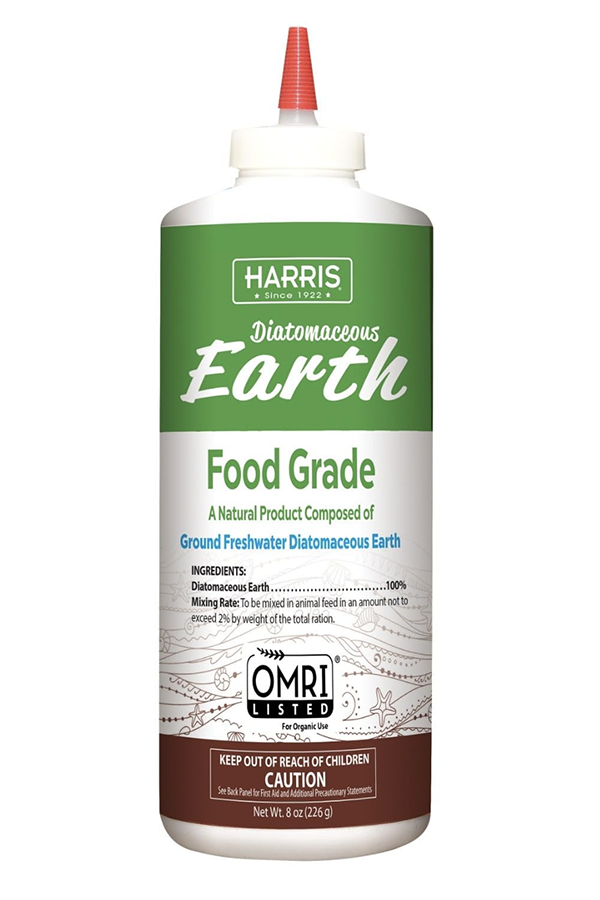
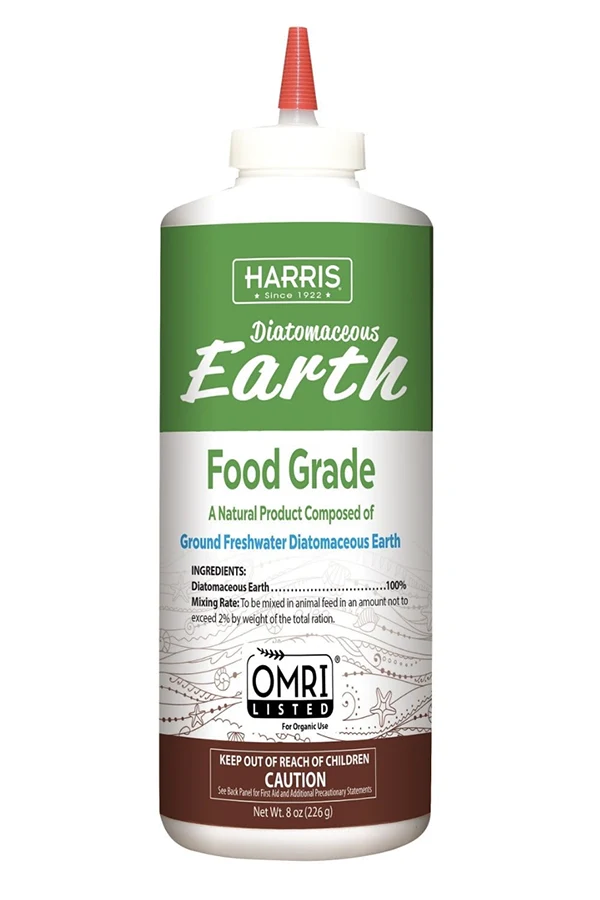
Sprinkle DE around the perimeter of your home or across the trail of ants. It will eliminate the ants that come into contact with the powder within 24 hours. Affiliate Product Link: HARRIS Diatomaceous Earth Food Grade
It’s important to use food-grade DE. Do not use DE labeled for pool maintenance. Also note that even though DE is food-grade and all-natural, it’s still best to wear a mask and gloves when applying the powder. Avoid inhaling the powder as it can irritate lungs and nasal passages.
Cinnamon works incredibly well to keep ants out due to their dislike of the scent. You can use whole cinnamon sticks or ground cinnamon and place them around ant trails or near entry points.
You can also coat cotton balls in cinnamon and place them around your home as well. Be sure to replace them once the scent starts to diminish. See our article: 5 Great Ways To Use Cinnamon In Flowerbeds And Gardens – Protect, Heal & Power Your Plants!


Another method that will work temporarily is to spread spent coffee grounds around the area where the ants have been getting into. The scent of the moist coffee grounds will deter the ants from crossing the path.
This method only works when the grounds are wet though. As the grounds dry, their scent and potency will weaken.
Baby powder is made up of talcum powder. If you sprinkle it around the places where ants are entering your home, they will turn the other way.


While talcum powder won’t eliminate the ants unless it is sprinkled directly on them, the scent will deter them. Reapply the baby powder weekly to keep the scent fresh and strong.
Using strong-scented essential oils like peppermint, spearmint, and citronella is a great way to ward off all sorts of insects and pests within your home, including ants.
Due to the strong odor of the peppermint oil, most pests like ants and spiders will find elsewhere to find their food source. The oil sprays will not kill the ants but it will cause them to steer clear.
Mix 10 to 12 drops of your favorite essential oil into a spray bottle with 2 cups of water. Shake and spray the mixture around the entry points in your home or where an ant trail is located. Repeat spraying weekly.
You can also soak cotton balls in essential oils until they are fully saturated. Place the cotton balls around your home and near their trails. The ants will avoid the strong scent. Replace the cotton balls with freshly soaked ones when the scent fades. Affiliate Product Link: Handcraft Blends Peppermint Essential Oil
In addition to using the tips above for current ant infestations, there are a few things you can do to help prevent them from entering in the first place.
First, be sure to store all food in containers and avoid keeping food out in the open. Clean up any spills, especially with sweet, sticky products like honey and sports drinks. Also, avoid leaving pet food out, especially moist foods for extended periods of time.
Seal any cracks, seals, and holes around window frames, in screens, and around door frames. While you might not be able to eliminate all small openings, using caulk or replacing broken lumber can go a long way in keeping not only ants out of your home but other small insects as well. For more tips on keeping pest out of the house, see: How To Stop Mice From Getting Inside – 2 Simple Tips & Tricks That Keep Mice Out!
Follow Our Facebook Page For Great Gardening Tips And Advice! This Is My Garden Facebook Page
This Is My Garden is a garden website created by gardeners, for gardeners. Jim and Mary Competti have been writing gardening, DIY and recipe articles and books and speaking for over 15 years from their 46 acre Ohio farm. They publish three articles every week, 52 weeks a year. Sign up today to follow via email, or follow along!
Looking for a few safe and humane ways to keep groundhogs out of your garden – and from destroying your plants?
Groundhogs can absolutely devastate a garden. In fact, a single groundhog is capable of consuming over a pound and a half of vegetation every day. Some of their garden favorites include berries, carrots, celery, tomatoes, cucumbers, sweet corn, squash – along with other greens like dandelions, grass and clover. But one thing is for sure – they can wreak havoc on more than just plants!
Not only do groundhogs consume enormous amounts of vegetation, they can also damage driveways, foundations, and other structures on your property. As they burrow down into the ground, they create tunnels that can span up to 100 feet long with openings on each end. And those tunnels can cause serious foundation issues.


While groundhogs aren’t usually aggressive, they can also carry rabies and other disease. Add that to the property damage and the destruction of garden crops – and you have more than enough reasons to try to keep them out of your garden and off your property!
So how do you know when a groundhog is visiting your garden? When it comes to crops, groundhogs typically don’t just eat one or two plants and call it a day. Instead, they often feast on several during one feeding.
Look for crops that have ripening fruit or vegetables and take note of any that are mysteriously disappearing. Unfortunately, you often won’t catch the groundhog in the act so you might have to look for other signs.
The best way to identify the presence of groundhogs is to look for their burrow openings. Look for holes that have a 10 to 12-inch sized opening. Smaller holes often indicate issues with moles as opposed to groundhogs. See: The Secret To Stopping Ground Moles
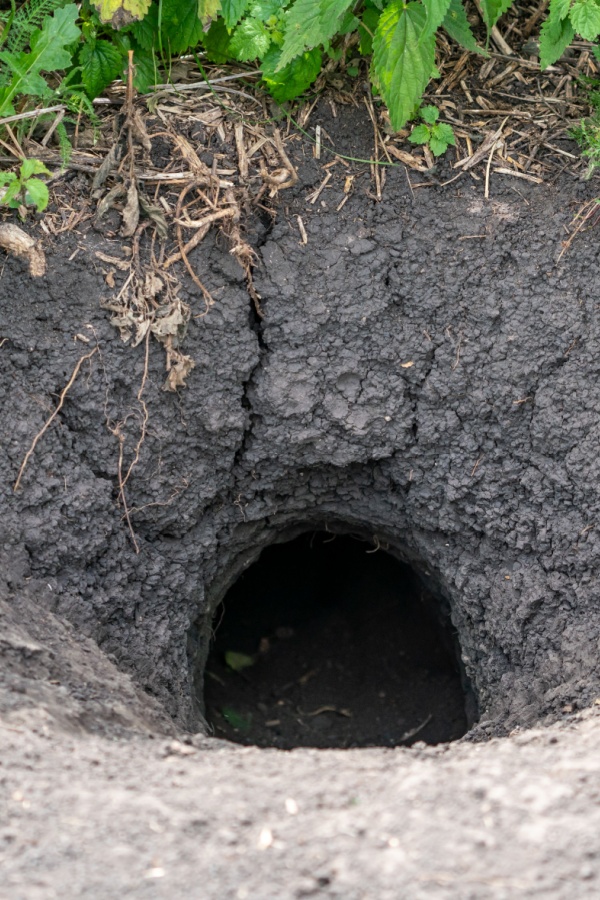
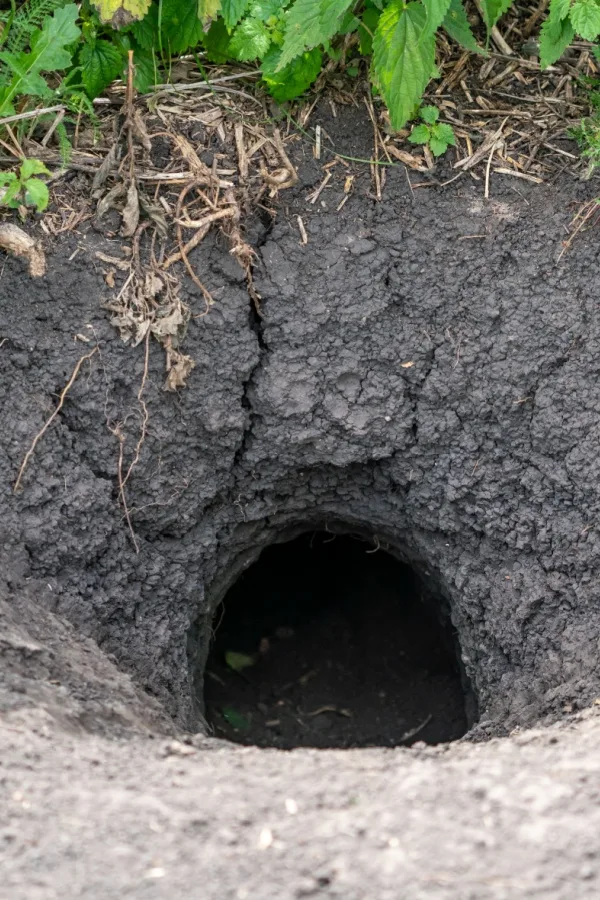
The openings will often be located against or under a structure. Look around a building’s foundation, underneath decks and patios, under sheds, or around anything with a concrete slab.
Typically, you will also see piles of soil randomly thrown about around the hole opening. Unlike a mole, you won’t be able to see the rest of the tunnel from above the soil. This is because a groundhog’s tunnel is several feet below the surface.
Last but not least, the footprints or groundhog tracks usually give them away. They will be around 4 to 12 inches apart with the front paws having four toes and the back ones having five. The sharp claw marks will appear curved, which allows for easy digging.
Once you have identified that you have a groundhog on your hands, it’s time to take action – and here are four safe and effective solutions that usually do the trick!
Groundhogs do have the ability to climb trees and some structures, but they struggle with thin fences. One of the most effective ways of keeping them out of your garden space is to install a short fence that can move.
Even a fence as short as 1 foot tall can be enough to discourage these pests from using your garden as a buffet. The important key is to make sure that the fence is a bit wobbly and not super rigid.
This will help deter them from climbing. Small snow/safety fences or chicken wire work great for this and are easy to install. You can even get the safety fences in green to blend in with the garden. Affiliate Product Link: Plastic Mesh Fence Safety/Snow Fence, 4’x100′ Roll
To help even more, place a couple of little pinwheels around the perimeter of the fence. Groundhogs are spooked by the noise and vibration of the pinwheels spinning – and together with the fence simply move on.


While there are several different commercial sprays out there that tote the ability to keep groundhogs out of your garden, you can easily make your own at home with hot peppers. Since groundhogs have a keen sense of smell, you can use it to your advantage with strong scents.
Hot pepper spray is harmless to your plants – but it leaves behind a spicy flavor as it dries. Not only will this work on keeping groundhogs from munching on your plants, but a whole host of other pests and insects as well.
To make it, you need four simple ingredients: 1 gallon of water, 8 to 10 hot peppers (or 5 tablespoons of hot pepper flakes), 6 cloves of garlic, and a few drops of dish soap.
Wearing gloves, chop up the peppers and garlic into small pieces. Place them in a large saucepan and heat for about 5 minutes on low heat. Next, add the water and simmer for about 30 to 45 minutes.
Remove the mixture from the heat and allow it to steep for 24 hours. Strain the liquid into a spray bottle or pump sprayer once cooled. Add a few drops of dish soap and your mix is good to go. Product Link: Petra 1 Gallon Pump Sprayer
To use, simply spray it around the perimeter of your garden or on all of your plants. Repeat after it rains or after mornings with heavy dew.


Similar to hot pepper spray, groundhogs also hate the smell of castor oil. Make your own repellent spray by mixing one part castor oil with three parts water. Spray this solution around their burrowing holes.
You can also use the castor oil spray around your garden to further help deter the pests from coming around. Reapply every couple of weeks or after heavy rains. Affiliate Product Link: HERITAGE STORE Organic Castor Oil
While all animals will resort to eating about anything if they are starving, there are a few plants that groundhogs don’t like. You can grow these as companion plants along with your vegetables in your garden to help the majority of groundhogs look elsewhere for their lunch.
Some plants are toxic to animals if they are consumed, so they make a perfect choice. Flowers like larkspur, foxglove, hellebores and lily-of-the-valley are excellent choices. You do need to be cautious with pets and children around with this approach.

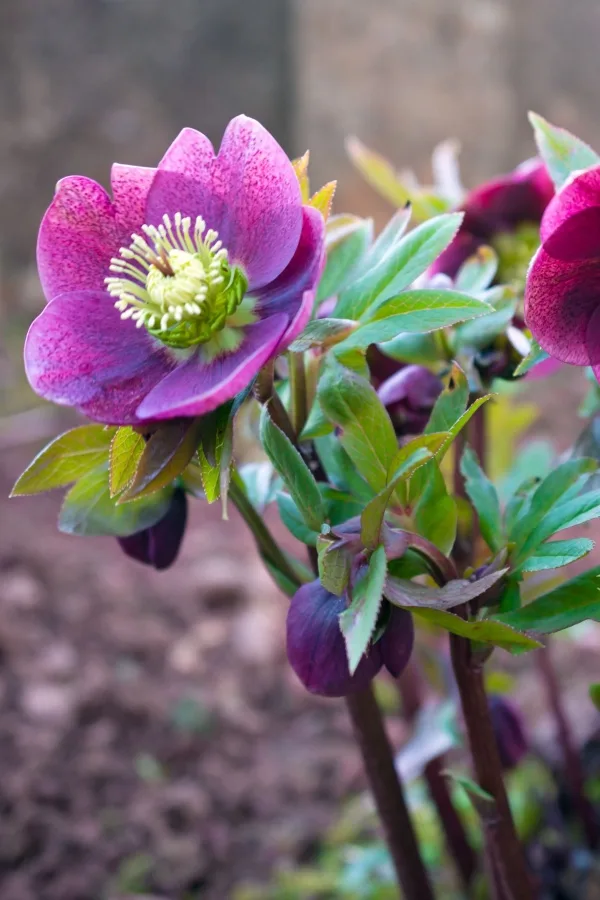
Other flowers aren’t toxic but still work well to keep groundhogs out of your garden. Those include ageratum, butterfly weed, bleeding heart, sweet alyssum, and yarrow. Also, any plants that have a strong odor such as lavender are great companion plants as well to keep groundhogs away.
Even if one of these tactics isn’t enough alone to keep groundhogs from your garden, try implementing a few of them at the same time. Before long, you’ll find the perfect combination to keep your vegetables safe and groundhog-free!
Follow Our Facebook Page For Great Gardening Tips And Advice! This Is My Garden Facebook Page
This Is My Garden is a garden website created by gardeners, for gardeners. Jim and Mary Competti have been writing gardening, DIY and recipe articles and books and speaking for over 15 years from their 46 acre Ohio farm. They publish three articles every week, 52 weeks a year. Sign up today to follow via email, or follow along!
Looking for a few simple ways to keep mosquitoes out of your yard without having to resort to harsh chemical sprays?
Mosquitoes can put a huge dent on the ability to enjoy outdoor activities in your yard. Especially when the heat and humidity of summer seem to multiply these harmful and painful pests to near staggering numbers. Unfortunately, mosquitoes are not only a nuisance, but a health risk as well.
The bite of a mosquito can carry a lengthy list of diseases. Not only that, the welts they leave behind from their bites can cause non-stop scratching and itching for days on end. Sadly, the often painful bites usually lead to either eliminating outdoor time, or resorting to using a bevy of harsh sprays and bug bombs to try to keep the flying insects from infesting and invading your outdoor spaces.


But here’s some good news! Believe it or not, there are a few simple solutions to keeping mosquito populations under control. And – without having to go down the road of chemical sprays. In fact, as it turns out, by simply performing a few easy tasks to all but eliminate their natural habitat, you can decrease their numbers greatly – and more than enough to reclaim your backyard!
Without standing water, mosquitoes cannot breed and multiply. And by simply eliminating any standing water around or near your home, you can instantly help keep mosquito populations in check. But you might be surprised how many places standing water can hide around your home. And when they do, they let mosquitoes multiply with ease.
Bird baths, small pools, and standing buckets of water left outdoors are all perfect breeding grounds for mosquitoes. As are old tires, uncovered rain barrels and even the small water trays placed under potted plants.
But mosquitoes can also find water sources to breed that are more discreet. One of the best examples of this are in downspouts and gutters. It ‘s here where leaves and debris can back up, leaving plenty of standing water to collect. In fact, this is one of the most common places of all where mosquitoes breed near a home.
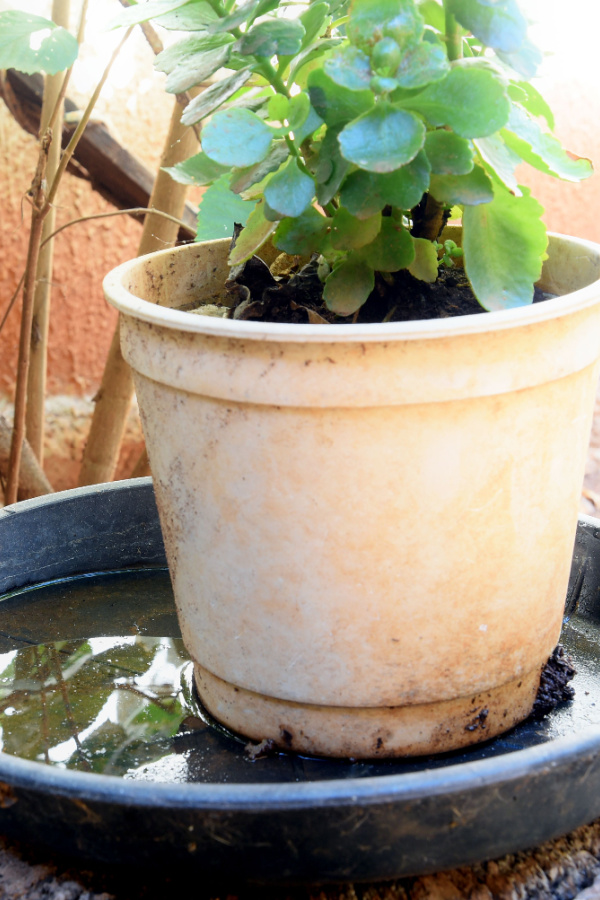
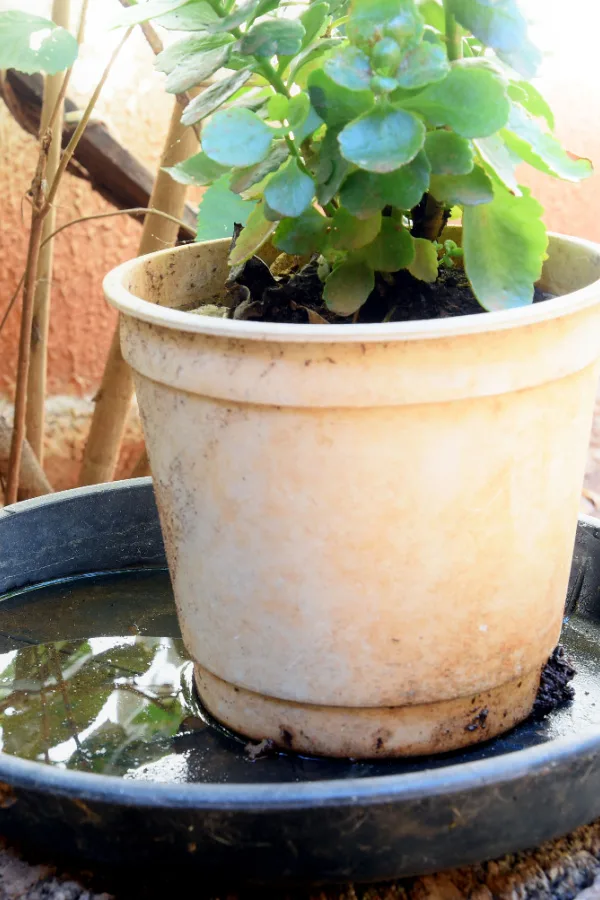
Mosquitoes can produce a new generation in a flash. In fact, in just 36 to 48 hours, mosquitoes can not only lay larvae, but hatch it. And the only way to help stop the cycle is to eliminate the water they breed in.
If you have bird baths or small pools for kids outdoors, change out the water every few days. Be sure to inspect gutters and downspouts for clogs and standing water on a regular basis. Remove any pails or small objects that can hold water from your outdoors.
Even more, if you have low lying areas in your yard that trap water, fill them in. By simply eliminating standing water, you will do wonders in controlling your overall mosquito population.
There is a long list of plants that not only look great in your landscape – but also help to repel mosquitoes naturally. By simply filling the spaces where you dine, play and enjoy the outdoors with a few of these plants, you can help keep the danger of biting mosquitoes far away.
Marigolds, nasturtiums, and herbs such as lavender, sage, and the entire family of mints are all great at repelling mosquitoes. For most of the plants listed above, it’s their scent that mosquitoes despise. But nasturtium plants take it to a whole new level, producing a specific chemical marker that mosquitoes are known to avoid at all costs.
Not only can you grow these repelling plants in your flowerbeds, but they are also great for growing in pots to place on tables or near chairs. Even better, all of these plants help to keep out other annoying pests such as aphids, whiteflies and the common housefly too!
Lavender is one of the best for container planting as it comes back each season. Not only that, it can be moved when growing in pots to wherever its needed for mosquito control. Affiliate Product Link: Set of 3 Potted French Lavender Provence Herb Plants – Great Container Plants
Once you eliminate the ability for mosquitoes to find a place to reproduce and put a few repelling plants in place – it’s time to eliminate the remaining ones. And one of the best ways to do that is by attracting their natural enemies to your landscape.
Without a doubt, one of the best all natural ways to protect your yard and outdoor areas is with the help of a few of nature’s best mosquito eating machines – birds!
Birds love mosquitoes and their larvae. Bats, purple martins and bluebirds are all natural predators of mosquitoes. As are robins and chickadees. In fact, together, these birds can devour hundreds and hundreds of them on a daily basis.
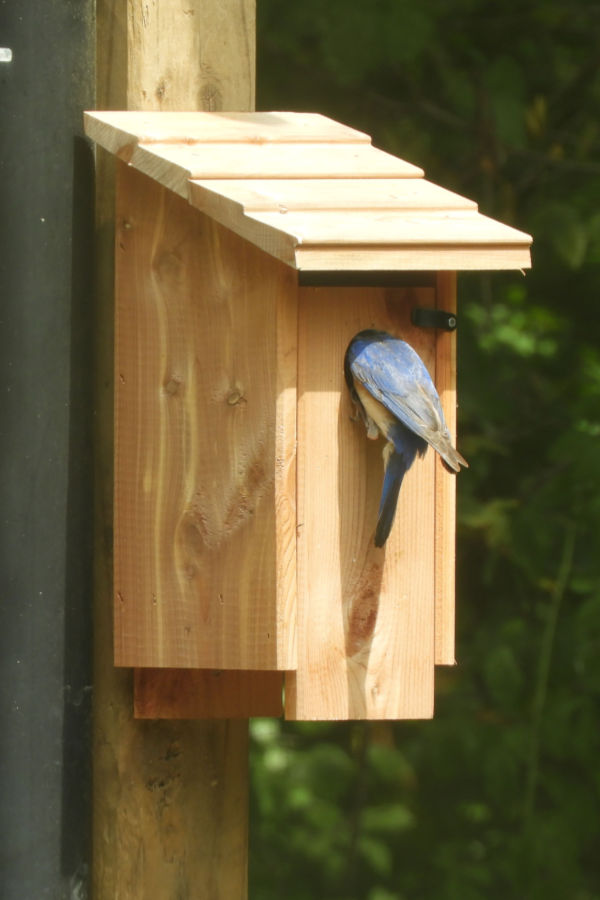
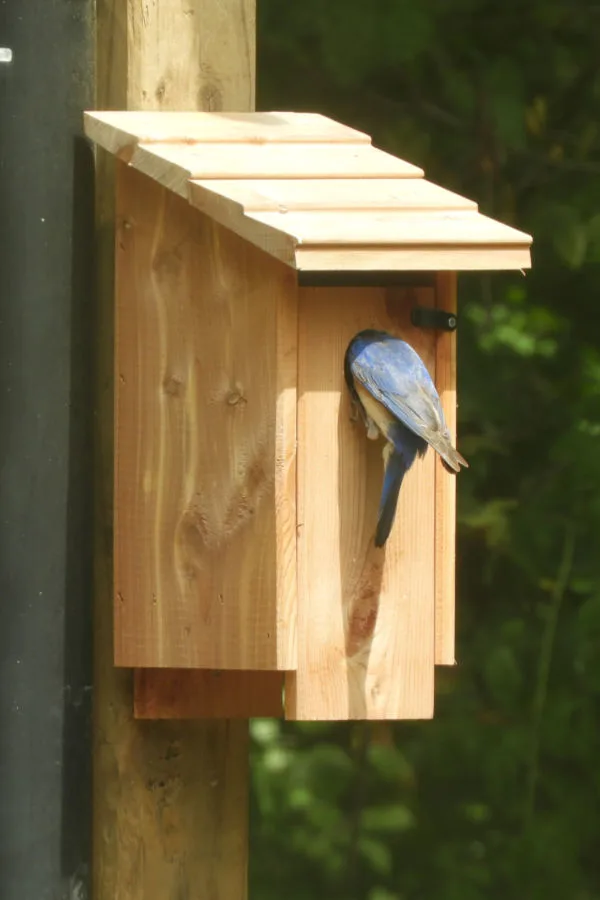
To bring these insect fighting machines into your backyard, create an inviting habitat for them to enjoy. The best way to start is to fill your landscape with the plants they love! See our article: How To Attract Bluebirds – And Why They Are Great For Gardens!
By planting perennials such as black-eyed Susan, Coneflower and other bird-attracting flowers, it can bring birds calling, and in the process, have a big effect on reducing your mosquito population.
And don’t stop with just plants, provide them the shelter they love too! Installing specific and inviting bird houses such as purple martin houses and bat houses work wonders for keeping these mosquito-eating birds on site. Affiliate Link: Nature’s Way Bird Products CWH3 Cedar Bluebird Box House
In addition, feeders and bird baths can be inviting to birds as well. But remember – keep them clean and change them often to prevent mosquitoes from using them too!
Finally, while you are enjoying your patio time, don’t forget that a good fire can help repel mosquitoes in a flash. Both heat and flames are excellent natural repellents for mosquitoes.
But to make that fire even more effective, add in a few herbs to the flames. The next time you light your fire pit or outdoor grill for the evening, toss a little sage, lavender or mint into the fire. It can be fresh or dried, but the resulting scent from the flames will send them packing! For more pest-battling tips, be sure to see How To Stop Slugs Fast – 5 Easy Ways To Protect Your Plants This Year!
Here is to keeping your outdoors free of mosquitoes without having to use harsh sprays or chemicals. And even more, to enjoying your summer to the fullest in peace!
Follow Our Facebook Page For Great Gardening Tips And Advice! This Is My Garden Facebook Page
This Is My Garden is a garden website created by gardeners, for gardeners. Jim and Mary Competti have been writing gardening, DIY and recipe articles and books and speaking for over 15 years from their 46 acre Ohio farm. They publish three articles every week, 52 weeks a year. Sign up today to follow via email, or follow along!
Did you know that you can use all-natural cinnamon to help protect the plants growing in your flowerbeds and garden from pests and disease – and help to build better soil at the same time?
It’s true – although cinnamon has long been known to provide a wide array of benefits to humans as an anti-inflammatory and anti-bacterial agent, it can also help your plants to a healthier life.
Cinnamon has been a helpful garden aid for centuries in the agricultural world. Its natural powers range far and wide when it comes to both helping plants grow, and keeping them safe from disease and pests. And as you will see in today’s article – it couldn’t be more safe and easy to use.
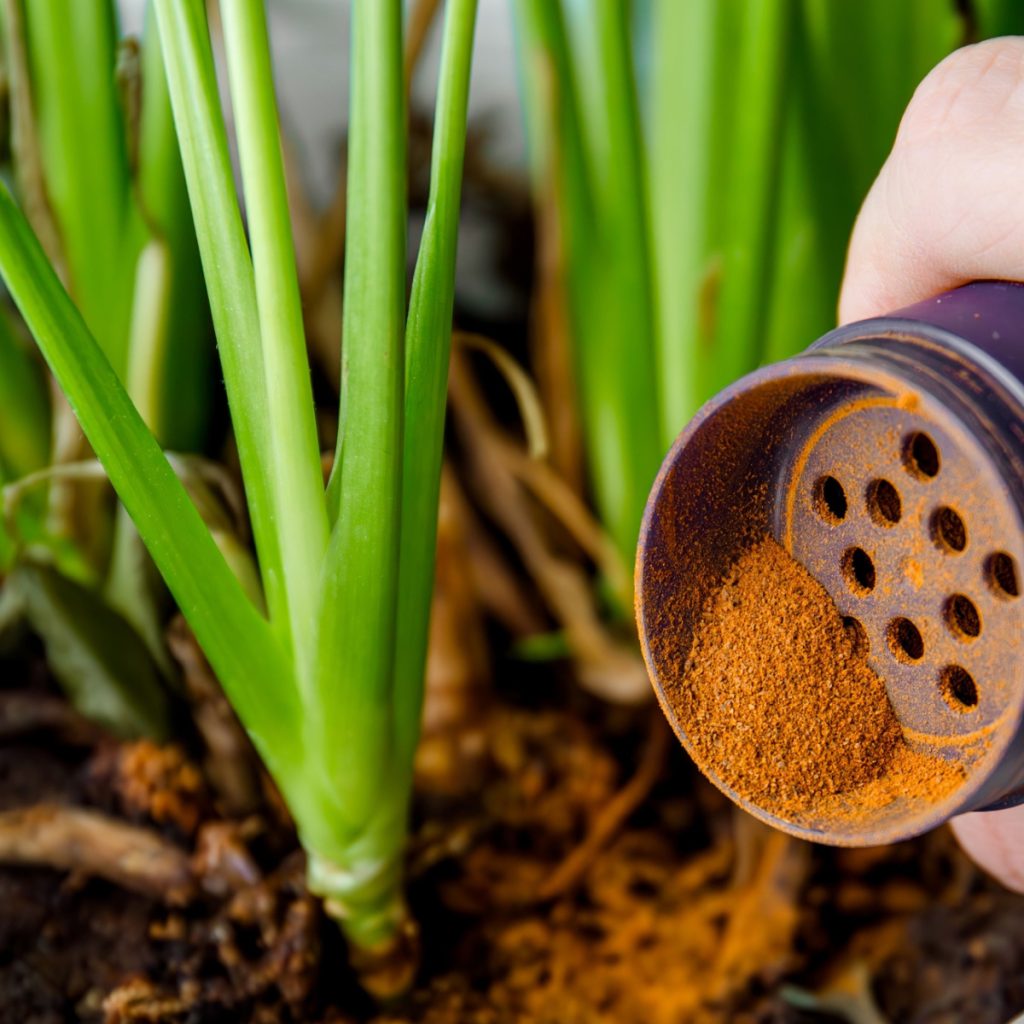
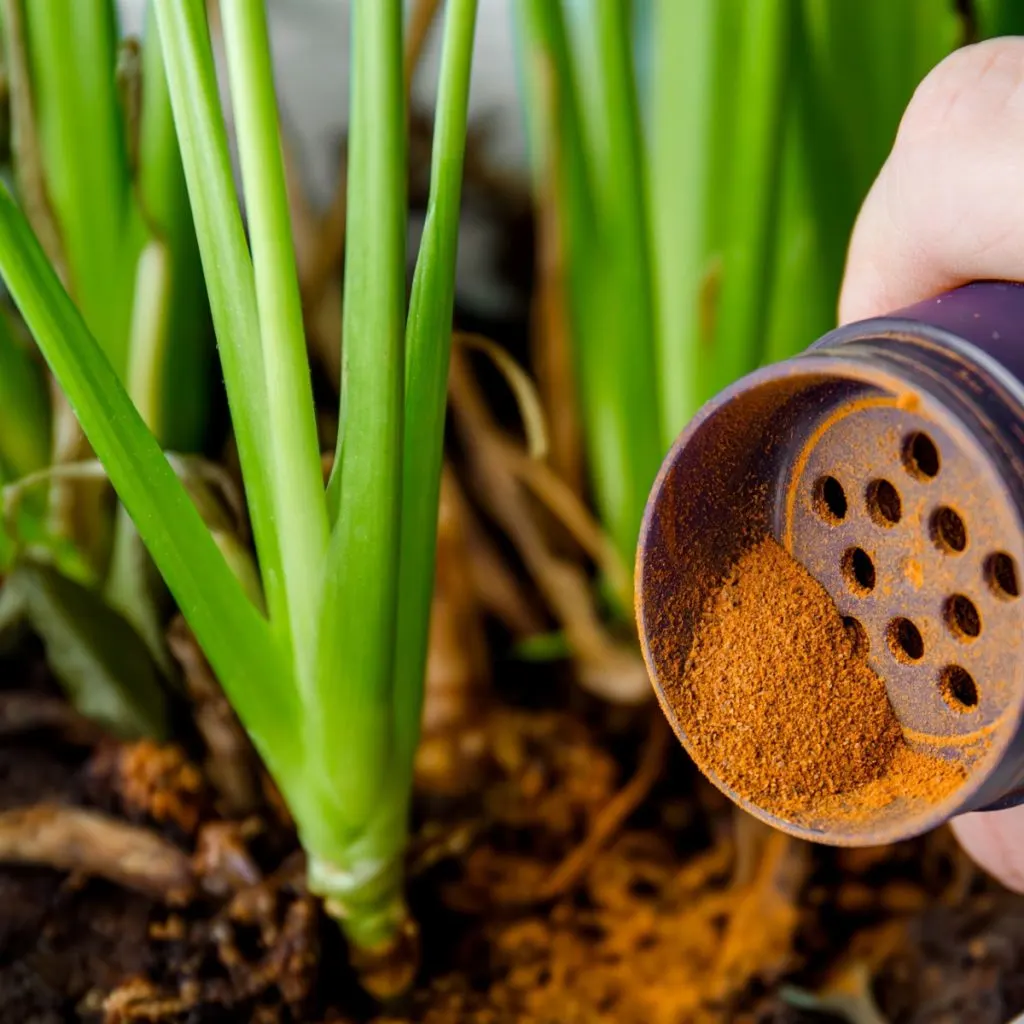
With that in mind, here are 5 great ways to use cinnamon to help you grow better this year – naturally!
When it comes to protecting potted plants and containers from rabbits, squirrels and more, cinnamon is an excellent solution. The scent of cinnamon is offensive to a long list of animals. And by strategically sprinkling cinnamon around the edge of containers and baskets, most pests will simply leave it alone and move on.
The good news is that even with its strong smell, cinnamon will not cause any harm to the plants. In fact, not only will it not injure plants, its antibacterial qualities can also help to prevent mold or mildew from appearing on the soil surface as well, further protecting your plants!
Many gardeners use the double approach of cinnamon and hot pepper spray to completely eliminate small animals from munching on their crops. See our article: How To Make Hot Pepper Spray – Protect Your Plants From Insects, Deer, Rabbits & More!
Much as with small animals, cinnamon can also be a great all-natural solution to repel ants too. Its pungent scent will help to repel ants in the garden, on flowering annuals and perennials, or anywhere you use it.
Ants are not fond of cinnamon powder in the least. In fact, they will go out of their way to avoid it! To protect plants, sprinkle cinnamon around the base of the plant. For a large bedding or area of plants, sprinkle it all throughout the soil, and then around the outer edge of the bed. Affiliate Product Link: Spice Classics Ground Cinnamon, 18 oz – One 18 Ounce Container of Ground Cinnamon Powder
If ants are a problem in raised beds, you can also mix the cinnamon directly into the soil to keep them from creating their tunnels in the space. This can also work if you happen to have ants in your child’s sandbox. Simply mix in cinnamon with the sand to keep them far away.
For in-home protection, sprinkle cinnamon at doors or entry points. You can also use cinnamon sticks for this purpose as the strong smell of the spice will keep them moving on.
Trying to root a new plant from a cutting or division? Cinnamon’s natural fungicidal properties are also extremely helpful when rooting new cuttings. This is great for cuttings from roses and all kinds of other perennials!
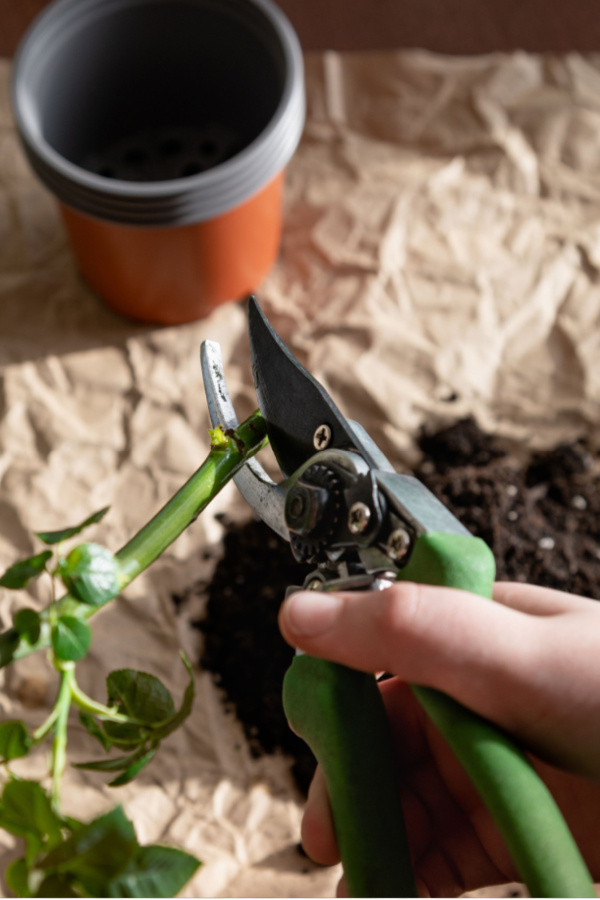
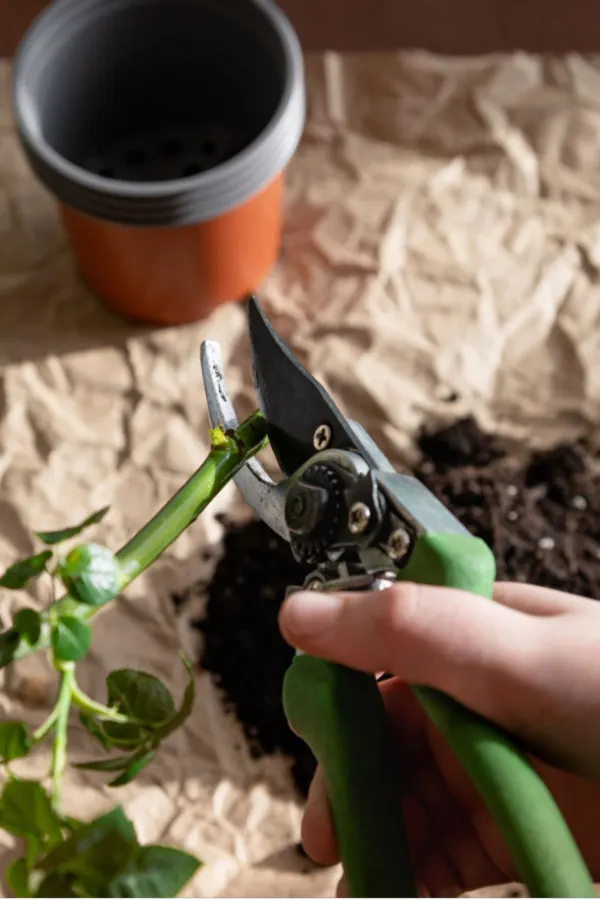
Cinnamon is like sulfur in that it acts beneficially to the spores that prevent stem cuttings from rotting. But it also helps those cuttings root and grow better. Cinnamon is proven to bring twice the growth of a stem cutting when it is mixed with rooting hormones.
To use as a rooting hormone, pour a spoonful of cinnamon powder on a small plate or hard surface. Next, dampen the ends of your cuttings and place them into the cinnamon powder. The coating of cinnamon will protect the exposed roots from fungi and help with root growth activity.
Damping off is a disease that can kill young seedlings in the blink of an eye. It can be quite common for those who raise transplants indoors from seed or simply trying to seed crops in their garden.
When the soil is overly moist, it can create favorable conditions for fungus to develop. Fungus that then spreads easily to the seedlings. The good news is that cinnamon can help prevent the fungus fairly easily with a simple, two-pronged approach.
To use cinnamon as a damping-off agent, mix one tablespoon of cinnamon powder with half a quart of water. In essence, you are creating your very own anti-fungal solution – one that is completely organic and natural.
To use, pour the solution over the soil bed where you plant your seedlings. Next, sprinkle a light coating of ground cinnamon on the surface of the soil. The combination of the two will allow your seedlings to grow without worry of the deadly fungus developing.
Cinnamon’s anti-bacterial and anti-fungal properties make it wonderful for using as a wound sealant for plants. When pruning off large branches or stems in the garden or in flowerbeds from plants, dip the open cut into cinnamon to help seal and protect the open wound.
Likewise, if a branch or stem sustains damage, applying cinnamon to the area can help to heal the plant, all while protecting the damaged area from disease or fungus.
The sap will usually adhere to the cinnamon with ease, however, you can add a bit of water to the cinnamon to form a paste that will stick to the open cut with ease.

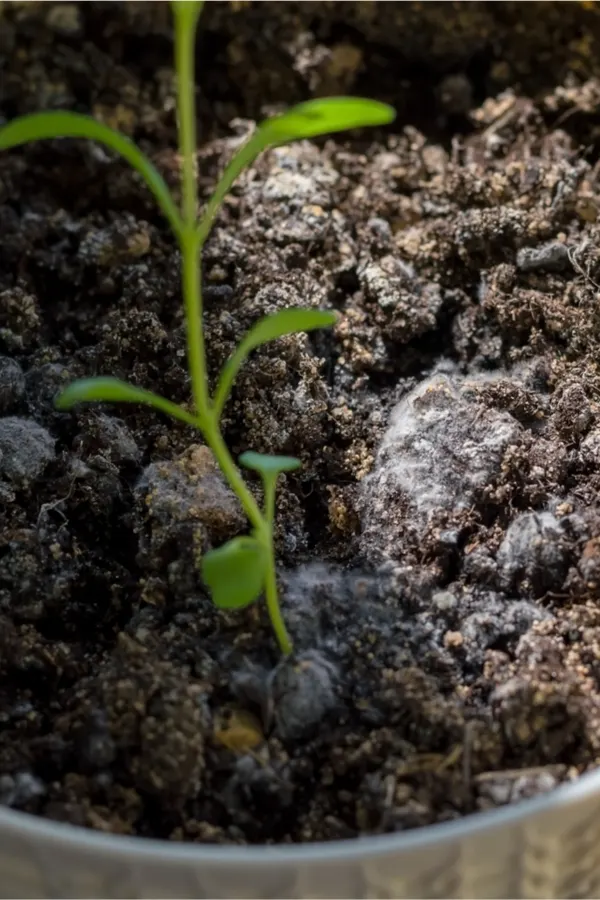
In addition to using cinnamon outdoors in your flowerbeds and gardens – it’s great indoors too. Many potted plants, hanging baskets and houseplants will have mold form on the top of their soil. This is caused by an overabundance of moisture, along with the many minerals that can often be present in potting soils or from fertilizers that are being applied to them.
Not only are the mold and algae unsightly, they can also harm the plants. The easy fix? Sprinkling ground cinnamon or cinnamon powder on the soil surface. It will kill fungi, mold and algae in a flash!
When first planting or repotting houseplants and outdoor container plants, you can also mix cinnamon powder into the soil to help prevent mold and fungus from the start. In addition to helping ward off mold, the cinnamon has the added benefit of helping the roots of plants grow better as well.
The organic contents of cinnamon are perfect for increasing the root growth of plants. The spice’s content works to help the stem cuttings or seedlings sustain growth. Even better, all while protecting the plant with its antimicrobial and anti-bacterial qualities.
Here is to using cinnamon in your gardens, flowerbeds and yes, even indoors too!
Follow Our Facebook Page For Great Gardening Tips And Advice! This Is My Garden Facebook Page
This Is My Garden is a garden website created by gardeners, for gardeners. Jim and Mary Competti have been writing gardening, DIY and recipe articles and books and speaking for over 15 years from their 46 acre Ohio farm. They publish three articles every week, 52 weeks a year. Sign up today to follow via email, or follow along!