How To Divide Overgrown Hostas - And Why Late Summer Is The Perfect Time To Do It!
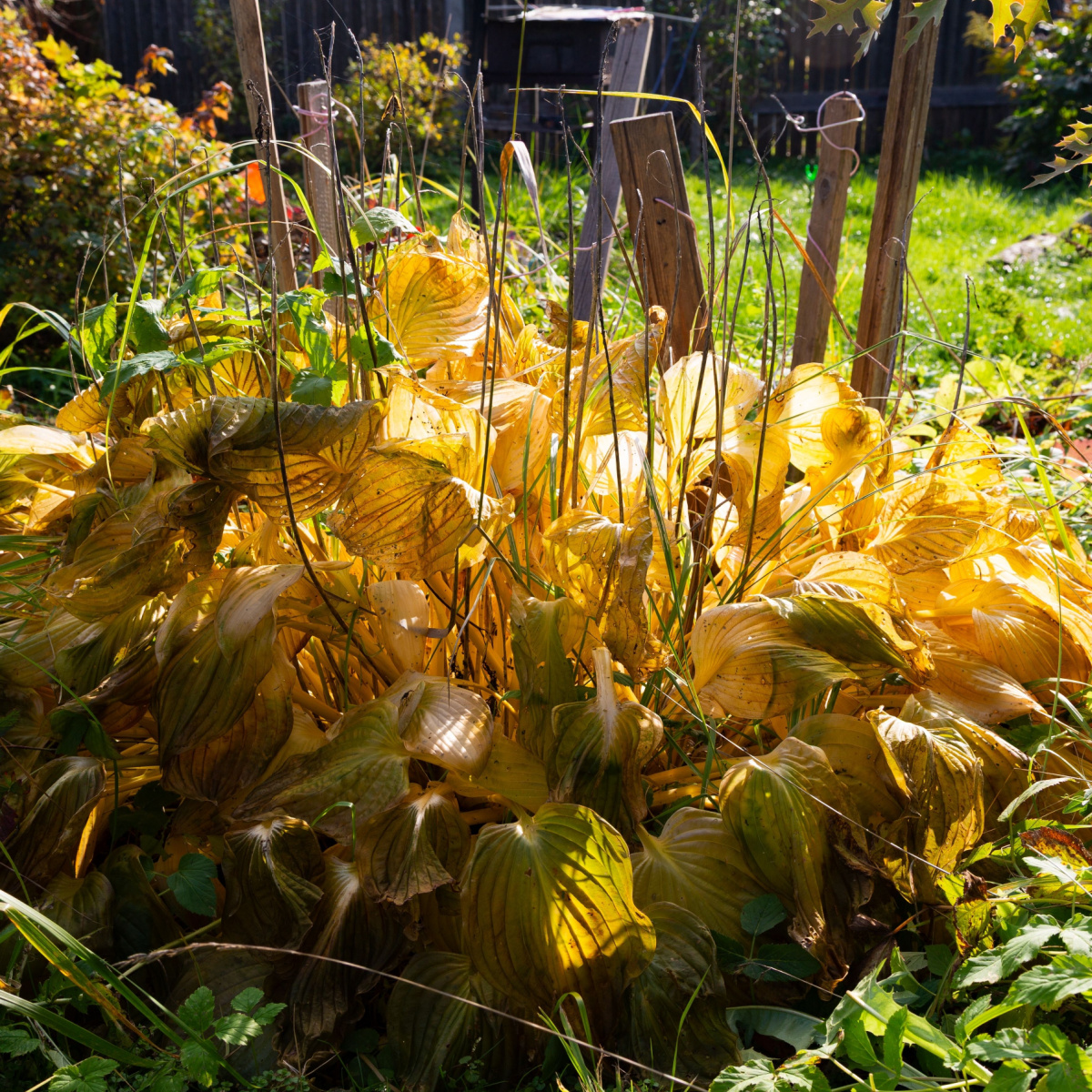
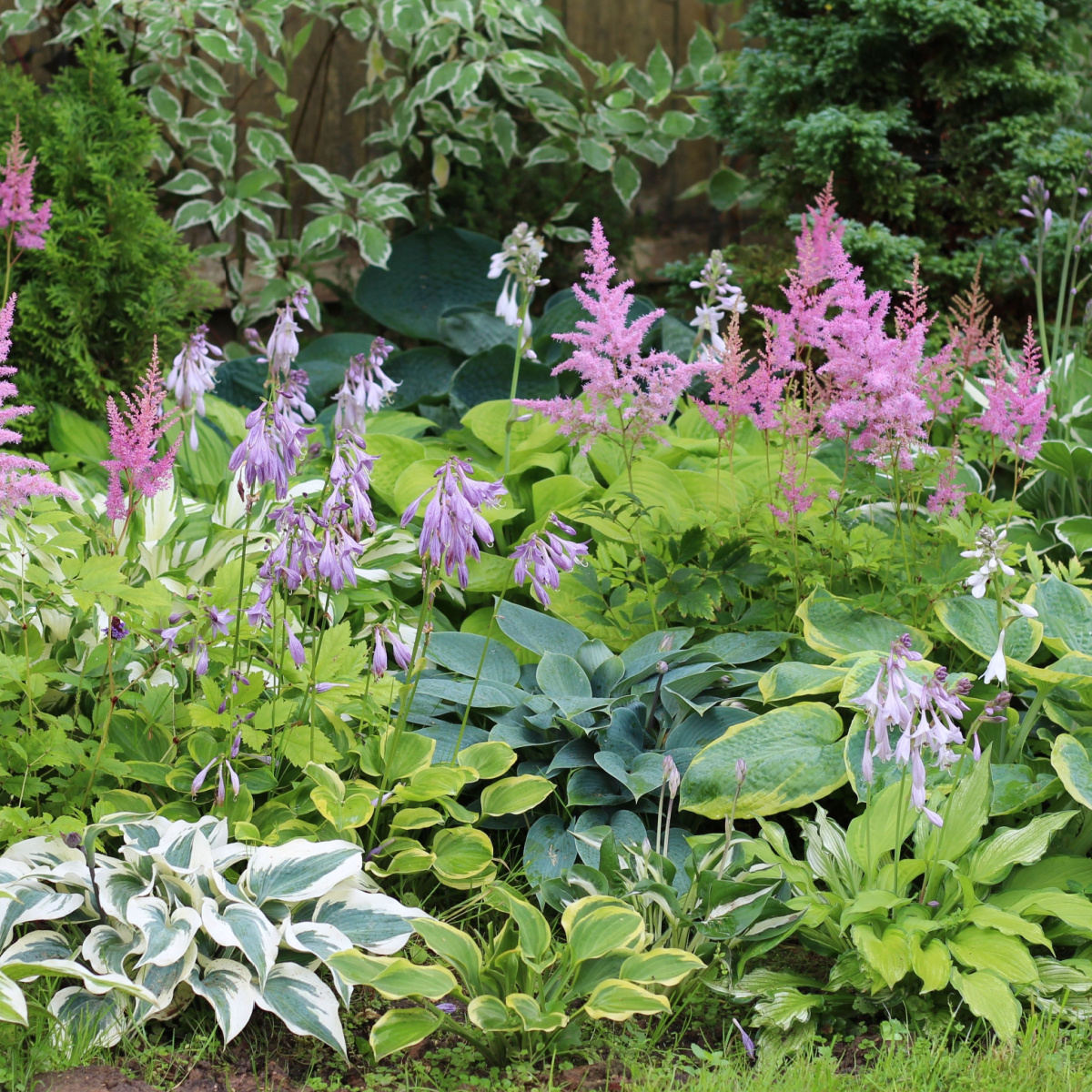
If your hostas are overgrown and looking sad - then late summer is the perfect time to take action and divide them into new plants! Not only is it a great way to keep your hostas healthy and your flowerbeds neat and tidy – it’s also a great way to create brand new plants for free!
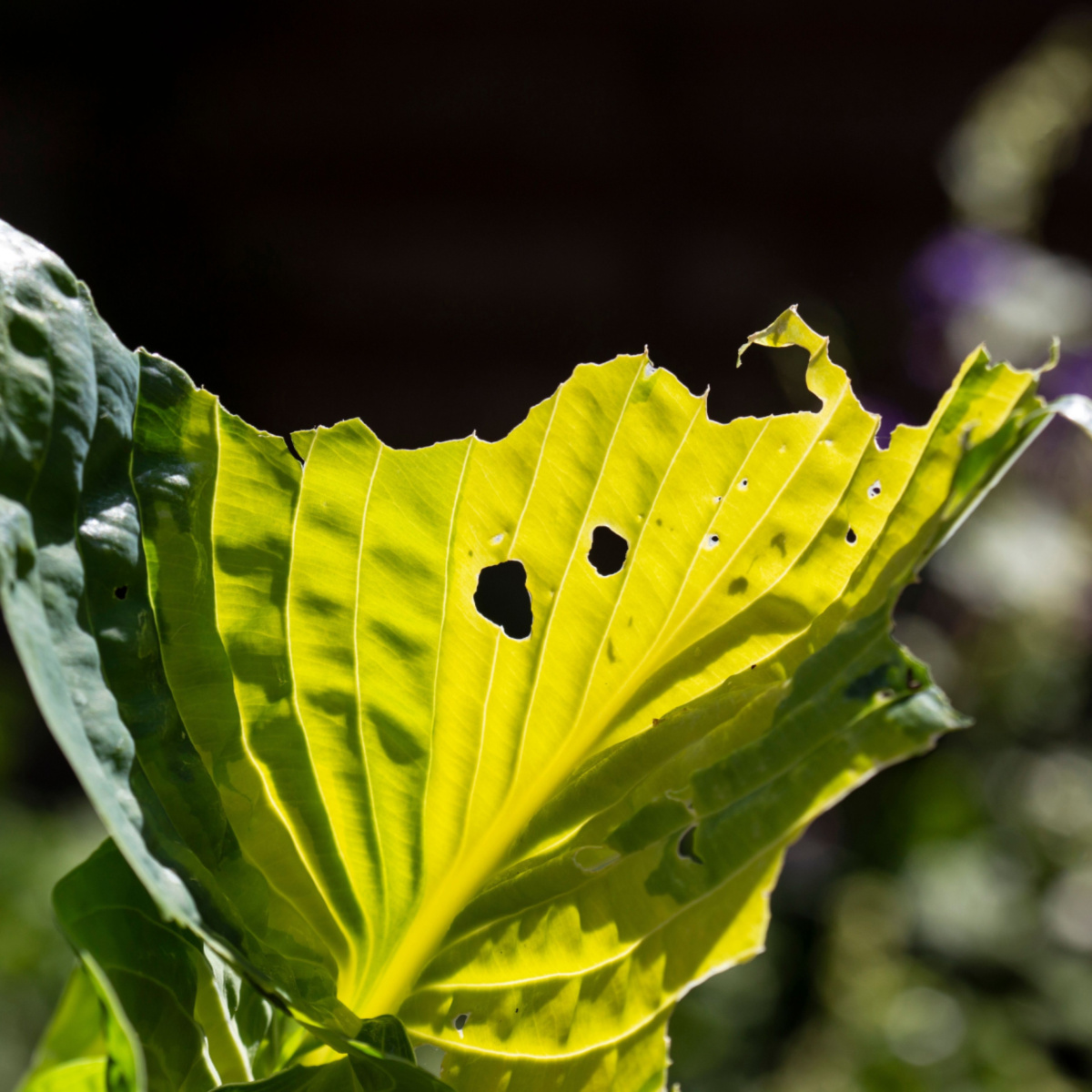
One thing is for sure, hostas can grow fast! In fact, within just a few years, they can double or triple in size, often crowding out other plants in the process. In addition, when the roots of hostas begin to become too large, it can start to spell trouble for the plants ability to grow and flower.
When the roots of hostas become tangled and root bound, the plant struggles to absorb the moisture and nutrients it needs for strong foliage growth up top. But that is exactly where regular cutting back and dividing can save the day – and late summer just happens to be the perfect time to do it. Even better – it couldn’t be easier to do!
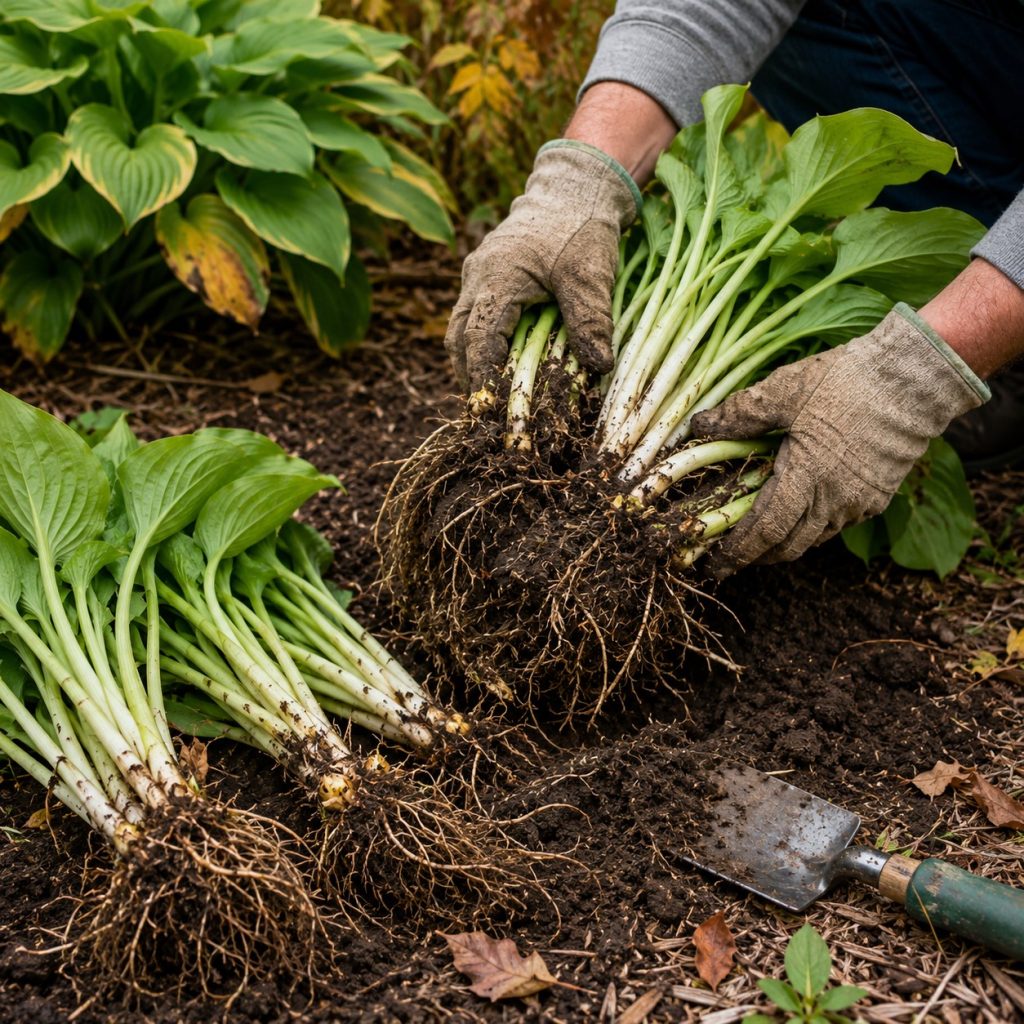
Why You Need To Divide Overgrown Hostas In Late Summer
Why Late Summer Is Best To Divide & Transplant
Hostas can really be cut back and divided at any time during their growing season. However, there are some big advantages to performing the task in late summer
For starters, in late summer, you have a much easier time knowing exactly how large the plant is. If you were to divide them in the early spring, you have no way of knowing what their full mature size will end up being. But by the end of summer, at full growth, you know exactly how much space the plants are taking up.
Being able to see the plant’s growth also makes dividing them easier since you can see where the stems are as opposed to waiting until they start to pop up through the soil in early spring.
But perhaps best of all, by dividing and transplanting in late summer, the new plants have the perfect amount of time to establish and start setting roots before winter arrives. And they can do so easily in the cooler and less stressful temperatures that fall bring.
One thing is for sure, it sets your hostas up to be ready to grow right from the start in the spring!
How To Divide Overgrown Hostas In Late Summer
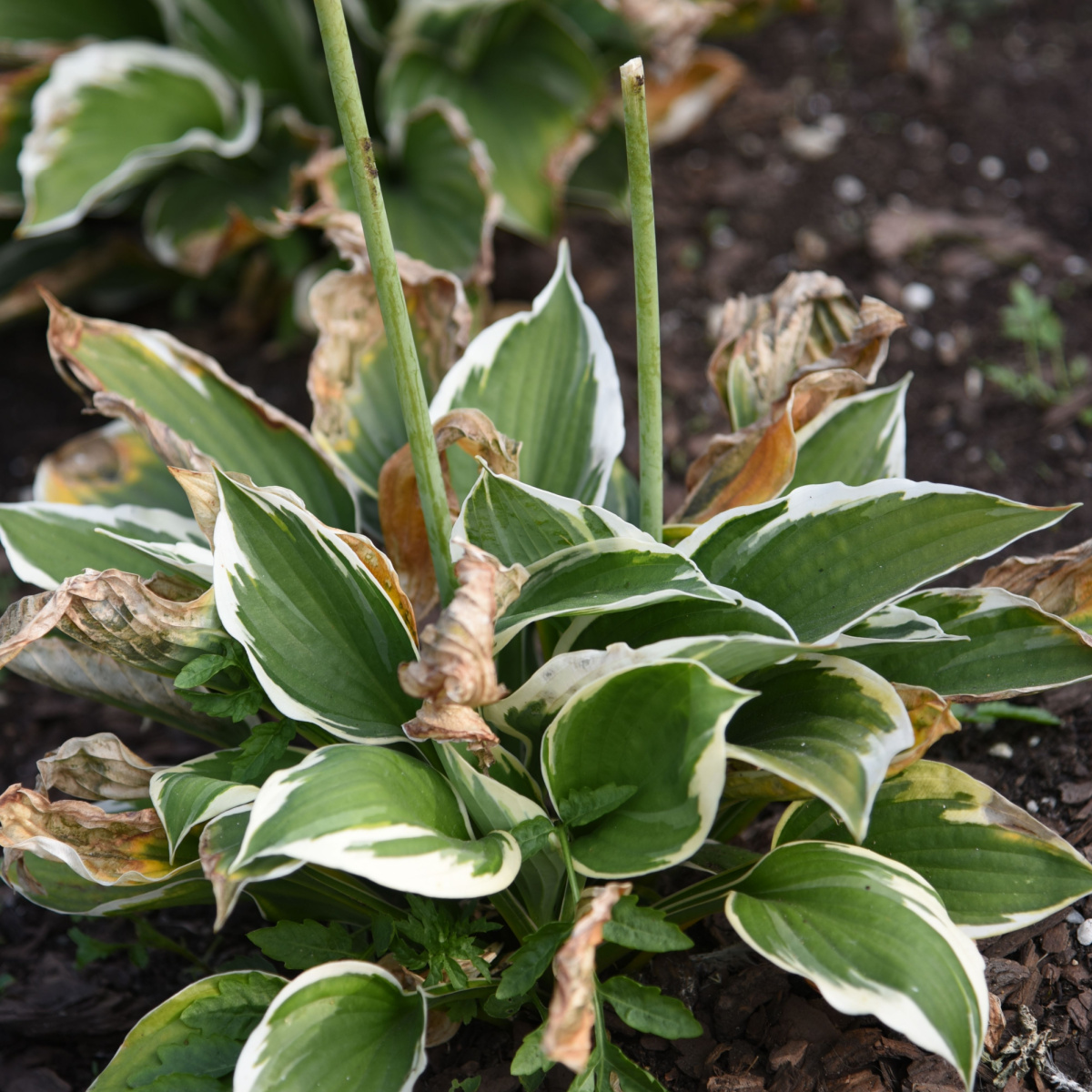
The first step in dividing your hostas is cutting back the foliage.
Dying and decaying leaves not only look unsightly but also give pests, mold and disease a hiding spot to overwinter. Unfortunately, if they do, they can all be right there in the spring to cause havoc to your plants. See our article: Summer Hosta Care – How To Keep Hostas Safe From Insects, Rabbits, Deer & More!

But when getting ready to divide hostas in late summer, cutting them back also makes digging up and dividing them far easier as well, allowing you to see the exact size of the plant’s root structure.
To remove the foliage, use a pair of hedge trimmers or pruners and cut the leaves back two to three inches above the soil line. It’s important to leave a little bit of the stem behind. This will allow you to easily see where you plant your new divisions which makes mulching a bit easier.
As for the cut leaves and stems, they can then go into your compost pile as long as they are free of pests or disease. Once all of the foliage has been removed, it’s time for dividing.
Digging Up Hostas
The next step in dividing is to dig out the root clump. Using the remaining stems as a guide, go out a few inches wider and dig around the perimeter of the plant. Hostas have fairly shallow roots. By digging down four to six inches all around the plant, it will usually pop out of the soil quite easily.
If your plant is extremely large, you can dig it out in sections. Don’t worry about damaging the plant. Hostas are incredibly tough and hardy plants. Once the root mass is up out of the ground, turn it upside down. This will give you a better sense of the size of the plant and make dividing far easier.
Dividing & Transplanting Overgrown Hostas In Late Summer
Now it’s time to cut the root clump into smaller divisions. The larger the cutting you make, the larger the plant will be next year. Use a sharp shovel or a garden knife to cut the root mass into sections.
Listen To Our Latest Garden Podcast Below

When cutting, try to keep each new division to a similar size. This will help the new plants all grow to the same size in your flowerbeds next year. As a good rule of thumb, three to five inch sections will create a hosta with a 12 to 18 inch canopy the following year.
Now that your hosta has been divided, it’s time to get the new plants into the ground. And you want to do this as soon as possible. Not only will planting quickly prevent the roots from drying out, but it also gives the plant time to establish before winter.
Create a planting hole that is about one and a half times the size of the division. Mix in a few inches of compost into the bottom of the hole. The compost will help to provide a dose of nutrients to the new plant. It will also help loosen the soil for easy root growth.
Place the new division into the hole so the crown of the roots are level with the ground. Backfill with more soil and water well to help set the new hosta in place.
Dividing & Transplanting
Now it’s time to cut the root clump into smaller divisions. The larger the cutting you make, the larger the plant will be next year. Use a sharp shovel or a garden knife to cut the root mass into sections.
When cutting overgrown hostas in late summer, try to keep each new division to a similar size. This will help the new plants all grow to the same size in your flowerbeds next year. As a good rule of thumb, three to five inch sections will create a hosta with a 12 to 18 inch canopy the following year.
Now that your hosta has been divided, it’s time to get the new plants into the ground. And you want to do this as soon as possible. Not only will planting quickly prevent the roots from drying out, but it also gives the plant time to establish before winter.
Create a planting hole that is about one and a half times the size of the division. Mix in a few inches of compost into the bottom of the hole. The compost will help to provide a dose of nutrients to the new plant. It will also help loosen the soil for easy root growth. Affiliate Link: R&M Organics Compost Soil Amendment Fertilizer
Place the new division into the hole so the crown of the roots are level with the ground. Backfill with more soil and water well to help set the new hosta in place.
This Is My Garden
Follow Our Facebook Page For Great Gardening Tips And Advice! This Is My Garden Facebook Page
This Is My Garden is a garden website created by gardeners, for gardeners. Jim and Mary Competti have been writing gardening, DIY and recipe articles and books and speaking for over 15 years from their 46 acre Ohio farm. They publish three articles every week, 52 weeks a year. Sign up today to follow via email, or follow along!

More Hosta
- Summer Hosta Care - How To Keep Hostas Safe From Insects, Rabbits, Deer & More!
- What To Do With Hostas In Late Fall - 3 Must Do Chores As Hostas Die Back!
- Late Summer Hosta Care – How To Keep Hostas Strong For Fall & Next Year!
- 3 Popular Perennials You Can Divide In The Middle Of Summer - And Create More Plants For Free!