7 Perennials You Should Divide In Early September – Get More Flowers For Free Now!
Early September is one of the best times of the year to divide many of the perennials growing in your flowerbeds – and doing it now can help you create healthier plants, better blooms and plenty of new plants for free!
By the end of summer, many perennial plants have been growing in the same spot for years. Their roots can become thick and overcrowded, and what was once a small, tidy plant can turn into a massive clump that struggles to flower.
Unfortunately, overcrowding can cause more problems than simply making a flowerbed look messy. When roots become packed together, they have to compete for moisture and nutrients. That can lead to smaller blooms, weak growth and even bare or dying areas in the center of plants.
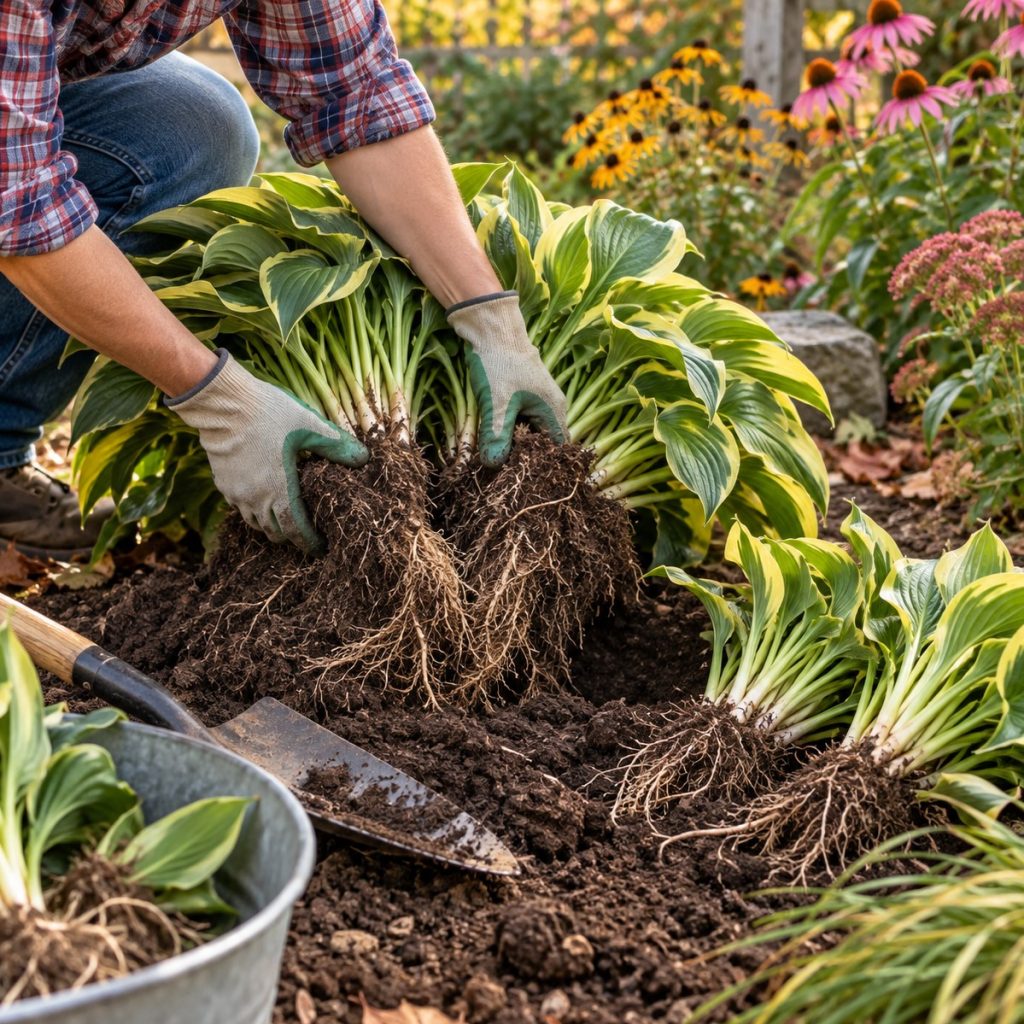
That is exactly where dividing can help. By digging up an established perennial and splitting its root system into several smaller sections, you give each new plant room to grow and develop again. Even better, every division becomes another plant you can use somewhere else in your landscape – without spending a dime!
Why Early September Is A Great Time To Divide Perennials
The Benefits Of Dividing In The Fall
Although spring is a good time for dividing many perennials, early fall has a few advantages of its own.
For starters, temperatures are usually beginning to moderate. Cooler daytime and nighttime temperatures reduce stress on newly transplanted plants. At the same time, the soil is still warm from summer, which helps roots establish quickly.
There is another big advantage to dividing in early September. Most spring and summer-flowering perennials have finished blooming by now. Instead of forcing a plant to support flowers and establish new roots at the same time, it can concentrate its energy on root growth.
The key is to divide early enough that plants have time to establish before the ground freezes. Ideally, give newly divided plants at least four to six weeks of growing weather before your area's typical first hard freeze. Here are seven perennials that are great candidates for dividing as summer turns to fall.

#1 Hostas
Hostas are one of the easiest and most forgiving perennial plants to divide. Better yet, an established hosta can often provide several new plants from a single clump. As hostas mature, their crowns become larger and larger. Eventually, plants can become overcrowded, with leaves and roots competing for space, water and nutrients.
Early September is an excellent time to divide hostas because the plants have completed most of their active summer growth. Don't worry if the foliage looks a little tired after transplanting. The leaves will soon die back naturally anyway.
Begin by cutting the foliage back to about six inches to make the plant easier to handle. Dig around the outside edge of the plant and lift the entire root ball from the ground. Use a sharp spade, garden knife or small saw to divide the root ball into sections. Each section should contain a healthy portion of roots and several growing points.
Replant immediately at the same depth the hosta was previously growing. Water thoroughly and continue watering whenever the soil becomes dry until cold weather arrives.
#2 Daylilies - One Of The Best Perennials To Divide In Early September
Daylilies are incredibly durable plants, but even they can suffer when clumps become too crowded. One of the easiest ways to tell that a daylily needs dividing is when flowering begins to decline. You may notice fewer blooms, smaller flowers or a dead area developing in the center of the plant.
Most daylilies benefit from being divided every three to five years, although vigorous varieties may need it more often. By early September, most daylilies have finished their main flowering cycle, making it a great time to split established clumps.
Cut the foliage back to about six inches. Next, dig around the entire plant and lift the clump from the soil. Separate the roots into smaller sections using your hands or a sharp garden knife. Each division should contain several healthy fans of foliage along with a good portion of roots. For more, see: 3 Things You Need To Be Doing For Your Daylilies In Early Fall

#3 Peonies
Peonies can live for decades without being divided, so unlike many perennials, they don't need regular splitting to remain healthy. But early fall is the ideal time to divide them when you want to move an existing plant or create additional peonies for other areas of your landscape.
September works especially well because peonies are beginning to transition toward dormancy. Their root systems can be divided and replanted with far less stress than during active spring growth.
After cutting the foliage down, carefully dig around the plant. Peony roots can extend surprisingly deep, so start well outside the crown to avoid damaging them.
Lift the root system and gently remove excess soil. Divide the crown into sections, making sure each new division contains at least three to five healthy buds, commonly called eyes. The most important part of replanting peonies is depth. Position the eyes only about one to two inches below the soil surface. Planting them too deeply is one of the most common reasons peonies fail to bloom.
#4 Bearded Iris
If there is one perennial that often benefits tremendously from regular dividing, it is the bearded iris. Iris plants grow from thick underground structures called rhizomes. Over time, these rhizomes multiply and crowd together. When that happens, flowering can decline considerably.
Crowded iris plants can also suffer from poor air circulation and increased disease issues. To divide, carefully lift the rhizomes from the soil using a garden fork or shovel. Remove any old, soft, damaged or rotting sections.
Cut healthy rhizomes into sections, making sure each piece contains roots and a fan of foliage. Trim the foliage back to around six inches before replanting. Unlike many perennials, iris rhizomes should not be buried deeply. Position the rhizome at or just slightly below the soil surface, leaving the upper portion exposed.

#5 Why Garden Phlox Are One Of The Best Perennials To Divide In Early September
Tall garden phlox can produce spectacular summer color, but older plants often become crowded as their clumps expand. As plants thicken, air circulation through the center of the plant decreases. This is especially troublesome with phlox because poor airflow can increase the likelihood of powdery mildew.
Dividing mature plants every few years helps rejuvenate them while keeping their size under control. After flowering has finished, cut the stems back and carefully lift the root mass from the ground. Divide the plant into several smaller sections, making sure each division has healthy roots and multiple shoots or buds.
Replant the strongest outer portions of the plant and discard any weak or woody center sections. Give newly planted phlox plenty of room. Good spacing allows air to move through the foliage and can help keep plants healthier during the following growing season.
#6 Black-Eyed Susans
Black-eyed Susans are well known for spreading and creating large masses of bright yellow blooms. Although that makes them wonderful for filling flowerbeds, they can quickly become too crowded.
Dense clumps compete heavily for nutrients and moisture. Over time, the center of the plant may weaken while the outer edges continue expanding. Dividing every three or four years helps keep plants vigorous and provides an easy way to control their spread.
Once flowering begins to slow in late summer or early fall, dig up the clump and separate it into manageable sections. Black-eyed Susans usually separate fairly easily by hand. For older, tougher clumps, use a garden knife or sharp shovel. Replant healthy outer sections and water them well.
#7 Coneflowers
Coneflowers are another one of the best perennials to divide in early September. They can easily become overcrowded after several years in the same location - and although coneflowers don't require frequent dividing, mature clumps can benefit from being split every three to four years, particularly when flowering starts to decline or the center of the plant becomes thin.

Early September can work well for dividing coneflowers in areas where there are several weeks of growing weather remaining before freezing temperatures arrive.
Dig around the plant and lift as much of the root system as possible. Divide the crown into several sections, with each containing healthy roots and shoots. Replant immediately and water thoroughly.
Don't Wait Too Long To Divide In The Fall
Timing is one of the most important factors when dividing perennials in autumn. Although September can be ideal, waiting until late fall can leave plants without enough time to establish roots before freezing weather arrives.
For gardeners in colder climates, complete dividing as early in September as possible. Gardeners in warmer growing zones usually have a little more time. As a general rule, aim to have perennial divisions in the ground at least four to six weeks before the soil begins freezing.
If you miss that window, it is usually better to wait until spring rather than risk losing newly transplanted plants over winter. A little dividing in early September can go a long way toward creating healthier plants – and even more flowers – next spring and summer!
This Is My Garden
Follow Our Facebook Page For Great Gardening Tips And Advice! This Is My Garden Facebook Page
This Is My Garden is a garden website created by gardeners, for gardeners. Jim and Mary Competti have been writing gardening, DIY and recipe articles and books and speaking for over 15 years from their 46 acre Ohio farm. They publish three articles every week, 52 weeks a year. Sign up today to follow via email, or follow along!

More Uncategorized
- How To Fertilize Creeping Phlox In Early Spring For Massive, Show-Stopping Blooms!
- Plant These 5 Perennials - And Watch Bees, Butterflies & Pollinators Flock To Your Yard!
- The Easiest Houseplants To Grow - 8 Plants Anyone Can Keep Alive!
- The Best Way To Feed Indoor Seedlings - How To Get Your Transplants Growing Fast!