Why To Never Leave Old Tomato Plants In Your Garden – And The 3 Best Ways To Safely Get Rid Of Them!
Believe it or not, what you do with the old tomato plants dying off in your garden this fall – and how quickly you remove them – can have a huge impact on the health of your garden next year.
Whether you grow tomatoes in a traditional garden, raised beds or containers, removing plants as soon as they start to fail is one of the most important fall garden chores of all. Leaving dying and decaying plants in place might seem harmless, but it can quickly create the perfect environment for trouble.
Old vegetable plants can provide a home for mold, mildew and disease. Even worse, dying foliage, stems and fruit can also give garden pests a protected place to feed, hide and even overwinter – allowing problems from this year’s garden to return again next spring.
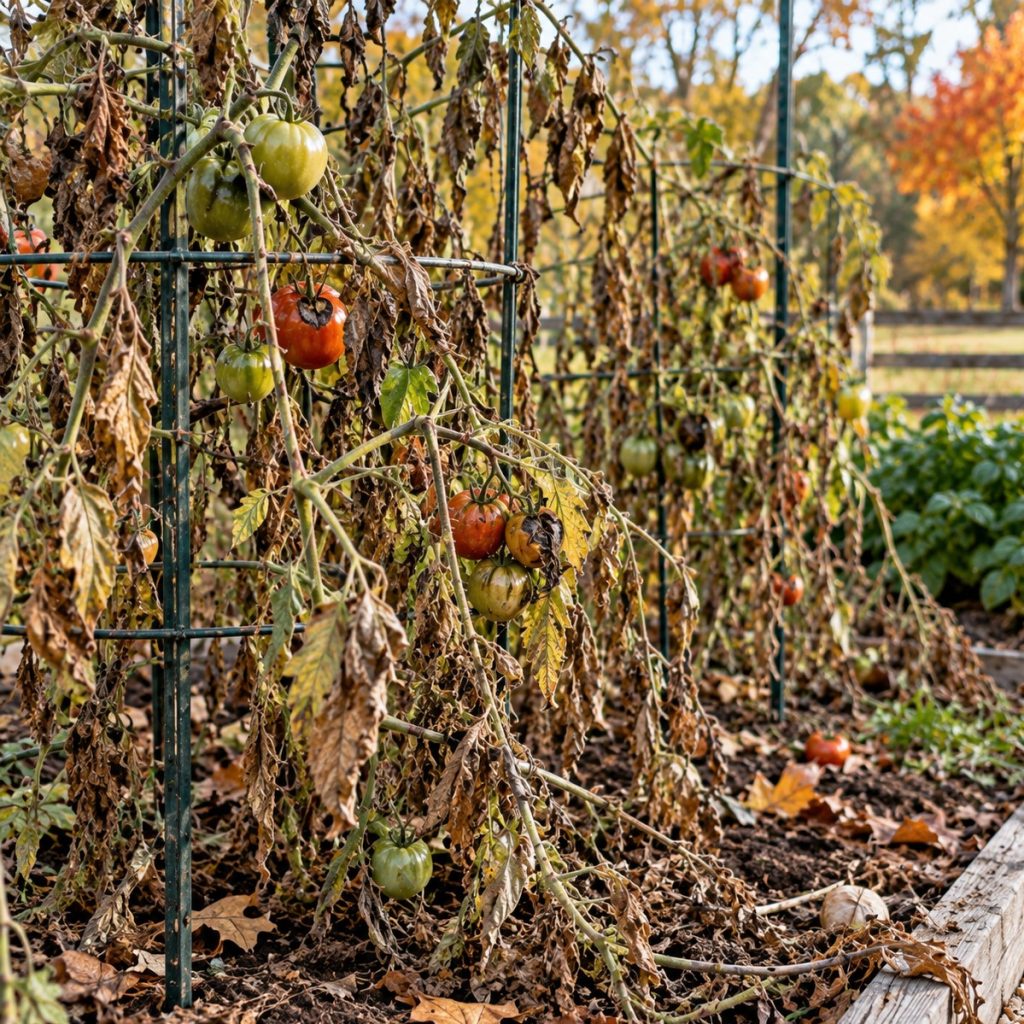
And although clearing away all old vegetable plants is important, it is especially critical when it comes to tomatoes. The longer dying tomato plants and their fallen fruit remain in your garden, the greater the chance that pests and disease can stick around to cause problems for next year’s tomato crop – and potentially other vegetable plants as well!
Never Leave Old Tomato Plants In Your Garden
The Danger Of Leaving Tomato Plants In The Garden
Whether it be mildew, blight, or a host of other ailments, tomato plants are one of the biggest carriers of disease. Unfortunately, the longer the plants stick around, the more likely they are to become infected. Not only infecting the tomato plants, but the surrounding soil and other vegetable plants in the process.
That is even more true when it comes to the dreaded soil borne disease of blight. As decaying foliage and fruit fall, they drop infected spores onto the soil surface. Spores that can then live for years to infect future tomato crops. See: How To Keep Tomato Blight Away
But rotting tomato plants also attract pests and insects by the thousands. Tomato hornworms, aphids, tomato root nematodes and a long list of other pests love to feast on decaying foliage and rotting fruit. And when they do, they often lay eggs that can come back to haunt next year’s crop even worse.

It’s obvious to see how important it is to get your old tomato plants out of their growing space as they begin to die off. But here’s the kicker – you also have to be careful with the plants once you take them out!
How To Safely Get Rid Of Tomato Plants After They Die Off
One thing you do not want to do with your old tomato plants and rotting fruit is place them in your home compost pile.
For most of the crops you clear from the garden in the fall, the compost pile is the perfect choice. After all, the plants break down, give back their remaining nutrients – and then help to create amazing compost. Compost that can then be used next year to help power a new garden with new plants.
Vegetable crops such as beans, greens and peas are a great example of this. Not only do they add good foliage that breaks down fast, they are also filled with nutrients. In addition, they have little chance of carrying disease to your pile.
But tomato plants are a different story. Because of the likelihood of carrying disease, they are best left far away from a home compost pile. In order to kill blight spores and other pathogens, a compost pile needs to get extremely hot. And for an extended period of time.
Unfortunately, home composting bins and piles simply do not have the size, air flow or ingredients to reach those temperatures. And that means the pathogens survive. And when the finished compost is used next year, they infect other plants as well.

Leave The Tomatoes Out Too!
So why leave out the rotting tomato fruits? For starters, they too can carry blight spores, mildew and other health issues to your compost pile. But even more, it’s best to leave them out to keep volunteer seeds from becoming an issue next growing season.
Just as with the pathogens, a home pile does not get hot enough to kill the seeds from the tomato fruits. And a single tomato can have hundreds of tiny seeds. When those seeds pass through the compost, that means they will sprout wherever it’s used to become next year’s weeding problem.
So with all of those dangers, what exactly is the best way to get rid of dying tomato plants and bad tomatoes? Obviously, the first key is to keep them as far away from your garden space as possible.
At the same time, simply throwing them in your weekly trash is such a waste. Especially when it is needlessly filling landfills with materials that still have value. With that in mind, here are three great alternatives:
3 Easy Ways To Get Rid Of Tomato Plants After They Die
The Trench & Bury Method
Although you should not add tomatoes to your home compost pile, that doesn’t mean you can’t still compost them. After all, like all living plants, they still add valuable minerals and nutrients back to the soil when they break down. And this is exactly where trench composting works!
Trench composting is actually a great way to compost everything if you don’t have a compost pile. And is it ever easy! In fact, it’s as simple as digging a deep hole and burying the plant material. The plants then break down, and add their resources back to the soil.

With non-tomato materials, you can do this anywhere in your garden. But with tomatoes, it’s important to bury the materials away from the garden. It keeps your garden safe and allows you to dispose of your tomato plants with ease!
Community / Commercial Composting Centers
Another great way to get rid of old tomato plants after they die is at a community or local municipal composting facility. These facilities use high heat composting methods that kill off pathogens and seeds. The end result is perfectly safe and blended compost that is great for powering flowers and vegetables.
Simply clear the plants and place into approved compostable yard waste bags. Always be sure to clear any fruit that has fallen down to the soil as well to keep it out of your garden.
If you happen to have leaves and other yard waste and don’t have a home compost pile, these composting centers are a great option in place of simply throwing valuable organic materials to the curb to put in a landfill. Affiliate Product Link: Leaf / Compost Bags

Burning Old Tomato Plants
Burning your plants in a fire pit or outdoor burn pile is another effective way to destroy plants and pathogens that can live in old tomato plants. The important thing here is following all local burn laws and rules.
If you live in an area where fire is a constant danger, this is obviously not a good solution. As for then using the ashes in the garden or in your compost pile, that is a matter of personal debate. Some experts and gardeners consider it completely safe, others play it safe and simply spread the ashes out away from the garden or their compost pile.
Here is to finding the best way to get rid of dying tomato plants from your garden this fall, and to keeping next year’s garden safe and ready to grow!
This Is My Garden
Follow Our Facebook Page For Great Gardening Tips And Advice! This Is My Garden Facebook Page
This Is My Garden is a garden website created by gardeners, for gardeners. Jim and Mary Competti have been writing gardening, DIY and recipe articles and books and speaking for over 15 years from their 46 acre Ohio farm. They publish three articles every week, 52 weeks a year. Sign up today to follow via email, or follow along!