How To Put Falling Pine Needles To Good Use This Fall!
Wondering how to put pine needles to good use in the fall instead of hauling away pile after pile? Believe it or not - all of those needles collecting beneath your trees can be one of the most useful materials you have for protecting flowerbeds, covering garden paths and more!
When pine trees begin dropping needles in autumn, the ground beneath them can quickly disappear under a blanket of brown. And once the wind starts blowing, those needles often find their way into the lawn, across walkways and into nearby beds.
Although the mess can be frustrating, there is no need to treat all of those needles as yard waste. Much like fallen leaves, they are a free resource you can collect and use throughout your landscape.

Pine needles are lightweight, easy to spread and slow to break down. Their shape allows them to form a loose, protective covering over soil. And because they tend to knit together, they can stay in place surprisingly well once they settle.
The key is knowing where pine needles work best, how thick to spread them and when to mix them with other materials. Here is how to put this fall’s supply to work!
Putting Pine Needles To Good Use In The Fall!
Will Pine Needles Make Your Garden Soil Too Acidic?
One of the biggest reasons gardeners hesitate to use pine needles is the fear that they will make their soil too acidic. Fortunately, spreading pine needles as mulch generally does not cause a meaningful change in the acidity of the soil underneath. Dead pine needles are not acidic in the least.
Fresh needles can be acidic, but that does not mean a surface layer will turn an entire flowerbed into acidic soil. As needles weather and decompose, their chemistry changes, and the soil itself helps buffer changes.
That means pine needles are not limited to use around blueberries, azaleas and other plants that prefer acidic conditions. They can also serve as mulch around many common landscape plants. See our article: The Best Way To Use Pine Needles To Mulch Acid Loving Bushes & Plants.
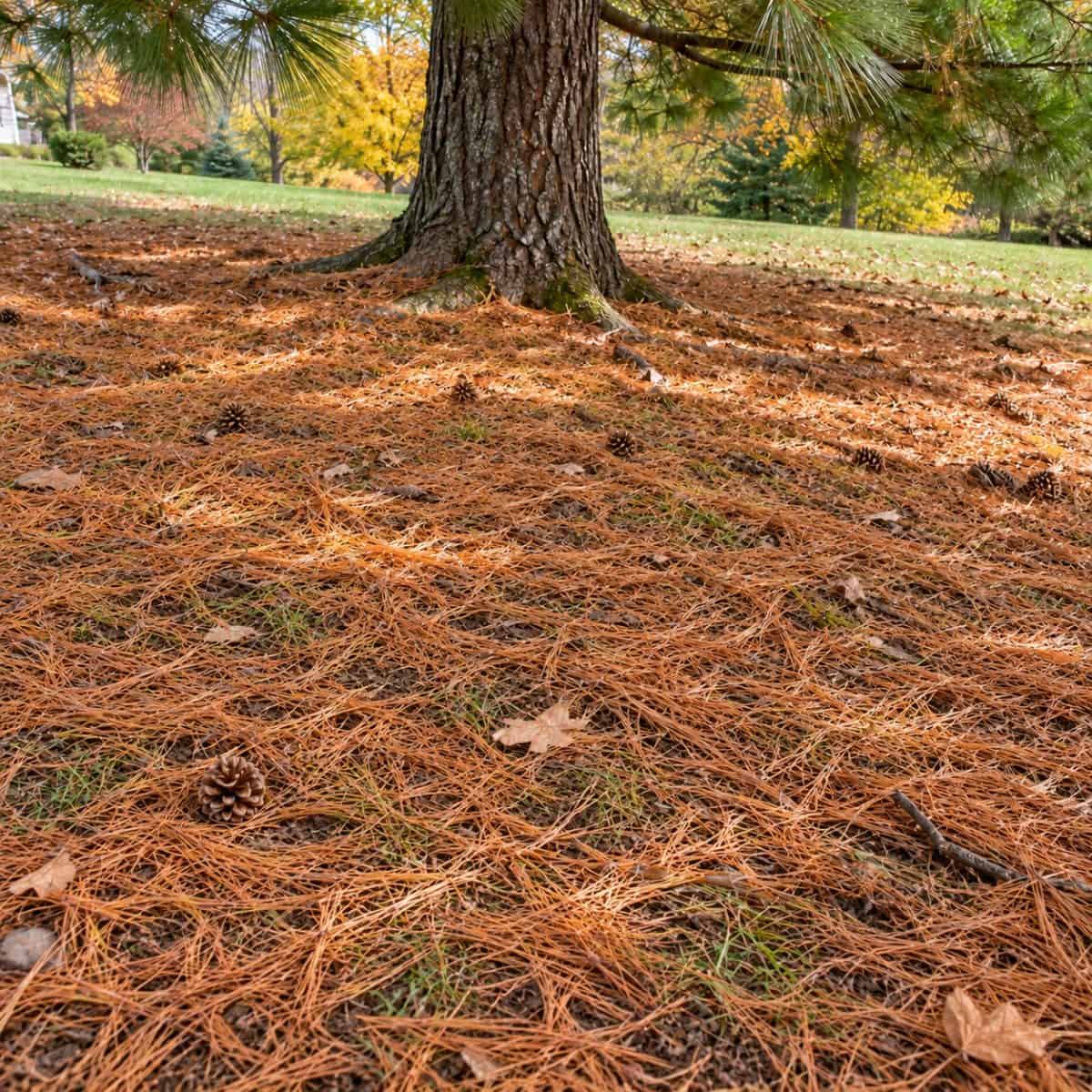
Another common question is whether you need to rake up every needle beneath a pine tree. In a natural planting area, leaving a reasonable layer in place is often useful. The needles cover the soil and gradually return organic material as they decompose.
On a lawn, however, a thick accumulation can block light and interfere with grass growth. Collect those heavy deposits and move them to a more useful location.
Use Pine Needles To Mulch Your Flowerbeds
One of the easiest ways to use pine needles in the fall is as mulch around established perennials, shrubs and trees. Often called pine straw when used as mulch, the needles help cover bare soil and reduce the impact of pounding rain.
That protection is especially useful in autumn and winter. Exposed soil can wash away during heavy rainfall, particularly on slopes or in beds where plants have died back. A covering of needles helps soften the force of falling water and keeps soil from splashing onto nearby plants.
Pine needles also help slow moisture loss. Although plants use less water as temperatures cool, their roots can still dry out during stretches of windy, rainless weather. Mulch helps keep soil moisture more consistent.
For established landscape beds, aim for a settled layer about two to three inches deep. Freshly spread needles can look fluffy at first, so check the depth after they have been watered or rained on.
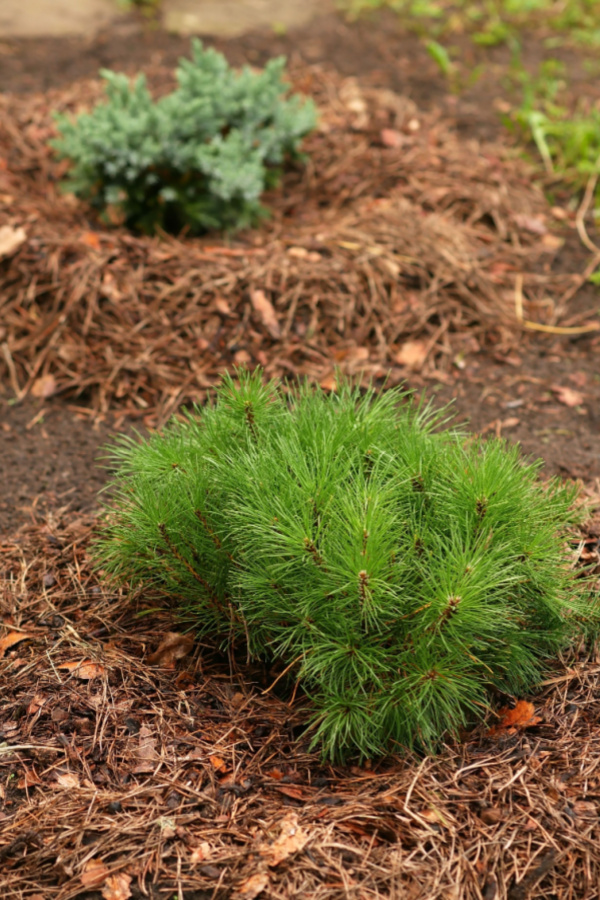
Before spreading them, pull existing weeds and water the soil if it is dry. Pine needles can discourage some new weeds from sprouting, but they will not eliminate established weeds growing beneath them.
Keep the needles a few inches away from tree trunks and shrub stems. Around perennials, leave a little breathing room near the crown instead of burying the center of the plant.
Protect Vulnerable Plants After The Weather Turns Cold
Pine needles can also provide seasonal protection for certain plants in the fall, but timing matters. There is a difference between maintaining a normal mulch layer in a flowerbed and adding extra material specifically for winter protection.
When you add winter mulch too early, it can keep soil warm longer and provide shelter for rodents near vulnerable plants. For plants that benefit from an insulating winter covering, wait until they have gone dormant and the soil has cooled thoroughly.
The goal is to help keep temperatures more consistent. Repeated freezing and thawing can push shallow-rooted plants upward, exposing roots to drying air. A loose mulch layer can help reduce those swings.
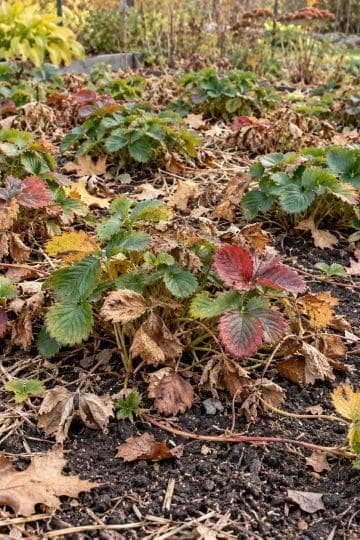
Pine needles are useful because they form an airy covering rather than a dense, wet blanket. They can be an option for protecting established strawberry beds where winter mulch is needed, provided the plants are fully dormant before you apply it.
Spread the needles loosely and use enough to create an insulating layer without packing them down. Check periodically to make sure wind has not exposed parts of the bed or pushed too much material into one spot.
Listen To Our Garden Podcast Below

In spring, gradually pull the covering back as growth resumes. Some of the needles can remain between plants to cover soil and help keep developing berries from resting directly on the ground.
Use Needles On Garden Paths And Between Beds
If you have more needles than your flowerbeds can use, garden paths are another excellent place to put them. They can cover exposed soil between raised beds, along vegetable garden walkways or on lightly traveled paths through the landscape.
Bare paths often become muddy as autumn rains arrive. Walking on that wet ground can compact the soil and leave deep footprints that collect even more water.
A layer of pine needles creates a buffer between your shoes and the soil. It will not correct a drainage problem, but it can reduce splashing and make a lightly used garden path more comfortable to walk on.
Start by removing weeds from the area. Then spread enough needles to create a settled covering around three inches deep. You may need to replenish the layer as it compresses and slowly breaks down.
For a new path over weedy ground, overlapping plain cardboard beneath the needles can help suppress existing growth. Remove tape and labels, wet the cardboard and cover it thoroughly so the edges do not lift.

Pine needles are particularly useful on informal paths where you want a natural appearance. As they weather, their color blends easily with surrounding beds and trees.
Where Not To Use Pine Needles This Fall
There are a few places to avoid, however. Needles can be slippery on hard surfaces, so keep them off steps, paved walks and decks. They also should not be used as mulch immediately against buildings, around fire pits or near other ignition sources.
For the right garden path, though, a pile of needles can become a practical covering that costs nothing beyond the time it takes to spread.
Here is to putting pine needles to good use in the fall - and to using a great free resource for your landscape!
This Is My Garden
Follow Our Facebook Page For Great Gardening Tips And Advice! This Is My Garden Facebook Page
This Is My Garden is a garden website created by gardeners, for gardeners. Jim and Mary Competti have been writing gardening, DIY and recipe articles and books and speaking for over 15 years from their 46 acre Ohio farm. They publish three articles every week, 52 weeks a year. Sign up today to follow via email, or follow along!