
Wondering what you can do for your lawn in October to set the stage for a great yard next Spring & Summer?
If you want a healthier, thicker lawn next spring – believe it or not, some of the most helpful work you can do starts in October – before your grass settles in for winter!
By early fall, lawns have been through plenty. Summer heat, dry weather, foot traffic and months of mowing can leave behind thin grass and compacted soil. Even when cooler temperatures bring back a little green, there can still be problems beneath the surface that keep your lawn from growing its best.
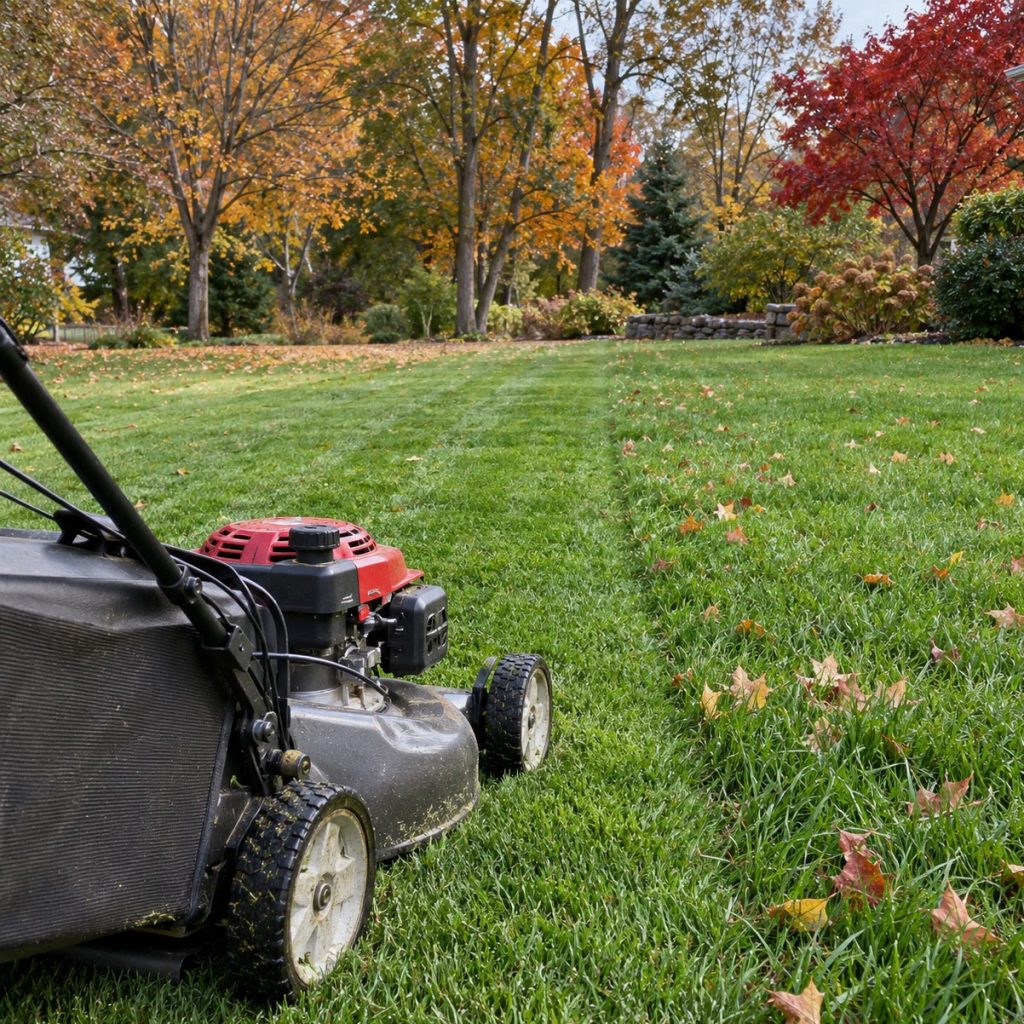
What To Do For Your Lawn In October
The 3 Most Important Fall Lawn Chores
The good news is that fall gives you an opportunity to help your grass recover. For cool-season lawns, including those with bluegrass, fescue and perennial ryegrass, cooler weather can provide excellent growing conditions. And taking advantage of that remaining growth can make a difference.
Three jobs deserve special attention this month: aerating compacted soil, getting your lawn ready for its final mowing, and deciding whether it needs fertilizer.
But timing matters! October weather varies greatly, and warm-season grasses need a different approach as they head toward dormancy. The goal is to work with your lawn’s growth – and give it what it actually needs.
1. Aerate To Open Up Compacted Soil
One of the biggest obstacles to a healthy lawn is something you might never notice simply by looking at the grass: compacted soil.
Every trip across the yard presses down on the ground. Mowers, pets, outdoor gatherings and regular foot traffic all contribute. Over time, that pressure reduces the spaces in the soil that allow air and water to move through it. Grass roots have a harder time growing through tightly packed ground. Water may puddle or run off instead of soaking in, and the lawn can struggle during dry stretches.
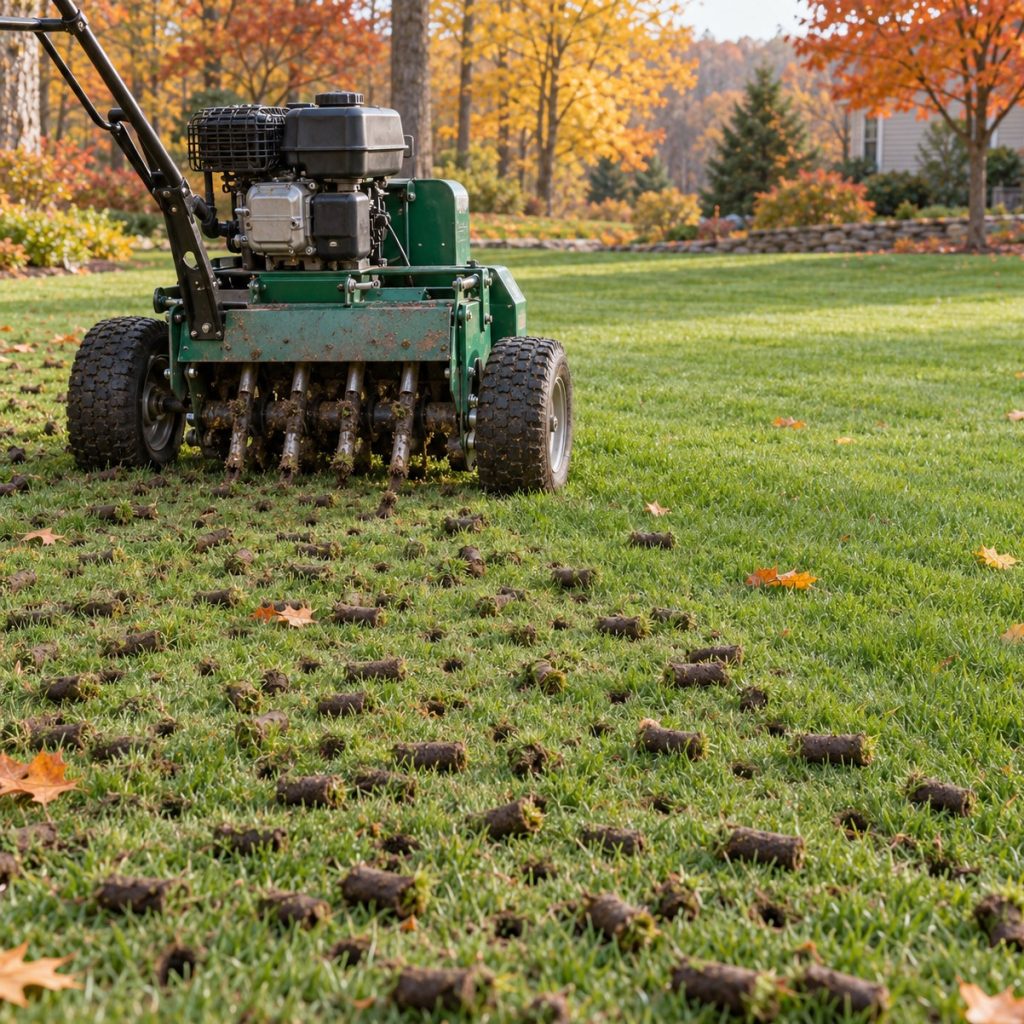
Core aeration helps by removing small plugs of soil. Those openings allow water and air to move into the root zone while giving roots more room to expand. For cool-season lawns, aerating during active fall growth gives the grass a chance to recover. Focus on areas with heavy traffic, hard ground or persistent compaction.
How To Get The Most From Aerating
For the best results, use a core aerator that pulls plugs from the ground. Machines that simply poke holes with solid spikes do not remove soil and are less effective at relieving compaction. Soil moisture makes a difference, too. Ground that is bone dry can be difficult to penetrate, while saturated soil can turn the job into a muddy mess.
Mark sprinkler heads, shallow irrigation lines and other obstacles before beginning. Then make overlapping passes across the areas that need attention. Particularly compacted spots may benefit from passes in different directions.
Leave the plugs on the lawn. They gradually break apart with weather and mowing, returning soil to the surface. There is no need to rake them all up and haul them away.
If you plan to overseed, aeration can help improve contact between seed and soil. But do not assume October always leaves enough time for new grass to establish. In colder areas, the best fall seeding window may already be over.
Above all, give the lawn time to recover. Aerating while grass is still growing is far more helpful than waiting until the ground is nearly frozen and the lawn has stopped responding.


Prepare For A Slightly Lower Final Mowing
As fall progresses, grass usually grows more slowly. That means you may mow less often – but it does not mean you should put the mower away on a particular calendar date.
Continue mowing as long as the grass needs it. In some areas, the final cut comes in October. In others, mild weather keeps the lawn growing into November or beyond.
For many cool-season lawns, a final height around 2½ to 3 inches is a reasonable target, depending on the grass variety. If you have been mowing taller through summer, you should the height down slightly over your last few cuts.
The important word is slightly! Cutting the lawn extremely short does not make it better prepared for winter. Scalping removes too much leaf tissue and can weaken the grass just when you want it heading into cold weather in good condition.
Think of the final mowing as tidying up the lawn. You want grass that is evenly cut and free of heavy clumps, without leaving it shaved down to the soil.
Lower Gradually And Keep Leaves From Smothering Grass
If your lawn is still tall, lower it gradually. Follow the same rule you use during the growing season: avoid removing more than one-third of the grass blade in a single mowing.
For example, bringing a four-inch lawn down to three inches is a much gentler adjustment than suddenly cutting it to two inches. Taking too much off at once creates unnecessary stress. Keep your mower blade sharp as well. A sharp blade cuts cleanly, while a dull blade tears the grass and leaves ragged tips.
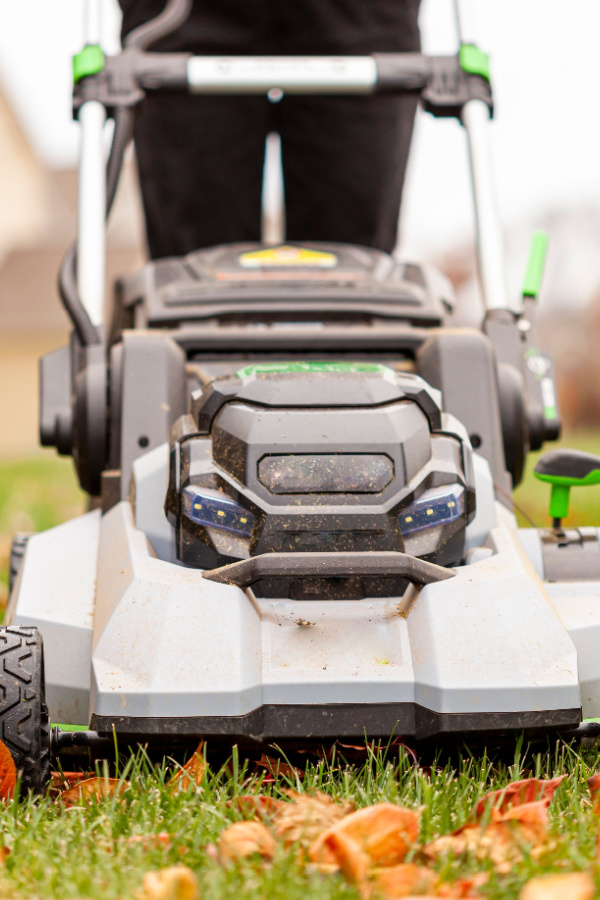
October mowing also provides an opportunity to manage fallen leaves. A light scattering can often be chopped into small pieces with a mulching mower, allowing the fragments to settle between grass blades. But thick layers need attention. If leaves form a wet mat or still blanket the grass after mowing, collect the excess and put them to work in your compost pile or garden.
To Fertilize Your Lawn In October – Or Not
Should you fertilize your lawn in October? For a cool-season lawn, the answer can be yes – but it is not an automatic recommendation for every yard.
Fall feeding can help actively growing grass recover from summer stress and maintain a thicker stand. However, the benefit depends on your grass type, climate, previous fertilizer applications and the lawn’s condition.
If you already fertilized in late summer or September, another application may be unnecessary. Adding more simply because a bag says winterizer” can leave you applying nutrients the lawn does not need.
Timing is especially important in colder climates. As temperatures drop and growth slows, grass becomes less able to use fertilizer efficiently. Waiting until the lawn is dormant or the ground is frozen increases the chance that nutrients will be lost instead of benefiting the grass.
October lawn care does not have to be complicated. Relieve compaction where it exists, keep mowing at a sensible height until growth stops, and fertilize only when your grass needs it and can use it. And remember, October is great for tidying up flowerbeds too! See our article: 6 Perennials You Can Still Divide In October
This Is My Garden
Follow Our Facebook Page For Great Gardening Tips And Advice! This Is My Garden Facebook Page
This Is My Garden is a garden website created by gardeners, for gardeners. Jim and Mary Competti have been writing gardening, DIY and recipe articles and books and speaking for over 15 years from their 46 acre Ohio farm. They publish three articles every week, 52 weeks a year. Sign up today to follow via email, or follow along!