3 Easy Ways To Use Coffee Grounds This Fall To Recharge The Soil In Your Flowerbeds & Garden!
If you are looking for a simple way to help recharge your garden and flowerbeds this fall - believe it or not - a good place to start is with the coffee grounds left behind after brewing your morning coffee!
Although those grounds have already helped make a delicious pot of coffee, they still have plenty of value. Used coffee grounds contain organic matter and nutrients that can be recycled back into your soil. And during the fall, they can also help you turn all of those falling leaves into valuable compost.
Whether you grow vegetables in raised beds, maintain perennial flowerbeds, or simply want to make better compost, saving your grounds is an easy habit to start. Even better, ordinary paper coffee filters can often go right along with them.
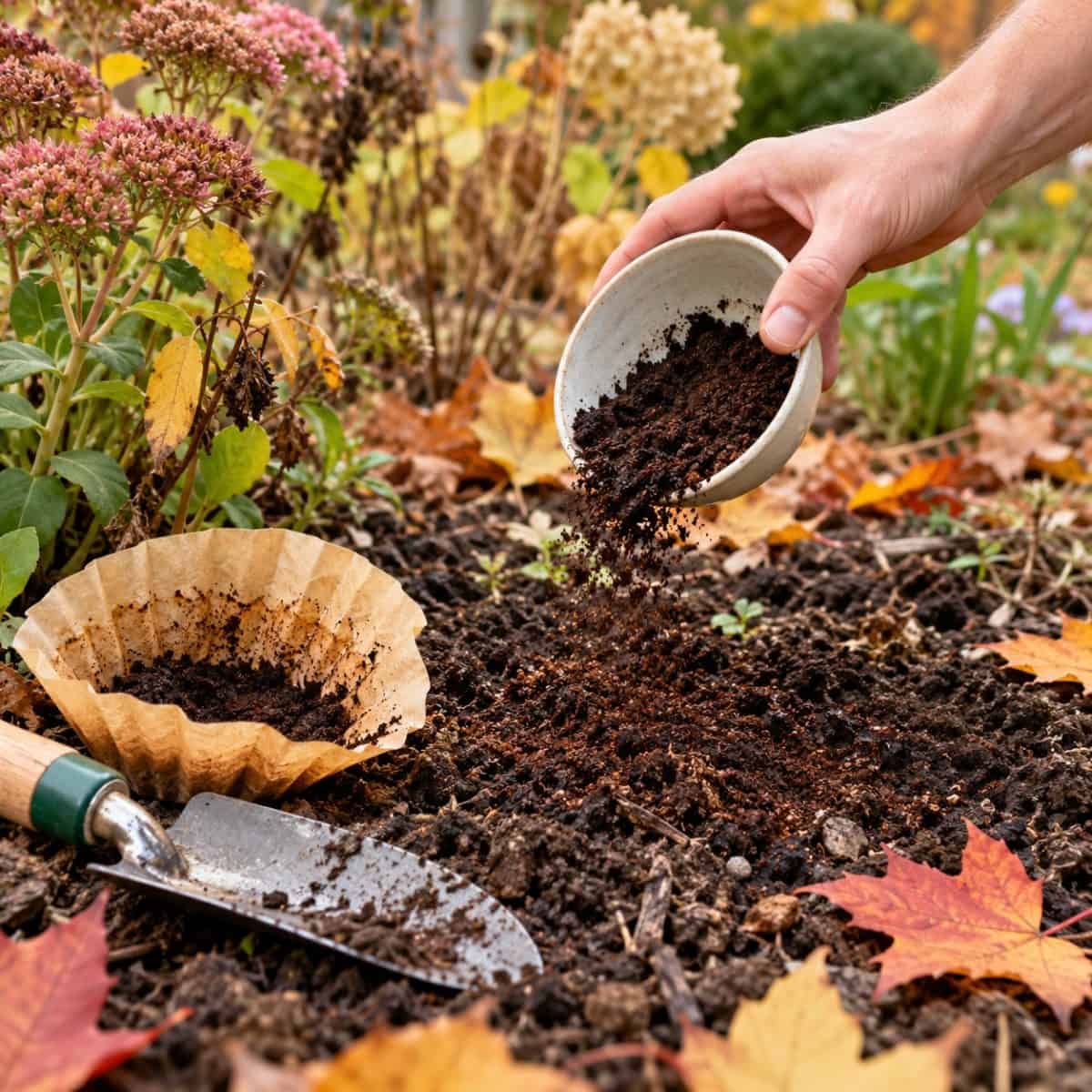
The key to success is knowing how and where to use them. Coffee grounds work best in modest amounts, mixed with other materials. Piling them around plants or covering a bed with a thick layer can actually create problems instead of improving the soil.
With that in mind, here is how to put those spent grounds to work this fall!
3 Easy Ways To Use Coffee Grounds This Fall
Why Spent Coffee Grounds Are Good For Your Soil
Even after brewing, coffee grounds contain nitrogen, along with smaller amounts of other plant nutrients. But their biggest value comes from the organic material they contribute as they decompose.
Healthy soil needs more than nutrients alone. It also needs a structure that allows roots to grow, water to move through, and air to reach below the surface. Decomposing organic matter helps support that structure while providing food for soil organisms.
That makes fall a useful time to recycle grounds into areas where they can help recharge the soil for the upcoming spring and summer. Decomposition can begin while the soil is still warm, although it will slow considerably as temperatures drop.
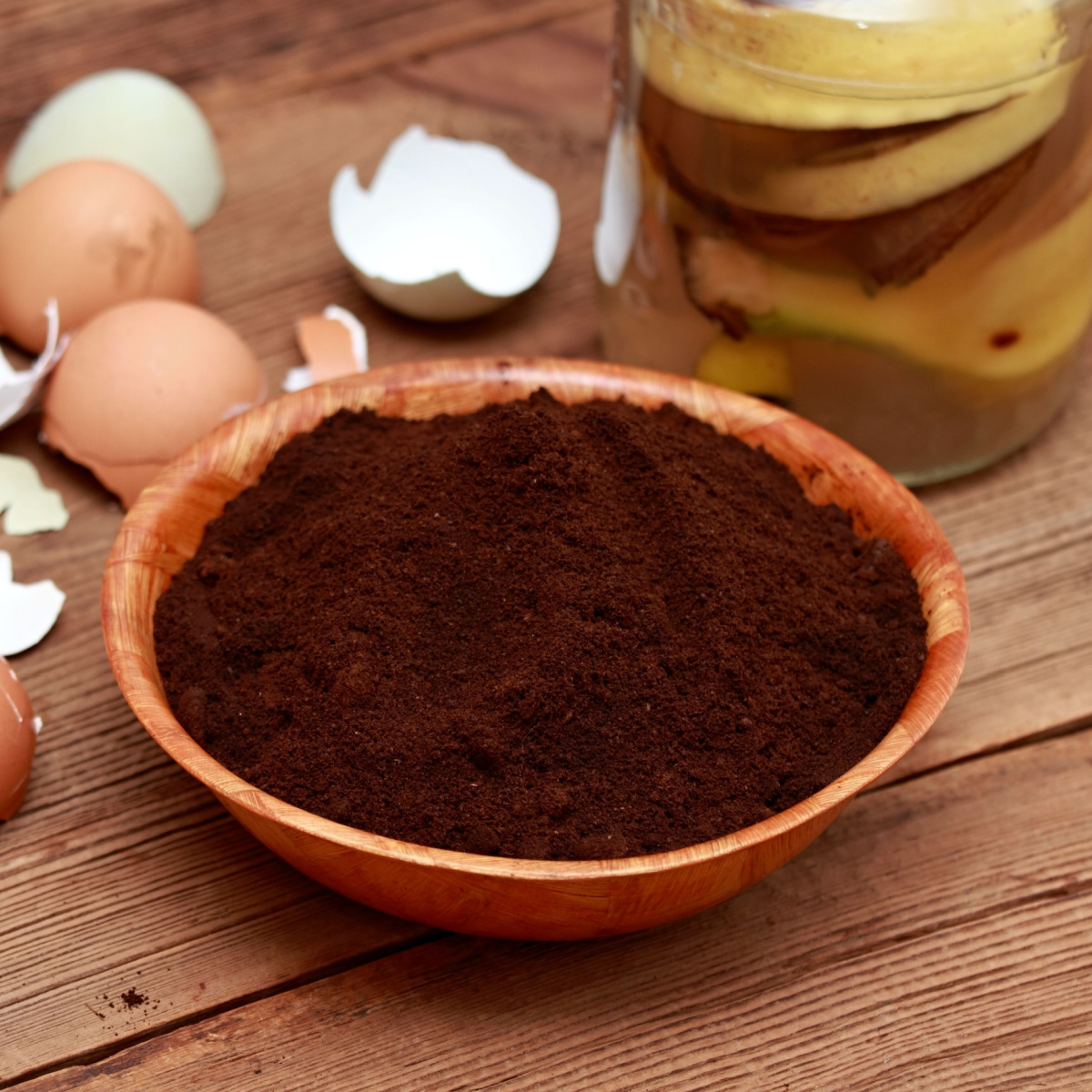
There is no need to reserve used grounds only for acid-loving plants. Brewing removes much of coffee’s acidity, so spent grounds are excellent for all types of plants. Save only plain grounds and ordinary paper filters.
Keep plastic pods, foil lids, and coffee mixed with cream or sugary flavorings out of your garden soil. Now let's take a look at 3 great ways to use them this fall!
1. Using Coffee Grounds In Raised Beds This Fall
Raised beds are a great place to recycle a little of your daily coffee waste after summer crops come out.
Scatter a light dusting of grounds across the open soil. Break apart any compressed clumps so you are distributing loose particles rather than dropping solid pucks onto the bed. The surface should still look mostly like soil.
Gently blend the grounds into the upper few inches of soil. As the coffee grounds break down over the winter months, they will not only release their nutrients back into the soil - but they will also help rebuild humus and soil structure.
This is also a great time to add other kitchen scraps to your raised beds such as egg shells and banana peels. Together, all three can really help recharge raised beds for next year! See our article: How To Recharge Your Raised Bed Soil This Winter With Kitchen Scraps!
Listen To Our Garden Podcast Below

Protect The Bed When You Use Coffee Grounds In The Fall
After adding your soil amendments, cover the bed with shredded leaves or another suitable winter mulch. This helps protect exposed soil from erosion and keeps it from sitting bare through winter.
Coffee grounds themselves should not serve as that protective mulch. Their fine particles can pack tightly together, creating a crust that interferes with water and air movement.
If your raised bed already contains fall vegetables or an established cover crop, avoid digging through their roots to incorporate grounds. Put that batch into your compost pile instead.
And resist the temptation to empty a large bucket of coffee shop grounds into one small bed. A household’s daily grounds can be spread among several uses. Larger collections belong in a properly balanced compost pile.
2. Burying Grounds & Paper Filters In Flowerbeds
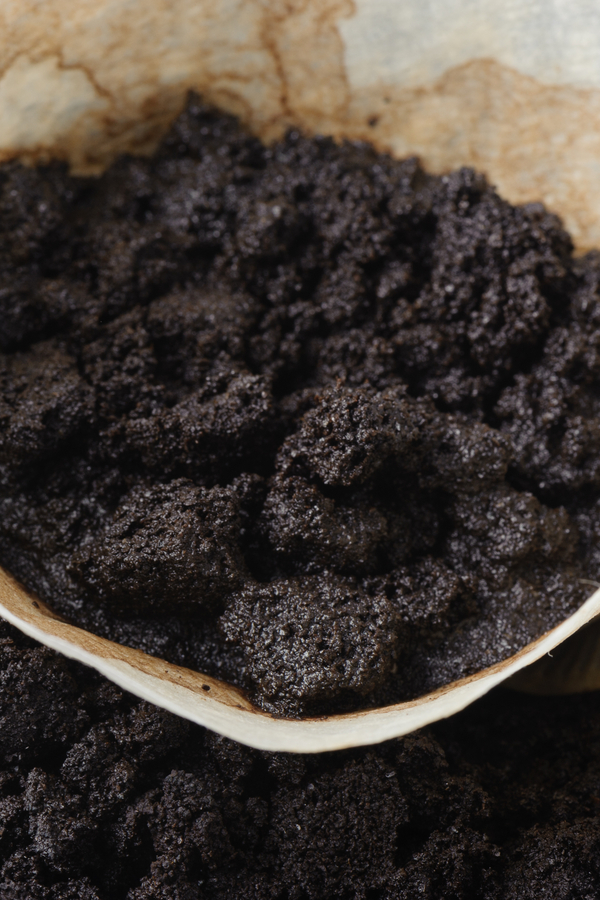
Another option is to bury small amounts of grounds and paper filters in open spaces near established plants.
This is a form of composting directly in the soil. Instead of carrying every filter to the compost bin, you allow a small quantity to decompose in place.
The important word is near. Avoid digging immediately against a plant’s crown, beside woody stems, or through a dense network of roots. Choose an open pocket between plants where you can work without damaging them.
Pull the mulch aside in that one spot. Open a small hole, empty a modest amount of grounds into the excavated soil, and mix them together thoroughly.
Tear the paper filter into pieces before adding it. Spreading the pieces through the soil helps prevent the filter from remaining as a folded packet filled with a dense lump of grounds.
Return the soil, cover the material completely, and replace the mulch. Keep the finished surface level so you do not leave a depression that collects water.
Move Around Instead Of Feeding The Same Spot
Use a different location the next time you bury grounds. Repeatedly adding them beside the same plant can create an overly concentrated pocket.

There is no benefit to burying a filter beside every perennial, either. Think of this as an occasional way to recycle a small amount of organic material, rather than a required feeding routine.
3. Using Grounds To Help Heat Up A Fall Compost Pile
One of the best destinations for coffee grounds is a fall compost pile, especially when you have an abundance of dry leaves.
Leaves provide carbon, but a pile made almost entirely from them often breaks down slowly. Coffee grounds contribute nitrogen to help balance those materials and support the microorganisms doing the decomposing.
Even though coffee grounds are brown in color, they count as a “green” compost ingredient. Their role is similar to fresh grass clippings and vegetable scraps.
Mix Grounds Throughout The Pile
Shred your leaves and other materials before building the pile whenever possible. Smaller pieces offer more surfaces for decomposers to work on and are easier to mix.
Scatter coffee grounds throughout, breaking apart clumps as you go. Add other suitable greens, such as fresh grass clippings or vegetable scraps, to provide variety.
Keep coffee grounds to no more than about one-fifth of the total pile by volume. More grounds do not necessarily mean faster composting. Paper filters can go into the pile as well. Tear them up and mix them through instead of stacking wet filters together.
However you choose to use them, one thing is for sure - coffee grounds are great for using in the fall to help you garden better than ever next year!
This Is My Garden
Follow Our Facebook Page For Great Gardening Tips And Advice! This Is My Garden Facebook Page
This Is My Garden is a garden website created by gardeners, for gardeners. Jim and Mary Competti have been writing gardening, DIY and recipe articles and books and speaking for over 15 years from their 46 acre Ohio farm. They publish three articles every week, 52 weeks a year. Sign up today to follow via email, or follow along!