The Biggest Secret To Storing Gas Powered Lawn Equipment For Winter
When it comes to storing your gas powered lawn equipment for winter - one small thing now can make a huge difference come next spring when you try to fire it up!
Before you park your mower in the shed, you need to take care of the fuel that’s going to sit in it all winter.
For mowers that can be stored with fuel in the tank, one of the easiest ways to prepare them for winter is to add a fuel stabilizer to fresh gasoline. Then run the engine long enough for that treated fuel to make its way through the fuel system.
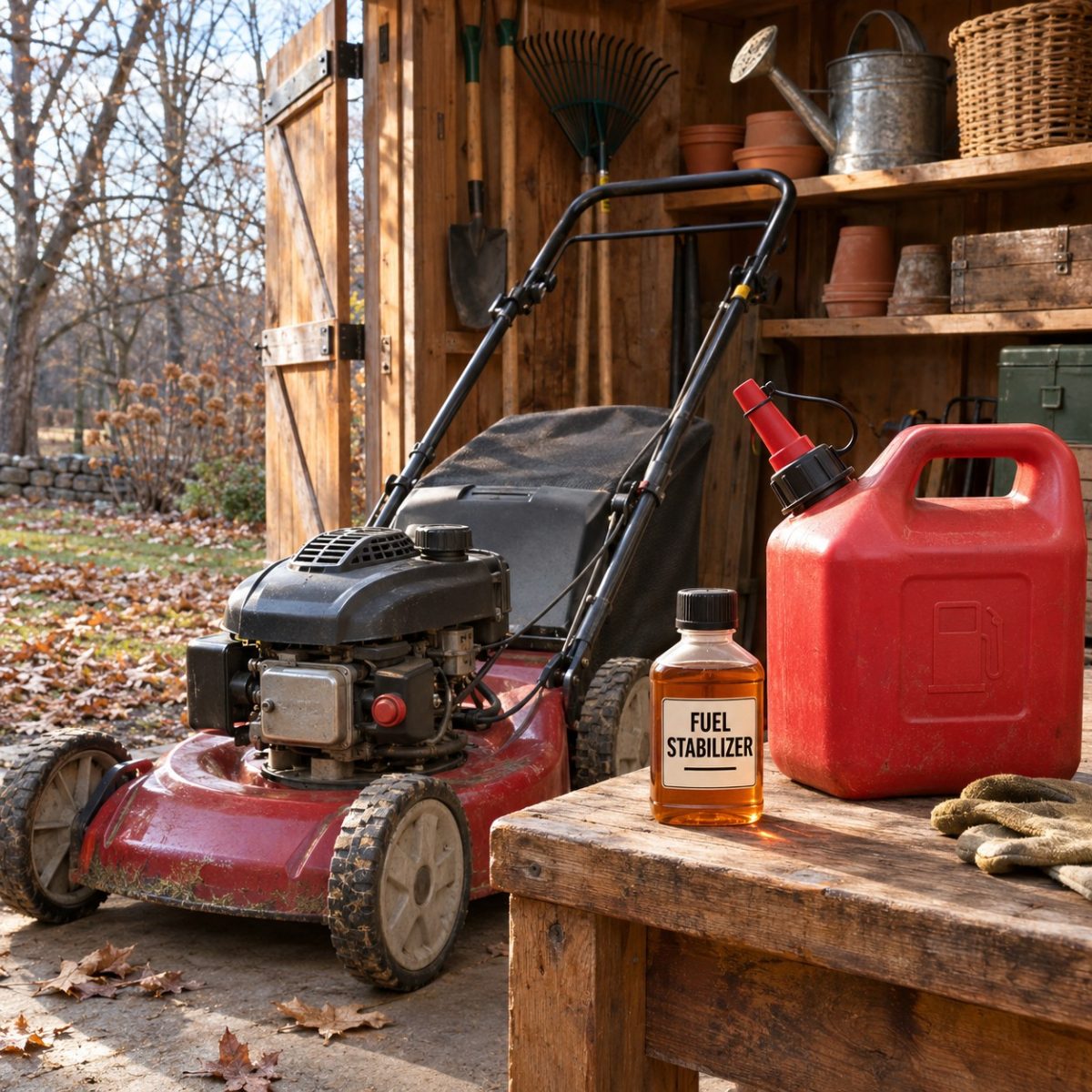
The same approach can work for gas-powered trimmers, leaf blowers and other lawn equipment when their manuals allow wet storage. A little attention to the fuel in November can save you from a long afternoon of pulling starter cords in April.
Storing Gas Powered Lawn Equipment For Winter
What Happens To Gasoline When It Sits All Winter?
Gasoline begins to degrade as it sits. Some of its lighter components evaporate, and the fuel can oxidize and leave behind sticky deposits. A mower may run fine when you put it away in November, then struggle to start after that same fuel has spent months sitting in the tank, line and carburetor.
A carburetor has tiny passages that meter fuel into the engine. It takes very little buildup to restrict one of those passages. When that happens, a mower might start and stall, surge at idle or only keep running with the choke partly on.
A fuel stabilizer helps slow that breakdown and reduce the gum and varnish that can form during storage. Start with gas you’ve recently purchased.
If the fuel in your mower has already been sitting for months, replace it with fresh fuel before treating it. Stabilizer helps preserve fresh gas. Once fuel has gone stale, the additive can’t restore it.

Why Running A Mower Out Of Gas Can Be Tricky
Running a mower until it quits sounds like an easy way to empty it. But the engine stops when it can no longer draw enough fuel to keep running.
Depending on the mower’s design, a little fuel may still be sitting in a low spot in the fuel line or at the bottom of the carburetor bowl.
There can also be fuel in the carburetor if you simply siphon or drain the tank and put the mower straight into storage. And with so little fuel left in the bowl, it can evaporate over the winter and leave a concentrated residue behind.
Some manufacturers account for this by telling you to try restarting the engine after it stalls. Other models have a carburetor drain and a specific procedure for using it.
How Treated Fuel Helps Protect Your Equipment
The biggest benefit of a fuel stabilizer is that it helps keep deposits from building up around the small parts and passages in the fuel system. A carburetor float and needle valve need to move freely, and the jets need to stay clear.
Listen To Our Garden Podcast Below

Some stabilizers also contain corrosion inhibitors. Check the label for that feature if you want it. Lubrication depends on the type of engine. On a four-cycle mower, the oil in the crankcase lubricates the engine.
On a two-cycle trimmer or leaf blower that uses premixed fuel, the two-cycle oil you mix into the gasoline provides that lubrication. If you’re treating fuel for one of those engines, keep using the manufacturer’s specified oil-to-gas ratio. The stabilizer’s job is to help preserve the fuel portion of that mix.
How To Use Fuel Stabilizer When Storing Gas Powered Lawn Equipment For Winter
Start by checking the storage section of your owner’s manual. It will tell you whether your mower can be stored with treated fuel and whether the manufacturer recommends a particular fuel level or storage procedure.
If your mower can be stored with fuel, measure the stabilizer according to the label. Then mix it with fresh gasoline in an approved fuel can. Affiliate Link: STA-BIL Storage Fuel Stabilizer, 16 oz

Mixing it in the can makes it easier to get the dose right, especially if your mower has a small tank. A measured gallon of fuel is easier to treat than a tank you’re guessing is half full.
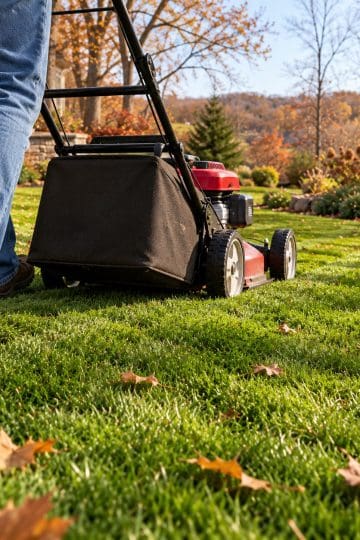
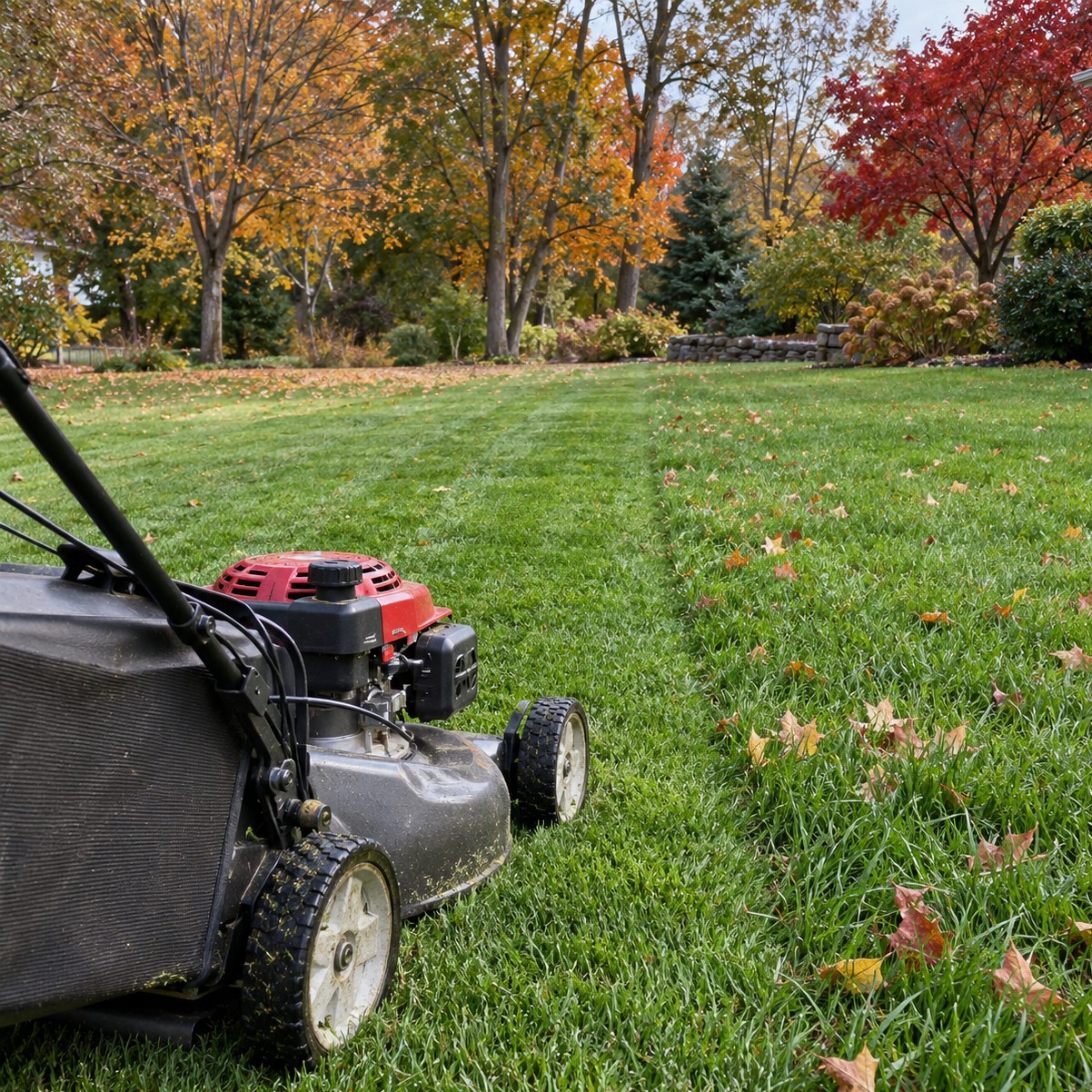
Add the treated fuel to the mower. Next, run the engine outdoors for a few minutes, or for the time specified in your manual. If you plan ahead, you can make that last mow of the season with treated fuel already in the tank.
By the time you finish, the treated gas will have had time to work through the fuel line and into the carburetor.
For trimmers and leaf blowers, measure out only as much fresh fuel mix as you need. If you use a premixed canned fuel, check the label and the equipment manual for storage instructions. Some of those fuels are already formulated for extended storage.
Getting Your Mower Started In Spring
When the grass starts growing again, check that any fuel shutoff valve you closed for storage is open. Then use the normal cold-start procedure for your mower.
A primer bulb, choke or automatic choke will work a little differently from one model to the next, so start it the same way you would on any other cool morning.
Fresh fuel treated in the fall gives the mower a better chance of starting easily. That's because there’s less opportunity for sticky deposits to form during storage. And the easiest time to do it is while you’re still mowing.
Mix a little fresh fuel for the final cut, let it circulate while you finish the lawn, and you’ll have taken care of the fuel system before you park the mower for winter!
And don't forget - make sure you protect your equipment from mice this winter too! See our article: How To Keep Mice Out of Stored Campers, Cars, & Lawn Equipment During The Winter
This Is My Garden
Follow Our Facebook Page For Great Gardening Tips And Advice! This Is My Garden Facebook Page
This Is My Garden is a garden website created by gardeners, for gardeners. Jim and Mary Competti have been writing gardening, DIY and recipe articles and books and speaking for over 15 years from their 46 acre Ohio farm. They publish three articles every week, 52 weeks a year. Sign up today to follow via email, or follow along!