Skip to Content

Growing Tomatoes

From how to plant, to fertilizing, pruning and staking – see all of our best tomato advice below!

what to do with tomato suckers
When it comes to growing tomatoes, the one topic that always spurs a lot of debate is just exactly what
mistakes growing tomatoes
Want to know the three biggest mistakes many gardeners make when growing backyard tomatoes? Or more importantly - how to
get rid of aphids on tomato plants
Looking for a way to quickly get rid of the aphids on your tomato plants? And keep them off for
tomato leaves turning yellow
Are your tomato leaves on your newly planted tomatoes turning yellow? Yellowing leaves are one of the most common issues
fertilizing newly planted tomatoes
If you are looking for the perfect way to get your tomatoes off to a fast start after planting day
best companion plants for tomatoes
Looking for a few of the best companion plants to grow alongside your tomatoes this year? One of the best
tomato planting hole ingredients
Did you know that what you put in a tomato planting hole when you plant can make a huge difference
planting wood ashes with tomatoes
One of the best ways to get your tomatoes off to a great start - and help them grow bigger,
common tomato planting mistakes
Without a doubt, the most important day in a tomato plant's life is the day it's planted outdoors - which
best way to grow tomato plants from seed indoors
Looking for the best way to start your tomato plants from seed indoors - and have amazing transplants ready in

When it comes to growing tomatoes, the one topic that always spurs a lot of debate is just exactly what to do with the tomato suckers that form on your plants – or more to point – should you remove them, or let them be?

On one side, you have long-time growers that insist that removing the suckers is a must. And at the other end of the spectrum, there are plenty of seasoned gardening veterans that say removing suckers is a waste of time and effort.

So who is right? Well – the first step to knowing the answer to this all important question is knowing exactly what a tomato sucker is – and what its purpose is for the plant.

what to do with tomato suckers
Tomato suckers are the small branches that form in the valley of where two tomato branches grow from.

What Are Tomato Suckers – And What Do You Need To Do With Them?

Tomato suckers are side shoots that grow in the joint of where the stem and branch of a tomato plant meet. In some cases, suckers can grow to only be a small set of small leaves. Other times, they can grow to become quite large branches.

In fact, some can grow big enough to have their own main stem and even more suckers of their own. But are they good to allow to grow?

One of the biggest misconceptions when it comes to tomato suckers is that they cannot produce blooms or fruit. They can actually do both quite well. If left to grow on their own, the branches, stems and fruit that suckers produce can be significant. So much that they can make up thirty percent or more of the plant’s total fruit if all are allowed to reach full maturity.

Sounds like a good thing to let them grow, right? After all, 30% more fruit sounds like a better deal on the surface. But surprisingly, it truly is best to remove them. Why? The answer is all about quality over quantity!

Why You Need To Remove Tomato Suckers

When it comes to pruning tomato plants, removing all or most of the suckers that form is truly the best option for a better harvest. Why? Because even though allowing the suckers to remain will allow your plant the opportunity to produce more tomatoes – it doesn’t mean they will all be good tomatoes.

tomato plant suckers
Contrary to what many thing, tomato suckers can grow quite big – and even have blossoms and fruit.

Tomato plants require a tremendous amount of nutrients to grow, produce flowers and set their fruit. And when a tomato plant is allowed to grow at will, it burns more energy than ever. So much so that with an overabundance of branches, flowers and fruit, it doesn’t have enough energy left to grow sizable tomatoes. Even worse, it also has more issues developing the flavor of the tomatoes it produces.

By removing suckers, the plant doesn’t have to maintain or expend energy on growing excess foliage. And with less foliage, there will also be fewer flowers and fruit to develop as well. Because of that – all of the extra energy can instead go to producing bigger, more flavorful tomatoes!

The good news? Removing tomato suckers is so easy to do! There is no need for fancy pruners. All you need to do is pinch them off with your fingernails as they develop. In a matter of a few seconds, you can help to keep your plant under control all summer long.

Pruning The Rest Of Your Tomato Plants

In addition to removing tomato suckers, a little extra pruning at the base of your tomato plant will also pay huge dividends when it comes to the health of your plants. And also with the quality and quantity of your harvest.

One of the most vulnerable parts of a growing tomato plant is its base. When too many branches and stems are left near the bottom of a plant, it can make it easy for pests and disease to gain access to the foliage and fruit above. And once that happens, it can put an entire harvest in jeopardy.

Listen In Below To Our Podcast On Pruning Tomato Plants

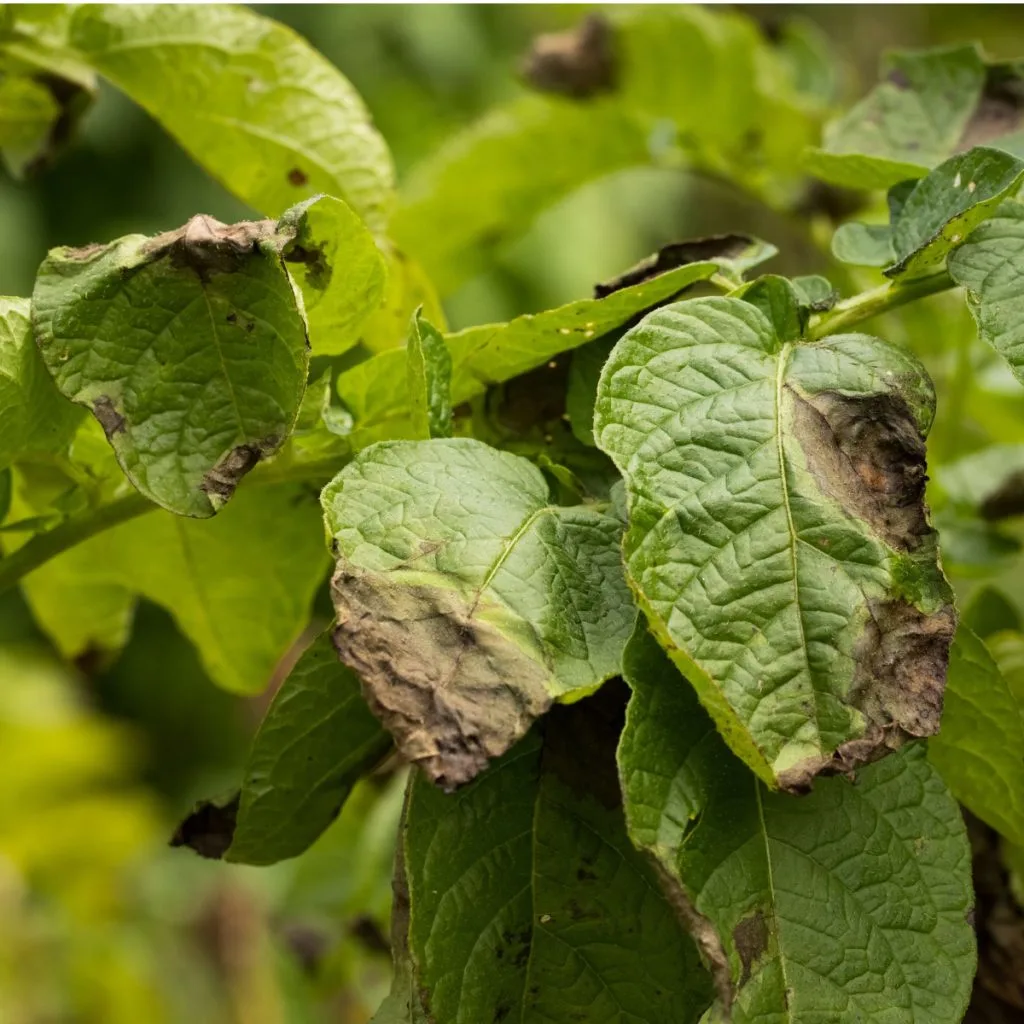
Blight, one of the deadliest of all tomato diseases, occurs from spores in the soil getting on plants. And when leaves and branches of a tomato plant touch or are near the soil – the deadly spores can easily splash up on them whenever it rains or you water. See our article: How To Keep Tomato Blight Away From Tomato Plants – 2 Simple Ways To Eliminate Blight!

All of those low hanging leaves also make it easy for pests to climb up onto plants too. Aphids, whiteflies, hornworms and other tomato pests can easily hide under all of that low foliage, building their populations as they do so.

Even More Reasons For Bottom Pruning

There are also three additional and very important reasons to prune the bottom of your tomato plants up – and those happen to be to allow in air, light and water.

When you allow a large mass of stems, branches, and leaves at the bottom of your plant – it can block all three. And that can be bad for tomato plants that need good air flow, circulation and moisture to stay healthy and productive.

tomato growing mistakes
Pruning the bottom foliage from your plants can big dividends for its overall health.

As your plants grow and mature, trim off the bottom set of leaves and branches. At first, trim up so young plants have at least 4 to 6 inches of space above the soil. At full maturity, large indeterminate tomatoes should have 12 to 18 inches of space. For smaller varieties and determinate types, prune up 8 to 12 inches at full maturity.

Here is to removing those tomato suckers this year and pruning your plants up. And when you do, to a healthier and better harvest of tomatoes all summer long! For more tomato growing tips, see: The Best Way To Tie Up Tomato Plants – How To Keep Your Tomatoes Under Control!

This Is My Garden

Follow Our Facebook Page For Great Gardening Tips And Advice! This Is My Garden Facebook Page

This Is My Garden is a garden website created by gardeners, for gardeners. Jim and Mary Competti have been writing gardening, DIY and recipe articles and books and speaking for over 15 years from their 46 acre Ohio farm. They publish three articles every week, 52 weeks a year. Sign up today to follow via email, or follow along!

Want to know the three biggest mistakes many gardeners make when growing backyard tomatoes? Or more importantly – how to avoid them so you can grow healthy plants that give you a big harvest?

Whether you grow your tomatoes in a traditional garden, a raised bed, or in pots or containers – there are a few key needs plants require to maintain their health. At the top of that list are water, nutrients and sunlight. Without all three, plants simply can’t survive – let alone produce a good crop of tomatoes.

Quite importantly, how a plant is cared for as it grows impacts how these three important needs are met. And, in a very big way! Which is exactly why avoiding the three miscues below is important to grow strong plants – and a big crop of tomatoes.

mistakes growing tomatoes
As you will see below – one mistake many gardeners make with their tomato plants is leaving the soil underneath them bare.

The Top 3 Mistakes Gardeners Make Growing Tomatoes!

#1 Not Giving Plants The Right Fertilizer

To reach their full potential, tomato plants need nutrients. And even if they are planted in the best soil possible, they usually need more than the soil can provide to really produce a sizable harvest.

The best way to give your tomato plants the extra nutrients they need is with fertilizer. But, and this is often where gardeners make a critical mistake, the type of fertilizer you feed your plants – and how you fertilize your plants can make a big difference between success and failure.

When it comes to the type of fertilizer to use – select a fertilizer that is higher in phosphorus and potassium than nitrogen. Yes, nitrogen will green up your plants and help them grow. But too much of it makes the plant only grow stems and foliage – and not concentrate on fruiting.

Phosphorus, on the other hand, is what plants use to produce blooms and eventually fruit. Potassium is important as well for plant health and ripening. When powering tomato production, these two are more important than nitrogen.

Look for fertilizers with an N-P-K ratio (Nitrogen, Phosphorus & Potassium) that provides at least double the phosphorus and potassium to nitrogen. This will still give enough nitrogen for plant power – but keep the plant concentrating more on fruiting. Affiliate Link: Farmer’s Secret Tomato Booster Fertilizer (32oz) – Super Concentrated – 3:8:7 Ratio

jump start tomato plants
With its higher phosphorus and potassium levels, this liquid fertilizer is perfect for powering not just tomatoes, but pepper plants too!

Fertilizing With A Low & Slow Approach

When it comes to fertilizing tomatoes, more is not always better. It is better to give your plants a steady but lower diet of energy than just a few big doses of fertilizer throughout the growing season.

Too much power all at once can send the plant into a growing frenzy. But instead of helping to produce more tomatoes, the plant uses all of the extra energy to grow more stems and leaves – all at the expense of producing more blooms and fruit!

The best ways to fertilize your plants is by taking a steady and slow approach. Fertilize every seven to ten days with a lighter dose. Use half of the recommended rate as this will help to not overpower the plant. But by fertilizing more regularly, it supplies constant, steady energy to stay healthy and produce fruit.

#2 Leaving The Soil Bare Around Your Tomatoes

One of the biggest mistakes of all when it comes to growing tomatoes is not giving plants a protective layer of mulch. Even if you are growing your tomatoes in containers and pots – a light layer of mulch can make a huge difference in your plant’s performance!

tomato growing mistakes
No matter how you grow your tomato plants, a layer of mulch is important to keep moisture in – and weeds out!

Leaving the soil bare under your growing plants can lead to a whole host of issues for tomato plants. First and foremost, a thick layer of mulch helps to minimize weeds and the chore of weeding. Weeds are not only unsightly, they also steal valuable nutrients from the soil. Nutrients that your tomato plants need to grow and produce.

But mulch does so much more than just prevent weeds. It also helps keep moisture in the soil. Bare soil can quickly dry out from the hot sun. But a layer of mulch helps to keep that moisture in at the root level of tomato plants, right where they need it most.

Even more, mulch helps to regulate the soil temperature. It keeps the soil from overheating on extremely hot days, and yet, it helps hold the heat in through cool nights. By doing this, it keeps the roots of your tomato plant steady. Which is exactly what they need for optimum growth!

One More Reason To Mulch Tomato Plants

Perhaps most importantly of all, a layer of mulch can help keep your tomato plants safe from blight. Blight is caused from spores that live in the soil. If left bare, those spores can easily splash up onto the leaves of plants when it rains or you water. And when it does, it can infect your plants in the process. See: How To Stop Tomato Blight – 3 Simple Secrets To Keep Your Plants Safe!

How much mulch is enough? In a traditional garden or raised bed setting, plants should have at least four inches of mulch to be effective. 6 inches is even better. For containers, one to two inches is best to help hold in moisture and keep the plants from drying out too fast.

Listen Below To Our Podcast On The Best Way To Support Your Tomatoes

As for best choices – straw, shredded leaves and grass clippings all work great for mulching tomato plants. To really make your mulch powerful, put a few inches of compost around your plants. Every time you water or it rains – the compost nutrients will leach to the roots below!

#3 Stepping Near Your Plants

Another one of the most common mistakes gardeners make when growing tomatoes or any vegetable for that matter, is stepping on or too close around the root zone of their plants. And for tomato plants, that can really have a negative impact on their health, growth and their ability to produce a sizable harvest!

The roots of a tomato plant are its lifeline. They not only anchor the plant to the ground, they are also responsible for absorbing air, water and nutrients from the soil that the plant needs to grow and produce.

The roots of a healthy tomato plant can easily extend 12 inches out from each plant. And when those roots become smashed from heavy foot traffic, the soil around them compresses down on them. Once that happens, it becomes difficult for the roots to breathe or absorb food and water – and the plant suffers.

When watering, weeding, fertilizing or harvesting, always take care to stay far away from the root zone. Leaving the soil loose and undisturbed allows the roots to grow freely. And loose soil gives your plant the best chance of success.

Here is to avoiding 3 of the biggest mistakes gardeners often make when growing tomatoes – and to a big harvest of juicy fruit this summer! Once harvest time rolls around, be sure to check out these tips: How To Know When To Harvest A Tomato – The Answer Might Surprise You!

This Is My Garden

Follow Our Facebook Page For Great Gardening Tips And Advice! This Is My Garden Facebook Page

This Is My Garden is a garden website created by gardeners, for gardeners. Jim and Mary Competti have been writing gardening, DIY and recipe articles and books and speaking for over 15 years from their 46 acre Ohio farm. They publish three articles every week, 52 weeks a year. Sign up today to follow via email, or follow along!

Looking for a way to quickly get rid of the aphids on your tomato plants? And keep them off for good?

Aphids might be small insects, but they can cause huge problems in a short amount of time. Especially when it comes to tomato plants. Once they find your plants, they can multiply fast. So fast, in fact, that their numbers can double or even triple in just a few days!

If you don’t catch them early, a small group can turn into a major infestation that damages or even kills your plants. Even worse, aphids don’t stop with tomatoes. If left untreated, they can quickly move to other plants in your garden. And when they do, they can all but decimate an entire garden’s harvest for the year.

get rid of aphids on tomato plants
Aphids can multiply rapidly on tomato plants. And in large numbers, they can severely impact your overall harvest!

The damage aphids leave behind can not only reduce plant growth and hurt fruit production, in some cases, it can even lead to the death of the plant. The good news? You can stop aphids quickly and naturally. Especially if you act early and know just what to do!

How To Quickly Get Rid Of Aphids On Tomato Plants

What Aphids Do To Tomato Plants

Aphids feed by piercing plant leaves and stems and sucking out the sap. This sap is full of nutrients, and when aphids remove it, they rob the plant of important energy needed for growth and fruit development.

As they feed, aphids cause leaves to curl, turn yellow, or become deformed. You may notice that your tomato plant stops growing. In other cases, new leaves that appear look misshapen or weak. In severe cases, the plant may even lose leaves and start to die back.

But that is just from the initial sap loss. What makes aphids worse is that they very often carry viruses and plant disease. So not only can their feeding weaken your tomato plants, they can also spread infection from plant to plant. And once a virus takes hold, there’s usually no way to reverse it. That’s why early detection and action is a must when it comes to aphids.

get rid of aphids
This colony of aphids has grown to take over almost the entire leaf – in just a few days!

How To Spot Aphids Early

Since aphids are tiny – often no larger than a pinhead – it can be easy to miss them at first. They often gather on the undersides of leaves, out of sight. That’s why it’s important to look closely when checking your plants.

Flip a few leaves over and see if you can spot any light green, black, yellow, or white insects grouped together. If you see any sticky sap or curling leaves, it usually is a sign they’re already feeding.

Another sign of aphids is an increase in ants around your plants. As aphids feed, they produce a sugary waste called “honeydew,” which ants love to eat. If you see ants crawling up and down your tomato plants, there’s a good chance aphids are nearby.

Honeydew can also leave behind a black, moldy-looking coating on leaves, which can further harm a tomato plant’s health. If you see this or any of the signs above, it’s time to take action quick. And the easiest way to do that is with a quick stream of water!

How To Get Rid Of Aphids With Water

One of the easiest and fastest ways to remove aphids is with a strong spray of water from your garden hose. The water knocks the aphids off the leaves and stems and onto the ground. Once they fall, they usually can’t make their way back to the plant and will die shortly after.

When spraying, make sure to focus on the undersides of the leaves where aphids like to hide. But it’s important to be careful when doing this not to damage your plant. Start with a light spray and adjust the pressure as needed. You may lose a few flowers or small tomatoes, but your plant will recover faster than if the aphids are left alone.

This method works well for light to moderate infestations. For bigger problems, or if aphids return quickly, you’ll want to use more than just water. And the easiest way to do that safely and naturally is with neem oil.

Using Neem Oil

If water alone doesn’t solve the problem, neem oil is an excellent next step. Neem oil is made from the seeds of the neem tree and is completely natural. It’s safe for pets and people and breaks down quickly in sunlight.

When sprayed on plants, neem oil coats the aphids and stops them from feeding and reproducing.To use neem oil on tomato plants, add two tablespoons of neem oil per gallon of water. In addition, squirt in a few drops of dish soap to help the mixture stick to the leaves.

Use a handheld spray bottle or garden sprayer to coat the leaves, especially underneath where the aphids hide. For best results, spray in the early morning or late evening when pollinators are not active. This helps protect helpful insects like bees and butterflies.

neem oil for pests
Look for pure neem oil or neem oil concentrate. It is extremely effective against aphids and works fast.

To eliminate aphids entirely, reapply the spray every 5 to 7 days until you no longer see any sign of activity or damage. Affiliate Link: HARRIS Neem Oil Cold Pressed Water Soluble Concentrate

A Few Other Ways To Get Rid Of Aphids

Another great way to keep aphid populations in check is by attracting insects that eat them. Ladybugs, lacewings, and parasitic wasps are all natural predators of aphids. These helpful bugs can help manage small infestations before they ever become a serious problem.

The easiest way to attract these beneficial insects is to plant flowers and herbs that offer pollen and nectar. Some great options include:

  • Dill
  • Fennel
  • Yarrow
  • Calendula
  • Sweet alyssum
  • Marigolds

Not only do these plants bring in helpful bugs, but they also add beauty to your garden and even help repel other pests. You can plant them directly in your garden or in pots and place them near your tomato plants.

marigolds to grow to repel pests
Marigolds are a perfect companion plant for tomatoes – and for helping to get rid of aphids!

Use Companion Plants To Repel Aphids

Another smart way to protect your tomato plants is with companion planting. Certain plants naturally repel aphids due to their strong smell or taste. By planting these near your tomatoes, you can keep aphids from ever wanting to visit.

Some great aphid-repelling plants include:

  • Mint
  • Chives
  • Basil
  • Cilantro
  • Garlic
  • Onions
  • Marigolds

Plant these close to or between your tomato plants for best results. If you’re short on space, you can grow them in small containers and place them right next to your tomato plants. See our article: The Best Marigolds To Grow To Repel Pests & Attract Pollinators.

Whether it’s spraying them off with water, treating with neem oil, attracting beneficial insects, or planting helpful companion crops, one thing is for sure, a little care goes a long way in helping to get rid of aphids on your tomato plants – for good! For more tips on keeping destructive pests out of the garden, see our article: How To Keep Groundhogs Out Of The Garden – 4 Simple Ways To Stop Groundhogs!

This Is My Garden

Follow Our Facebook Page For Great Gardening Tips And Advice! This Is My Garden Facebook Page

This Is My Garden is a garden website created by gardeners, for gardeners. Jim and Mary Competti have been writing gardening, DIY and recipe articles and books and speaking for over 15 years from their 46 acre Ohio farm. They publish three articles every week, 52 weeks a year. Sign up today to follow via email, or follow along!

Are your tomato leaves on your newly planted tomatoes turning yellow?

Yellowing leaves are one of the most common issues gardeners face when growing tomatoes. Especially in the early stages of growth. Tomato plants can struggle to take off after transplanting – and yellow leaves are often the first sign that something isn’t quite right.

While there can be a few different reasons for this, more times than not, the root of the problem comes down to one main issue – too much water.

tomato leaves turning yellow
More often than not – yellow leaves on your tomato plants are caused by too much water.

Why Too Much Water Can Be Turning Your Tomato Leaves Yellow

Yellow leaves on a tomato plant can be confusing, especially for new gardeners. It’s easy to assume the yellowing is caused by the plant not getting enough water. After all, yellow leaves often look dry and sickly.

But in reality, the opposite is usually true. More often than not, it’s too much water that is to blame, not too little. Tomato plants, like all vegetables, need water to survive. But when they get too much of it, the roots begin to suffer.

The root system of a tomato plant is responsible for taking in oxygen and nutrients from the soil. When the soil around the roots stays too wet, the oxygen gets pushed out. Over time, this wet environment causes the roots to swell and become waterlogged.

When roots swell up like this, they can no longer take in nutrients effectively. The plant starts to suffer, and it shows up in the leaves. Instead of the bright, healthy green color tomato plants are known for, the leaves begin to turn pale, then yellow. This is the plant’s way of signaling that it’s not getting the nutrition it needs to grow.

The tricky part is that many gardeners see the yellow leaves and assume the plant is thirsty. So, they water more. And unfortunately, that only makes things worse. The soil stays soggy, the roots get more stressed, and the leaves continue to yellow. Eventually, the plant can even die if the issue isn’t corrected.

watering tomato plants
How you water your tomato plants can play a big role in their success, or failure. Especially when it comes to them getting too much water!

Why Young Plants Suffer Most

Young tomato plants are especially prone to their leaves turning yellow. Right after transplanting into the ground or a container, their roots are still getting adjusted to the new environment. If you add heavy watering on top of that, it’s easy to overwhelm them.

Because young plants don’t have deep roots yet, the moisture builds up in the top few inches of soil. That, of course, is right where their roots are trying to grow.

Early spring rains, cooler weather, and cloudy days can make it worse. With less sunshine and warmth, the soil doesn’t dry out as quickly. That can lead to soggy conditions that linger day after day, which is bad news for young tomatoes trying to settle in and grow strong.

How To Avoid Overwatering

The best way to avoid overwatering your tomato plants is to know exactly how wet the soil is before you water. That’s where a moisture meter can be a huge help. These small, inexpensive tools are easy to use. You simply push the probe into the soil, and it gives you a quick reading of how wet or dry the soil is. Affiliate Link: XLUX Long Probe Deep Use Soil Moisture Meter

Tomato plants do best when the soil is kept evenly moist but not soggy. You want the soil to be damp several inches down but not soaking wet. If the meter reads in the “wet” zone, you don’t need to water. If it shows “dry,” especially a few inches deep, then it’s time to give your plants a drink.

moisture meter
Use a moisture meter to check moisture levels in the soil. The probe makes it easy to check moisture levels a few inches down.

Many gardeners are surprised by how wet their soil actually is, even after a few days without rain. Using a moisture meter can take the guesswork out of watering and help prevent yellow leaves before they start.

How Much Water Do Tomato Plants Really Need?

So how much water is the right amount? For tomato plants in the ground, about 1 to 1.5 inches of water per week is all they really need. That can come from rain, hand watering, or a combination of both. If your area gets regular rainfall, you may not need to water much at all.

Instead of watering a little every day, it’s better to water deeply every few days. Deep watering encourages the roots to grow deeper into the soil. That helps plants find moisture during dry spells and makes the plant more stable and productive. Shallow, frequent watering keeps the roots near the surface, where the soil dries out faster.

If you’re growing tomatoes in containers, keep in mind that they’ll likely need to be watered more often than those in the ground. Containers dry out faster, especially in hot weather. But even so, it’s important to let the top inch or two of soil dry out before watering again.

If The Soil Is Soggy – Remove The Mulch

So what if your plants leaves are yellow right now? The first thing you can do (besides not watering) to help is remove any mulch.

mulching vegetable plants
Mulch can be a huge help for tomato plants. But if your soil is overly wet – it’s best to remove it for a little while.

Mulch is great for tomato plants. It helps keep moisture in the soil, regulates temperature, and keeps weeds down. But when your soil is already too wet, mulch can trap in even more moisture. That’s why, if your tomato plants are showing signs of overwatering and the soil feels soggy, you may need to temporarily remove the mulch around the base of the plant.

Removing the mulch allows air and sunlight to reach the soil, helping it dry out faster. Once the soil has returned to a normal moisture level, you can replace the mulch to help keep it that way. Just be sure to keep mulch a few inches away from the plant’s main stem. This will avoid trapping moisture right at the base, which can lead to rot.

Switch To A Granular Fertilizer To Stop Tomato Leaves From Turning Yellow

When tomato leaves turn yellow from overwatering, the plants are lacking nutrients. But adding a liquid fertilizer at this point will only make the problem worse. Applying more liquid to already soggy soil just adds to the stress.

Instead, switch to a dry, granular fertilizer. A slow-release granular fertilizer sits on the soil and gradually dissolves as you water or as it rains. It delivers nutrients without dumping more water into the soil. This can help feed the plant and encourage the roots to recover without worsening the wet conditions. Affiliate Link: 5-10-10 Tomato & Vegetable Granular Fertilizer

You can apply a light dose of fertilizer around the base of the plant, keeping it a few inches away from the stem. As the plant begins to recover, you should start to see new green leaves appearing, and the yellowing should slowly stop spreading. For more on fertilizing, see: How To Fertilize Tomato Plants In The Summer For A Bigger Harvest.

Don’t Panic – Tomato Plants Can Bounce Back

Yellow leaves are a warning sign, but they don’t always mean the plant is doomed. If caught early, many tomato plants can bounce back from overwatering with just a little care and patience. By cutting back on water, allowing the soil to dry out, and feeding your plants the right nutrients, you can turn things around quickly.

It’s also a good idea to remove the worst of the yellow leaves once the plant is recovering. This helps the plant focus its energy on producing new, healthy growth. Just be sure not to remove too many leaves at once.

Tomatoes need foliage to photosynthesize and grow, so it’s best to snip off a few of the most damaged leaves at a time over the course of a few days. Here’s to stopping your tomato leaves from turning yellow – and to a big harvest this summer of tomatoes! For more tips on keeping your tomato plants healthy, be sure to check out: How To Get Rid Of Aphids On Tomato Plants – Fast!

This Is My Garden

Follow Our Facebook Page For Great Gardening Tips And Advice! This Is My Garden Facebook Page

This Is My Garden is a garden website created by gardeners, for gardeners. Jim and Mary Competti have been writing gardening, DIY and recipe articles and books and speaking for over 15 years from their 46 acre Ohio farm. They publish three articles every week, 52 weeks a year. Sign up today to follow via email, or follow along!

If you are looking for the perfect way to get your tomatoes off to a fast start after planting day – there is no better remedy than fertilizing your young tomatoes with just the right dose of power!

Tomato plants need a lot of power to fill out and grow strong. Not only do they require the typical big 3 nutrients of nitrogen (N), phosphorus (P) and potassium (K), – they also need a host of other nutrients to produce great roots, strong foliage – and eventually, lots of blossoms and fruit.

The first four to six weeks of a tomato plant’s life in the soil are extremely important for setting the stage for success. Plants need to develop strong roots early in the season to help anchor and feed the plant as it grows.

fertilizing newly planted tomatoes
Once you plant – it’s all about making sure you give your young tomato plants the energy they need to take off!

The deeper and more developed a root system is, the more nutrients and moisture it can absorb for the plant. Likewise, the foliage of a plant needs to develop early as well. Without a good leaf canopy, tomato plants will struggle with the process of photosynthesis, which also provides energy.

Although plants can and do get power from the soil they are planted in, giving them an extra boost of nutrients at this early stage can be vital to jump starting their growth. And the faster they get growing – the better they will produce later. But knowing how, when and what to power your plants with early on is the real secret to growing a huge crop of tasty tomatoes!

The Secret To Fertilizing Young Tomato Plants

How you fertilize, when you fertilize, and what you use to power your young tomato plants are 3 critical factors in just how well your tomato plants will begin to grow early on. With that in mind, here is a look at how to best tackle each of those three needs with ease – and big success!

#1 – How To Fertilize Newly Planted Tomatoes

Unfortunately, for young plants, fertilizing is not as simple as loading them up with a big dose of energy. In fact, that can actually create more harm than good. Too much power will lead to an overproduction of foliage – and little to no fruit later.

fertilizing tomatoes
Giving your newly planted tomatoes too much power early on, or the wrong kind of power can harm plants – and even take them out completely.

When any vegetable plant receives an abundance of energy, they will put it toward growing more stems and leaves. And when that happens, the plant usually slows or even stops bloom production. And with young plants, too much fertilizer can even kill the plant if it’s in a high enough dose.

So how can you energize young plants in just the right way? There are a few important factors to consider when powering young tomato plants. The first is that they need to be given a low, slow and steady diet of nutrients.

Small but regular feedings of power are better than a few big doses of high energy all at once. Lower but consistent power creates strong, manageable growth in the roots, and above the soil in the stems and leaves.

Getting The Balance Of Nutrients Right

Secondly, it’s important when fertilizing to make sure the nutrients you are giving your plants are in the right balance. Too much nitrogen will create too much foliage. Too little phosphorous can mean less root growth. And without enough potassium, tomato plants have trouble producing blooms and fruit.

In addition to the big three, they also need to be getting calcium and other trace minerals to stave off blossom end rot and other issues.

Finally, and this is extremely critical when powering young tomato plants, the nutrients you give to your plants need to be in a form that is easy for them to absorb. The simple fact is, the quicker a plant can absorb the nutrients, the better. And the best way to give plants power fast is with liquid fertilizer!

Listen In To Our Podcast Below On Powering Up Tomato Plants!

#2 – Fertilizing Young Tomatoes With Liquid Power

When it comes to what type of fertilizer to use for tomato plants, liquid fertilizers are the answer. Liquid fertilizers not only absorb quickly into the roots of plants, but also through the leaves. This double dose of power can help your tomato plants power up quickly.

So what are the best choices for liquid fertilizing? There are great choices for both homemade or store bought liquid fertilizers. No matter what your choice, it’s always best to stay organic in your approach since you will be consuming the tomatoes the plant produces.

If you are looking for an all-natural homemade approach, compost tea is the answer. Compost tea is full of the perfect balance of nutrients that can power tomato plants. Even better, those nutrients are low enough that they can’t overpower plants – and they absorb easily into the roots and foliage too.

You can make compost tea from your own compost, or from store bought compost. Another great option is worm casting tea – made simply from soaking castings in water. Both compost and worm casting tea are nature’s perfect organic fertilizer. Product Affiliate Link : Pure Worm Castings

Both worm casting and compost tea can be applied at full strength every 7 days without worry. The low and slow nature of the power in both allow them to power plants weekly.

liquid organics
Selecting an organic liquid option for your edible plants is always a good idea!

Commercial Options

There are also some great commercial organic liquid fertilizers available for powering tomatoes. They have a bit more power than compost and worm casting tea, so they should be used at half-strength of their recommended dose every ten to fourteen days instead of weekly when fertilizing newly planted tomatoes.

Look for options that have balanced but lower N-P-K ratios that won’t overpower plants. Always make sure with commercial fertilizers that the first number, which is the Nitrogen content, is not too much higher than the Phosphorous and Potassium numbers. Affiliate Link: Miracle-Gro Performance Organics Edibles Plant Nutrition

Nitrogen is important, but it helps plants with foliage growth, while Potassium and Phosphorous help with healthy and bloom and fruit production. It is vital that there is a balance for best results!

#3 – When To Start Fertilizing

So when should you start fertilizing newly planted tomatoes? For starters, when they first go in the ground, you can help your plants immediately by powering their planting hole.

Adding generous amounts of compost, worm castings, coffee grounds and pulverized egg shells into the hole when planting will help energize the roots quickly. All four also happen to provide the right balance of nutrients as well. See: What To Put In A Tomato Planting Hole – 4 Must Add Ingredients To Power Your Plants!

coffee grounds on houseplants
Coffee grounds are an excellent addition to your tomato planting hole.

But beyond adding those nutrient sources to the planting hole, you do not want to add any additional fertilizer on planting day. Or, for that matter, during the first seven days after planting. Why? Because new plants need time to settle in from the shock of transplanting.

Putting fertilizer on too soon after transplanting will actually harm more than help tomato plants. It can put them in even more shock, and can damage leaves and roots in the process. Instead, allow your plants a week to set their roots firmly into the soil.

But once that time period has passed, it’s time to start fertilizing. And regularly! For best results, your plants should be powered every ten to fourteen days after they have settled in. But, and this is key – it needs to be with a balanced, low, slow and easily absorbed nutrient source.

When To Stop Fertilizing

So when should you stop fertilizing tomato plants? For determinate varieties that produce all of their crop over a few weeks, stop fertilizing when the fruit is beginning to set in full but has not started to turn yet.

Fertilizing beyond this point for determinates will not help the plant produce any more tomatoes. In fact, fertilizing them late can often stop them from producing all of the fruit they would have. For more early growing tomato tips, be sure to see: What To Do With Tomato Suckers – Is It Better To Remove, Or Not To Remove?

For indeterminate tomatoes that grow until the first killing frost, once fruit begins to set, back off to every two to three weeks with fertilizing. This will allow your plants to concentrate more on ripening fruit than growing – but still giving them a bit of power to keep growing and producing. For more great tomato growing tips, be sure to check out: The Top 3 Mistakes Gardeners Make Growing Tomatoes – And How To Avoid Them!, and Are Your Tomato Leaves Turning Brown In Late Summer? Here’s Why – And How To Fix It!

Here is to fertilizing your young tomatoes for your biggest harvest ever this year!

This Is My Garden

Follow Our Facebook Page For Great Gardening Tips And Advice! This Is My Garden Facebook Page

This Is My Garden is a garden website created by gardeners, for gardeners. Jim and Mary Competti have been writing gardening, DIY and recipe articles and books and speaking for over 15 years from their 46 acre Ohio farm. They publish three articles every week, 52 weeks a year. Sign up today to follow via email, or follow along!

Looking for a few of the best companion plants to grow alongside your tomatoes this year?

One of the best ways to help your tomato plants perform better is to grow other plants near them that help them out – a practice known as companion planting. Not only can companion planting protect and power a tomato crop to bigger, more tastier yields, it can also help bring color, beauty and amazing scents to your garden space as well!

So what exactly is companion planting? In a nutshell, it’s the process of taking advantage of the beneficial relationships that can exist between different varieties of plants by planting them near one another.

best companion plants for tomatoes
Zinnias happen to be one of the best tomato companion plants of all. And can they ever bring blooming beauty to your garden space too!

For example, beans and peas are wonderful for growing with corn. Why? Because as beans and peas grow, they help to fix nitrogen availability in the soil. Nitrogen that is much needed by corn to reach its full potential. But at the same time, corn can provide a natural trellis for the peas or beans to climb on, flower and produce.

Companion plants exist for nearly all vegetable plants and flowers. And it can work both ways. There are also some varieties of plants that can hurt another plant when growing nearby. For instance, corn should never be planted near tomatoes. Both are heavy nitrogen feeders and will compete with each other for nutrients.

The Best Companion Plants For Tomatoes – And Why They Work!

How Companion Planting Helps Tomatoes

Of all the vegetable plants that can go into a garden, tomatoes are at the top of the list when it comes to benefiting from companion planting.

Tomato plants can suffer quite easily from disease and attacks from pests. In fact, tomatoes are the prime target for a myriad of insect problems and plant health issues. For starters, you have the tomato hornworm, which can decimate a plant seemingly overnight.

There are also aphids, cutworms, nematodes and a long list of other pests waiting to attack as well. Unfortunately, plants that fall victim to pests then become even more susceptible to disease. A weak plant is an easy target as it doesn’t have the strength to fight off attacks.

aphids on tomatoes
Aphids can create quite a problem for tomato plants and the tomatoes on it – but companion planting can work wonders to keep aphids away.

It is a vicious cycle that for tomatoes, can cause poor health and lead to low yields. But luckily, that is exactly where companion planting can step in and come to the rescue!

As you will see below, there all all kinds of plants that can help benefit tomatoes. Most help with providing natural protection from pests. Meanwhile, others aid in defending against pests, all while actually improving the flavor of your tomatoes as well.

Best of all – all the beneficial plants below can grow by simply seeding a few seeds around your tomato plants after planting. Talk about an easy, all-natural way to grow better tomatoes. Here is a look at all five, starting with the best of the best, zinnias!

1. Why Zinnias Are Great For Tomatoes

Want big color in your garden and great pest protection? Then planting zinnias will do the trick! Zinnias are one of the best companion plants of all when it comes to adding beauty and protection for tomatoes. In fact, many old-school gardeners still seed them as a border around their entire garden. Not only to help deter pests, but to create a beautiful ring of color.

Zinnias are great for defending against tomato worms. But they also help attract predatory wasps, which are the mortal enemy of tomato and tobacco worms. Even better, they attract lady bugs as well, which in turn keeps the aphid and white fly populations in check.

The best part, zinnias can be direct seeded. They also germinate extremely fast. The flowers can be cut to keep plants blooming all season long – and those cut flowers are perfect for filling your home with big flower power! Affiliate Seed Link: Zinnia Multi Variety Seed Pack

2. The Power Of Marigolds

Marigolds are another incredible companion plant to grow in the garden. And that is especially true when growing near tomato pants! The pungent scent of marigolds does wonders for keeping an entire host of garden pests at bay, including nematodes, white flies and aphids.

Nematodes can be terribly destructive to tomato plants. They can suck the life out of tomatoes as they feed off the plant’s roots in the soil. But marigolds can stop that issue quickly. Nematodes can’t stand the scent and chemical markers of marigolds. By planting just a few marigold plants among your tomato plants, you can eliminate the nematode issue entirely.

Marigolds also bring big blooms and color to your garden. Not only do they add beauty, those blooms also bring in a long list of pollinators that help the flowers on all of your vegetable plants turn into luscious fruit.

The Ease Of Planting Marigolds

The real beauty of marigolds is that they are among the easiest seeds of any annual flower to scatter. They germinate fast without much need for watering or care. If the soil is warm enough, they can actually germinate in as little as just five days after planting.

Best of all, they can then produce flowers in four to five weeks, just as the tomatoes begin to flower themselves. See our article: The Best Marigolds To Grow To Repel Pests, Attract Pollinators – And Add Big Color!

best companion plants for tomatoes
Marigolds are one of the best companion plants for tomatoes because they bring in beneficial pollinators and helpful insects that keep pests away.

Marigolds pungent scent helps deter other big tomato pests as well, such as tomato hornworms, squash bugs and cabbage worms. They can even be offensive to rabbits, deer and squirrels too. To plant, simply sow seed 1/8 deep in the soil and water in! Affiliate Seed Link: French Marigold Seeds

3. Why Basil Is One Of The Best Companion Plants For Tomatoes

Basil is another wonderful choice for companion planting with tomatoes. This is one case where the harvest from two plants pair just as well in the kitchen as the plants do while growing in the garden!

Basil helps to deter an army of common tomato pests when planted near tomato plants. That includes white flies, aphids and the dreaded tomato hornworm. But even better, mosquitoes and the common house fly are not fond of basil’s oily foliage or distinct scent either.

That means being able to work in the garden and water and harvest your tomatoes with a little less worry of being bitten. But perhaps best of all, basil also is said to improve the flavor of tomatoes when growing in close proximity to tomato plants. In fact, many restaurant chefs request this from growers and swear by it.

Basil seed can go in the ground at the same time as you are planting your tomato transplants. Simply scatter a few seeds around each plant and allow them to grow in harmony. Affiliate Seed Link : Sweet Basil Seeds

basil
Basil and tomatoes are the perfect pairing in the garden and the kitchen.

4. How Sunflowers Can Help Tomatoes

Not only can sunflowers bring amazing beauty and interest to your vegetable garden space, they can also help protect tomatoes like nobody’s business!

More than anything else, sunflowers help repel aphids and are also known to keep white flies away. Both happen to be more than a nemesis to tomatoes. By simply planting sunflowers within a few feet of your tomato crop, you can help protect your plants with ease. Affiliate Seed Link : Sunflower Seed Assortment

Even better, you are then rewarded in late summer with gorgeous seed heads from your sunflowers. Not only are they good for roasting and eating, they also make great cut flowers – or prime food for bird feeders.

Here is to planting some of the best companion plants for your tomatoes this year – and to having your best crop of tomatoes ever!

This Is My Garden

Follow Our Facebook Page For Great Gardening Tips And Advice! This Is My Garden Facebook Page

This Is My Garden is a garden website created by gardeners, for gardeners. Jim and Mary Competti have been writing gardening, DIY and recipe articles and books and speaking for over 15 years from their 46 acre Ohio farm. They publish three articles every week, 52 weeks a year. Sign up today to follow via email, or follow along!

Did you know that what you put in a tomato planting hole when you plant can make a huge difference in how quickly your plant grows – and how well it produces this year?

Getting your tomato plants off to a great start is one of the biggest keys to growing a big harvest of juicy tomatoes in the summer – and there is no better way to jump start your crop than putting a big dose of power in your tomato planting hole with four simple but powerful ingredients!

Tomato plants are one of the heaviest feeders of all vegetable plants. They need a lot of nutrients. Not only to produce delicious tomatoes, but to power all-important early growth. And strong, early growth is the key to setting the stage for a bumper crop of tomatoes.

tomato planting hole ingredients
Planting day is a huge day for your tomato transplants. That is exactly why you need to give them big power in their planting hole – right from the start!

What To Put In A Tomato Planting Hole

Setting The Stage For Big Root Growth

The roots of a tomato plant are extremely important to its overall success. The bigger and more robust a tomato plant’s root system can grow, the more it can easily and readily absorb the nutrients and moisture it needs to grow and produce.

So how do you get the roots of your tomato plant to grow big and strong? It all begins, of course, with planting healthy transplants. But from there, it all comes down to making sure you are planting your tomatoes in the finest soil possible – and not just right into ordinary garden soil.

Tomatoes grow best in fertile, well-draining soil. And that soil need to be loose enough to allow for strong, fast root growth. But because tomatoes require such a large supply of nutrients, even the richest soil can use a boost. Especially at planting time!

Avoiding Transplant Shock

When tomato transplants first go in the ground, they go through a bit of shock. Up until that point, they have been protected, growing indoors or under cover for most of their life. Even more, the roots have been growing in fertile, seed starting soil that is rich and loose.

Now they find themselves in a big planting hole outdoors. And it takes the roots time to learn to expand to find more food and moisture. This time period is absolutely critical for the plant’s short and long term success.

what to put in a tomato planting hole
The faster a transplants roots can take hold and grow – the better!

If they can’t quickly find the nutrients they need, or if the soil around them is hard and tough to grow through, it will stall and delay early growth. But if they can easily find an overload of nutrients, and have loose, easy-to grow through soil, they will quickly take off and begin to expand rapidly.

The less transplant shock a tomato plant can have the better. And the quicker the root system grows, the more rapidly it will gain the nutrients it needs to power even more growth and strong bloom sets. That is exactly why it is so important to stack the deck in your favor by filling your planting hole with pure power. And to do that – all it takes is adding 4 simple ingredients into every single hole!

1. Why You Need To Put Compost In Every Tomato Planting Hole

Compost is a must-add to every single tomato planting hole. It is full of energy and nutrients. Even better, its nutrients are in a form that are easy for the roots of tomato plants to absorb. That means they can get the food they need right from the start!

The benefits of compost do not end there. Compost can absorb water and hold moisture nearly ten times more than plain soil. For tomato plants, that means they can have the moisture they need to grow foliage, blooms and fruit. Affiliate Product Link: Charlies Bagged Compost

Finally, compost helps to loosen the soil with its light and airy makeup. Loose soil allows the roots to expand easily and without issue. Remember, the more root structure a plant can have below, the more it will feed the plant above!

Listen In Below On Our Podcast On How To Fertilize Tomato Plants All Summer For A Big Harvest!

How much compost should go into each planting hole? At minimum, mix at least two to three cups of compost into each hole. And for an added benefit, put a few more cups around the base of your plant after planting. Those nutrients will leach down to the roots every time it rains or you water.

2. The Power Of Worm Castings In A Tomato Planting Hole

Worm castings are a must for tomato planting holes! They are perhaps natures finest slow and low release fertilizer. Castings are the manure of earthworms. As they chew through the soil, earthworms leave behind castings, which are loaded with a perfect mix of energy. Even better, it’s easy for plants to absorb.

For the roots of tomatoes, the castings provide instant energy. But what makes them so special is that the energy is delivered low and slow to keep the plant growing at the perfect rate – not too slow, and not too fast.

In each planting hole, mix in a quarter to a half-cup of worm castings for best results. This is actually a great practice for all of your vegetable plants. Once you use worm castings and see the results, you won’t ever stop using them! Affiliate Product Link : Pure Worm Castings

worm casting soil
Worm castings power young tomato plants in a near perfect fashion!

3. Egg Shell Powder

Another big ingredient that is at the top of the list to put in your tomato planting hole are egg shells. Or more importantly, pulverized egg shells. See our article: The Best Way To Use Egg Shells In Your Garden.

One of the most important nutrients tomato plants need is calcium. Early on, it helps the plant build strong stems and roots. But more importantly, calcium is critical for helping tomato fruit to form without issue.

Tomato blossom (black end) rot is caused when the plant cannot take in enough calcium. Without enough, the blossom end of the tomato turns soft and dark. If bad enough, blossom end rot can ruin an entire crop of tomatoes.

The good news is that egg shells happen to be full of calcium. In fact, an egg shells makeup consists of nearly 95% calcium carbonate. By putting pulverized egg shells in your planting hole, the calcium within them can then be absorbed into your plants.

Why pulverized? The more your can break down the egg shells, the sooner they can decompose and allow their calcium to be absorbed. Large pieces of egg shells will eventually decompose, but not quickly. By pulverizing the shells down to a near powder, it will speed up the process and the absorption rate.

Egg shells should be ground down into a fine powder to allow their nutrients to absorb into the soil and plants faster.

To be effective, use the egg shells from four to six eggs in each planting hole, or about two tablespoons of egg shell powder. If you happen to have a small electric coffee grinder – it makes fast work of grinding up the shells! Affiliate Link: BLACK+DECKER One Touch Coffee Grinder

Coffee Grounds – 4 Secret Ingredients To Put In Your Tomato Planting Hole!

Finally, while you are mixing all of that goodness into your planting hole, don’t forget spent coffee grounds. Yes, as it turns out, just like many humans, tomato plants enjoy a little jolt of energy from coffee grounds too!

Coffee grounds contain nitrogen and other trace elements. Nitrogen is a key factor for tomato plants when it comes to growing strong foliage and roots. But even more, like compost and worm castings, spent coffee grounds help to retain moisture and loosen the soil makeup.

Mix two to three tablespoons of spent coffee grounds into each planting hole. It’s important to use only the spent grounds and not fresh grounds. Fresh grounds are acidic and can affect the soil’s pH. Spent grounds, because they are run through a steaming hot water rinse, lose the acidity and are perfect for powering your plants. Once your tomato plants get planted and it’s time to give them a little boost, be sure to check out our article Fertilizing Young Tomatoes – 3 Simple Tips To Power Up Your Newly Planted Tomatoes Fast!

Here is to knowing what to put in your tomato planting hole this year – and to growing your best crop of tomato plants ever!

This Is My Garden

Follow Our Facebook Page For Great Gardening Tips And Advice! This Is My Garden Facebook Page

This Is My Garden is a garden website created by gardeners, for gardeners. Jim and Mary Competti have been writing gardening, DIY and recipe articles and books and speaking for over 15 years from their 46 acre Ohio farm. They publish three articles every week, 52 weeks a year. Sign up today to follow via email, or follow along!

One of the best ways to get your tomatoes off to a great start – and help them grow bigger, better, and more productive than ever is by planting them with wood ashes. And is it ever easy to do!

As it turns out, wood ashes can be extremely beneficial all over the vegetable garden. From helping to raise the pH level in overly acidic soils, to recharging tired soil with a multitude of nutrients and minerals.

But when it comes to growing the most popular plant of all in the vegetable garden – the beloved tomato – ashes are truly unbelievable. Not only they can they help keep your plants healthier and safe from blossom end rot and more – they can also be a huge help in delivering a bigger harvest.

planting wood ashes with tomatoes
By putting wood ashes in your planting hole – you start your tomatoes off with some of the most important nutrients they need for health and production.

Planting Tomatoes With Wood Ashes

How Wood Ashes Help Tomato Plants

So why are ashes so incredible for tomato plants? For starters, when wood burns down, the nutrients left behind in the ash are some of the most important of all when it comes to growing healthy, strong, and highly productive tomato plants.

At the very top of the list of those nutrients is calcium. Calcium is absolutely crucial for tomato plants. Not only does it help young tomato plants develop healthy cells and wall structure for strong stems and branches, it also assists the plant in the successful germination of its blooms.

But as important as those are to a tomato plant’s growth, calcium is even more critical when it comes to a tomato plant forming healthy fruit.

Without enough calcium, tomato plants are highly prone to blossom end rot. Blossom end rot is a disorder that occurs when a tomato plant is calcium deficient. As the tomatoes form on the plant, the blossom end begins to rot. Ultimately, the fruit rots away before it can mature.

Blossom end rot cure
Wood ashes can help prevent blossom end rot – which occurs because of a calcium deficiency in the soil.

Wood Ashes, Calcium, & Potash

The good news is that wood ashes happen to contain a large amount of calcium. In fact, nearly 20% of a pile of ashes is made up of calcium. Even better, those same ashes also contain a fair amount of potassium as well – which just happens to be another key nutrient tomatoes need.

Potassium, or potash as it is often called, is used by tomato plants to help absorb water. And because a tomato consists of nearly of 95% water – the ability to take in more water can certainly be a huge key in developing larger and more juicy tomatoes on your plants.

Potassium also helps power photosynthesis, which helps tomato plants turn light into energy. Energy that then powers strong, healthy growth and more blooms. Wood ash also happens to contain magnesium, phosphorous and other trace nutrients that tomato plants need as well.

If all of that wasn’t enough reason to use wood ashes on your tomato plants, when mixed into the soil around plants, ashes also increase the soil’s ability to retain moisture. That means every time it rains or you water, the plants stay hydrated longer than ever.

Now that we know the benefits ashes can bring to tomato plants, let’s take a look at a simple two-prong approach for how to best use them for great tomato plants.

How To Use Ashes When Planting

The secret to success when using ashes to power tomato plants all comes down to knowing when to apply ashes to the soil and plants – and in what quantity.

Just as with fertilizer and water, too much of a good thing can be harmful to plants. If too little ash is used, your tomato plants can’t get the critical nutrients they need. And if too much is applied, it can change the soil’s pH and negatively affect growth.

So when and how much wood ash should you apply to your plants? There are actually two great ways to use ash on your plants, and you can do both easily and quickly on planting day.

Powering The Planting Hole

One of the most important times to use ashes on your tomato plants is on planting day. Putting ashes directly into your planting holes can give young transplants a big dose of the nutrients they need most early on.

For best results, start by digging your tomato planting hole deep. The deeper you plant your tomatoes the better. This will allow roots to develop all along the stem. This, in turn, provides a strong anchor and the ability to absorb nutrients more quickly. A deep hole also allows you to add in plenty of wood ash as well. See: How Deep To Plant Tomato Plants.

1 to 2 cups of ashes per tomato planting hole will help provide plenty of calcium and potassium to your plants.

For each plant, mix in about 1.5 cups of wood ash with the existing soil. This is also a great time to add in worm castings, coffee grounds, compost and egg shells. Together, all of these natural ingredients will fill your planting hole with serious power. Affiliate Link: 100% Worm Castings

Top Dressing With Ashes

Once your transplant has been planted, lightly tamp the soil on the surface to set it in place. Now it’s time to add a bit more ash as a topdressing before you mulch your plants.

A top dressing of ash on the soil’s surface will allow even more of its nutrients to leach down into the soil every time it rains or you water. The ash on the soil surface will also help to hold that moisture in place longer as well.

To top dress, scatter about 1/2 cup of ashes lightly around the base of each plant. Finish by mulching your tomato plants as you normally would with straw, shredded leaves or grass clippings. By putting the ash under the mulch, it will stay in place and do its job perfectly.

Fertilizing Your Tomato Plants

One ingredient wood ashes do not contain is nitrogen. Because of that, it’s still important to fertilize your plants as usual on a regular basis throughout the season. When fertilizing, apply a liquid fertilizer every ten to fourteen days at half of the recommended strength. Affiliate Link: Farmer’s Secret Tomato Booster Fertilizer (32oz).

By giving your plants more frequent but lighter doses of power, it keeps your plants consistently energized without overpowering them. If given too many nutrients at once, tomato plants will simply grow bigger. All at the expense of producing new blooms and fruit.

Together, the fertilizer and the ash will give your tomato plants all of the nutrients they will need to give you your best crop of tomatoes ever! For more information on getting the most from your tomato plants, be sure to read our article: The 4 Best Companion Plants For Tomatoes – How To Get Tomato Plants To Grow Better!

This Is My Garden

Follow Our Facebook Page For Great Gardening Tips And Advice! This Is My Garden Facebook Page

This Is My Garden is a garden website created by gardeners, for gardeners. Jim and Mary Competti have been writing gardening, DIY and recipe articles and books and speaking for over 15 years from their 46 acre Ohio farm. They publish three articles every week, 52 weeks a year. Sign up today to follow via email, or follow along!

Without a doubt, the most important day in a tomato plant’s life is the day it’s planted outdoors – which is exactly why it’s so important to avoid 5 of the most common and costly planting mistakes often made when gardeners plant their tomatoes in the ground!

Whether you grow tomatoes in a traditional garden, raised beds or in containers – how and when you put your tomato plants into the soil on planting day can make all the difference between starting your plants down the road to success – or putting them at risk of failure right from the start.

One thing is for sure, putting transplants into their permanent home is quite stressful on the entire plant. Not just for the roots below the soil surface as they try to adjust – but also for the stems and foliage above the ground dealing with direct sunlight, fluctuating temperatures, wind and rain. But all too often, that stress is made far worse by how the plant is planted.

common tomato planting mistakes
How and when a tomato plant goes in the ground matters greatly to its long term success.

But here’s the good news. By simply avoiding 5 all-too-common pitfalls – and instead providing your tomato plants with the right space and soil conditions from day one, nearly all of that stress can be greatly reduced. And because of that – you can have your transplants growing stronger and faster than ever!

Avoiding The 5 Most Common Tomato Planting Mistakes

1. Planting In The Same Space & Soil Year After Year

One of the biggest mistakes made in vegetable gardens as a whole is not rotating crops from year to year. And that mistake is amplified when growing tomatoes!

Tomato plants use a tremendous amount of resources from the soil. Unfortunately, if you keep planting your tomatoes in the same space or soil each year, the nutrients they need most are all but depleted from the soil.

But the news gets worse when planting tomatoes in the same space. Beyond a lack of available nutrients, planting in the same soil leaves tomato plants vulnerable to two of the biggest ailments that affect tomato plants, blossom-end rot and tomato blight.

Blossom rot is due to a deficiency of calcium in the soil. And if tomatoes grow in the same exact soil year after year, the calcium in the soil can be lacking or completely gone. Tomato blight on the other hand, is caused by spores. And once the spores are present in the soil, they can stick around to destroy crops for multiple years.

tomato blight - late summer
Planting your tomatoes in the same location year after year highly increases the chance for blight to occur.

By simply rotating where you plant tomatoes each year, they can find the nutrients they need. They can also grow in spore free soil to keep disease at bay. This includes changing the soil in containers every single year. See: How To Prevent Blossom End Rot.

2. Planting Too Early – One Of The Most Common Tomato Planting Mistakes Of All!

Another big mistake is jumping the gun and putting your tomato plants in the ground too early. Tomatoes are a warm weather and warm soil crop.

Planting too early can cause a long list of issues for tender, young tomato plants. Both early on – and as the plants mature into mid and late summer. When the soil is still cold, the roots of tomato plants do not act or perform to the best of their abilities.

Because of this, they do not absorb nutrients or water from the soil well. And as they sit and lag in the soil, they also become extremely vulnerable to rot, mold and other disease.

Worse yet, planting too early can leave your plants susceptible to a late frost or even a possible killing freeze. Frosts can injure tender foliage and impact future growth by stunting the plant. If the frost is hard enough or if a freeze occurs, it can actually kill off the entire plant in short order.

How To Know When To Plant

A big key to success is to avoid the temptation of planting too early simply because you have had a few warm days. Allow warmer weather to settle in so that soil temperatures can heat up as well. It can take a full week to ten days of 70 to 80 degree daytime temperatures to warm the soil adequately. And it’s vital to wait until that happens before planting.

Listen In To Our Podcast Below On How To Jump Start Your Tomato Plants!

For best results, soil temperatures need to be at 60 to 65° before planting. An inexpensive soil thermometer is a great way to check the soil to see if it’s ready. Simply put the probe in the soil to instantly to see the temperature. Affiliate Link : AcuRite Soil Thermometer Probe

As simple as this sounds, planting when the soil is warm will pay huge dividends. A smaller plant planted in warm temperatures will easily outgrow transplants twice its size that were planted in cool soil. Whatever you do, wait until that temperature warms!

3. Planting Tomatoes Too Shallow

All too often, gardeners plant their tomatoes far too shallow. When you plant your tomatoes, you need to plant them deep! The deeper your roots can grow, the more easily they will develop strong, healthy, and resilient roots. Planting deep also allows plants to have less chance of drying out and more ability to absorb nutrients.

Forget shallow three to four inch holes that barely cover the top soil level of your tomato transplants! Instead, dig down eight to ten inches to create your planting holes. A post hole digger can be perfect for this, creating a nice, wide deep hole in seconds. Affiliate Link: Post Hole Digger

Finally, before you plant your tomatoes in the hole, it’s important not to commit the next common planting mistake on our list – failing to fill your planting hole with power!

tomato planting mistakes to avoid
Tomatoes need to go deep in the soil to develop more roots.

4. Failing To Give Tomato Plants Power

As mentioned earlier, tomato plants consume a lot of nutrients from the soil. And that is exactly why it is vital to give them a big dose of power right as you plant them!

Fill your planting hole with compost, worm castings, crushed egg shells and coffee grounds to accomplish this. A cup or two of compost will help provide energy and help plants absorb moisture. A half cup of worm castings will do the same and release their energy slowly as the plant grows. Affiliate Product Link: Worm Castings

Three to four crushed egg shells will help provide calcium to your tomato plant as it grows. This is pivotal for eliminating blossom rot. Calcium also helps develop strong cell structure in the stems. Be sure to pulverize the egg shells with a grinder to get them to work fast for your plants.

And how about the coffee grounds? A few tablespoons of coffee grounds can help power your tomato plants with a low dose of nitrogen and other trace minerals. They also help retain moisture, helping keep plants hydrated.

Mix all of those powerful materials with the soil in the planting hole as you plant your transplants. Plant them down far enough that you cover the first two sets of leaves. All along the buried stem, new roots will grow off to absorb even more energy and water from the soil.

worm casting soil
Worm castings are the secret ingredient to success for tomato planting holes!

5. Mulching

Last but not least, don’t forget to mulch your tomato plants! And not just with a couple inches of mulch, but with a thick, protective layer four to six inches deep.

Leaving soil bare around your plants will cause all types of serious issues for your plants. For one, it dries the soil and roots of the plants out at a rapid rate. And tomato roots need their moisture. Mulch also regulates the soil temperature, keeping it from soaring or plummeting on cold or hot days.

Failing to mulch also allows competing weeds to easily move in. As weeds take hold, they steal moisture and nutrients from the soil, and away from your tomato plants.

Mulch tomato plants with a thick coating of straw, shredded leaves or compost to help insulate and protect plants as they grow. A few inches on container tomato plants is equally important to help insulate plants. Here is to planting your tomato plant with success – and to a big harvest this year as well!

This Is My Garden

Follow Our Facebook Page For Great Gardening Tips And Advice! This Is My Garden Facebook Page

This Is My Garden is a garden website created by gardeners, for gardeners. Jim and Mary Competti have been writing gardening, DIY and recipe articles and books and speaking for over 15 years from their 46 acre Ohio farm. They publish three articles every week, 52 weeks a year. Sign up today to follow via email, or follow along!

Looking for the best way to start your tomato plants from seed indoors – and have amazing transplants ready in time for your raised beds or garden this year?

Not only is the process of growing your own plants from seed fun and extremely rewarding, it can lead to stronger plants and far better results than when using store bought transplants. And contrary to what many may think – the process can be quite economical and easy.

But even more, growing from seed lets you have control of your plants right from the start! You have the opportunity to give your plants exactly what they need all along the way – and make sure they get the exact care they need before they go in the ground on planting day.

best way to grow tomato plants from seed indoors
Growing your own tomato transplants is easy – especially when you follow a few simple tips that help them to grow strong roots and thick stems!

Even better – growing your own plants from seed can help save big on a gardening budget. Let’s face it, tomato plants can be expensive to purchase each and every spring. But seeds are far less expensive. Especially when you save them for multiple years.

But here is the best news of all – growing tomatoes from seed couldn’t be easier. As you will see below, it doesn’t require fancy lights or equipment. Nor does it have to be time consuming. In fact, by following four simple secrets – anyone can start and grow amazing tomato transplants in their home with ease!

The Best Way To Start Tomato Plants From Seed Indoors

#1 Start Your Seeds In The Right Soil

Just like tomato plants, tomato seeds need great soil to grow healthy and strong. If you plant your seeds in less than ideal soil, you will get less than ideal results.

Instead of starting seeds in garden soil, top soil or basic potting soil, it’s important to use soil specifically created for starting seeds. A good seed starting soil is light, airy, well draining and full of the nutrients seeds need.

Seed starting soil allows seeds to germinate quickly and easily. More importantly, the loose soil allows roots to expand freely and quickly. That same looseness also allows excess water to flow through and not rot out tender young seedlings. Affiliate Product Link: Espoma Organic Seed Starter Premium Potting Soil Mix

best way to start seeds - seed starting soil
Seed starting soil is far lighter than other soils and allows for easy germination and fast root growth.

Heavier soil can make root growth difficult. It also simply doesn’t have enough nutrients in it to help seeds take off quickly. Without a doubt, great transplants really do start by planting your seeds in a quality seed starting soil.

Grow In Larger Seed Cells!

Last but not least, while on the subject of starting seeds in soil – it’s best to use larger seed cells to grow your plants in. Small cells may hold a lot of plants – but it will severely restrict early growth.

Using larger 2 to 3 inch wide and deep seed starting cells instead of smaller 1 inch versions can pay off with far better results . Larger cells allow for more root growth. Even better, they prevent you from having to transplant seedlings more than once – which can temporarily slow growth. Affiliate Link: Seed Starter Trays 300 DEEP Extra Large Cells

#2 Using The Best Light To Start Tomato Plants From Seed

Plain and simple – you can’t grow good tomato transplants in a sunny windowsill! The plants will certainly sprout, but they will grow long and skinny. And the result will be a “leggy” plant that eventually struggle to grow outdoors.

The key to growing strong and healthy transplants is to let them grow low and slow. And the only way to do that is with artificial lighting. Unfortunately, when tomato plants grow in a sunny windowsill, they reach for the sun. And because it’s far away, they develop weak and skinny long stems that bend and lean.

tomato plant in window
Seedlings that grow in windows grow long, thin and weak.

The good news? It doesn’t take fancy or expensive lights to grow tomato plants. Vegetable plants do not require special grow lights to develop. In fact, an ordinary fluorescent or LED shop light is perfect for giving young plants everything they need to develop.

Simply place these lights directly over top of your seedlings once they sprout. Keep the bulbs about 1 to 1.5 inches above the tops of your plants and leave on for 12 to 14 hours each day.

The cool, bright light will allow the plants to grow with ease. Even better, because it is right over top, they will develop strong, slow growth. See our article: How To Give Indoor Seedlings The Right Light – With Inexpensive LED Shop Lights!

#3 Fertilizing For Success

If there is one mistake gardeners make more than any other when growing their own plants from seed, it’s failing to fertilize plants when they are young. Fertilizing young seedlings with a light dose of liquid fertilizer every few weeks is crucial to developing strong, healthy plants.

Once plants have sprouted and have been up for about 14 days, it’s time to start fertilizing. But the key here is to fertilize lightly. For this, you can also use an all purpose organic liquid fertilizer. However, you will need to use it at 1/4 to 1/5th of its recommended strength for seedlings. Affiliate Link: Espoma Organic 8 Ounce Concentrated Tomato! Plant Food

Give your plants a regular feeding every ten to fourteen days until planting day. The extra nutrients will go a long way to helping give you transplants that are sizable, healthy, and most importantly, ready for planting day outdoors!

Listen To Our Podcast Below On How To Jump Start Tomato Plants!

#4 Watering – How To Water Tomato Plants When You Start Them From Seed

Last but not least, be careful not to over or under water your young tomato plants. When growing indoors, plants will usually need to be watered every day or two. The real key to success is to never let the soil get too dry – or stay too wet.

Allowing plants to dry out too much between waterings will lead to poor root and stem development. When roots dry out, they shrivel. And when they shrivel, they are unable to take in nutrients from the soil. Infrequent watering also causes stress on the plant that can stunt future growth as well.

On the other side, when the soil stays too wet, the tender roots of plants swell up. And when they do this, it also leaves the roots unable to take in needed nutrients from the soil. This can often lead to the tomato plant’s leaves turning yellow and even falling off the plant.

All in all, with good seed starting soil, proper light and a bit of fertilizer and regular water, your plants will reward you with amazing growth. Once planting day rolls around, be sure to check out How To Avoid The 5 Most Common Tomato Planting Mistakes – And Grow Great Tomatoes! Here is to growing your own tomato plants from seed this year. And, to having your biggest tomato harvest ever!

This Is My Garden

Follow Our Facebook Page For Great Gardening Tips And Advice! This Is My Garden Facebook Page

This Is My Garden is a garden website created by gardeners, for gardeners. Jim and Mary Competti have been writing gardening, DIY and recipe articles and books and speaking for over 15 years from their 46 acre Ohio farm. They publish three articles every week, 52 weeks a year. Sign up today to follow via email, or follow along!