Skip to Content

Featured Gardens

We love to showcase gardens from around the World! Check out our Featured Garden stories below, and feel free to send us tips on what garden we should feature next at thefarm@owgarden.com

How To Attract Butterflies To Your Flower Beds & Garden
Looking for a few simple ways to attract more butterflies to your flower beds, garden and landscape?  For all of
Chihuly
Talk about a show of color mixing man-made art with nature - the beautiful Chihuly Garden in Seattle is a
Touring DanWalt Gardens
DanWalt Gardens is aptly referred to as one of Billings best kept secrets. And after touring the garden and grounds,
sunken gardens
Tucked away on the southwest corner of 27th & Capitol Parkway in Lincoln, Nebraska is Sunken Gardens. And is it
Christmas Tree Farm
When it comes to creating Christmas memories and magic, it's hard to top a visit to a Christmas Tree farm!
Cheekwood Gardens
A Photo Tour of Cheekwood Gardens and Estate - Nashville, Tennessee One of our favorite passions at This Is My
potager garden
Today's garden feature is an inspiration to a Potager Garden from long ago. It comes to us from the 1.6
prairie garden
The beauty of a Prairie Garden! No matter where you live, in the city, suburbs, or countryside - you can
icebox pickles
When we saw Kelli's story below about her granny's icebox pickles, it brought a big smile to our faces. So
garden showcase contest
Announcing our first ever Garden Showcase Contest! Share your garden with the world and win some cool gifts - like

Looking for a few simple ways to attract more butterflies to your flower beds, garden and landscape? 

For all of those who appreciate the wonders of nature, you know just how exciting it is to watch butterflies flutter effortlessly around your flowers. But these delightful creatures add so much more than just beauty to your garden – they also play an essential role in the important process of pollination.

Bees of course are well known to pollinate all types of flowers, fruits and other plants. But when it comes to vegetable gardens, butterflies are the bigger help. In fact, they prefer vegetable plants far more than bees and can play a huge role in helping you produce more food bearing crops from your space.

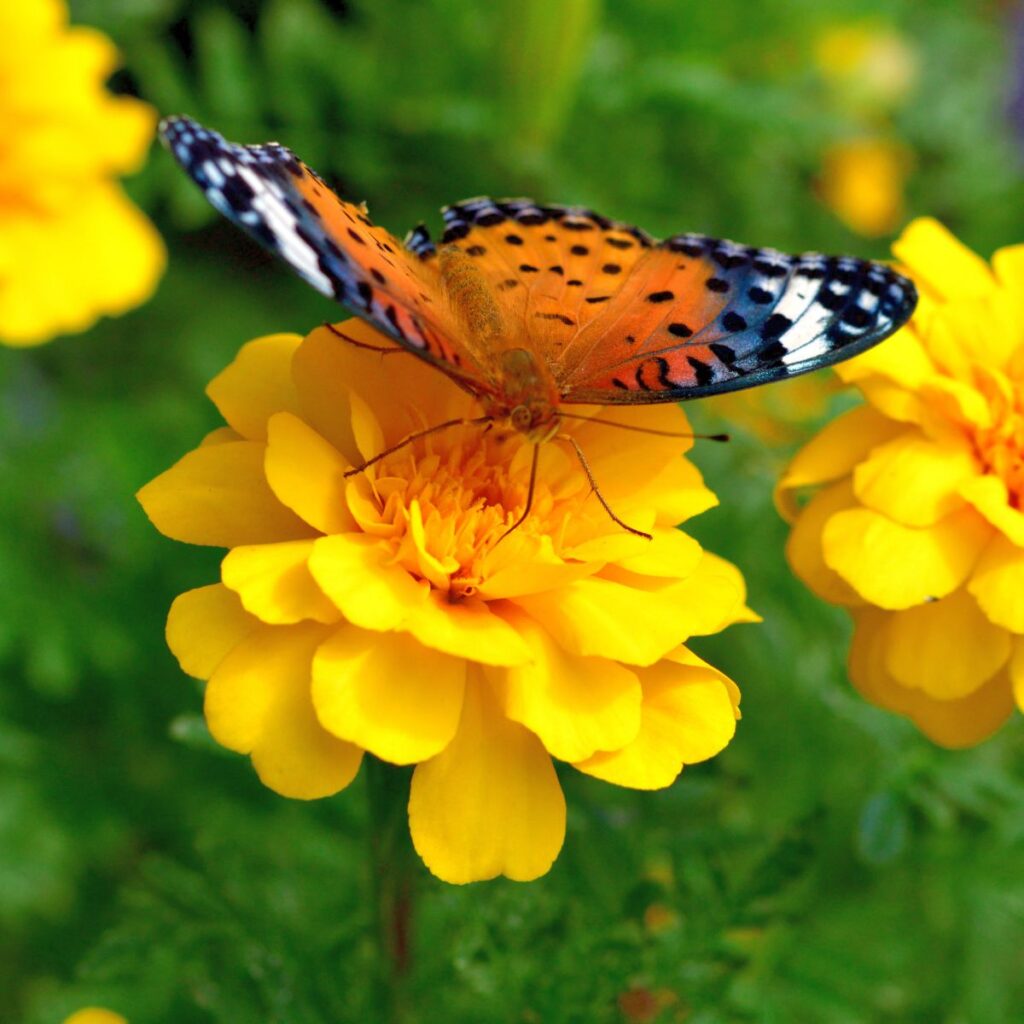
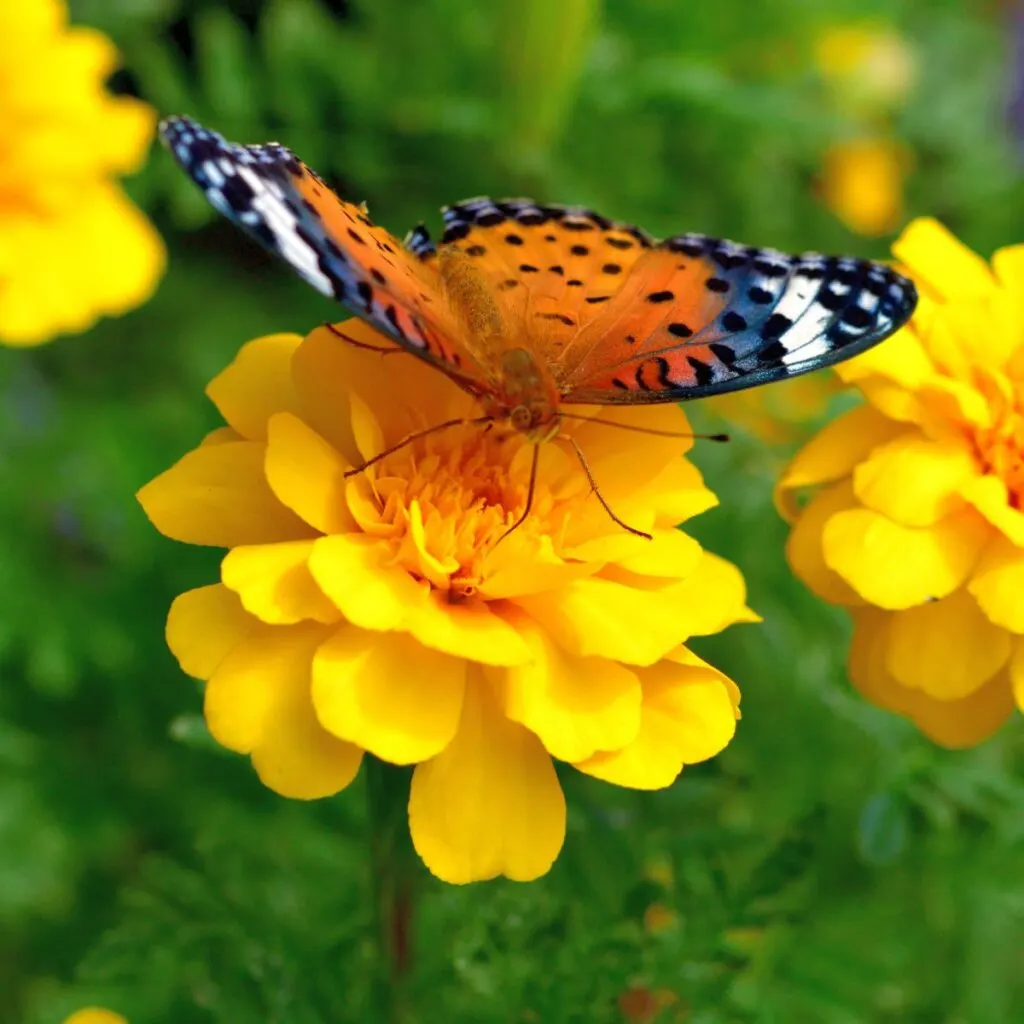
Marigold - How To Attract Butterflies To Your Flower Beds & Garden
Marigolds are popular with butterflies and for adding splashes of color to dazzle any garden space.

Butterflies, just like bees, also enjoy a wide range of annual and perennial flowers too. They also are extremely content to visit and stick around locations that can provide them with water and additional food and nectar sources as well.

Plants, Water & Feeders – How To Attract Butterflies In Droves!

With that in mind, today’s article includes a wide range of gorgeous flowers that butterflies love, along with a few key tips and tricks like adding a butterfly feeder that can help to feed and attract them even more.

All of the plants featured today are able to tolerate a diverse landscape, making them suitable for different zones. As an added bonus, most require little maintenance one planted. And of course, a feeder can be installed in any area to help as well to fill in the gaps.

By simply planting and creating a favorable habitat you can all but ensure to bring butterflies into your landscape to work their magic. All the while, enjoying their beauty each and every day!

How To Attract Butterflies To Your Flowerbeds, Garden & Landscape

5 Flowers Butterflies Love

Marigolds

Marigolds are low-maintenance flowers that come in a wide range of yellows, reds and oranges. As it happens – those just happen to be colors butterflies love! Marigolds thrive in full sunlight and are able to handle a wide range of soil conditions.

Zinnia
With minimal care requirements, zinnias add an effortless aesthetic to any landscape,

Although they can be planted from transplants, marigolds seed easily, making them extremely economical to sow and grow in flowerbeds and vegetable gardens – and it is in vegetable gardens where butterflies can really help!

In a vegetable garden setting, marigolds do far more than just attract pollinating butterflies – they also help deter a long list of garden pests from damaging your crops! See: How To Repel Pests With Marigolds

Zinnias – How To Attract Butterflies With Ease

Zinnias, like marigolds, are annual flowers that have a beautiful variety of vivid colors. Also available in many sizes and shapes, these plants love to bask in the sun and are easy to grow from seed, making them a favorite for gardeners of all levels.

With minimal care requirements, zinnias can bloom all summer long, attracting butterflies right along with them.

Joe Pye Weed – How To Attract Butterflies With Ease

Looking for a perennial that can bring butterflies calling each and every year? Joe Pye Weed is a perennial native to North America and is a rock star when it comes to attracting pollinators. The gorgeous plant has soft, dainty flower clusters which attract both butterflies and bees in droves. 

How To Attract Butterflies To Your Flower Beds & Garden - Joe Pye Weed
Joe Pye Weed is a perennial native to North America. The gorgeous plant has soft, dainty flower clusters which are popular for attracting both butterflies and bees. 

This pollinator-friendly plant makes for a great focal point in gardens and flower beds with its soft hues of pink and purple. Note that while this plant typically thrives in more moist soils, it is still able to thrive in most plant zones. 

Liatris – How To Attract Butterflies With Ease

Also known as Blazing Star, the unique flower heads of Liatris come in stunning shades of purple, pink, or white. These not only add elegance to wherever they grow, they are also a huge pollinator plant.

Loved by the butterflies and bees, Liatris serves as an essential source of nectar. The important food source contributes greatly to the health of pollinators. Better yet, the plant is tolerant to drought and is able to thrive in full sunlight – making it easy to maintain and enjoy with little work.

Yarrow

Available in a wide array of white, yellow, pink and red bloom colors, yarrow gives a simple and gentle elegance to flower beds and gardens. This fragrant and drought-tolerant plant attracts a range of beneficial insects, making it an excellent companion for vegetable gardens and flower beds.

Yarrow
With its low maintenance needs, Yarrow is a favorite choice for attracting butterflies.

With its low maintenance needs, Yarrow is a favorite perennial choice to add lasting flower power to the landscape. Affiliate Plant Link: Achillea ‘Moonshine’ Yarrow Plants

Using A Butterfly Feeder – How to Attract Butterflies With Ease

In addition to planting colorful flowers, it’s quite easy to install a butterfly feeder in your yard. Butterfly feeders serve as an alternative food source and attract butterflies into your outdoor area to then visit other plants. 

While you can find a wide selecting of gorgeous butterfly feeders online, you can also easily and efficiently make a simple DIY butterfly feeder at home. This can be made by filling a shallow dish with a solution of sugar water (four parts water to one part sugar).

You can also place a few small, ripe pieces of fruit in the solution to provide a perfect perching spot for butterflies. Typically, slightly over ripened fruits that are a bit sweeter can be a favorite for butterflies. Strawberries, oranges, watermelon and bananas will do the trick. 

Again, be sure the pieces of fruits are cut into small pieces and use them sparingly. No need to over serve these delicate insects at the risk of attracting any uninvited guests such as flies or ants!

butterfly feeders
Butterfly feeders can provide extra nutrition for butterflies. They also can give them a safe place to perch while feeding.


As for commercial feeders, the Songbird Essentials SE78215 Butterfly Feeder/Nectar Combo is a great choice. It makes it easy for butterflies to find and feed. No matter which choice you use, always hang at a reasonable distance from your home to enjoy these stunning pollinators. 

Leaving it near an open space makes for a more inviting area for butterflies to visit. Keeping it at a distance also keeps any unwanted visitors at a distance too!

Other Helpful TipsHow To Attract Butterflies With Ease

Butterflies absolutely love sunlight. With that in mind, they are more likely to visit gardens that receive ample sunlight. Ensure that your flower bed and garden have enough open spaces where butterflies can enjoy the warmth.

Like all living things, butterflies need to have water in order to survive. Create a butterfly-friendly oasis by incorporating shallow dishes or saucers filled with water in your garden. 

It’s also important to embrace organic gardening practices by using natural alternatives to control pests in your garden. Avoid using pesticides and chemicals which can kill butterflies, bees and other beneficial insects.

In order to keep these special visitors coming by your garden consistently, be sure to maintain your garden well. Providing a reliable food source with flower beds and feeders is the best practice of all. Consistent sources of food is what will keep butterflies returning again and again.

With a nice sunny spot and some water and inviting flowers, you’ve got the ultimate hot spot for butterflies to enjoy!

Follow Our Facebook Page For Great Gardening Tips And Advice! This Is My Garden Facebook Page

This Is My Garden is a garden website created by gardeners, for gardeners. Jim and Mary Competti have been writing gardening, DIY and recipe articles and books and speaking for over 15 years from their 46 acre Ohio farm. They publish three articles every week, 52 weeks a year. Sign up today to follow via email, or follow along!

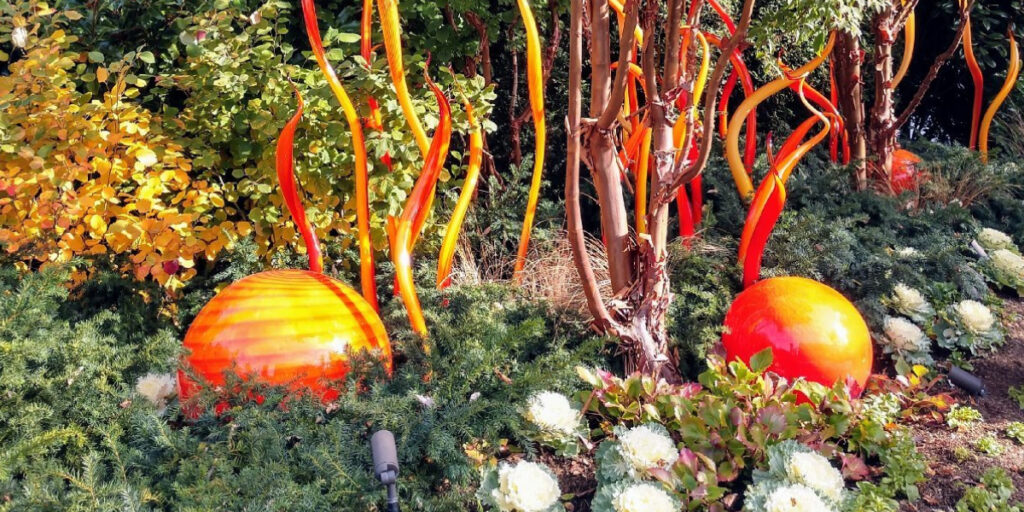
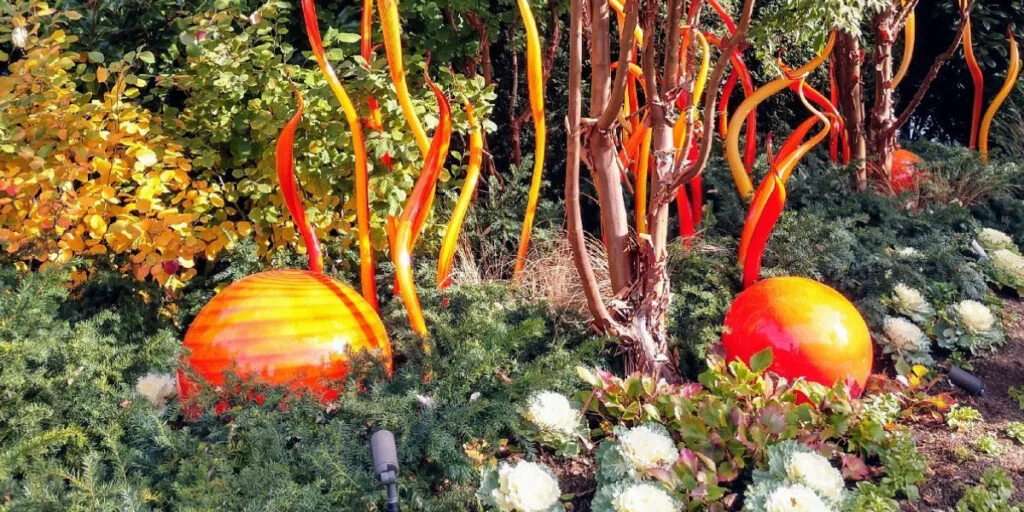
Talk about a show of color mixing man-made art with nature – the beautiful Chihuly Garden in Seattle is a wonder to behold!

What a treat we have today with our visit to Chihuly. It is the latest in our series of Featured Gardens, where we highlight public, private and backyard gardens from all over the country.

The outdoor gardens at Chihuly are filled with natural and made made beauty.

Chihuly Garden and Glass is an exhibit located in downtown Seattle showcasing the amazing talent and studio glass artwork of Dale Chihuly.

The display opened in 2012, on the grounds of the former 1962 World’s Fair.

Sitting under the watchful eye of the soaring Space Needle, the indoor studio and outdoor garden has become quite the attraction for visitors the world over.

Beautiful Chihuly Garden
As you walk about the garden, it is amazing to see how the glass sculptures blend in with the plantings and hardscapes. You have to look closely at the picture above to realize many of the “trees” in the photo above are made of glass.

And after strolling about the grounds, it is so easy to see why!

Dale Chihuly and The Chihuly Garden and Glass Exhibit

Dale Chihuly was born in nearby Tacoma Washington in 1941, and was first introduced to glass while attending the University of Washington. His passion only grew from there.

No, that is not a plant soaring in the air. It is actually an incredible Chihuli glass sculpture! As you walk about the garden, it can truly be difficult to determine what is man-made, and what is growing.

He has studied glass at several institutions across the United States, including time oversees at glass factory in Venice. And with each new experience, his talents continued to progress.

His passion for the art of glass blowing, along with his incredible artistic ability is easy to see. And they have resulted in his work being commissioned and displayed the world over.

The garden is filled with displays in every shape and color. The garden backs up to an Air Stream camper, which has been converted into an educational glass blowing exhibit showcasing the art.

In fact, to date, he has more than 200 museum collections spanning the globe!

The Beautiful Chihuly Garden

Although the exhibit in Seattle includes an amazing display of Chihuly’s work indoors, it is his outdoor garden that is a sight to behold for anyone who considers themselves to be a garden enthusiast.

The plants and glass in the garden are in perfect harmony.

It is an artful, delicate, and yet powerful display. The combination of the texture, color and foliage of living plants is in perfect harmony with the glass.

The garden area is centered around four colossal sculptures. As you walk about the tree-lined paths, perennials and annuals fill the spaces with simple beauty. But mixed in, and almost undetectable, are “blooms” of glass.

In fact, it’s almost becomes impossible to tell what it growing, and what is man-made!

beautiful chihuly garden
With autumn in the air, the garden mixes beautiful displays of fall annuals with the incredible glass artwork. These flowering kale plants were a sight to behold all by themselves. And when you add in the glass sculptures, it simply breathtaking.

But perhaps most beautiful of all is Chihuly’s The Sun sculpture.

With radiant orange and yellow tubes of glass that explode with color, it is majestic to behold. Especially on bright, sunny days, when nature’s own version dances it’s rays off of the sculpture.

Chihuly’s The Sun. Hard to believe it is made from glass!

One thing is for sure, a trip to the beautiful Chihuly Garden and exhibit in Seattle is worth the price of admission!

Check out more on their facebook page Chihuly Garden and Glass

This Is My Garden is a website dedicated to spreading the love and knowledge of gardening around the world. We publish two new garden articles each week. This article may contain affiliate links.

DanWalt Gardens is aptly referred to as one of Billings best kept secrets. And after touring the garden and grounds, it’s easy to see why!

Located on the southeast side of Billings, Montana, the garden grows on land that was once part of a 10 acre vegetable farm.

DanWalt Gardens
Simply strolling through the front gates of the garden is an event all to it’s own. With the coneflowers, asters and more in bursting in bloom during our fall visit, it was a sight to behold.

It also happens to sit squarely in a portion of the Yellowstone River flood plain, which provided plenty of fertile silt and soil deposits to the land over the years.

Deposits that have helped grow a stunning display of perennials and annuals for nearly 30 years!

In addition to the many perennials and annuals, there are beautiful sculptures placed all throughout the grounds.

It is quite impressive to think that on just an acre and a half of land, there is so much to see and take in, no matter the time of year.

A Full Season Of Blooms

One of the things that make DanWalt Gardens so unique is there is always something to see. No matter when you visit.

In the early spring, the grounds come to life with tulips, hyacinths and daffodils. As May and June arrive, so do the hostas, phlox, poppies, peonies, iris and more. The colors simply keep on coming!

The dahlias, with their over-sized blooms, were on full display during our visit. Along with many of the other fall perennials in blooms, they filled the garden with overwhelming color.

And as summer hits, the clematis, lilies, black-eyed-susans, hydrangeas and daisies come together to bring a whole new pallet of color to the landscape.

Fall happened to be our time to visit, and as we toured, the Dahlias were simply a site to behold. As were the asters and angel’s trumpet.

DanWalt Gardens
The many sculptures, walkways and water features lend a peaceful tranquility to the garden. It is easy to see why many couples choose the grounds for their wedding.

Even the hardy hibiscus was still holding on beautifully to some of it’s late summer blooms.

But beyond the mass plantings of perennials and annuals, it is the many walkways, structures, statues and water features that give DanWalt Gardens it’s all-season beauty.

Everywhere you walk, there are structures and hardscapes that add beauty and texture in perfect harmony with the plants.

In fact, as you walk around, you truly are amazed that they can fit so many plants and features into a one and a half acre plot.

The History Of DanWalt Gardens

The gardens history is as unique as it’s collection of gorgeous blooms and foliage.

DanWalt Gardens

DanWalt was started back in the 1990’s by two gentleman with the first names of Dan and Walt. Their original intent was to simply grow vegetables and flowers in their backyard.

But as any great garden story, it all grew from there.

DanWalt Gardens

As the garden grew in size and beauty, they began to host a few small events. And, after hosting a local benefit dinner party, the “secret” was no longer a secret.

It became a local venue for everything from small parties, to weddings and more. And it simply took off from there.

With a pavilion, outdoor bar and patio area, and a commercial service kitchen, DanWalt Gardens has grown to become a local treasure for all kinds of local events and activities.

A few years back, Dan and Walt decided it was time to step back, and sold the garden to a couple who have continued to build on the success of the past.

And as the gardens continue to flourish and grow under the new ownership, DanWalt is to sure to continue on as a Billings treasure!

Just look at that beautiful fall color!

If you ever happen to be in the Billings, Montana area, it is certainly worth a visit to see this “secret” treasure of the city! For more info, check out DanWalt’s Facebook Page.

To check out more garden check out our “Featured Garden” tab to check out all of our garden stories.

This Is My Garden is a website dedicated to spreading the love and knowledge of gardening around the world. We publish two new garden articles each week. This article may contain affiliate links.

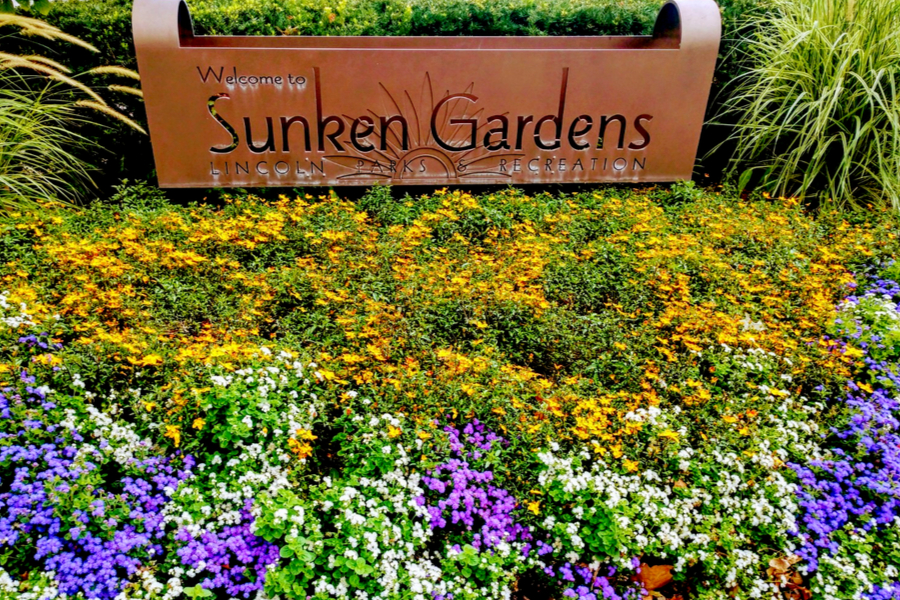
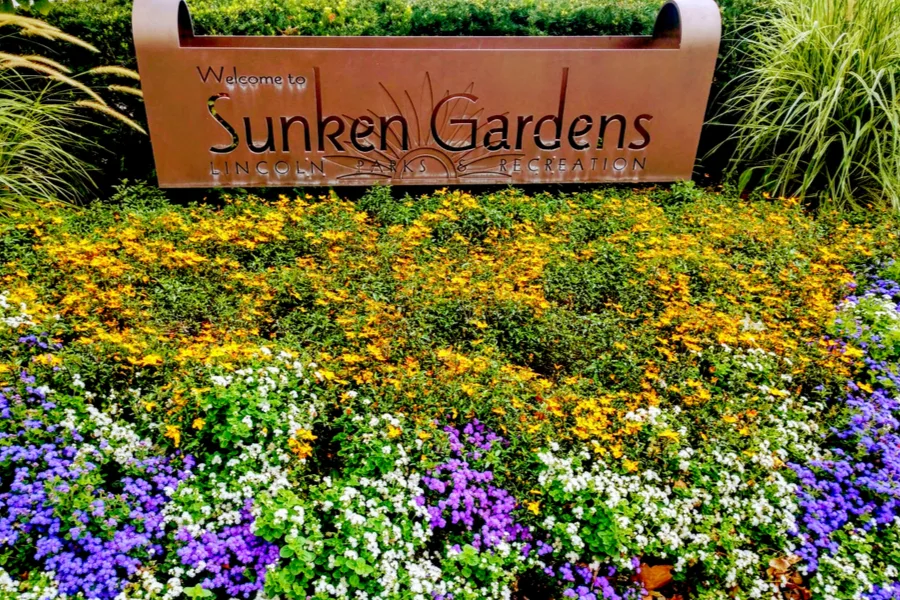
Tucked away on the southwest corner of 27th & Capitol Parkway in Lincoln, Nebraska is Sunken Gardens. And is it ever a treasure of a garden to behold!

Overseen by the city of Lincoln, and powered by an amazing volunteer effort, the garden offers one of the most impressive displays of annual flowers around.

touring sunken gardens
The annuals on display at the gardens are breathtaking. Everywhere you turn, color and texture abound!

And the perennial flowers, ponds, trees and walkways that grace the grounds are certainly a sight to behold as well!

A Tour Of Sunken Gardens

We are so happy with today’s article to revive our popular “Featured Gardens” series, showcasing some of America’s most beautiful private and public gardens.

The gardens include ponds and fountains, as well as a stunning display of annuals and perennials.

And we couldn’t have picked a better garden to start with than Lincoln, Nebraska’s Sunken Gardens.

The History Of Sunken Gardens

Originally started as part of the Public Works Project in 1930, Sunken Gardens has grown into an into an incredible display that includes over 30,000 annuals.

The history
The gardens were started as part of the Public Works programs back in the 1930’s.

Each year, a mass of garden volunteers help to plant the garden in a chosen theme.

And nearly all of it is planted and created in a single day during their “Wake Up The Garden Event.” The event is held in May of each year. And in the spirit of volunteering, the public is always invited to join in to help for the day as well.

This past year’s theme was “Sun Salutations.” And the display of bright reds, oranges, and yellows were certainly the perfect salute to the fiery sun above.

Sunken Gardens
This year’s them of “Sun Salutations” was captured perfectly with the bright, hot colors of the garden.

It really is a sight to behold!

In fact, Sunken Gardens is the only Nebraska garden by National Geographic Guide to Public Gardens as one of the 300 Best Gardens to visit in the United States and Canada. And as you stroll around, it is easy to see why.

Perhaps the most amazing part of all is that the entire display is located on just 1.5 acres.

annuals and perennials
Mixed in with the annuals are a beautiful selection of perennials such as hostas, viburnum and hydrangeas. The garden even has a collection of tropical plants that are overwintered each year in greenhouses, and then planted back into the landscape each summer.

But as you walk throughout, you feel as though you are among a much larger “forest’ of flowers, trees, ponds and walkways. Everywhere you look, there is color all around.

Put The Beds To Bed Event

Sadly, as with all annuals, every good thing must come to an end. And the same holds true for Sunken Gardens every fall.

To do so, the garden hosts an annual “Put The Beds To Bed” event in late fall.

The event, like their spring planting, is open to the public. In a single day, the garden’s annual flowers are pulled and sent to the compost bins.

The fountain
The view at Sunken Gardens from the fountain area, with the gardens below.

At the same time, the entire garden is spaded, and a thick layer of fresh compost is added to rejuvenate the beds for the following season.

It is amazing to think in a single day so much can be accomplished in such a large space. And all with a massive volunteer effort!

ponds at the garden
Mixed in with all of the annuals are a wondrous selection of perennials like these hostas.

And then the wait is on again until the following May, when the beautiful process begins all over again!

If you ever happen to pass through Lincoln, Nebraska, it is certainly worth the stop to check out this treasure of a garden!

The stately entrance area to Sunken Gardens

Sunken Gardens is located at 27th and Capital Parkway in Lincoln Nebraska. It is open daily from 6 a.m to 11 p.m. and admission is free. For more information, you can check out their Facebook page here : LNKSunkenGardens

If you know of a backyard, city or botanical garden we should feature, email us at info@thisismygarden.com.

This Is My Garden is a website dedicated to spreading the love and knowledge of gardening around the world. We publish two new garden articles each week. This article may contain affiliate links.

When it comes to creating Christmas memories and magic, it’s hard to top a visit to a Christmas Tree farm!

Christmas tree farms are an iconic part of Christmas traditions that exist so many families.

The smell of fresh-cut pine. A roaring campfire to warm the hands. Maybe even enjoying a mug of hot chocolate, or a cup of coffee.

Christmas Tree Farm

Nothing beats heading out into a forest of trees to find just the right Christmas Tree!

And then, above all else, there is heading out on the land to find the perfect Christmas tree!

Christmas Tree Farm Magic

Anyone who has ever been to a Christmas tree farm knows the excitement of finding “THE” tree.

Heading out among the mini small pine forests to size up the trees one by one.

Checking to see if it’s too small, too round, too tall – or just right. And then, of course, the family discussions of why this one or that one is the better choice!

Christmas Tree Farm

Whether its a pre-cut tree, a living tree, or finding and cutting one down as a family – heading to a tree farm is a big tradition for many families.

It is a day that so many folks have fond childhood memories of, and now try to pass it along to their kids as well.

A Visit To Fleming’s Christmas Tree Farm

Today, thanks to the recommendation of one of our readers from Pennsylvania, we are going to take a little photo tour to one of the magical places.

Fleming’s Christmas Tree Farm to be exact.

Christmas Tree Farm

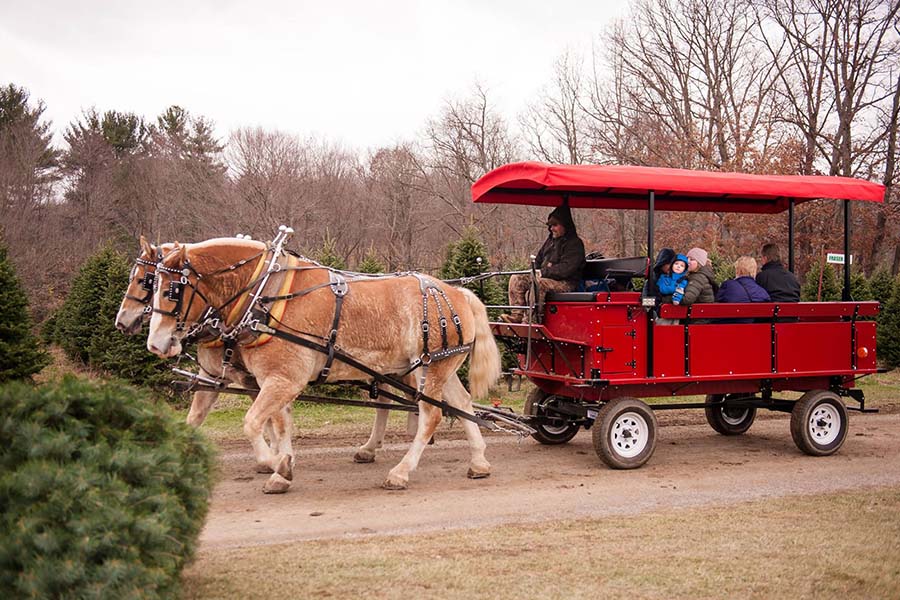
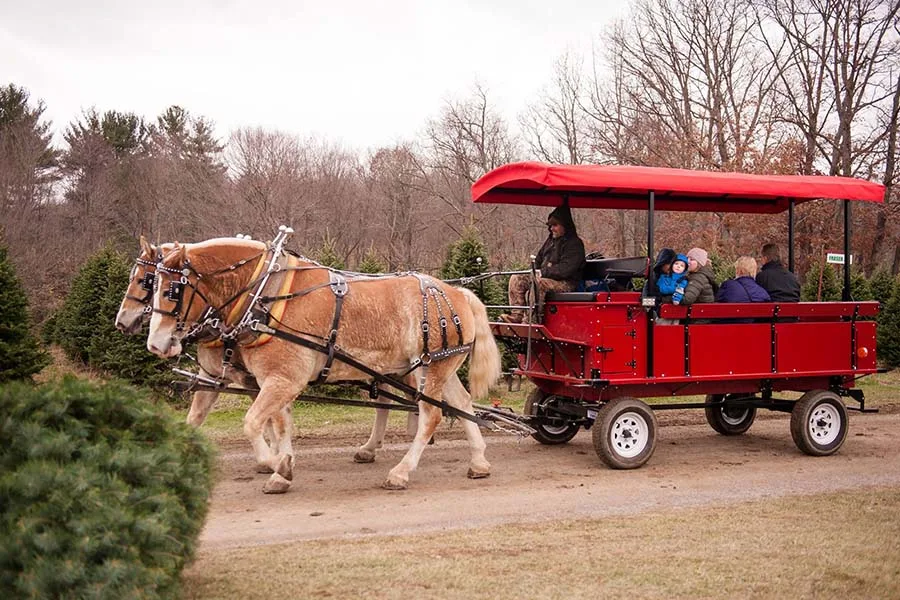
One of the horse-drawn wagons at Fleming’s Christmas Tree Farm in Indiana, PA.

At This Is My Garden, we love sharing with our readers the beautiful gardens, estates and farms that dot the landscape from sea to shining sea and beyond. And Fleming’s Christmas Tree Farm certainly qualifies on that front.

Fleming’s is located Indiana, Pennsylvania. Indiana, PA is a beautiful town of about 15,000 residents, located about an hour and fifteen minutes northeast of Pittsburgh.

Christmas Comes Alive At The Farm

Every year, in late November and into the December, the Fleming’s farm comes alive with the Christmas spirit.

With over 10,000 Christmas trees to pick from, there really is something for everyone.

Christmas Tree Farm

Santa and one of his reindeer joining in on the fun.

Fresh pre-cut trees. Live Christmas trees, for those who want their Christmas tree to grow for years to come. See : Living Christmas Tree Care

And of course, those 10,000 live trees out on their farm, just waiting to be cut down and find a home for the holidays.

Whether it’s a Fraser Fir, Douglas Fir, Canaan Fir, or a gorgeous Colorado Blue Spruce, finding the right tree is as easy as getting the family to agree!

Christmas Tree Farm

Fleming’s Christmas Tree Farm’s gift shop – just in case you need a little something for that tree!

At Fleming’s it really is an experience.

And if you come during one of their Family Fun Weekends (November 23rd, 24th, 25th & December 1st, 2nd, 8th, 9th), there is even more magic in the air.

They have horse-drawn wagon rides, a visit from Santa, and a Christmas shop filled with Christmas items to decorate any home.

Everywhere you look – it’s Christmas! And you can tell by the photos that no matter the age, children and adults alike are having fun.

Christmas Tree Farm

You can feel the Christmas Spirit in the air!

As our reader who recommended the story put it, “it’s just such and incredibly fun atmosphere to enjoy the spirit of the Christmas season.”

Giving Back To The Community

One of the great things about Fleming’s is their commitment to community.

Fleming’s Tree Farm has been involved in efforts to donate trees since 2005.

Christmas Tree Farm

Christmas Trees that have been donated and tagged to send to our troops

In 2005, the National Christmas Tree Growers Association developed an entity called the Christmas Spirit Foundation.

A Trees for Troops program was started by the foundation, and focused on donating Christmas Trees to troops, and military bases here and overseas.

Christmas Tree Farm

Trees For The Troops Day at Fleming’s Tree Farm

In the first year, 4,300 Christmas trees were donated and distributed to five military bases in the U.S. and overseas. By 2016, over 193,237 trees had been donated to over 75 bases!

Local Efforts

In 2009, a local Indiana, PA group committee was formed to organize an event for the drive. Their purpose was to sell trees to be donated to the Trees for Troops program.

In the seven local years of the event, over 2000 trees have now been donated to the program.

Christmas Tree Farm

A soldier helping out for Trees for the Troops Day.

Fleming’s will host a drive again this year at their tree farm (1803 Fleming Rd. Indiana, PA 15701) on Saturday, December 1st, 2018, from 9 am to 5 pm.

The event features Santa, live music, face painting, horse drawn wagon rides and more. And even  better, the chance to meet and thank a soldier!

Each tree donated that day has a special tag for donors to write a special message. It is just another thing that makes a visit to Fleming’s tree farm so special.

For more on Fleming’s Tree Farm – Check out their website at : Fleming’s Christmas Tree Farm

Here’s to enjoying your own Christmas traditions this year with family and friends!

This Is My Garden

This Is My Garden is a garden website created by gardeners – for gardeners! We publish two articles every week, 52 weeks a year.

If you have a great garden story – or a local farm or garden you would like us to feature, email us today at info@thisismygarden.com

You can sign up to follow along via email below. Be sure to follow along on Facebook and Pinterest as well for our latest stories and pins. This article may contain affiliate links.

A Photo Tour of Cheekwood Gardens and Estate – Nashville, Tennessee

One of our favorite passions at This Is My Garden is to share in the beauty and stories of wonderful private and public gardens from all over.

Whether it’s a roof-top garden in the middle of a big city, a rural backyard home garden, or a gorgeous estate, there is beauty to be found everywhere.

Cheekwood Gardens

The Cheekwood Estate located in west Nashville, Tennessee

We love receiving and publishing stories from our readers about gardens the world over. Occasionally, we get the chance to visit and write about one as well.

Such is the case recently when we visited Cheekwood Gardens on a beautiful Autumn weekend.

Situated on 55 acres on the west side of Nashville, Cheekwood Estate is part botanical garden, art museum and community gathering spot.

Cheekwood Gardens

The beauty of Cheekwood Gardens is all around you as your stroll the grounds.

It is simply nothing short of spectacular. You are certainly left in awe of the sheer size and beauty of the entire estate.

A Little History – Cheekwood Gardens and Estate

Believe it or not – Cheekwood owes much of its early creation and success to coffee. Maxwell House coffee to be more precise.

Maxwell House coffee was introduced to the citizens of Nashville, TN by a local grocer named Joel Owlsey Cheek in 1892. He named the brew after one of his favorite and most loyal local clients, the now defunct Maxwell House Hotel.

Cheekwood Gardens

Cheekwood Gardens owes a bit of its heritage to Maxwell Coffee

The entire extended Cheek family was involved in the grocery business. And that included Leslie Sr. Cheek. As part of the family, they had invested in the growing coffee business of their cousin Joel Cheek.

The Maxwell House coffee brand grew like wildfire – and was a windfall for the Cheek extended family.

And when it sold for a whopping $40 million dollars in 1928, it gave Leslie Sr. plenty of additional cash to put into his new estate he was building in west Nashville.

The estate was passed down through the family until finally being donated as a public garden and fine arts center. It officially opened in May of 1960 to the public.

Cheekwood Gardens

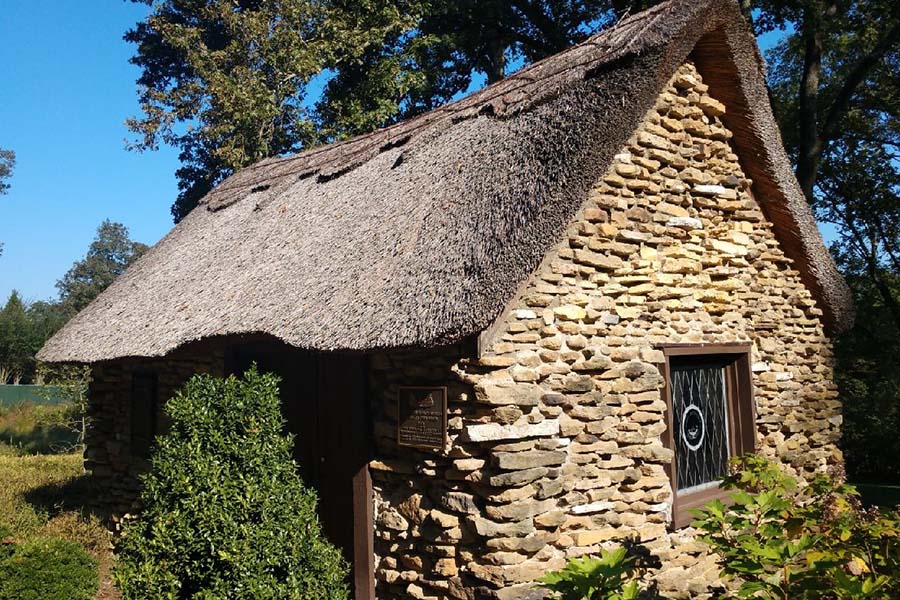
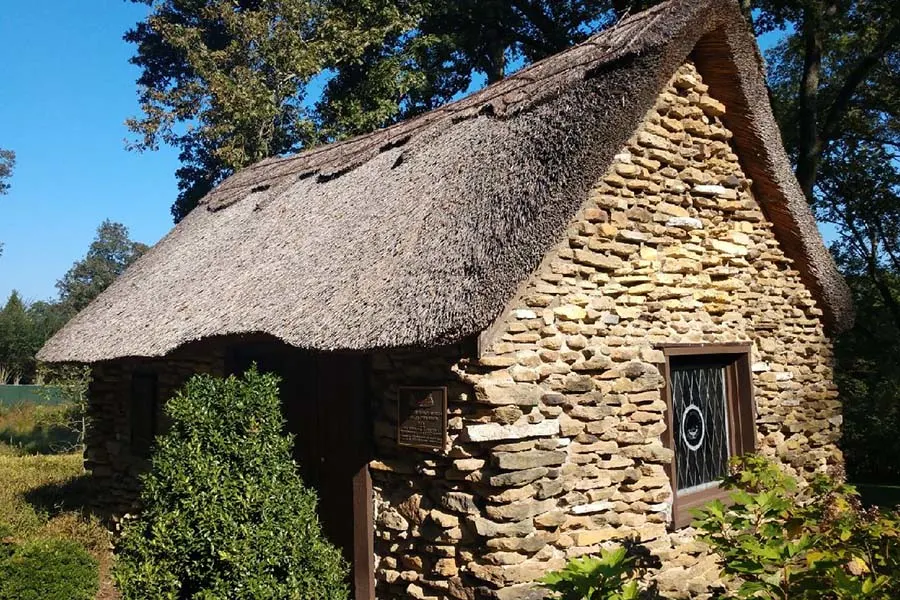
A converted stable on the grounds now holds a restaurant and beautiful courtyard.

And after our visit, we can definitely say with a pun intended, Cheekwood Gardens is definitely good to the last drop!

We have included below a few photos and highlights from our visit around the Botanical Gardens and Estate. You can also find out more about Cheekwood on their website @ Cheekwood Gardens and Estate.

If you have a local garden site in your area, or want to showcase your own Backyard Garden Oasis, drop us a line at info@thisismygarden.com.

Cheekwood Gardens Photo Tour and Highlights

Brilliant autumn color abounds at Cheekwood Gardens.

cheekwood gardens

The main walkway is lined with a vast array of autumn’s muted colors. And if happen to like mums, they are everywhere!

Cheekwood has over 5000 chrysanthemums in bloom throughout the grounds each fall! And pumpkins galore.


Cheekwood Gardens

In fact, the entire grounds at Cheekwood Estate are filled with interesting plantings and themed areas.

These themed areas change with the season, and even include a beautiful Christmas light display that brings visitors by the thousands.

Cheekwood Gardens

Strolling about the grounds brings new beauty at every turn.

One of the favorites for visitors – both children and adults alike, is the outdoor train area.

It is filled with miniature trains that weave through bushes, trees and across high trestle bridges.

Cheekwood Gardens

Cheekwood Gardens

Cheekwood Gardens


Strolling through the grounds, a gardener can’t help but be inspired with fresh ideas for their own home plantings or projects.

Whether it’s a walk through the herb garden, or a stroll through the Japanese gardens, you are surrounded by nature’s beauty.

Cheekwood Gardens

Cheekwood Gardens

cheeckwood gardens

The seasonal displays keep visitors coming back to Cheekwood.

cheekwood gardens

Cheekwood Gardens

We hope you enjoyed our little photo tour of Cheekwood Gardens. If you are ever in the Nashville, Tennessee area, stop by to enjoy for yourself!

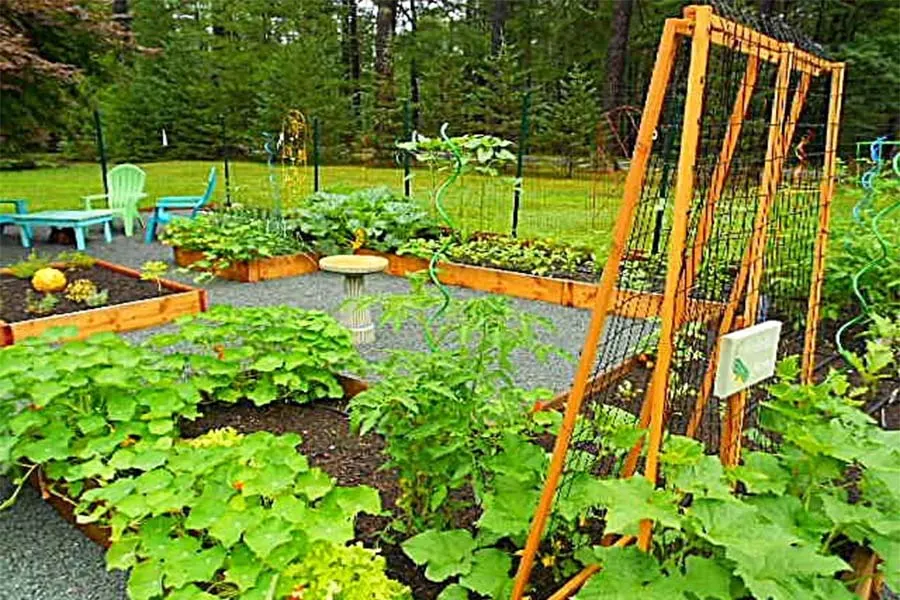
Today’s garden feature is an inspiration to a Potager Garden from long ago. It comes to us from the 1.6 acre mini farm of Sandy Greig from Eldred, New York. Eldred is located 5 miles from the Pennsylvania border in the rolling hills of New York.

Sandy created her garden in the likeness of an old-fashioned potager garden. A potager garden allows for the harmonious planting of vegetables, herbs, flowers close at hand. It makes heading out to find a meal a simple adventure –  and the results of Sandy’s Potager Garden are simply stunning.

Sandy – your garden story and photos are amazing – and we can’t thank you enough for sharing your story below with This Is My Garden.  Be sure to check out all of our past garden feature stories here, at our Garden Features Tab

Designing a Garden Room – Sandy Greig’s Potager Garden

potager garden

Sandy’s country house has come a long way from when she first purchased in 20161

When I bought my country house in 2016, it had been neglected and vacant for more than 2 years. But I felt it had promise to become a cozy place to rest while developing the 1.5 acres of land into a mini-farm.

At just under just 800 square feet, the house had a good roof and clear well. The cosmetics were in dire need of an update. I found myself looking out the large living room window and thinking how nice it would be to have a beautiful garden right outside the door.

French potager gardens have always intrigued me. In a design I call “formal whimsy”, a potager would make harvest easy and close at hand for vegetables and herbs and by adding flowers. The garden provided for all the senses.

Throughout the winter, I began to plan how the garden would be shaped. There are a lot of deer nearby, so I knew it would have to be fenced. I took into consideration what produce would benefit my family. I also had to consider the daylight hours and shade and height and colors of the plants. By spring,  had a budget, and was ready to begin.

Old tree stumps were impossible (for me) to trim or get out. Breaking up the ground with a rototiller would have been impossible. The ground was also severely compacted. And rocks –  rocks were everywhere! All of these conditions made normal gardening practices beyond a challenge. So to make the space more usable, I opted for raised beds for the vegetable garden.

Creating The Garden…

potager garden

Creating the garden step by step

I first laid out stakes approximately 36′ out from the house and across the full width for the fence. It was within this space that my version of portage garden would take shape.

I connected fencing to the house and placed in 2 gates. The raised beds were constructed of 2×10’s, 8′ long. I overlapped 2×4’s on some of 2 x 10’s to create the beds. I used exterior screws for all of the corners.

Once the main frame was complete, it was obvious the ground sloped and dipped. To remedy, I had to dig out soil to level.  I used stakes and screws in some places to hold the beds level. Having given up on perfection, eye-ball level was good enough. A local excavation company brought in yards of a fortified compost/top soil blend and filled the beds for me. Once the beds were filled, we put up the fence.

potager garden

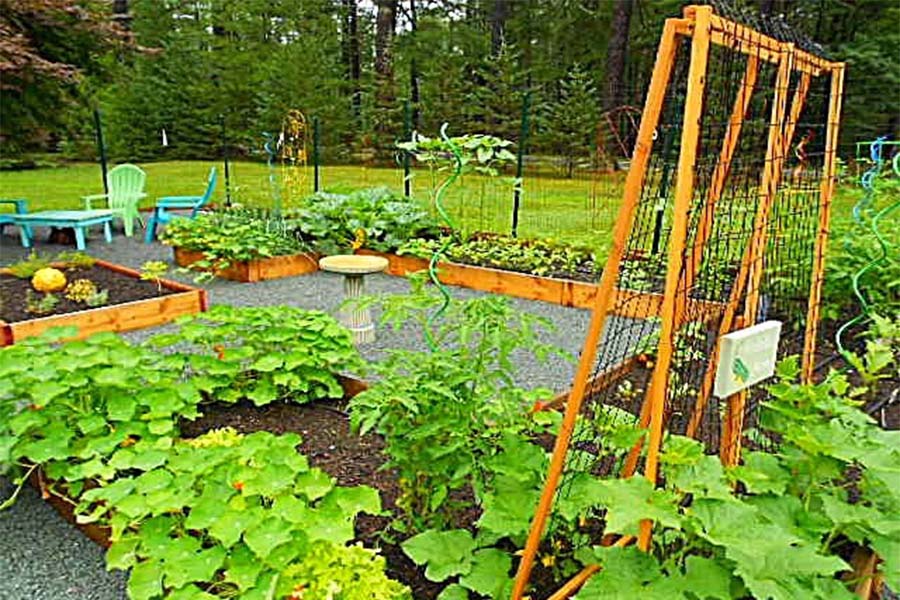
A bounty of food and color

My friend Rick and I did the fencing using 6′ Blue Hawk wire fence and 6′ T-Post stakes. We set the stakes about 6′ apart, more than enough to keep out the less than aggressive deer.

Some areas were so dense with rock, we had to dig out a hole to put the stake into and re-fill with dirt. It was both time consuming and exhausting,  but eventually we had it all together. We used rough cut 1″ lumber and ripped 4″ wide pieces to seal the fence to the ground. We were also hoping to keep out small animals (which seemed to work), AND make a barrier for the stone I would add later to the garden floor.

Since I’m often away for days at a time, we added drip irrigation with a timer. Then we went to work on figuring out the gates.

The T-posts have pre-drilled holes, allowing us to add wood to frame out the gates. That gave us something to attach the pre-made wired gates to. At $25 each, the pre-made gates were a low cost decorative addition to add style to the garden. I’d read that deer will not jump an enclosed portal, so I added a cross piece at the top with screws.

Keeping deer issues at a minimum…

potager garden

Fencing was a must to keep the deer from having at the garden.

I did have a deer later get in the garden, but luckily, it caused no damage. From then on, we used bungee cords to close the area over the cute gate. From that point on, deer have not been a problem.

Meanwhile, the garden area closest to the house was planned. Since this spot is gradually shaded from about 1 PM on, most of the planting was developed for perennial, shade tolerant flowers. All of the work was done by hand.  I even uncovered enough rocks to edge the garden!

The whole, unplanted garden space was covered with landscape fabric to prevent weeds from coming through. Plants were added to the flower beds and vegetable seeds were planted in the raised beds. I then covered the ground in pea gravel. While I waited for the plants to grow, I went to work staining and painting the house!

My theme for the garden was inspired by Dale Chihuly, a renown glass artist who frequently displays his pieces in gardens. Bold color, squiggles and orbs were added to mimic a Chihuly installation. And I adopted a metal mascot to guard the door.

potager garden

A day’s harvest from Sandy’s country style potager garden

A seating area is shaded by the beautiful red maple tree in the afternoons. Being comfortable in the garden is so precious. Friends love to sit and chat. The feeling of being in a room is protective and it’s great to witness nature in this peaceful setting. The garden provided a bountiful harvest. I have to say, it was inspiring to know this was just a first year garden.

And that’s how we came to expand the living space of our small house.  From the living room we are called out by the garden which never sleeps. It offers beauty, produce and inspiration everyday. You can find out more at Bringing The Farm Home – and follow along on my garden adventure!

Send us your garden story or tip!

Thank you Sandy for your incredible garden tour. We love your take on the Potager Garden theme! Do you have a garden tip you would like to share? Or perhaps a few photos and a short story on your own garden?

Email us today at info@thisismygarden.com and share it with our TIMG community. You can also use the “Feature My Garden Tip” button at the top of the website to submit your entry. This article may contain affiliate links.

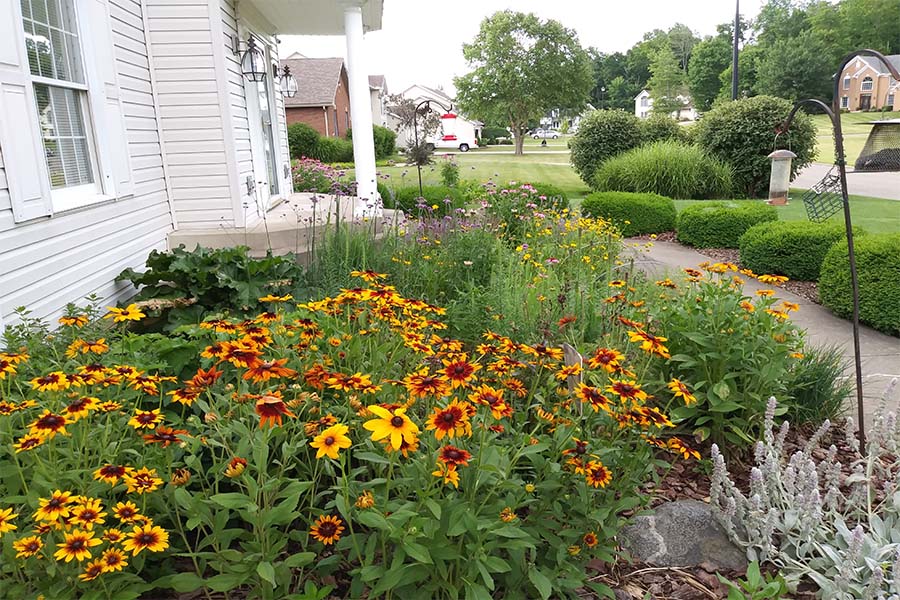
Tricia’s gorgeous Black-Eyed Susan plants, which reseed wonderfully every year.

The beauty of a Prairie Garden! No matter where you live, in the city, suburbs, or countryside – you can find a way to garden. I think that is why we love Tricia’s story below so much!

Tricia found a way to take some rocky, clay-like soil and turn it into a home-grown prairie oasis. But what makes it even better is that she adds a little of her own flair with plants like Lavender, that she simply loves to look at.

I think that is what makes gardening so special – it is whatever you want to make of it, and whatever you enjoy looking at. And for Tricia, she has created a home-grown prairie garden that is simply gorgeous!

Let’s take a look now at her story:

Tricia’s Home-Grown Prairie Garden

prairie garden

Extending the garden to the backyard

Tricia – Central Ohio
Growing Zone : 6A

I grew up in Northeast Ohio, but after I got married I lived in Champaign/Urbana Illinois for 18 years. During my time there the state of Illinois, and especially the Champaign/Urbana area, began making an effort to restore small parts of the tallgrass prairie garden in many of the open spaces around the city and along the highways.

I got a chance to learn about and appreciate the plants that made up the tallgrass prairie and I came to love many of these flowers.

Ten years ago I returned to my birth state of Ohio and moved into a house that had a rather large garden area in front of the house. It was filled with rose bushes, chrysanthemums, and other bushes like Inkberry.

prairie garden

Love the contrast of color!

As the spring thaw took off, and the plantings started to grow, the deer quickly mowed down and munched most of the plants in the garden. I knew that I had to change out those plantings as they were constantly being eaten and would offer no enjoyment to me.

As I started to dig into the flower garden, I soon realized that the ground was full of cement chunks, rocks, and hard clay. It was then that I remembered that prairie plants could grow in clay and thrive in dry conditions.

I even remembered that some of their roots might even help break up the clay. So I pulled out all of the previous plantings and started to plant my very own prairie garden.

I absolutely love lavender, and although it is not typically in a prairie garden, it had to have a prominent spot in my garden.

After I planted my lavender I went on to plant my prairie plants. I planted Tickseed Coreopsis, Yarrow, Purple Cone Flower, and Blazing Star Liatris.

I then added some biannual black-eyed Susan seeds that re-seed every year. I eventually added a few herbs for culinary purposes as well.

Over the past 10 years I have experimented and planted many different flowers in my garden, some made it and some didn’t. Those that were eaten by the deer were pulled out. As time went on the deer didn’t seem to bother eating the prairie flowers or herbs, and the garden started to flourish.

I am always on the lookout for something unusual that would add a different appearance to the garden. My most recent addition was Verbena Bonariensis. I loved its airy, wispy, long stems topped off with purple flowers.

I eventually expanded the lavender plants and purple cone flowers to the other side of my front flower garden. To that garden I added Calendula and Cosmos Mexican Aster Flowers.

The garden gives me much enjoyment. I truly love to wander past my garden brushing my hands over the lavender and herb plants releasing their oils, and gazing at the numerous butterflies, bumble bees, honey bees, and pollinators busy at work in my garden. It’s my little patch of the prairie.

Share Your Garden With The World…

We can’t thank Tricia enough for sharing her garden and landscape with us!

Now it’s time to share your garden! We want to showcase gardens of all sizes and shapes. So no matter what you grow, how you grow it or where you grow it – send in your photos and short gardening story to This Is My Garden – and share it with the world.

Simply email us at info@thisismygarden.com, or use the Share My Garden tab on the website. And be sure to follow us on Facebook and Instagram to get our weekly updates as well!

When we saw Kelli’s story below about her granny’s icebox pickles, it brought a big smile to our faces.

So many of the gardens and garden stories shared by our readers revolve around canning and preserving from the garden. And they almost always include traditions and recipes passed down from parents, grandparents, and even great-grandparents.

icebox pickles
In the old days, canning was often the only way to feed a large family

Years ago, growing a garden and preserving the harvest was much more than a hobby. For many it was about survival. Growing your own vegetables and canning helped feed hungry mouths through the cold winter months. It was simply a way of life.

Reading Kelli’s story below, it brought back memories for me, like I am sure it will do for so many of our readers. I love hearing my own mother, now 92, tell stories of her mom and dad making big batches of pickles down in their cellar.

She remembers with a smile memories of her little brothers trying to sneak down the cellar steps to sample a few.

Let’s take a look now at Kelli’s story, and her Granny’s Icebox Pickles. She has even been so kind to include the recipe as well.

Sharing Granny’s Famous Southern Icebox Pickles

I love reading all of the garden stories here from people from all over. So I thought I would share a little garden story from my past.

My name is Kelli, and although I now live in the Georgia, my parents and grandparents grew up in the middle of Kentucky. They both had large gardens growing up, and before we moved away when I was 10, my brothers and sisters spent a lot of summers working in them alongside my Granny.

She taught us how to use a hoe, how to fertilize with horse manure, and to never turn your back on a rooster! But if there is one thing that always reminds me of my Granny, it is her famous Icebox Pickles. Every year, when the cucumbers started to come on, we knew we were in for a treat!

icebox pickles
Fresh cucumbers means it pickle season!

Mind you, when I say famous, I don’t mean “FAMOUS”. My granny’s picture never graced the cover of a pickle jar, nor did she win blue ribbons at local fairs. But she did win the hearts and taste buds of everyone who ever tried one of her famous Icebox Pickles. And for that, she was certainly famous.

The Real Icebox – Granny’s Famous Southern Icebox Pickles

We had a refrigerator by then, but as she made them, granny would always tell us about the real icebox’s of the old days. It was a stout metal chest in the corner of her house that kept things chilled with a block of ice.

Every so often, as the old ice block melted, a new one was put in to take its place. It was simply a way of life for many rural folks to keep a few necessities cold. And it was where she made her Icebox Pickles. We still make them today, but in the refrigerator of course.

The recipe is actually quite simple. She started by cutting fresh cucumbers into 1″ slices. She would cut up enough to have about 4 quarts on hand. Then she would slice two large medium sweet onions into 1/2 inch long slices as well.

To make the liquid portion, she used 4 cups of apple cider vinegar, 2 cups of sugar , 1/4 cup of pickling salt, 3/4 teaspoon celery seeds, 3/4 teaspoon mustard seeds, and 1/2 teaspoon ground turmeric.  

She would pour all the ingredients in a pot and warm them up for about 5 minutes. Next, she would always tell us the secret was to never let the water boil, just getting it to barely simmer.

She would then take the mixture and pour it over the onions and pickles in a large pot and let it cool for about an hour or until the mixture came back to room temperature.

Off To The Icebox – Granny’s Famous Southern Icebox Pickles

Then it was off to the icebox overnight! Well, for us now, of course its the fridge! I love putting them in old fashioned canning jars to give away as gifts.

It still amazes me that you can pick fresh cucumbers one day, and have these pickles the next! It’s a little easier now with our modern refrigerator “icebox”.  Although, I still remember Granny saying they turned out better in the ol’ icebox.

My kids and now grandchildren still gobble them up just like I did when I was a child. Maybe it’s the sweetness, maybe it’s the fact that they are ice-cold on a hot sunny day. But for me, every time I taste my a homemade Icebox pickle, it simply reminds me of my Granny.

People always ask me how long they will last in the refrigerator, and I reply with a simple, “not for long” as soon as someone tastes them!  Thank you for letting me share my Granny’s recipe and story!

Follow Our Facebook Page For Great Gardening Tips And Advice! This Is My Garden Facebook Page

This Is My Garden is a garden website created by gardeners, for gardeners. Jim and Mary Competti have been writing gardening, DIY and recipe articles and books and speaking for over 15 years from their 46 acre Ohio farm. They publish three articles every week, 52 weeks a year. Sign up today to follow via email, or follow along!

Announcing our first ever Garden Showcase Contest! Share your garden with the world and win some cool gifts – like a $100 Visa gift card, some great garden tools – and a visit from us to deliver the winnings and write a full featured story on you and your garden!

container gardening

Whether you garden in containers, or on a large farm – you can enter!

Ever since launching This Is My Garden 4 1/2 months ago, we have been absolutely floored by the number of fellow gardeners wanting and willing to share a few photos and details of their own personal garden.

We have also had some wonderful tips on growing everything from trees to watermelon, making your own maple syrup, and more.

The site and it’s following have grown right along with it. This past weekend, the 2,000th follower signed up, surpassing our goal of 1500 that was for the entire 2017 year. And we still have 6 months still to go!

So, we figured, let’s go for 5,000!

To kick off the effort, we decided to host our first ever Garden Showcase Contest! After all, that is what This Is My Garden is all about – showing and sharing what and how you grow!

The contest focuses on the simple love of gardening in your very own personal garden space! We don’t care if it’s small or large, or whether it’s a vegetable garden. flower garden, fruit orchard, vineyard,container garden, herb garden, water garden, rock garden – or even a personal train garden.

It just has to be a garden! Simply share a few photos from your garden space – and tell us why you love this beautiful thing we call gardening.

garden showcase contest

Have a beautiful flower garden to share? Enter it today!

All you have to do to enter is email us with your entry at info@thisismygarden.com. You can send up to 8 photos of your garden or landscape, along with a few paragraphs (300 words or less) describing what you grow and why you love to garden.

That’s it!

We will pick 3 finalists from the entries, and then showcase those top 3 on the blog on Saturday, July 1st. At that point, we will open it up to the public to cast their votes on the site for their favorite among the 3 finalists. Voting will continue through the 4th of July.

We will then announce the winner on the blog the following Saturday (July 8th). And if you have already been featured in the past on the site – no worries, you are already entered!

The Grand Prize winner will receive a @$100.00 Visa Gift Card, a Hori-Hori Garden tool – and a personal gift basket from This Is My Garden filled with seeds and small garden gifts.

We will then deliver the prizes to the winner’s doorstep on a mutually agreed upon time. I mean, if it is the grand prize winner – we want to see the garden too!

The Grand Prize winner will also have a fulll featured story on their award-winning garden later in the year on both This Is My Garden and Old World Garden Farms’ websites.

So get out there and take a few photos of that garden space and enter today!

Thanks so much – Jim and Mary. For some inspiration, check out some of our featured gardens from this year so far :  TIMG Featured Gardens